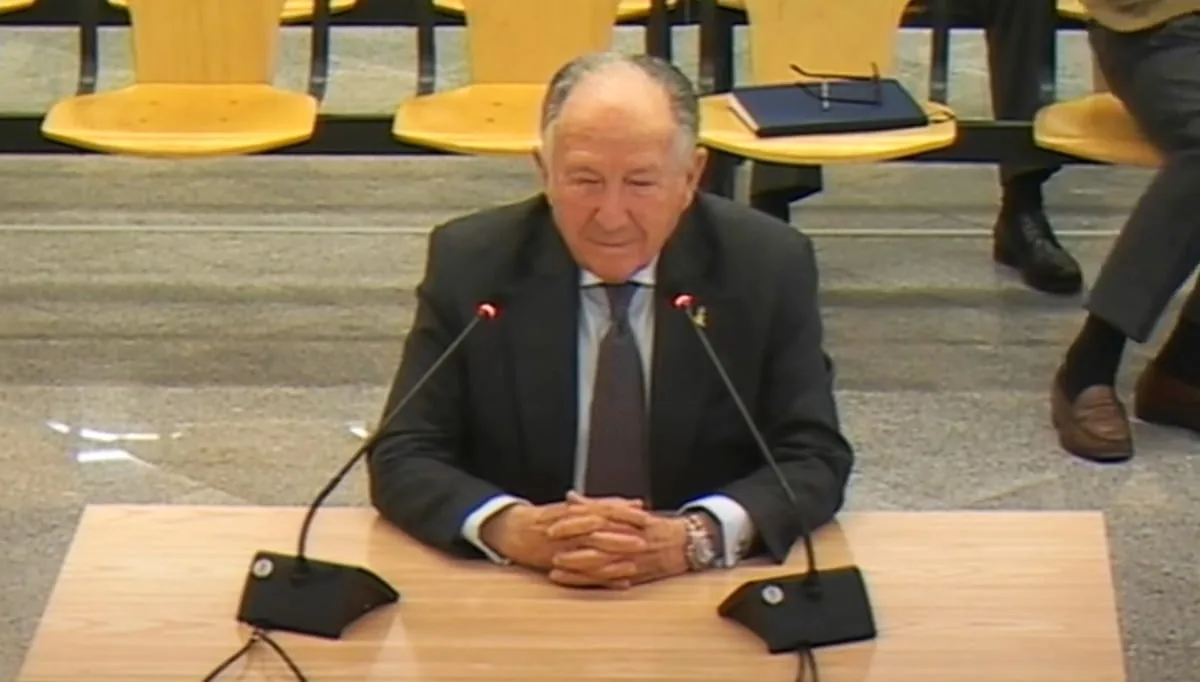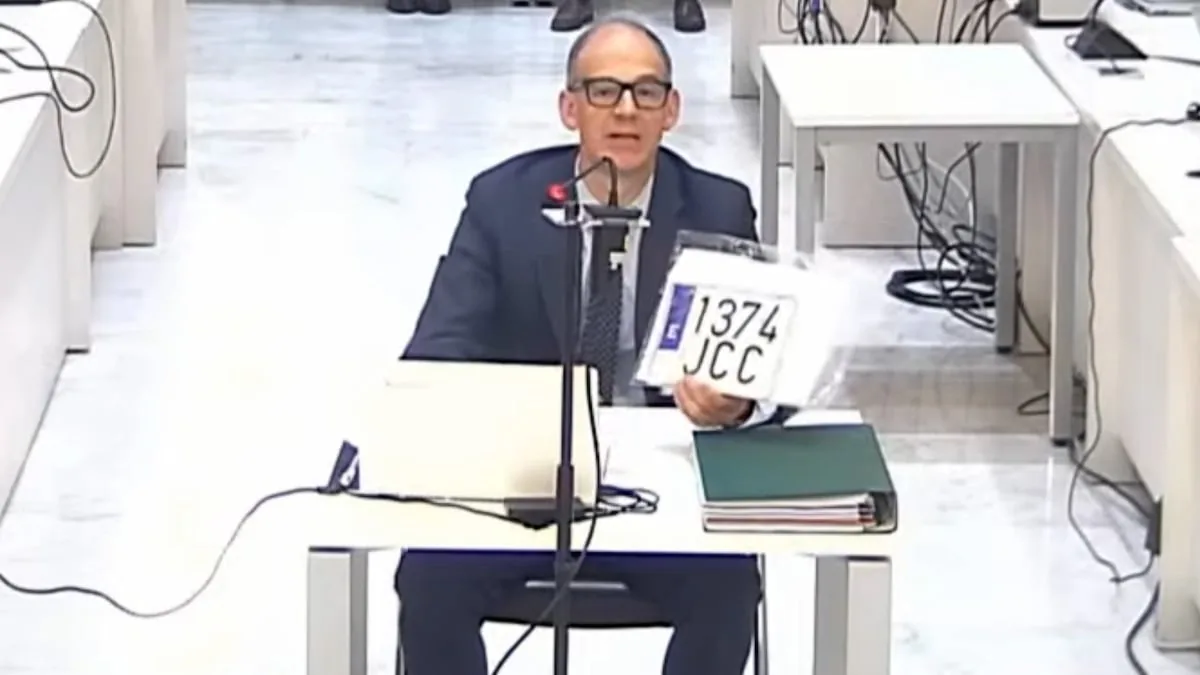


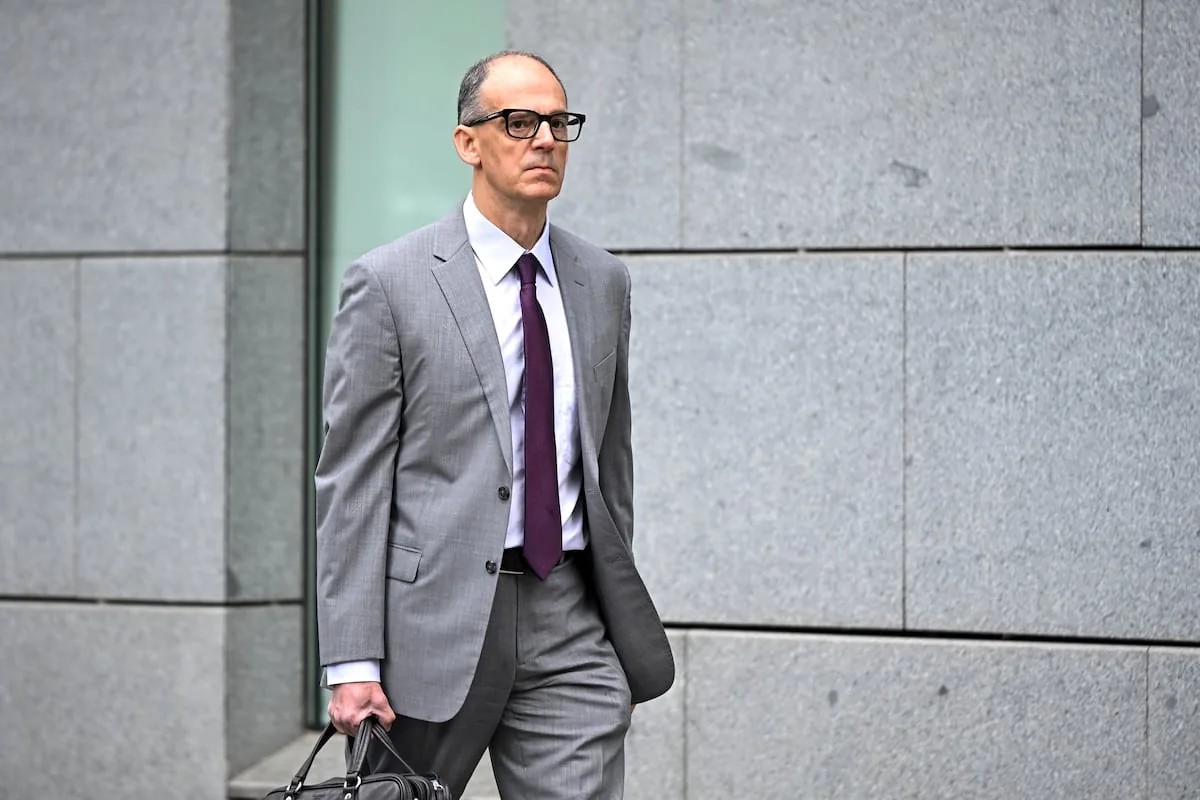
The first blow from Chief Inspector Manuel Morocho, the lead investigator of the Gürtel case, came just as his testimony began this Tuesday in the trial over the Kitchen plot, which puts the former top officials of the Ministry of the Interior on trial for deploying in 2013 a spy network against the former PP treasurer Luis Bárcenas. “It was a police operation without judicial authorization,” states the experienced National Police officer, who led over a decade ago the investigations that cornered the PP and who now, sitting before a National Court tribunal, bluntly denounces that a group of high-ranking officers conspired within the Corps itself to “torpedo” the case that was closing in on the conservatives. According to him, in line with the Anti-Corruption Prosecutor’s Office’s theses, Kitchen was a plot “against” the Gürtel case.
Read more The ‘Renoir’ that belonged to the Duchess of Alba returns to Spain thanks to a national buyer
Manuel Morocho’s testimony has hit squarely the defenses of the main accused, who repeat that they were simply following Bárcenas’s steps to find the “money” he was hiding and his “front men.” Mariano Rajoy, Prime Minister during the espionage deployment, aligned with them, stating last week: “I am convinced that this police operation complied with the law.” However, based on the case file’s evidence (such as the agendas of Commissioner José Manuel Villarejo, audios, and phone communications), the Prosecutor’s Office maintains that the plot sought “compromising” material of high-ranking PP officials that the former treasurer might still have, to prevent it from reaching the Gürtel investigators.
The chief inspector, known by his professional ID number 81,067, is also convinced that Kitchen was devised “against” him and “against” the group of agents of the Economic and Fiscal Crime Unit (UDEF) he led. Why? Because the espionage on Bárcenas was done behind his back: without informing him or the investigating judge Pablo Ruz, who was leading the Gürtel case from the National Court. And those involved never provided them with the information or data they obtained. They knew nothing about the surveillance until many years later when it came to light.
—Did you request any kind of support from the Deputy Operational Directorate (DAO)? —the prosecutor asked him.
—No —Morocho replied.
Commissioner Eugenio Pino, appointed by Minister Jorge Fernández Díaz, headed the DAO in 2013. The case file points to him as the officer in charge of the “planning and development” of the surveillance on Bárcenas, his family, and his environment —which was carried out for months through dozens of agents from two units outside the UDEF—. Pino allegedly operated under the orders of the then Interior Minister; and his number two, Francisco Martínez, Secretary of State for Security.
—And from the DAO, were you reported any relevant information for the Gürtel case? —the public prosecutor pressed again.
—No.
As an example, the chief inspector detailed before the court that they never informed him that Sergio Ríos, Bárcenas’s driver, had been recruited as an informant, to whom more than 50,000 euros from reserved funds were paid; nor did they send him documentation of the former treasurer that was later found at Villarejo’s home after his arrest —such as invoices and handwritten notes from his wife, Rosalía Iglesias—. And, to make matters worse, Morocho emphasized that he never proposed surveillance on the ex-accountant’s wife or son, even though Kitchen targeted them.
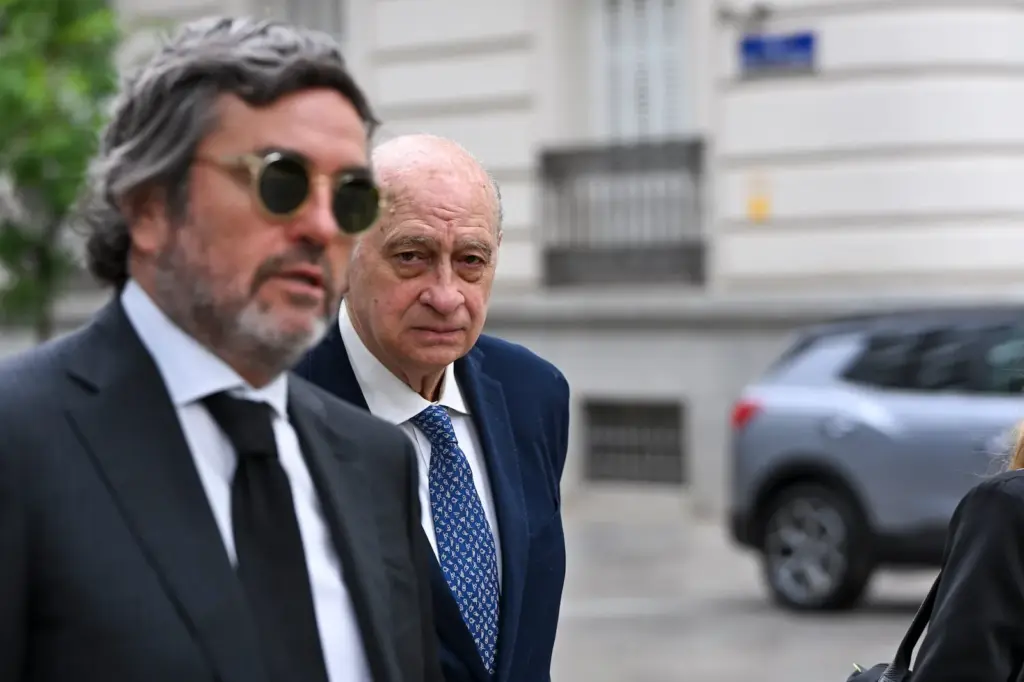
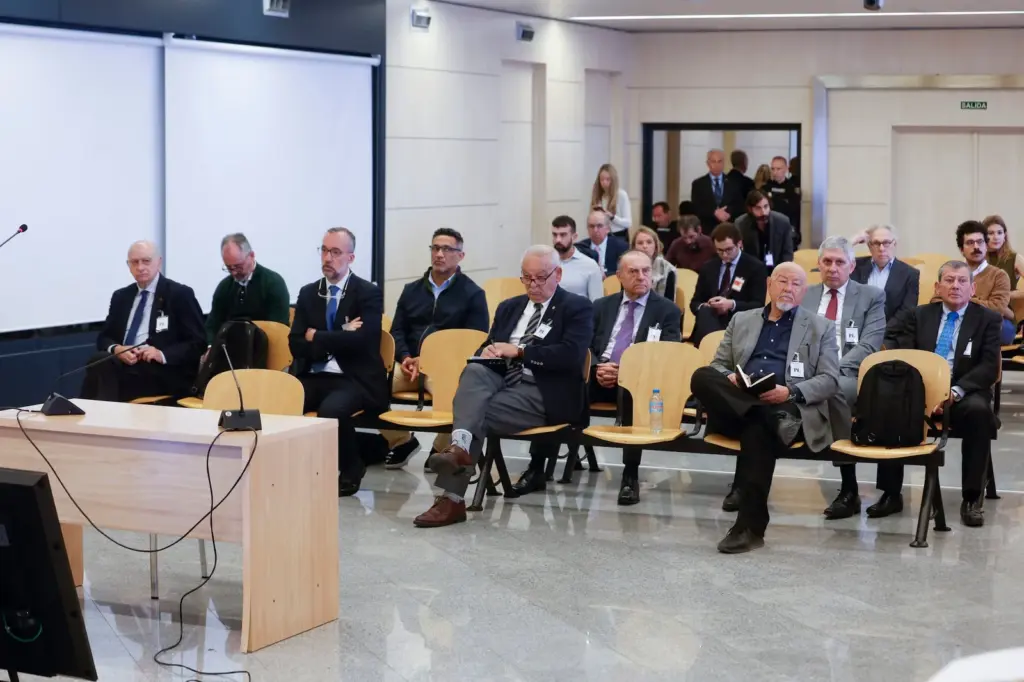
All parties knew that this Wednesday’s session was key. Of the ten defendants, only Villarejo missed the interrogation (due to health reasons). Fernández Díaz, Martínez, and Pino remained attentive to every word spoken by the former UDEF agent. Sitting behind him, they watched as Morocho inflicted enormous damage on the alibis most defenses put forward. He dealt so many blows that the defendants’ lawyers interrupted the chief inspector’s interrogation numerous times to limit his answers. Magistrate Teresa Palacios, president of the tribunal, also made efforts from the start to prevent the agent from elaborating too much in his responses.
“The off-the-books payments”
For almost four hours, this witness’s account was a real steamroller. Moreover, as he did during the investigation phase, the inspector stated that the boycott of Gürtel extended beyond the espionage on Bárcenas and included pressures on his group from the entire “command scale” of the Corps, to align with the PP’s defense theses. “The correlation between the outflows of the off-the-books payments and the renovation [of the PP headquarters on Génova street] was questioned,” Morocho cited as an example of a matter the justice system has established as proven, and for which the conservative party was convicted.
Along those lines, Morocho explained that his superiors despised The Bárcenas Papers, published by EL PAÍS in 2013. He emphasized that they told him it was “an invention” of the former treasurer and repeatedly said they were “his papers, but not of the political party.” Rajoy and his leadership have maintained exactly that position for years. “The aim was to discredit the content,” the chief inspector stressed before indicating that, in this way, they tried to prevent him from recording the evidence appearing against the conservatives. In fact, in 2021, he already told the National Court that he was urged to remove the then Prime Minister’s name from a report. This Wednesday he reiterated it.
Read more The singer and poet Patti Smith, Princess of Asturias Award for the Arts 2026
—Did you receive pressure to ensure Rajoy’s name did not appear in a report? —Gloria de Pascual, PSOE lawyer and popular accusation, questioned him.
—Yes, it was singled out so that this person would not appear —the investigator said, before indicating that he was also asked to remove the name of Ignacio López del Hierro, husband of María Dolores de Cospedal, PP’s Secretary General.
The 2015 stratagem
In 2015, when the Kitchen espionage was already considered over, the plot introduced a generic mention in the Police’s intelligence and coordination system. For the accusations, that move was a stratagem to have an alibi if it ever came to light. Morocho delved into this idea this Wednesday. The inspector analyzed the data entered into the Corps’ databases and found them very “irrelevant”; besides not specifying anything about the surveillance of the Bárcenas family. And even, according to the witness, they deliberately included a wrong address of a Rosalía Iglesias premises, where the plot believed sensitive PP documents might be kept and which they had already accessed, according to the case file.
“They contribute nothing. Everything was known, except what came from what I supposed were some surveillances. It was information already known. They were people already in the case files and for whom the magistrate was already requesting actions,” highlighted the main Gürtel investigator: “For me, it was the confirmation of the existence of a Police operation on Luis Bárcenas and against the group designated as the judicial assistance unit of the Court.”
In this regard, the chief inspector added that he had requested in 2007, when Gürtel started, that any unit communicate to him any possible information that could relate to his investigations. But the accused in Kitchen did not upload anything to the system until summer 2015, when the investigation line on The Bárcenas Papers had already been closed and sent to oral trial.
The “pressures”
“There were maneuvers to torpedo,” Morocho highlighted, describing a wide range of “pressures” brewed within the Police to delay his reports, remove him from the unit, and try to buy him off with a better-paid position. The “final objective” was “to get me out of the way.”
For that alleged bribery attempt, he pointed to Commissioner José Luis Olivera, who sits on the defendants’ bench. “He calls me and says he wants to make me a proposal. We meet at an establishment…,” he began. Then, he recounted how Olivera offered him a post in Lisbon and, upon his refusal, offered a position at any embassy he wanted. During that meeting, according to his version, Olivera received a call that, he was told, was from Minister Fernández Díaz because he was “interested” in his future. “I told him no because of my commitment to Magistrate Ruz, to the Police, and to society, because I promised to defend the community and uphold democratic principles.”
At that time, Morocho’s suspicions about Olivera, a friend of Villarejo and a high Interior official, multiplied rapidly. According to his account, the commissioner asked him to send his secret Gürtel reports to a personal email address to “guide him,” and requested the phone number of Rosalía Iglesias. The chief inspector refused everything. “The request [for the mobile] was after Bárcenas entered prison. For me, it was an indicator that they wanted him for something. The scenario being prepared was an action in Luis Bárcenas’s environment,” he insisted.
The interrogation of Morocho was suspended at 14:04 this Wednesday. The chief inspector will continue testifying on Thursday before the court.
Read more Man arrested after stabbing two people in a predominantly Jewish neighborhood in London