





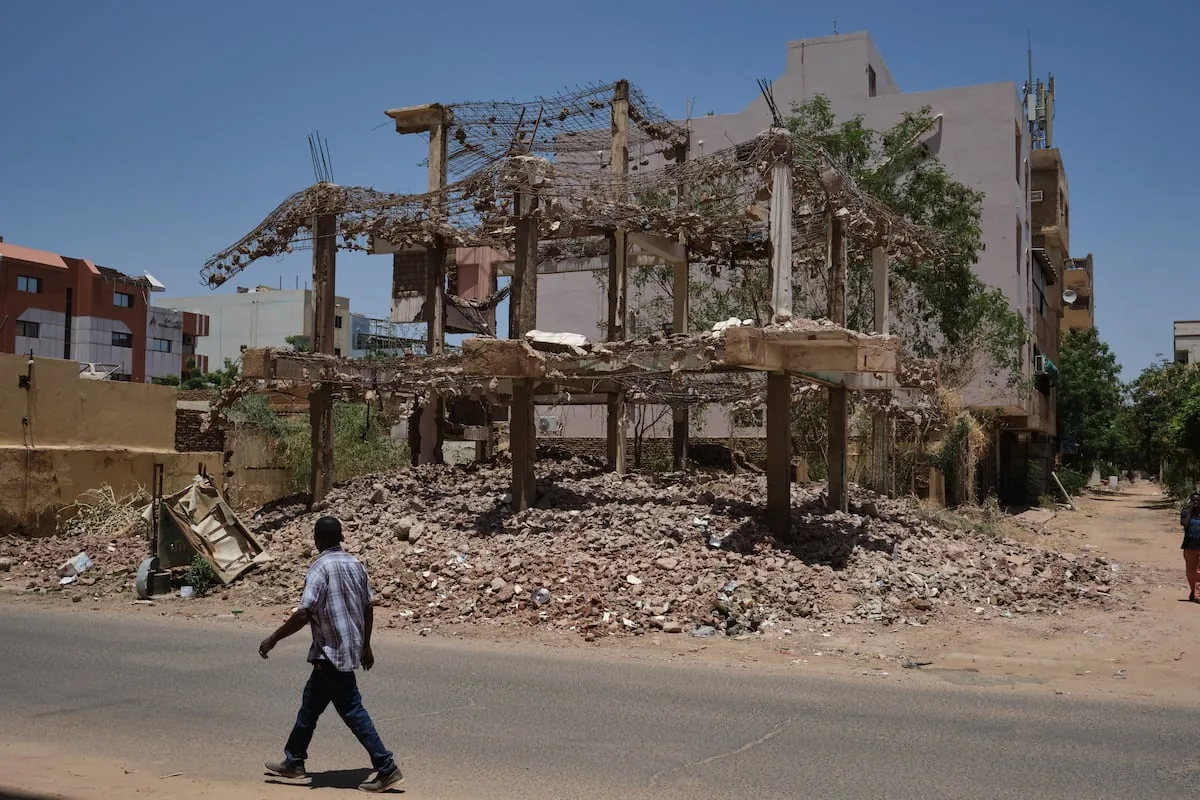
Osman al Bashir spent 26 days trapped in a building in the Al Arabi market, in the center of Khartoum, since the day the war broke out in Sudan, on April 15, 2023. “Every time we needed supplies, we had to risk going out and being hit by snipers, who were stationed on the rooftops,” he explains from outside the building where he was trapped. Three years have just passed since the conflict plunged the country into the greatest humanitarian crisis on the planet. But still, when he looks around, he vividly remembers the horror he experienced those days. He points to several spots with his finger: “There, there, and there… There too.” These are the places where he himself remembers seeing dozens of corpses scattered in the streets of what was once the commercial epicenter of the capital.
Read more The writing school of TV3
April 15, 2023 will be a date marked in Sudan’s memory. That morning, the Rapid Support Forces (RSF), the paramilitary group commanded by Mohammad Hamdan Dagalo, alias Hemedti, attacked Khartoum and the country’s Armed Forces, led by General Abdel Fattah al Burhan. Since that day, more than 11 million people, out of a total of 51 million inhabitants, have been internally displaced and more than four million have fled the country, mostly to Chad, Ethiopia, Uganda or neighboring South Sudan, according to data from UNHCR, the UN refugee agency. It is the largest humanitarian crisis in the world and also the most ignored, without even a precise death toll.
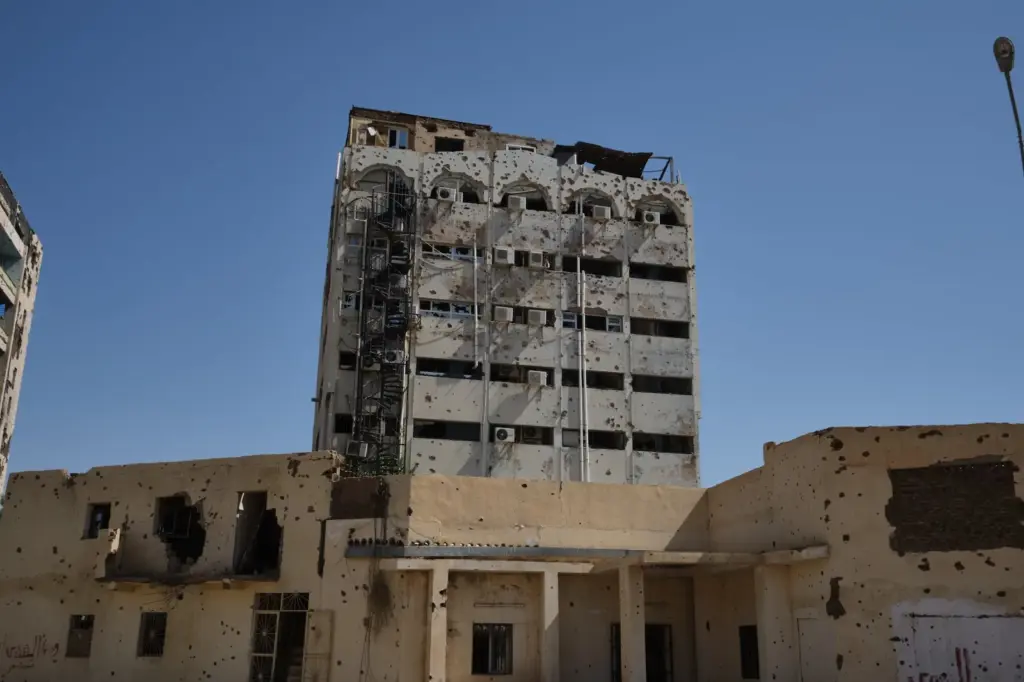
The war began in the capital, on every street, on every corner. Today, the wounds of the conflict, which has spread throughout the country, still bleed in Khartoum. They are not scars, they have not healed: they remain open, throbbing.
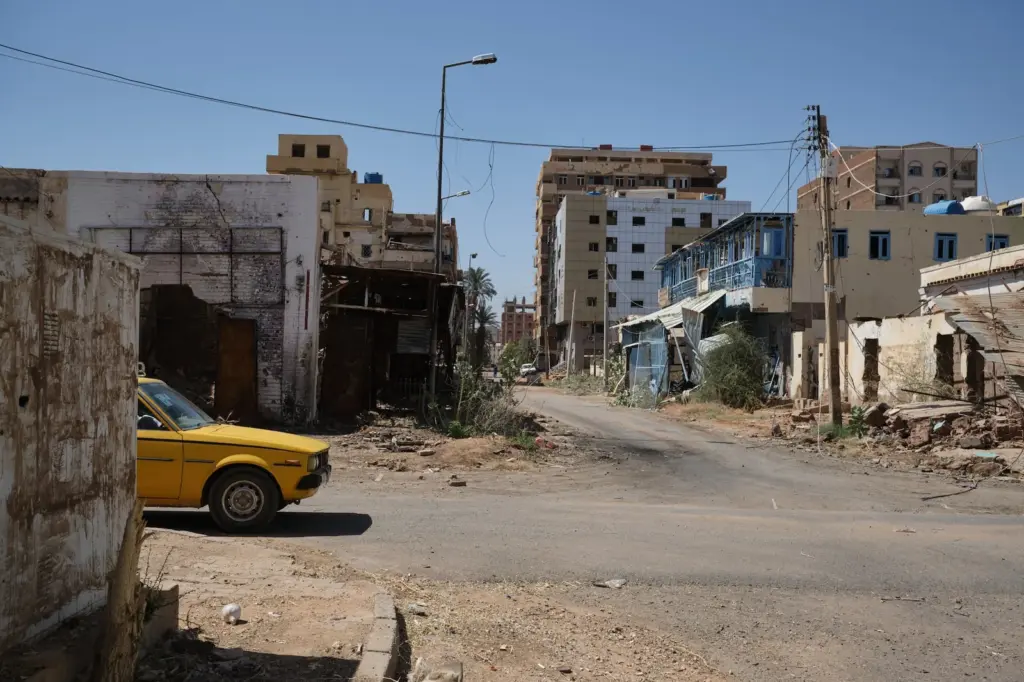
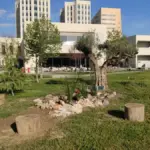
Citizens sit at the tea ladies, small stalls run by women, and sip tea while contemplating a ghost city in ruins. Both in the market and along Khartoum’s long avenues, the ravages of war are impossible to ignore: the black soot from fires, the holes in buildings, planes split in half at the airport, debris flooding every corner, dismantled and destroyed cars. There is no corner that has escaped the ferocity of a war that engulfed everything.
The difficult part is finding places that were not bombed, looted, or destroyed in a conflict whose death toll is still unknown: the UN Office for the Coordination of Humanitarian Affairs (OCHA) has confirmed the deaths of 54,000 people, although, according to Tom Periello, US Special Envoy for Sudan until 2025, the number of fatalities exceeds 400,000.
Every time we needed supplies, we had to risk going out and being hit by snipers, who were stationed on the rooftopsOsman al Bashir, Sudanese
In those first days of war, thousands of civilians were trapped in Khartoum as the RSF, heirs to the Janjaweed militias, driven by dictator Omar al Bashir, who committed the Darfur genocide in 2003, and also responsible for the recent massacres in El Fasher, took control.
For two years, the Sudanese capital remained under their control, a period that citizens like Manal, who uses a fictitious name to protect her identity, describe as follows: “We lived with the fear that at any moment we could die. The looting, the threats… All of that was part of our daily lives,” she explains from the El Haj Yousif neighborhood, on the outskirts of the capital.
In March 2025, and after almost two years of fighting, General Al Burhan announced that the national army had retaken control of Khartoum. “Completely free,” he said. From that moment until today, 1.3 million people have returned to the capital from different parts of the country.
Although a certain calm now prevails in Khartoum, the war is far from over. Especially in the Darfur and Kordofan regions, where a large part of the military campaigns of the last year have been concentrated. According to OCHA, more than 500 civilians have died in drone attacks between January 1 and March 15 alone.
Hell
On Alsayed Abdalrahman Street, in the center of Al Arabi market, only a handful of businesses remain open. One of them is a restaurant called Haya. The owner, Mohammed Altayib, fled what he describes as “hell” the same day the war began, and returned in September 2025, a few months after the army liberated the capital. Haya is the first restaurant in the market to have reopened its doors in this area of the city.
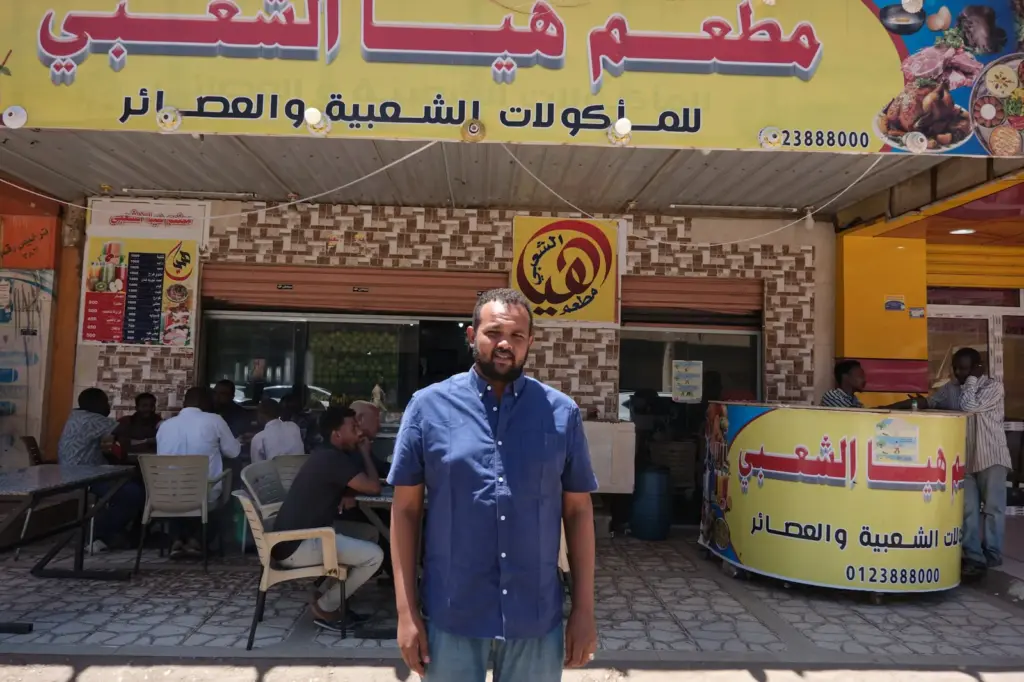
“We had three restaurants with the same name. This is the only one that has not been bombed,” explains Altayib as a group of men arrive and sit at one of the tables inside. “Thank God we managed to escape. It was very difficult to evacuate my employees, who come from other cities in the country. Now, little by little, we are returning to our daily lives,” he says.
A little further away, Idriss, a 20-year-old man, silently looks around. He doesn’t talk about politics or numbers. “Let this end now,” he pleads. No one dares to assure him it will be soon.
When we returned, the destruction was immense. We could barely walk through the streets, the chaos was absoluteAli Ahmed Abdelkarim, 29-year-old Sudanese
With the hundreds of thousands of people returning to their homes, hope also returns that normality will once again be possible. Ali Ahmed Abdelkarim is 29 years old and wears a spotless red jalabia (traditional Sudanese dress). His feet, shod in brown leather sandals, march decisively over a mountain of burnt metal plates, which resonate with a “clack clack” behind each step. A few meters away, two men on a truck stretch out their arms as Abdelkarim hands them debris, which they load into the back.
“When we returned, the destruction was immense. We could barely walk through the streets, the chaos was absolute,” he recounts. Now, this young man has decided to contribute to the city’s reconstruction as a volunteer. He wears no vest, displays no logo, and has no organization behind him. “This business, for example, is not mine. However, I help because I want to contribute to the reconstruction and rehabilitation of my country and thus return to normality,” he comments.
The challenges remain abysmal. In 2026, 33.7 million people need humanitarian assistance, the highest figure in the world, representing an increase of 3.3 million compared to 2025, according to United Nations data.
Even so, the humanitarian response plan for 2026, launched in February, has just over 15% of the necessary funding —in 2025, only 39.5% of the most basic needs were covered—, which continues to limit life-saving assistance. Coinciding with the third anniversary of the war, the international community gathered at the Berlin Conference has just pledged 1.5 billion euros to curb the “humanitarian catastrophe.”
Despite the commitments, aid remains insufficient for a crisis that continues to worsen. On the ground, reconstruction is progressing at an uneven pace, and millions of people continue to depend on assistance to survive.
Ahmed Abubakar, a resident of Khartoum, summarizes the impact of these three years of war with a simple phrase: “War takes away everything you never thought you would lose.” His neighborhood, Eltayif, in the east of the city, like so many others, has also not escaped destruction. “Unfortunately, the part of the city where I live was also affected. Nothing has escaped the conflict.”