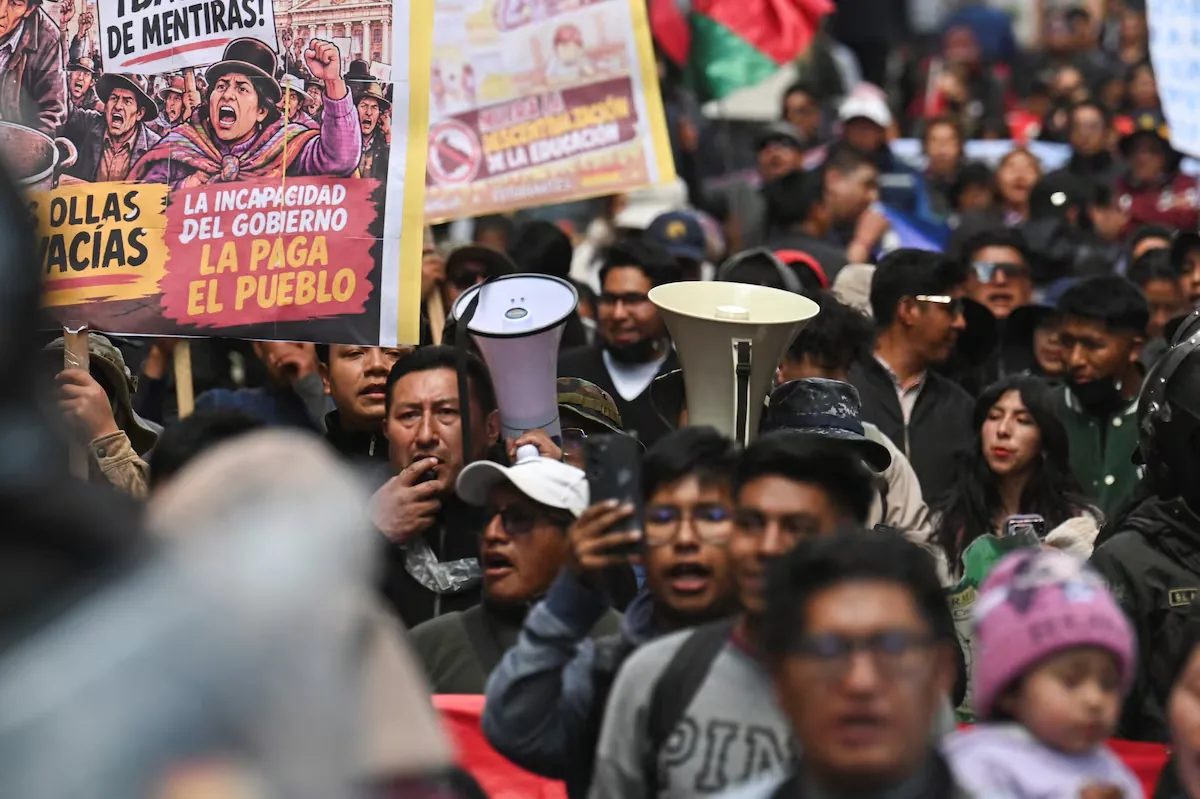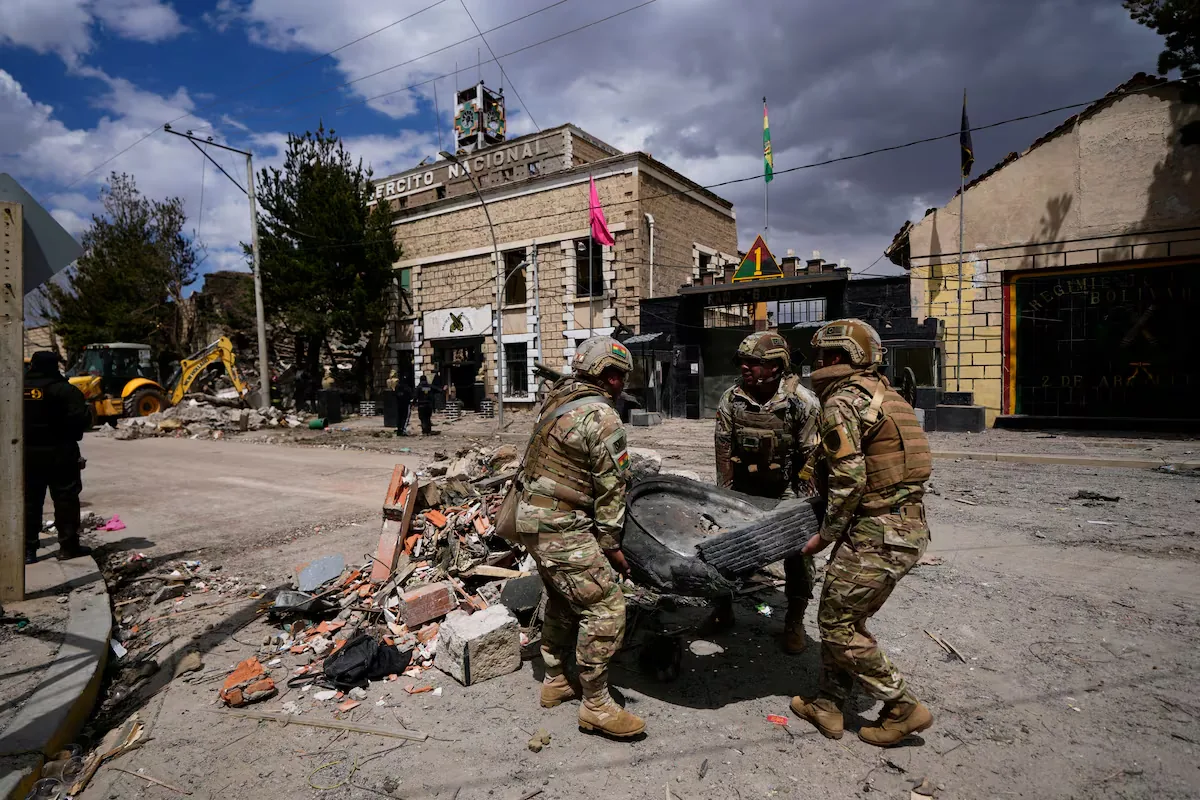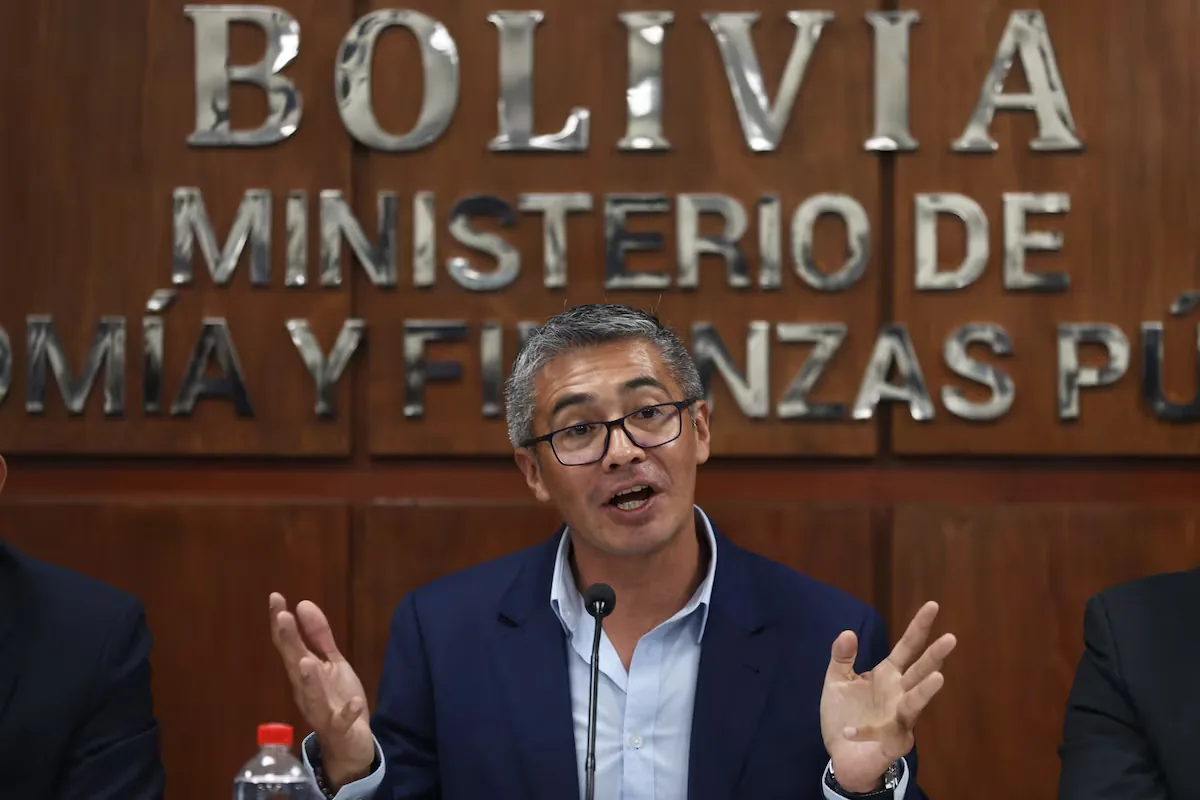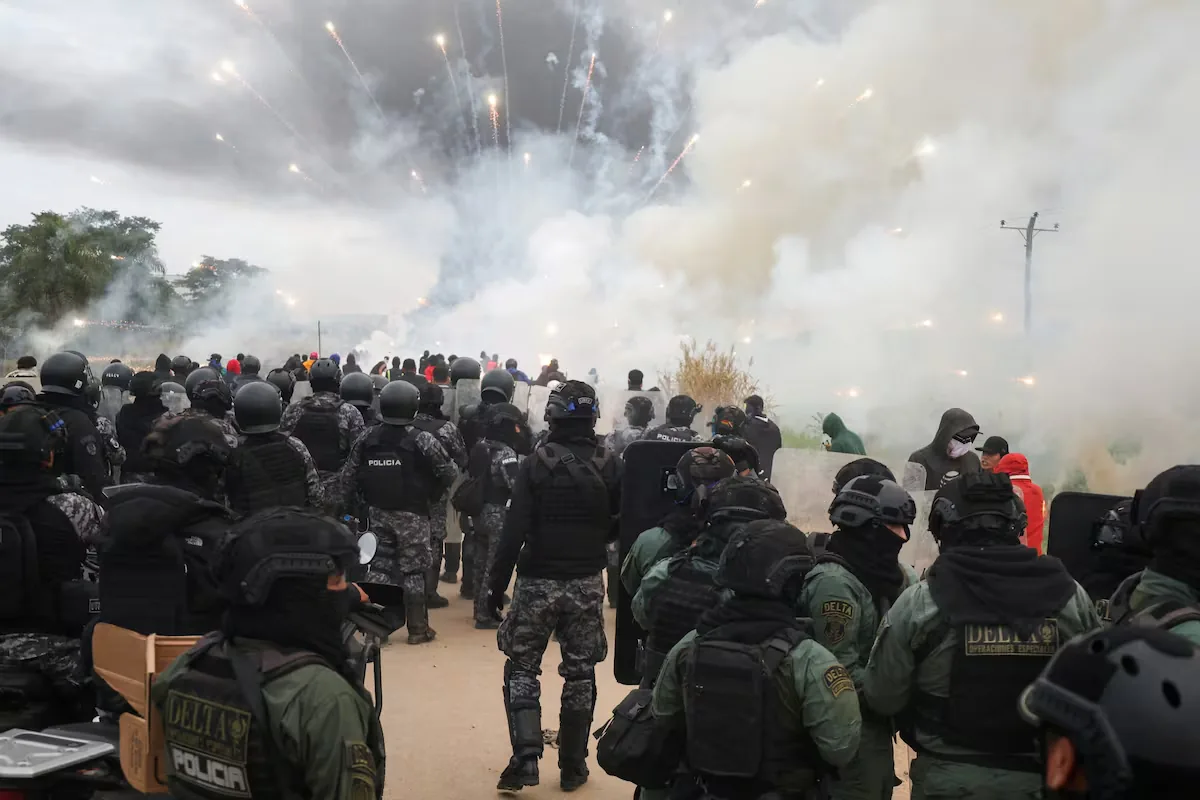
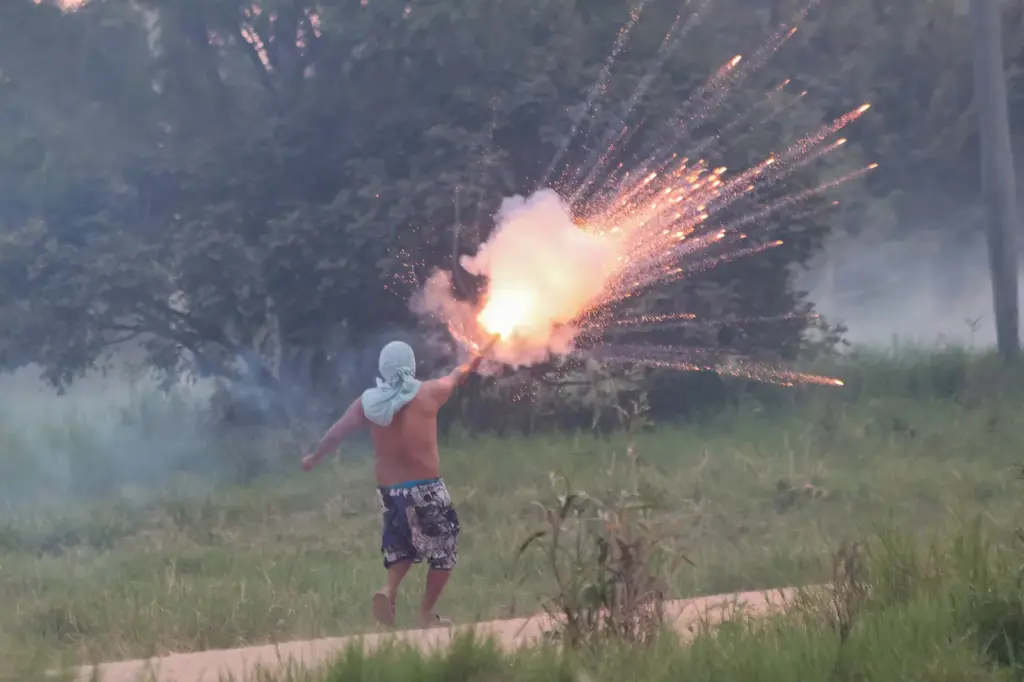
Bolivia is on the brink of an abyss after 37 days of protests. In La Paz, there is desperation, anger, and even hunger; the population is fed up with long queues to refuel or buy food at exorbitant prices. In Cochabamba, Bolivia’s fourth most populous city, panic is growing at the first signs of shortages. In Santa Cruz, this Saturday, an attempt to unblock a road turned into the most violent confrontation to date between protesters and security forces backed by residents. At least 19 people were injured, including six police officers, one seriously, according to official sources. Faced with the failure of the dialogue called by President Rodrigo Paz, the Government is preparing the way to declare a state of emergency. The fear is that Bolivia’s history will repeat itself, that the intervention of the Army will unleash a new bloodbath.
Read more What should be changed about political campaigns?
On Thursday, the Bolivian Senate voted in favor of the norm that provides a legal framework for the state of emergency and allows the Government to suspend certain rights in order to restore normality. The Chamber of Deputies was preparing to turn it into law this Saturday night. Once it has that card in hand, the Executive only needs to publish a decree and have the Legislative Assembly approve it within 72 hours.
“The last thing we want is violence right now,” a government source emphasizes. In Paz’s inner circle, they admit that the expansion of the conflict and the resistance to authorizing the intervention of the Armed Forces has cost him political capital less than seven months after taking office.
Extreme polarization
The crisis, however, has strengthened the extremes. Conservative forces, represented in the last elections by Jorge Tuto Quiroga, are confident that Paz will be badly wounded, thus paving the way for a president who will impose a heavy hand on the streets, in the style of those already governing in neighboring countries such as Argentina (Javier Milei) and Chile (José Antonio Kast). Former President Evo Morales (2006-2019), hidden in his Chapare stronghold to evade a judicial arrest warrant, also hopes to emerge strengthened. “Knowing my brothers from the Bolivian altiplano, if they rise up, it is impossible for them to lose. If there is one death, there is more reaction, they are not scared, it is a rebellion,” Morales told EL PAÍS.
The philosopher and activist María Galindo disagrees: “In that case, he should be the first to be willing to die. Evo Morales does not want to die for this, he wants others to die for him.” Galindo puts into words a thought shared by many who at one time supported the indigenous former president, but who now criticize his attempt to benefit from protests he neither started nor leads: “The only thing Evo Morales cares about is his own skin.”
Galindo is even more critical of a Government she sees as a bulwark against the far-right advancing on the continent, but which she accuses of “acting with a very cruel and Machiavellian calculation” by betting on attrition “so that the state of emergency has social support.”
Farmers, miners, teachers, and residents who today demand Paz’s resignation voted for him in October 2025. When they rose up against the president, they gave voice to widespread social discontent among the indigenous population: the idea that they had been deceived by a president who excluded them from the Government and enacted laws that went against their interests.
Mandate until 2030
For analyst Diego Ayo, Paz has governed “with enormous clumsiness” and his numerous political errors have fueled the mobilizations. Even so, he warns that “blockades cannot be justified” nor can it be overlooked that those who have a large part of Bolivia paralyzed are a minority. “Paz made a set of promises and did not keep a single one. He has turned around, he has not responded to the voters who voted for him, he has responded to the middle and upper classes. That is one thing, and not respecting electoral times is another,” he criticizes. Paz’s mandate is until 2030.
The initial identification of some Bolivians with the protesters has lost strength as their actions put thousands of households in trouble, especially the most vulnerable, those who live from what they earn day by day. On Wednesday, more than a thousand people queued in front of a La Paz city hall truck to receive a chicken. In May alone, inflation soared more than 5% in the Bolivian capital. “I can’t take it anymore. I work three days and have to stop for another three because there’s no gasoline,” laments Wilfredo Villamil, a taxi driver. He and his brother take turns queuing at the gas station and attending to a small business. Their sales have plummeted by half. “Either he resigns or they solve it somehow,” he doubts.
The polarization is visible even in El Alto, that rugged city built by rural immigrants 4,000 meters above sea level, which in 2003 led the rebellion against Gonzalo Sánchez de Lozada, Goni, in the so-called Gas War. As then, at the forefront of the protests are the Aymara communities of the altiplano. Their resistance and organization are linked to agricultural cycles: in May, when they rose up against Paz, they had just harvested. Near noon, at the blockade points, hundreds of protesters are seen sitting in a circle to share an apthapi, a collective lunch where everyone contributes what they have.
Johny Sosa, a 62-year-old bricklayer and merchant, was dedicated to vegetable production until he migrated to El Alto 35 years ago. “Without fighting, we would still be miserable,” Sosa says proudly. He points around to remember that when he arrived in this city, the houses were made of adobe and straw. There was no electricity. There were no sewers. Nor was there a gas network, paved streets, or a cable car. Even less so the cholets of the new Aymara bourgeoisie, with five or six floors and a facade decorated with yellow, bright red, electric blue, and fluorescent green glass with which they seek to stand out among a sea of exposed brick houses.
Read more Gutiérrez, the town where eight out of ten residents voted for Abelardo De la Espriella
The new generations, especially those who have cut ties with the countryside or the mines from which their grandparents and great-grandparents emigrated, oppose the blockades and the protesters who force them to close their shops. “When the marches come, we have to close. They tell us that either we close or they loot,” denounces Teresa Martínez, owner of a shoe store in one of El Alto’s shopping centers. Her employees, she continues, are forced to walk for an hour and a half to get to the store. They sell almost nothing: “Nobody thinks about buying shoes when they can’t find chicken or vegetables.”
The growing social rejection helped to negotiate a truce on Thursday, one of the days when the July 16 fair, one of the largest in South America, operates. After weeks at half-throttle, that day the kilometers and kilometers of stalls selling everything one could imagine reappeared. Once, even a penguin.
Detained leaders
The truce was also an opportunity to regroup in anticipation of what is to come. The president of the Federation of Neighborhood Councils of La Paz was arrested on Friday and sent to pre-trial detention, accused of terrorism, criminal association, and public instigation to commit crimes. Other leaders went into hiding for fear of being next.
In Cochabamba, in the center of the country, there is more panic about what might come than an suffocating shortage. Although it is, after La Paz, the department with the largest number of blocked roads, the fertility of its valleys allows it to sustain itself. Unlike the gray supply centers in the seat of government, the Municipal America Market is colorful with fruits and vegetables. However, prices are up to five times higher for products like bananas and oranges. The emptiest shelves are those selling meat; beef comes from the east, from Santa Cruz and Beni, with whom the roads remain closed.
Mónica Inturrias hurries to buy all the scarce product left to a butcher, taking the seven kilos she had left. “I’m buying everything I have, I don’t know when there will be meat again,” she says. “Vendors are taking advantage of the situation,” comments another market shopper in passing, who is busy on a holiday. The same fear of scarcity runs through vehicle drivers: fuel supply is normal, but gas stations fill with queues when protesters confirm they will continue with pressure measures or when they hear worrying news on television.
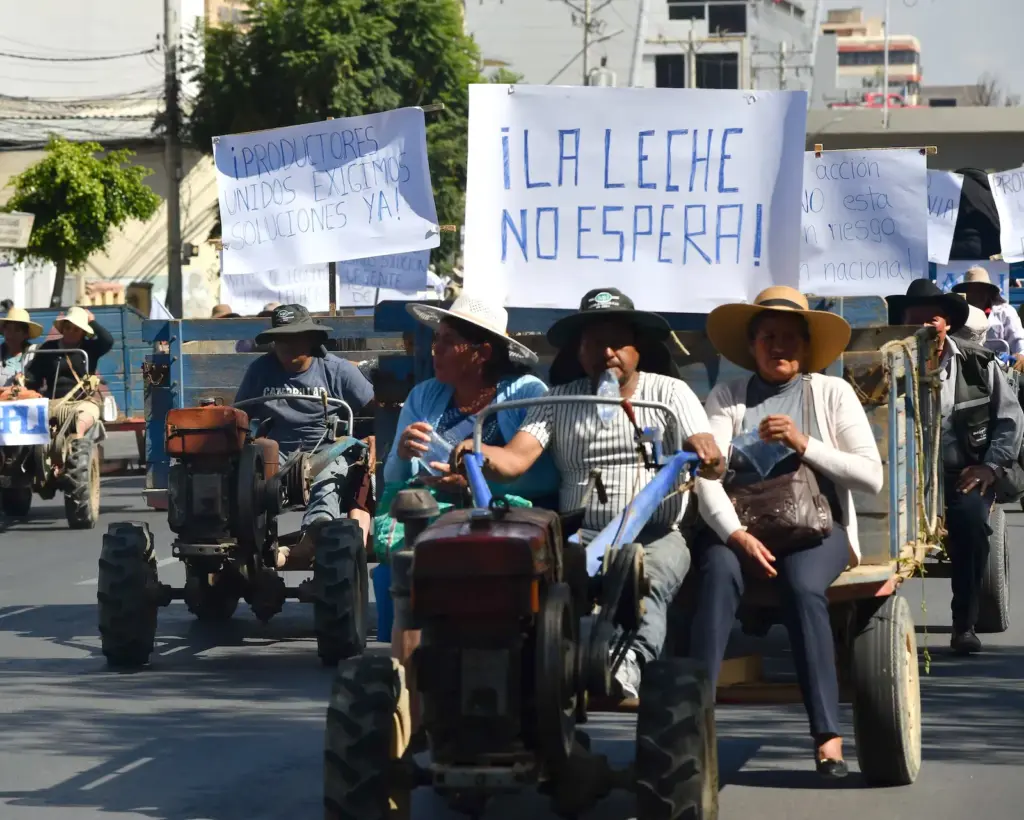
Known as “Bolivia’s granary,” Cochabamba takes advantage of its strategic central location to supply the Andean west of the country. The road closures have prevented food from reaching the market, fruits and vegetables rot in trucks stranded on the highway for weeks, and chickens die of hunger. Dairy farmers have been forced to go out into neighborhoods to offer their products, and poultry farmers are selling egg flats for up to 60% less than their regular price.
Funding of protests
From Santa Cruz, the political crisis seems distant. Many of its inhabitants proudly differentiate themselves from those in La Paz, and repeat, in more or less similar words, that “Santa Cruz always works, never stops.” Prejudices against the inhabitants of the Andean west of the country have soared in recent weeks, and no one seems to doubt that to sustain the blockades for more than a month, those who cut the roads are paid to be there. Some believe they are financed by Evo Morales; others by drug traffickers, by smugglers, by foreigners trying to subvert order, or by all of them.
Families with relatives in La Paz go to the airport to send large boxes loaded with food there. Each trip they hope will be the last, that the president will order the Army to unblock the roads. The businessmen of this livestock province, which concentrates more than 60% of the country’s meat, milk, egg, and chicken production, agree with them. The road closures prevent trucks from reaching the rest of the country and have caused millions in losses.
According to the Ombudsman’s Office, at least seven people have died due to not having received timely medical attention because of the blockades, and another three have died in episodes of violence that occurred around them. Throughout the five weeks of conflict, at least 37 people have been injured and 365 arrested. Tension is at its maximum during these hours.