









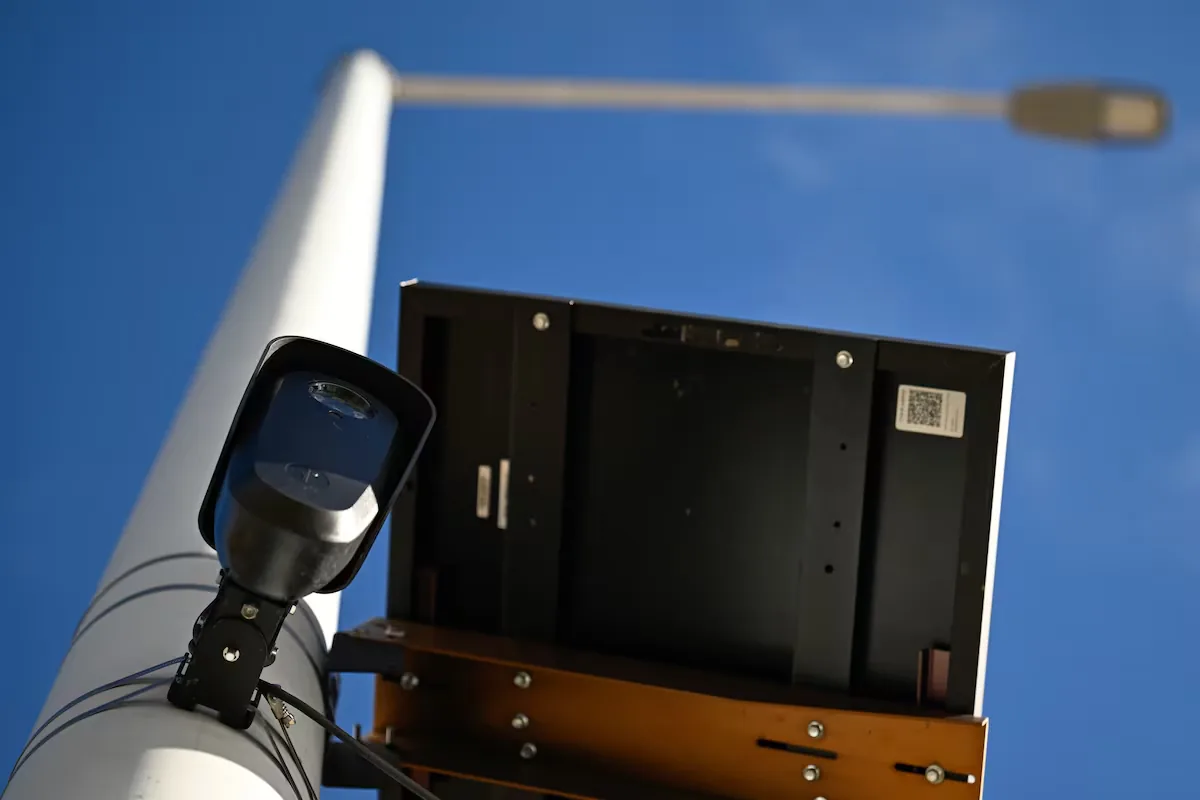
A camera installed on a pole may seem like part of the urban landscape, but every car that passes in front of it can leave a record. Flock Safety cameras are designed to read license plates and store information about vehicles traveling on roads, neighborhood entrances, parking lots, and other areas. For authorities, that capability can become a decisive clue to locate a missing person, a stolen vehicle, or a suspect. However, it also raises a more uncomfortable question: how far can surveillance of people who have not committed any crime go?
The debate has gained strength in recent months after several cases came to light of officers who used the system to track ex-partners, family members, and acquaintances. At the same time, dozens of communities have suspended or canceled their contracts with Flock, while the company announced new controls to try to limit possible abuses.
What are Flock cameras?
Flock cameras are automatic license plate readers, known as ALPR (Automated License Plate Readers), developed by Flock Safety, a security technology company based in Atlanta.
The devices are usually installed on poles next to roads, intersections, neighborhood entrances, parking lots, and around businesses or private properties. Some operate with solar panels and cellular networks, allowing them to be placed without a conventional connection to the power grid.
When a car passes in front of a camera, it captures images and uses artificial intelligence and machine learning to identify the license plate and other vehicle features. The system can record information such as color, make, model, location, and time, as well as distinctive elements like stickers, roof racks, or modifications.
An officer can search for a specific license plate or use vehicle features to try to find matches. Additionally, agencies can share information across jurisdictions, allowing an investigation to go beyond the place where the vehicle was originally recorded.
This network is precisely one of the aspects that most concerns civil liberties organizations. Although an individual camera only records a vehicle at a specific point, the connection between thousands of devices can create a much broader history of movements.
For its part, Flock assures that its cameras do not use facial recognition, do not provide live video, do not record conversations, nor transcribe words. The company also states that it does not sell its customers’ data to third parties.
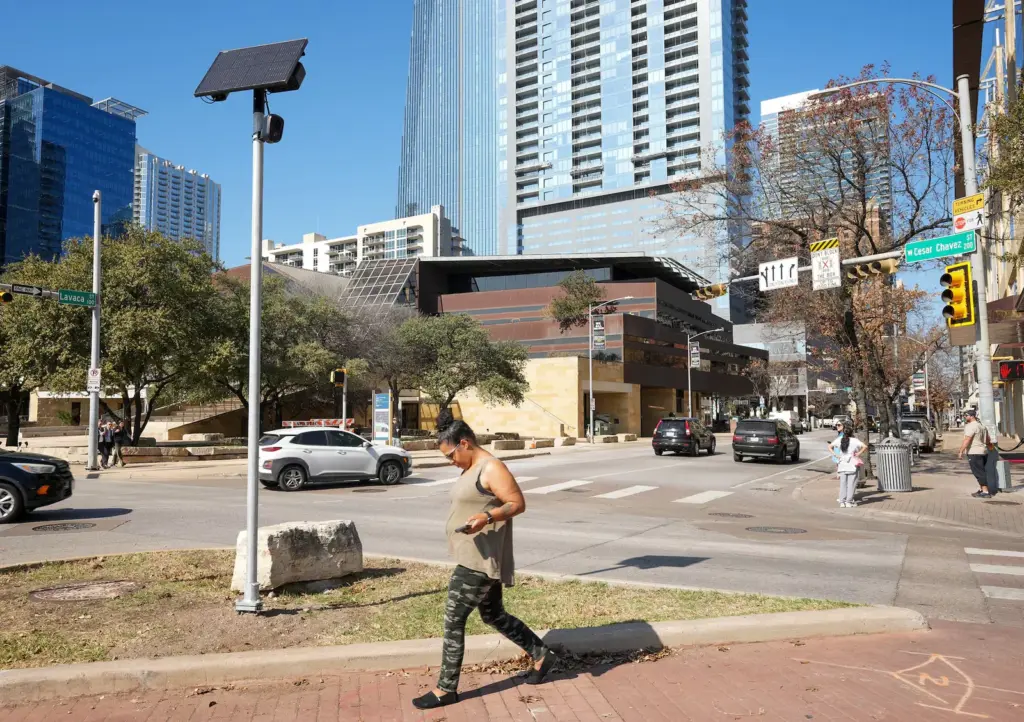
Where are Flock cameras used?
The technology has rapidly spread to 49 states, with thousands of communities and police agencies among its clients. Additionally, the cameras are used by universities, businesses, homeowners associations, and other private organizations.
Flock mainly operates through a subscription model, where its clients pay for the cameras and associated services.
Authorities defend the system as a tool to locate stolen vehicles, missing persons, and crime suspects. In various cases, investigators have attributed an important role to automatic readers in finding fugitives and missing persons.
Read more Adam Ramsay-Peaty humanizes and dissolves in the pool
However, the same capability that allows quickly finding a sought vehicle is what generates much of the criticism: the cameras also record cars of people who are not suspected of any crime.
Why are they controversial?
Flock cameras have been questioned because they record all vehicles that pass in front of them, not just those related to investigations. By connecting data from different devices, authorities can reconstruct movement patterns, which has raised concerns about mass surveillance, privacy, and possible violations of the Fourth Amendment.
There is also concern that other agencies may access these records, especially due to cases where they have been used for investigations related to immigration or to track people traveling to other states to access abortion services.
Questions increased after several cases of misuse by law enforcement officers. In Florida, a police officer was accused of checking his ex-wife’s license plate 717 times to follow her movements, while in Georgia and Savannah other officers were accused of searching for information about acquaintances, family members, and friends. Additionally, errors in license plate reading have led to the detention of innocent people.
What has been the public response?
The controversy has caused growing opposition. More than 50 agencies or jurisdictions have canceled, suspended, rejected contracts, or deactivated cameras since early 2026.
In some localities, cameras have been covered or removed, while others have been vandalized. The rejection also spurred initiatives like DeFlock, which seeks to document the presence of these devices through a collaborative map.
Concern extends beyond civil rights groups: some residents have expressed surprise and discomfort upon discovering that their movements can be recorded even when there is no suspicion that they have committed a crime.
What changes did Flock announce in August 2026?
In response to criticism, Flock announced on August 13 new measures that will be mandatory for police agencies starting January 1. Among them, an audit tool that will detect unusual searches and can temporarily block users while their activity is reviewed. Additionally, each query must be linked to a specific criminal case.
The company will also reduce the standard data retention period from 30 to seven days, although data may be kept longer when part of an active investigation. Agencies will also be able to limit what types of crimes allow other jurisdictions to query their records.
Flock states that the changes aim to strengthen privacy and accountability. However, its critics believe that the new measures do not eliminate the risk of abuse, as police departments will still play a central role in deciding when and how to access the data.
Read more Vicenç Sanclemente, in the Gràcia festival proclamation: “The town we know is in danger”