






When Javier del Río is asked what he has done in life, he does not answer with a profession. “To live,” he says. “To live all the time, all the time very intensely.” Then come the jobs, the travels, the changes of direction: he studied television camera work and photojournalism, recorded football matches and concerts, went to England, then to Australia with three friends and a van, spent seasons in Ibiza, shaved off his dreadlocks so they would let him work as a golf instructor at a course in Murcia, and ended up making a living from that sport in Madrid.
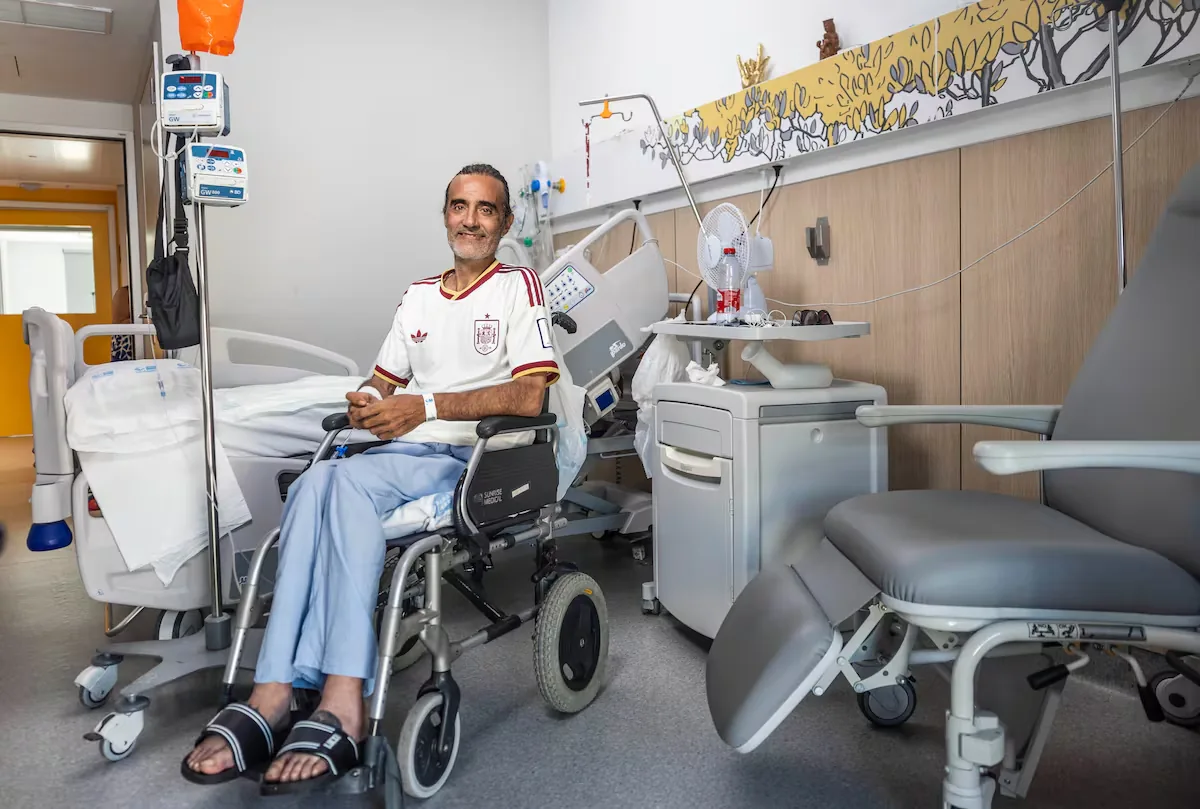
Now, at 51 years old, he is on the fifth floor of oncology at the Gregorio Marañón Hospital in Madrid, the palliative care unit. After 11 years since his diagnosis of a kidney tumor, he has undergone countless treatments: chemo, radiation, immunotherapy, clinical trials. But there is nothing left to do. The stay on the ward is usually counted in days, about 13 on average, but he is approaching two months.
One day he told María Victoria Casas, a nurse in the unit, that for him the end was the moment they had to clean him in bed. That moment has arrived. And yet, Javier talks about peace with a look of disbelief. He is still surprised that this feeling has appeared precisely there, in a palliative care ward.
“At first, your mind doesn’t accept it. When you hear ‘palliative,’ you think you go quickly from there to the funeral home,” he says with wide eyes and a smile. “This place is amazing, but not because of how I am, but because of where I am. If you tell anyone you are in a building of a hospital oncology ward, palliative care, where there is pain, suffering… Zero. The only thing they give me is peace, love, all the time,” he explains, aware that part of this positivity may come from the opioids they provide him intravenously to relieve pain.
It is one of the purposes of palliative care. But pain, emphasizes Marisa Solano, the ward’s doctor, is just one more symptom. “There are patients with dyspnea, with uncontrollable vomiting, with delirium, with cognitive deterioration,” she lists.
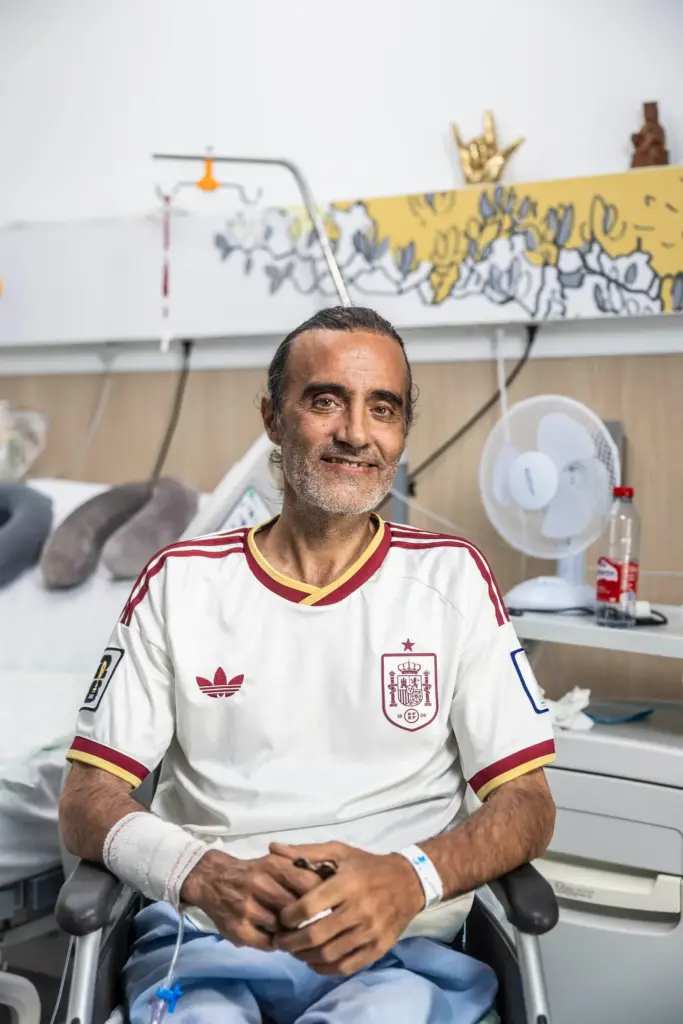
On the fifth floor, they are not there to cure. Nor to unnecessarily prolong life. “When we sit down to prescribe, we think about whether what I am going to prescribe will really help relieve the symptoms,” she says. Sometimes they do decide to buy time, but with a specific purpose: for a child to arrive, for a grandchild to come from London, for the patient to be more awake to say goodbye. The general goal, the doctor summarizes, is “to relieve and comfort,” not to prolong biological life for its own sake.
The Gregorio Marañón is a pioneer in palliative care, a unit created almost 30 years ago that has 18 individual rooms. It was the first Spanish hospital certified as a recognized center in the integration of oncology and palliative care awarded by the European Society for Medical Oncology. It is a reference in Spain, where access to this type of care is still insufficient. This country ranks 28th in the world in palliative care, and is second to last among the advanced group, only ahead of South Korea, according to the first World Atlas evaluating this service, published in 2025 by the Atlantes Observatory of the University of Navarra.
When Javier returned to the unit in May after a first stay and trying to spend his last moments at home, he arrived with “unverbalizable” pain. “It doesn’t let you think about anything. There is only pain.” They gave him rescue medication and then he was able to breathe and think. His mother had tried to care for him at home, but she could hardly lift him from the bed anymore. He also endured it for her, because he knew she spent the days sitting in a hospital chair from morning until night. A week after leaving the hospital, he returned.
The palliative care ward, for patients who maintain lucidity, is more than just symptom care. Ana García, a clinical psychologist, defines it this way: “It’s not just dying, it’s coming to close the biography. Just as medical treatments are individualized for physical symptoms, the approach to end-of-life suffering is also personalized: what has meaning for that person, what symbols they need, what unfinished tasks remain, who needs to be forgiven, who to thank, what legacy they want to leave.”
Read more Mexico issues a travel warning for the United States amid an outbreak of intestinal infections
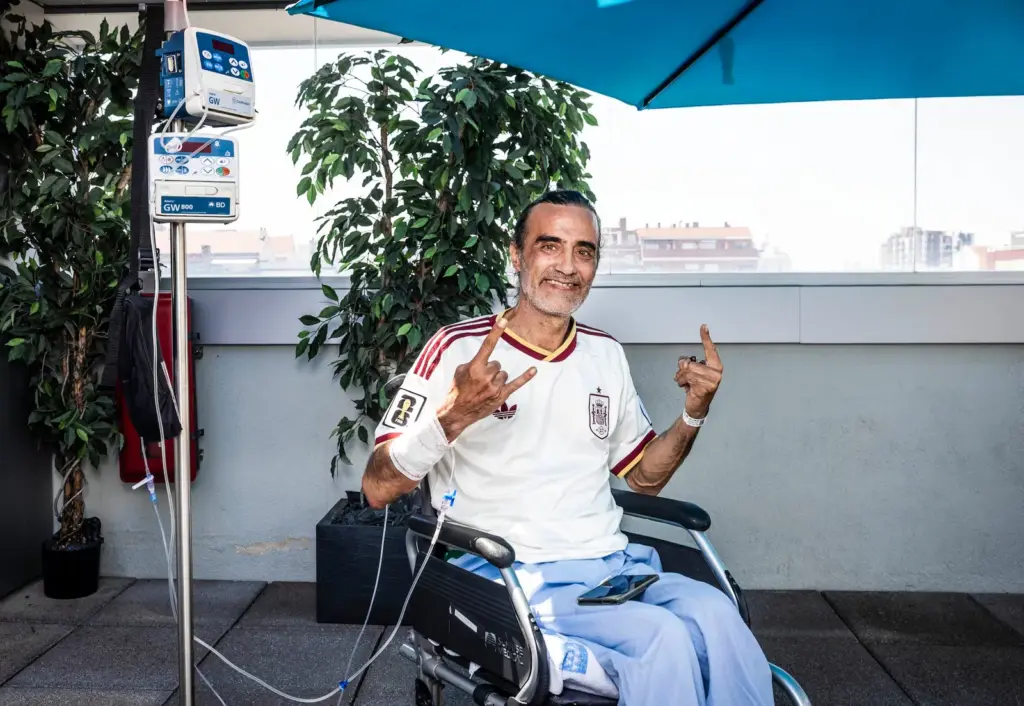
Part of that closure, for Javier, has taken the form of a party. It was the birthday of a close friend who had also suffered cancer and whom he accompanied for two years at the Jiménez Díaz Foundation. He wanted to prepare a surprise because, as he explained to the nurses, it would be the last birthday he would spend with him. The team helped him. They prepared the terrace with balloons, friends came, they brought a tattoo artist, and everyone got the same star tattooed on their skin. “I had prepared the birthday and when I entered the terrace I surprised myself. This could not have happened if it hadn’t been here,” says Javier.
His friends come and go from the ward. Some stay until dawn. It’s not usual, but the team usually adapts to each person’s needs. “They are very nocturnal,” Casas justifies. The nurse says Javier always has a smile, that he is grateful, that his way of dealing with the illness has also transformed those who care for him. He insists that he does not only receive technical care. He talks about gestures: “You see a nurse hugging another patient she doesn’t even know with affection… someone holding a hand, a way of looking…”
Spain, according to the first World Atlas of palliative care, has strengths in the regulatory and political framework, access to essential medicines, broad service coverage, and international leadership in research, but there is great territorial inequality, as the quality of services varies greatly depending on the autonomous community.
That, despite several studies showing that palliative care units not only relieve the pain of patients and their families but also save money. The Spanish Society of Palliative Care (SECPAL) has estimated it at 500 million euros nationwide, considering only cancer patients.
What patients experience has little to do with figures and money. A spiritual search is common, sometimes mixed with religion, but often goes beyond. The Marañón psychologist points out that even those who are not believers go through a vital moment of seeking comfort. “Together, family and team, we try to humanize that moment that will come to all of us,” she says.
It is a large team that works hand in hand. Besides psychology, nursing, and medicine, social work plays an important role. María Ángeles Navarro, who holds this area, is responsible for checking if there is a family network, whether support exists or not, if home discharge will require home help, teleassistance, recognition of dependency, disability, advance directives, living wills, even funeral matters or body transfers for foreign patients. End-of-life life is also bureaucracy, logistics, money, permits, papers. Palliative care tries to organize all that so that suffering does not also come from there.
Javier does not feel like a victim. He repeats it without dramatics: “No, not at all.” He says he looks back and would sign again for the life he has lived. “All the time. I leave nothing out. I am very grateful. I am not angry about anything.”
“He tells the beautiful part,” adds his mother, sitting next to him. “I am living day to day.” Her reflection helps explain what happens on the fifth floor of the Gregorio Marañón: Javier’s joy, his mother’s resignation, the peace that can be found in a palliative care unit, and the pain that still exists no matter how much these cares, in all their dimension, make it more bearable.