









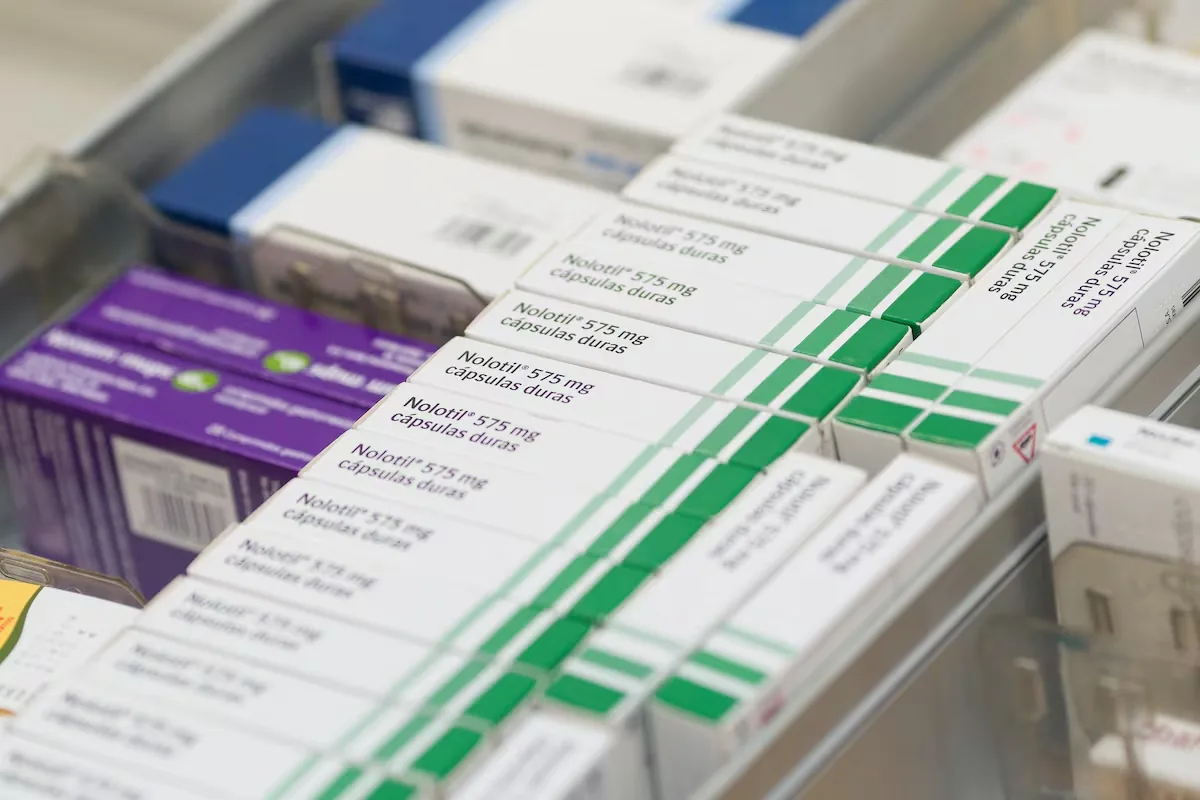
The Council of Ministers has approved the Draft Law on Medicines and Health Products, a legislative change that revolutionizes pharmaceutical policy as it has operated in Spain over the last two decades. The main novelty is that groups of identical medicines, which now all cost the same in pharmacies if they are to be financed by public health, will be able to have different prices, and it will be the patient who can choose which one they prefer.
The Ministry of Health will set a maximum financed amount, and generic drug manufacturers will be able to compete downwards to try to gain market share. Conversely, if pharmaceutical companies selling branded medicines — such as Gelocatil with paracetamol or Nolotil with metamizole — want to set slightly higher prices, they will be able to do so, and the patient will bear the difference. Within this maximum amount financed by public health, patients will continue to pay the current co-payment according to their income (or will pay nothing if they are pensioners, unless they choose a branded one with a higher price).
The objective pursued by the Ministry of Health is to boost the penetration of generics, which in turn helps to reduce the pharmaceutical bill. With the current reference price system, generics are often sold in Spain at higher prices than in countries with higher incomes, such as Sweden. The draft law was approved this Tuesday by the Council of Ministers and will now be sent to the Congress of Deputies for final approval, which will depend on the position adopted by the PP, Junts, and other political forces.
The new regulation also introduces important novelties to guarantee supply and mitigate recurrent supply problems for some drugs. The most notable is the introduction of the concept of “strategic medicine,” defined as “one indispensable for the health system and whose supply chain is vulnerable.” To prevent pharmacies from running out of stock, the Spanish Agency for Medicines and Health Products (AEMPS) will be able to adopt “special economic and regulatory measures to prevent shortages.” Among the new actions planned, the obligation for manufacturers, distributors, and pharmacies to communicate available stocks to the Ministry of Health is reinforced to allow for greater control and foresight of potential deficiencies.
Regarding the new model for financing and pricing drugs, the new law plans to promote a new system called “dynamic pricing” which will be complementary to the current “reference pricing” system. The latter divides all medicines into groups of identical drugs that have the same active ingredient and form of administration. Once a year, the Ministry of Health reviews the price at which they are sold and revises it downwards to consolidate the structural savings of the system.
With the new dynamic prices, the Ministry of Health aims to promote prices that adjust “progressively and automatically,” that is, more quickly, according to the market share that generic and biosimilar drugs achieve as the patent for innovative branded medicines expires. Each medicine can be regulated by either the reference price system or the dynamic price system, but not by both at the same time.
When all measures related to the price of financed medicines are implemented, the Ministry of Health estimates that autonomous communities could save around 2.1 billion euros per year.
Accelerating the arrival of drugs
Another important novelty of the law is that it opens the door to accelerating the arrival of new medicines to public health for which no alternatives exist and which cover an unmet need. Currently, it is necessary to wait for the Ministry of Health and pharmaceutical companies to reach an agreement on the price. With the regulatory change, a 180-day window opens for hospitals and health centers to begin administering innovative drugs before the agreement is formalized.
In this first phase, the price paid by public health will be that requested by the pharmaceutical company, although this will subsequently be reviewed, and companies must “compensate or return the corresponding amounts” if the drug does not achieve the expected results or the final agreed price is lower.
This route is intended for medicines with results backed by robust scientific evidence, although very costly, such as those indicated for the rare disease called butterfly skin. According to sources from the Ministry of Health, however, this formula would not be applicable to drugs whose efficacy is still subject to great uncertainty, such as new therapies against Alzheimer’s, which last week caused a notable clash between public administrations and the pharmaceutical company Eli Lilly.
The Law on Medicines and Health Products also formally recognizes the ability to prescribe medicines to new professionals, such as nursing staff and physiotherapists, always within their areas of competence. These groups thus join dentists and podiatrists, in addition to doctors. Within one year, the regulatory framework will be updated to ensure the effectiveness of this measure. This process, according to the Ministry of Health, “includes the development and publication of interdisciplinary protocols designed to facilitate operational coordination between doctors, nurses, and physiotherapists, ensuring comprehensive and coherent patient care at all times.”
Finally, the future regulation regulates new formulas to “facilitate access to medicines when there are exceptional health situations or when the patient’s clinical situation, dependency, disability, or vulnerability makes displacement difficult.” In practice, this will allow the patient to receive the medicines they need at home without having to physically go to a community pharmacy or hospital pharmacy service.
The Ministry of Health insists that this does not mean that “distance selling of medicines” will be implemented, but rather that the aim is to “bring dispensing closer to the patient when justified circumstances arise that motivate it and provided that professional pharmaceutical control is maintained” throughout the process.
The employers’ association Farmaindustria, in an initial reaction, considers that the project “represents a necessary update of a regulatory framework that is already more than two decades old” and highlights that it represents “a great opportunity to adapt the world of medicine to the technological and biomedical revolution that must serve to transform the health system and prepare it for the next 20 years.” Despite this positive assessment, the sector sees areas for improvement in the parliamentary process: “The specific system proposed implies significant reductions in drug prices, without taking into account the impact on the industrial fabric and the guarantee of drug supply. Protecting European manufacturing also for mature products reinforces strategic autonomy.”
The General Council of Pharmaceutical Colleges, for its part, also positively values the improvements introduced in the drafting of the text since its first versions, although it expresses its “concern that the system designed for dispensing transfers the responsibility of choosing the medicine to the patient,” which can pose “a significant safety risk since this is a technical decision with clinical implications” in which the role of the pharmacist as a healthcare professional is key.
Read more Burnham announces as a first measure the abolition of VAT on electricity bills