









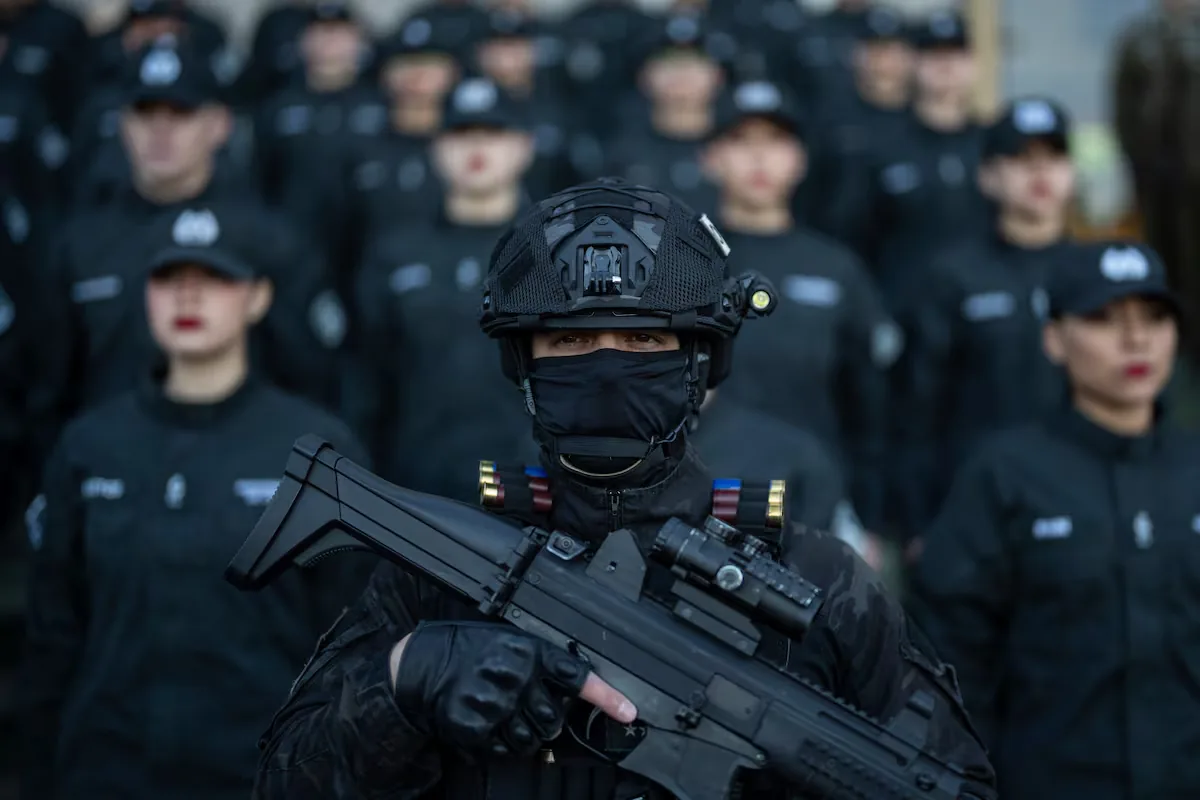
Public security demands significant public and private efforts, which translate into reviewing rules, institutions, management models, and strategies for prevention and criminal prosecution. During President Boric’s administration, changes were promoted in the Public Ministry that created the Supraterritorial Prosecutor’s Office to investigate crimes linked to organized crime. At the same time, relevant devices such as the use of informants, undercover agents, and effective collaborators were incorporated, and investments were made in preventive police. In turn, President Kast’s government has announced a series of security proposals that include parliamentary initiatives and proposals from the Executive.
Read more Video | Comfort food for gray days
Notwithstanding the commendable proactivity of the executive and legislative powers, limits and safeguards must be established so that the new rules do not become sources of violations of guarantees or abuses of power.
The constitutional reform, which creates a new state of exception linked to situations of citizen insecurity, represents a dangerous and inadvisable decision for several reasons.
First, the Constitution already establishes rules related to public security requirements, among which stand out article 1, fifth paragraph, article 6, article 9, article 19, numeral 7, and the regulations governing the Public Ministry, the Armed Forces and Order and Security, and the National Security Council.
Second, the mechanisms, institutions, and rules associated with public security are framed within a system of checks and balances fundamental to preventing abuses or violations of rights. Thus, the government in power does not control the Public Ministry, an autonomous body that directs criminal investigations. In turn, the Prosecutor’s Office’s requests are controlled by judges, who authorize intercepting communications, ordering detentions, lifting banking secrecy, or deciding on the use of preventive detention. In another dimension, the police have autonomous powers that translate into investigative and preventive identity checks, detention powers, but these are later controlled by the Prosecutor’s Office and the courts.
Read more Energy multinationals return to Venezuela
There is a delicate and justified network of checks and balances that prevent excessive concentration of power to ensure a reasonable balance between prosecutorial effectiveness and respect for guarantees. This is a characteristic of the most robust and efficient models, as demonstrated by the experiences of Germany, Portugal, Italy, and England, among others.
At the other extreme, experiences of excessive concentration of powers in the hands of the Executive Power and the police, without checks from the Legislative Power, Judicial Power, or the Public Ministry, hide significant problems. The reform proposed by the Government reveals these problems. Indeed, the possibility of affecting rights and guarantees, such as communications, the right to assembly or movement unilaterally by the government in power, represents a risk that in comparative experiences is usually limited to cases of terrorism. Broader solutions that extend to a set of less precise offenses such as those associated with the expression organized crime create a wide margin to limit rights.
These concerns do not arise from mere academic speculation; they are precisely the type of instruments usually used in countries like El Salvador, Venezuela, Nicaragua, Cuba, or Eastern European countries to persecute political opponents, civil society organizations, and journalists. Liberal democracies must distrust the existence of discretionary powers that are exempt from effective institutional arrangements of checks and balances. That these powers may contingently be used for commendable purposes does not guarantee that in the future they will not be exercised to erode the framework of freedoms inherent to liberal democracy.
A third issue worthy of observation relates to the more widespread use of the Armed Forces in public security tasks. These forces lack adequate training to operate in everyday urban contexts; this is a reason why Parliament has approved limited roles in citizen security matters. If the current organization, resources, profiles, staffing, and technological support of preventive and investigative police are insufficient, the urgent task is to improve these conditions or create special and better-trained police bodies to face more complex crime. The use of the Armed Forces entails other risks such as the judicialization of cases involving military personnel in their public order tasks and the recruitment of military assets by criminal groups, as has occurred in various Central American countries. Unlike terrorism, organized crime is not committed to spreading and promoting its actions in the public space. This explains why, in cases like Italy, the presence of the Armed Forces in guarding critical public spaces is associated with a terrorist threat of very particular characteristics, and not with intervention in safeguarding public security and combating organized crime.
Read more The Forec model, the Colombian Government’s bet for reconstruction after the earthquake