Up to 200,000 Sahrawis born under the Spanish flag and their descendants living in Western Sahara, under Moroccan control for 50 years; in the Tindouf refugee camps (Algeria), base of the Polisario Front, and in the European diaspora, are preparing to receive this Thursday as a historic reparation with recognition of rights the vote in Congress on the law that grants them Spanish nationality amid the migration crisis in Ceuta. Faced with the expectation generated among the Sahrawis since the first legislative initiatives emerged more than three years ago for the granting of the passport to Spaniards from what was the 53rd province, Morocco officially remains silent. However, media close to the Rabat Government express signs of mistrust regarding the progress of Spanish legislation that could imply the recognition of a differentiated identity for its own citizens in Western Sahara.
“This law represents a very important step towards the reparation of a situation that has lasted for decades. People who were born when the Sahara was under Spanish Administration and who, due to subsequent historical circumstances, were left in a situation of uncertainty regarding their nationality,” highlights Bucharaya Bahi, president of the association Collective of Sahrawis Born under the Spanish Flag and Administration.
In an exchange of messages from El Aaiún, capital of the former Spanish colony, this 56-year-old jurist tries to avoid any political confrontation to insist on the recognition of a historical reality so that the affected people can have a clear path to “recover Spanish nationality,” which they consider linked to their birth and family origin.
“A Spanish passport can facilitate mobility, studies, work, and family ties with Spain. But for us, it also has a special, human, and social meaning,” he explains. “There are many Sahrawis who keep Spanish documents from their parents, grandparents, or their own birth, and who have maintained a link with Spain for generations.”
The president of the association considers that the new legislation, when approved by the Spanish Legislature, should be understood as a matter of nationality, personal and not political or diplomatic. “In the Tindouf camps, it can also have an important dimension for families with the same historical origin. In both cases, I believe we should see it above all from the perspective of people and their individual rights,” Bucharaya Bahi emphasizes.
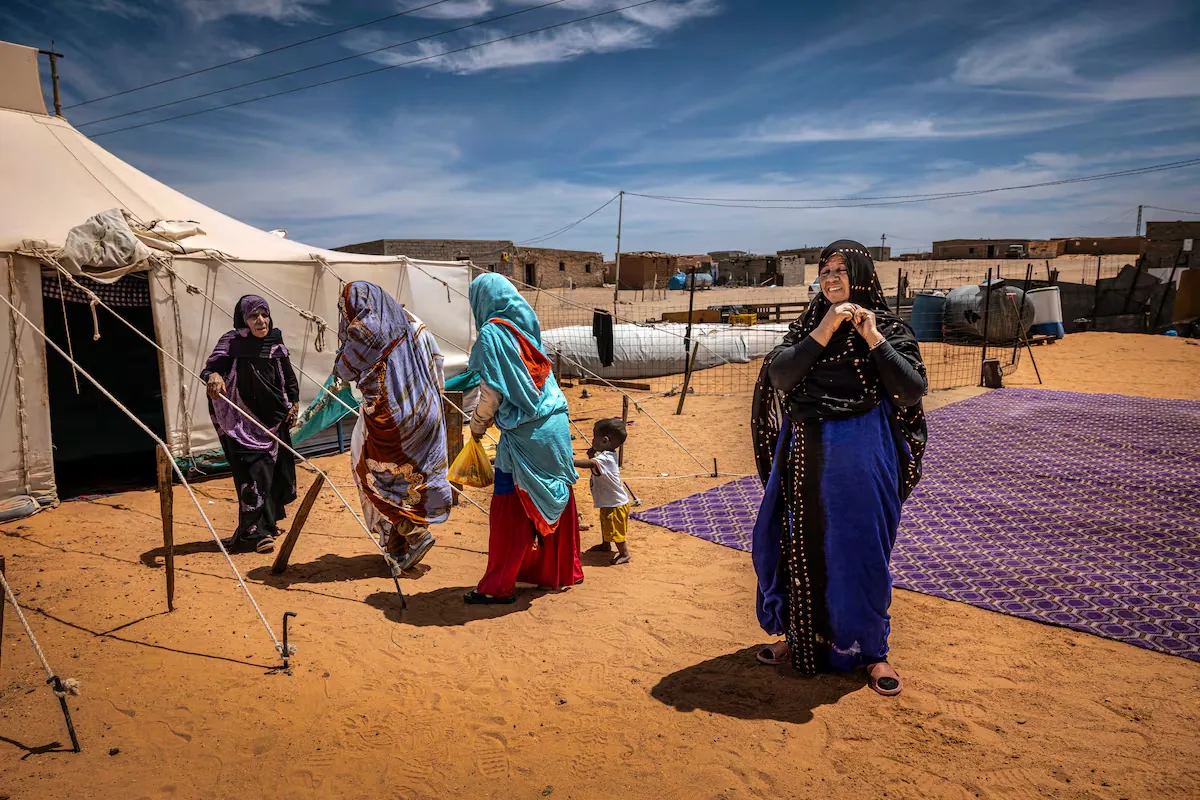
Estimates from sources familiar with the reality on the ground raise the number of Sahrawis born under Spanish Administration, before the departure of colonial troops in 1976, who are still alive, as well as their direct descendants, to 110,000 (12% of the current population of Western Sahara, with Moroccan nationality). They consider that in Tindouf, in the desert southwest of Algeria, that figure is about 45,000, mostly stateless, among the more than 170,000 refugees officially counted by the United Nations. And that another 45,000 are distributed as immigrants settled in various European countries, where they have documentation as residents and even passports. All will be able to opt to become Spanish when the law comes into effect after its final parliamentary approval.
“This is not a normal administrative concession, as in other cases of nationality acquisition, but a historic reparation. Although late, because the Sahrawis have been waiting for more than 50 years. The Sahara was a Spanish province,” recalls Brahim Hameyada, 67, director of the Unamuno Academy, a center recognized by the Cervantes Institute in Dajla, the former Villa Cisneros, from southern Sahara. In 1976, the Spanish Government offered the Sahrawis a one-year period to opt for nationality, but almost no one could exercise that right.
“In today’s Sahara, a change is expected above all symbolic after the approval of the law, not a massive demographic movement [to Spain],” he maintains. He argues, with the passport in hand, that the new Spaniards of Sahrawi origin will have guaranteed free movement in the Schengen area, access to European universities and, if applicable, to the labor market in the EU, as well as being able to receive healthcare in Spain.
Read more 30,000 pesos bonus per child in Chile: how to know if you qualify and who can receive it
“But in the Tindouf camps, the effect may be different for refugees who have been stateless for 50 years,” warns Hameyada, who returned in 1992 to the former Villa Cisneros where he was born after having served since 1976 in Algeria in the ranks of the Polisario Front, a movement that defends the independence of Western Sahara through a self-determination referendum. He foresees that, with a Spanish ID and options for education and work in Spain, the thousands of young people who have been in Tindouf for years without being able to travel will have a legal framework for mobility.
“Without political connotations, I believe that every Sahrawi, whether in Tindouf or in the current Sahara, wherever they are, will receive this law with satisfaction because it benefits them in their social and professional life. The granting of nationality is a historic reparation,” adds this Spanish teacher.
A conflict in a war phase
The Polisario Front does not reject the new law, although it hopes it will include humanitarian aid measures. Morocco remains silent on official channels but unofficially conveys concern about a legal initiative that touches the sensitive nerve of sovereignty and citizenship.
Sources consulted in El Aaiún warn of the potential risk of adopting a reparative justice measure without having reached a final solution to a dispute that has been in a war phase for almost six years, after the 1991 ceasefire was broken by the Polisario Front.
This week, the attack of a Moroccan drone against two vehicles heading to the Tindouf camps caused at least two injuries, according to a Sahrawi spokesperson. They were traveling through an area near Mauritania and the wall or sand embankment that separates 80% of the Sahrawi territory under the control of the Rabat army from the 20% held by the Polisario militias.
“If the Sahrawis in the camps who are stateless obtain Spanish nationality with the war front open, the casualties that occur could involve Spain and implicate it in the conflict,” warn the sources on the ground consulted.
Another front that could open after the approval of the nationality law would be the presence of tens of thousands of Sahrawis with dual nationality, Moroccan and Spanish, who would assert their new passport in the event of detention for political reasons by the security forces of the Rabat Government.