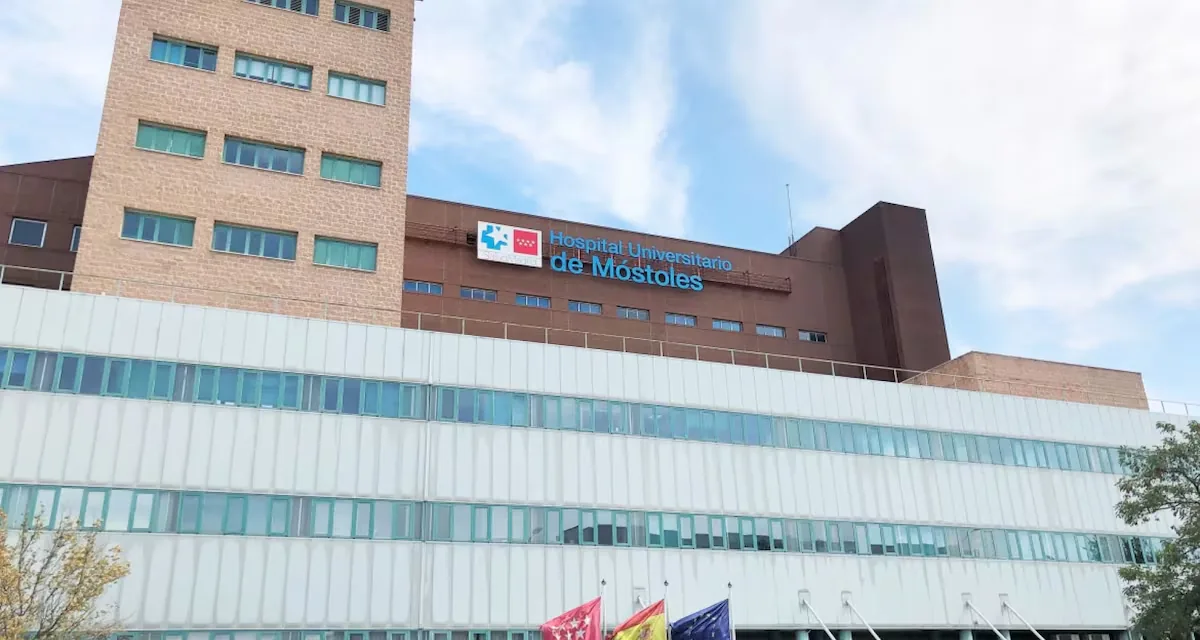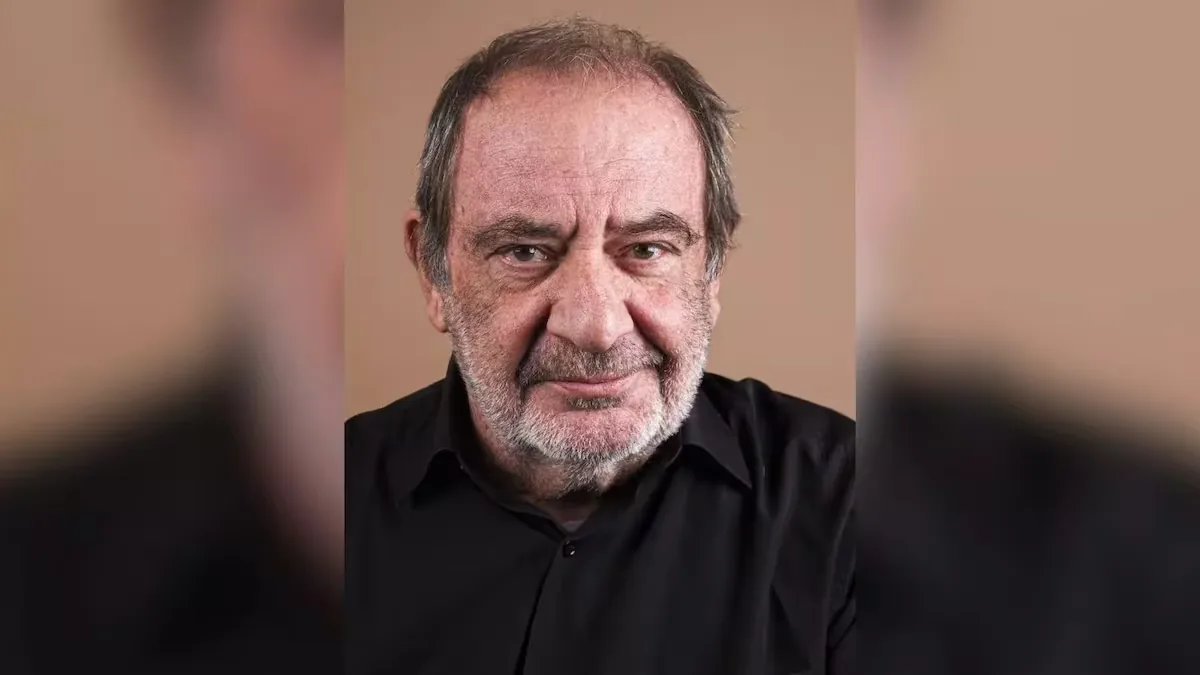
If roughness and tenderness, visceralness and delicacy, humor and existential anguish have ever gone hand in hand, it has undoubtedly been in the personality of Manel Dueso, actor (theater, film, and television), director, playwright, and above all, and he would have wanted us to highlight this, poet. An unclassifiable and irreducible artist and human being, Dueso, who signed as Manel or Manuel as convenient, born in Sabadell and who passed away on Tuesday at the age of 73 in the Sant Pau hospital in Barcelona due to colon cancer, leaves a mark on the hearts of those who knew him as large as his big and rough hands and his big and characteristic nose, a bit potato-like.
Read more Industry and construction are sinking in Argentina and putting Milei’s model under strain
Many will remember him for his very diverse roles, among them some as unforgettable as Agustín Solano in Ñaque o de piojos, by José Sanchis Sinisterra (together they were part of the founding team of Sala Beckett), or as popular as the multiple, expressive, and effective characters in the TV3 series Nissaga de poder, La Riera (Mossèn Esteva), or Laberint d’ombres. He performed in all registers and directed everything, Shakespeare, Molière, Chekhov, Lorca, Fassbinder, Genet, Connor MacPherson (La presa and Dublin Carol), and wrote about twenty plays that he often staged himself, such as Sara y Simon, Matem els homes, or Pensem. (Pause.) To hell with it! Among his theatrical parents were Beckett, Ionesco, and Edward Bond. In film, he appeared in movies like Salvador, Eva, and Operación Malaya, among others, and worked as an acting director for Manel Huerga and as Torquemada in the series Isabel.
There are few people you can say you have encountered throughout your life—from the classrooms of the Institut del Teatre, where he studied Acting and was never very skilled in acrobatics—and who each time seemed to always be there, making reconnecting unnecessary. That was how it was with Manel Dueso, even though he could seem strange, grumpy, and dismissive, speaking with that raspy voice, and looking at you with those falsely sleepy eyes in whose depths beat a painful gaze of a beaten and dangerous dog. A gaze that was very useful to him on stage and screen.
In reality, seeming ironic and even cynical, what he was doing was opening himself up with the ease that people who have suffered and loved a lot have. Talking with him, talking deeply, was sometimes a trial from which you did not come out unscathed. Like fakirs used to walking on fire or nails, he was unaware of the level of pain he carried and that stuck to your body and soul like flammable kerosene.
On one occasion when we met to talk about the publication of Mata’m (Lapislàtzuli, 2023), one of his best plays, as hard as few— a man wants to die and asks a friend equally devastated who has just come out of prison and wants to return to it to kill him—I was so shattered that I couldn’t write a single line: he didn’t reproach me. Mata’m has an addition of extraordinary poems titled Assaig de petits comiats (essay of small farewells) which includes a terrible poem about his father’s leap into the void. That time, at the Masía bar, next to the old headquarters of the Institut, where we used to meet and remember les beaux jours with Oriol Genís, Abel Folk, Enric Benz, Artur Costa, and the other classmates, but above all we talked about Montse Guallar, for whom we both had a weakness despite our different tastes, Manel spoke to me at length about his father’s suicide, an event that obsessed and conditioned him. “I have tried to understand death through my father’s suicide,” he told me. He told me his father was a very primitive man, from the countryside, who came to Catalonia from Aragón and whose life was marked by having a tetraplegic son, Manel’s brother.
Read more Simeone: “Julián Alvarez’s game was very good, he took charge of the ball from minute one to ninety”
We also talked about his illness, which looked bad from the start and was combined with a fall that left him battered. Curiously, he was upbeat, he had never thought his theater would be published and was very excited that a poetry book was also going to be published, thanks to the push from his friend Francesc Orella, who starred in Mata’m at its premiere at the Villarroel (Grec festival) in 2004 alongside Àurea Màrquez, his favorite actress. He said he had recovered the poet he was when young (he won a prize in 1988) and that poetry was what he liked most to write. On the other hand, he felt a bit out of the theater being made now, which seemed very conservative, boring, and reluctant to confrontation. “I want things to happen in theater, to piss me off, that’s what I want to do, to annoy,” he emphasized. He told me about his discovery of the Mallorcan poet Antonina Canyelles and his fascination with her, as with Rimbaud, Baudelaire, and, “of course, Gil de Biedma.”
He dreamed of “returning to the origin, working with people eager to do things.” In December last year, the Teatre Nacional de Catalunya (TNC) under Carme Portaceli, also a colleague from the Institut in the late seventies, gave him the opportunity to premiere in the Sala Petita Jambo Bwana, a black comedy directed by himself about three friends, one of whom has suffered a rape, and a Senegalese immigrant.
Until the end, he remained incredibly lucid and brave. He said language was a weapon against pain and that one should die reciting poetry. I don’t know if he did. But he has a wonderful one in his essay of small farewells, beautiful as a last embrace: “Em desfaig./ Quan es difumini el dibuix/ seré polsim davant teu./ Només hauràs de bufar/ que l’alè final/ sigui el principi de l’adeu.”