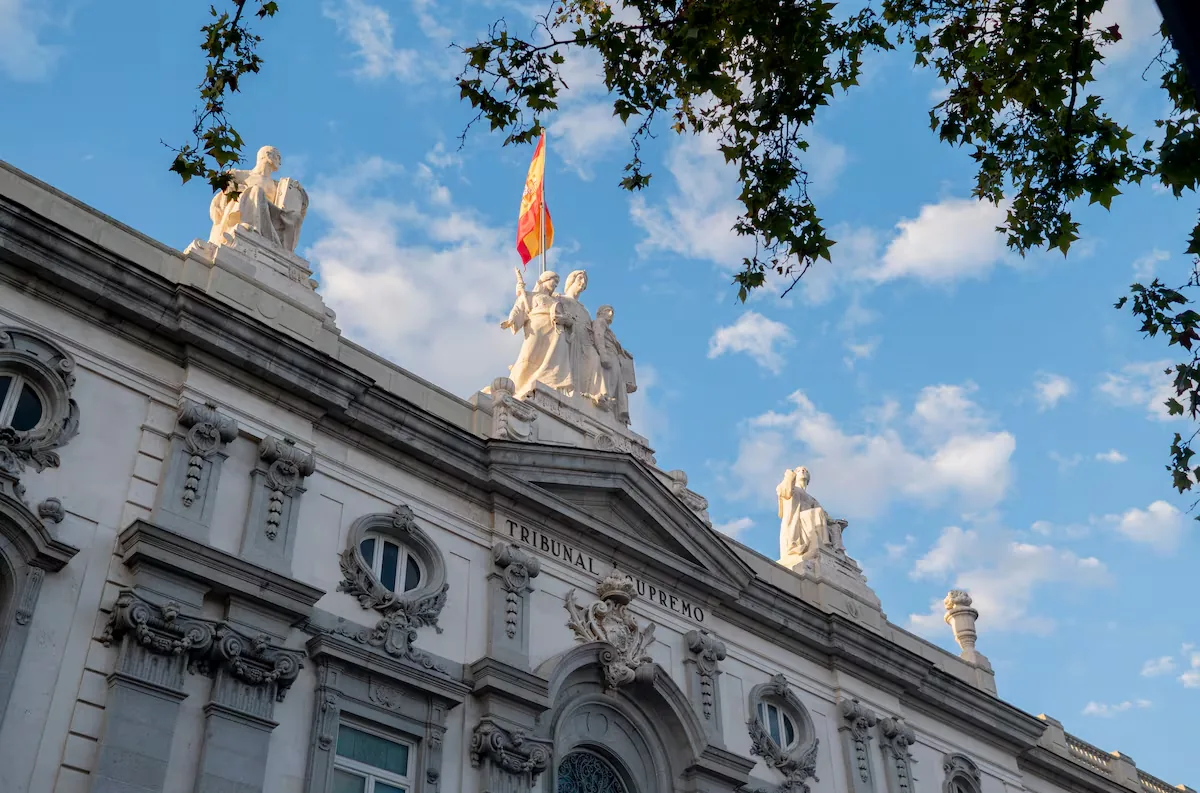
The Supreme Court has rejected forcing the Government ministers to appear in the Senate in August, as requested by the PP due to the Ceuta crisis. The party led by Alberto Núñez Feijóo had asked the high court to, before ruling on the substance of their appeal ― that is, whether the Executive can choose when to appear before the Cortes ― agree as an urgent precautionary measure ― without hearing the State Attorney’s Office representing the Government ― the summons of several ministers in the Upper Chamber, where the Populars have a majority. The court has ruled out making an immediate decision and has given the Executive 10 days to submit its arguments. Once the magistrates receive them, they will rule.
Read more Ukrainian drones attack a warehouse of the Russian e-commerce giant Ozon for the first time
In a resolution issued on Friday night, the Vacation Chamber holds that “the legally required special urgency” to grant the Populars’ request without first hearing the Government’s arguments “has not been proven.” The court considers that “it is not sufficiently justified” that parliamentary control “must necessarily take place, to be effective, within the extraordinary period of the month of August (of which only one week remains).” And it warns that it “will not unduly delay” ruling once it has received the arguments from the State Attorney’s Office representing the Executive.
The magistrates insist that the PP has offered “no reason” to justify why their appeal would lose its protective purpose if the court did not rule before hearing the Government. “Especially because it is not apparent that the public interest in the substantive issue will disappear,” that is, the “serious migratory crisis” in Ceuta, which underpins the requests for appearances.
The Supreme Court explains that in this case “the special urgency” that would justify “sacrificing the right to be heard of the opposing party” ― the Government ― before adopting a precautionary measure, which, it emphasizes, would also be of “immediate execution,” “does not concur.” Therefore, it opts to give the State Attorney’s Office 10 days to submit its arguments before the court. And it warns that its decision to reject the PP’s request is limited “exclusively” to the request for the urgent precautionary measure ― acting without hearing the Executive ― without prejudging or predetermining the “possible decisions” it may adopt regarding “jurisdiction, competence, and admissibility of the procedure itself.”
According to the resolution, accessed by EL PAÍS, the magistrates Ignacio Sancho, Antonio Sempere, Pablo Llarena, Ángeles Huet, Raquel Blázquez, and Ángel Turienzo made this decision after 9:00 p.m. on Friday. The Vacation Chamber is composed of a presiding magistrate ― in this case Sancho ― and one from each of the court’s chambers (civil, criminal, administrative litigation, social, and military). The shifts were assigned on June 17 by the Supreme Court’s Governing Chamber.
The PP’s appeal
It was last Wednesday when Feijóo announced at a press conference in Ceuta that his party would file an administrative litigation appeal before the Supreme Court against the Government’s decision not to send its ministers to the appearances requested by the PP in the Senate during August. The Populars had summoned the Interior Minister, Fernando Grande-Marlaska, on the 12th; the Foreign Minister, José Manuel Albares, on the 17th; and the Defense Minister, Margarita Robles, on the 18th. But the Executive argued that they would appear before the Congress of Deputies in the last week of August.
Read more South Korea sends its first container ship to Europe via the Arctic route to avoid the Middle East
Dissatisfied with La Moncloa’s response, the PP went to the Supreme Court and argued that the Government’s attitude violated the senators’ right to perform their public duties. Thus, it asked the high court to order Pedro Sánchez’s Executive to “immediately cease” its conduct “aimed at preventing, evading, or depriving the efficiency of the appearances regularly requested by the Senate.” Specifically, it requested the court to “within a maximum period of 24 hours” adopt the necessary measures to “ensure the availability and attendance” of the ministers to the Upper Chamber.
Feijóo stated that his party “has been forced” to go to the Supreme Court so that this court clarifies whether Government ministers can refuse to appear in the Senate and not report on what happened in Ceuta, to do so first in the Congress, as is already planned. “The Government cannot decide in which Chamber it appears nor when it does nor under what conditions it accepts to be controlled,” he pointed out. For the PP leader, a later appearance before Congress “does not exempt it from also appearing in the Senate, which requested it first.” “And that is why we will use all the instruments at our disposal to ensure this constitutional obligation is fulfilled, which is to inform the people of Ceuta and all Spaniards from the territorial chamber,” he added.
This Saturday, almost two hours after the Supreme Court’s decision became known, the Minister of the Presidency, Justice, and Relations with the Cortes, Félix Bolaños, attacked the Populars on the social network X. “The PP’s theatrics in the Senate go nowhere,” reads the message he posted, in which he recalls that the party has filed 22 appeals against the Government or Congress before the Supreme Court and the Constitutional Court. “All lost,” he added in a second post.
Yes, 22 filed and 22 lost. Before the SC and the CC. All lost. https://t.co/uXIjt8bF2u
Read more Health calls the autonomous communities this Monday to send vaccines to Ceuta
— Félix Bolaños (@felixbolanosg) August 22, 2026