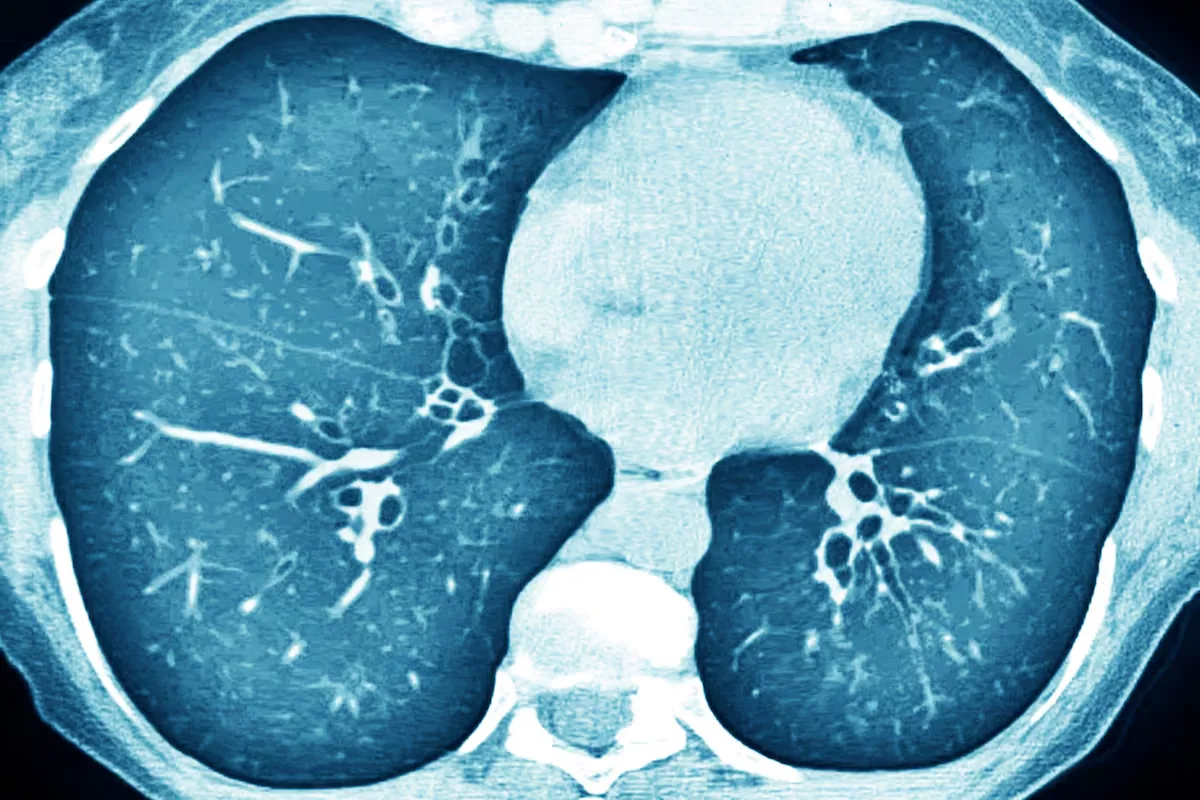
Messenger RNA-based treatments have already shown their effectiveness in producing vaccines against viruses or therapies for cancer, but their applications are still in their infancy. Today, the journal Science publishes a preclinical study that demonstrates the potential of transfer RNA to combat dozens of hereditary diseases.
Read more How to withdraw funds from the AFC held by pensioners in Chile
In the case they used as a model, the disease treated is cystic fibrosis, but the interest in this technology goes far beyond that. Researchers believe it could be used to treat dozens of diseases caused by the same basic fault in genetic instructions. The infections of fibrosis, the muscle weakness of Duchenne muscular dystrophy, or the epileptic seizures of Dravet syndrome are very different symptoms, but their origin is common and has to do with something similar to a typographical error.
To use the information stored in DNA and convert those instructions into the proteins that make up the skin, heart, or some hormones, the cell first copies the information into messenger RNA, a molecule that carries the information to microscopic factories called ribosomes. There, the message is read three letters at a time and proteins are assembled until a stop order appears, the work is considered finished, and the next piece is processed.
In general, the system works well, but changing just one letter in the DNA is enough for the stop signal to appear where it shouldn’t. That typographical error is known as a nonsense mutation, and its consequence is incomplete proteins that generally do not function. This type of mutation is behind about 11% of human genetic and hereditary diseases, making them a very interesting target for those who want to cure them.
Cystic fibrosis is one of these diseases. In one out of every ten people who suffer from it, a misplaced stop signal in the CFTR gene, which contains the instructions to make a protein that regulates the passage of salts through cells, causes the protein not to function. The lack of balance between water and sodium makes the body’s fluids too dense, and these obstruct the respiratory or digestive ducts.
This week, a team of researchers from the University of Toronto (Canada) publishes in Science an article showing a technique to restore the correct production of the protein that fails in cystic fibrosis, in cell cultures, patient-derived organoids, and mice. According to the authors, this same technique could be applied to dozens of diseases that arise from a similar typographical error.
The idea is not new and uses an artificial version of some RNA molecules called transfer RNA, capable of making the cellular machinery ignore the premature stop signal. The problem is that, until now, these molecules were unstable inside cells, could cause inflammation, and it was difficult to deliver them to the affected tissues.
To solve these problems, first, the researchers applied learning from the development of COVID vaccines. It was then seen that if RNA was injected as is into the body, the immune system identified it as an intruder because it thought it was a virus and destroyed it before it could do its job. To solve this, scientists applied a chemical tweak that served as a disguise and allowed the RNA to enter cells without triggering an immune response.
Read more He thought it was a pet: the explanation of the detainee for the death of filmmaker Paz Ramírez
In this work and in other previous experiences with synthetic tRNA, something similar happened. The immune system attacked it and the molecule degraded too quickly inside the cell. After testing several chemical modifications, they discovered one that also served as a disguise and prevented the destruction of tRNA when inhaled.
Additionally, the University of Toronto team redesigned lipid nanoparticles, tiny fat bubbles similar to those that carry other RNA molecules, like those used in COVID or melanoma vaccines. In this case, they specifically adapted them to carry tRNA, a much smaller molecule, inside cells. This custom vehicle is one of the main advances of the study, because a therapy capable of correcting errors in DNA reading is of little use if it does not reach the organ where it must act, in this case the lung.
Although the technique has only been tested in animal models and years of development will be needed before proving it is safe and effective for patients, the authors suggest that the treatment could be applied with a nebulizer that would allow the fat nanoparticles to travel to the airways and lungs. Once in the lungs, the nanoparticles would penetrate the mucus layer and release the tRNA that suppresses the error. Since RNA does not permanently modify DNA and the cell processes it naturally, the treatment would require a dose every so often to maintain normal protein production.
“There are so many types of disease-causing mutations, many of which affect only a small number of people, that developing an independent gene therapy for each individual mutation is extremely complex,” says Bowen Li, lead author of the study. “With transfer RNA therapies, our goal is to develop a common therapeutic approach that could potentially address the same type of mutation in many different genes and diseases, including rare diseases that currently have few or no effective treatment options,” he adds.
The technique is promising, but moving from organoids or mice to humans will take time, although previous experience with RNA technologies may shorten the path. Tests in animal models have revealed that repeated inhalation of lipid nanoparticles can cause lung inflammation, and it will also be necessary to ensure that the fat capsules carrying the tRNA are safe after years of continuous use.
If current gene therapies often seem like tools designed to fix a very specific fault, the strategy presented today is more like a master key capable of solving the same type of error in many different genes. Although still far from clinical use, it represents a new way of thinking about hereditary diseases, not as thousands of different problems, but as groups of disorders that share the same mechanism and could benefit from a common solution.