For years, Europe has become accustomed to a contradiction that it now begins to consider dangerous: being one of the largest regulatory powers in the digital world while relying on others for much of the technology that those rules aimed to regulate. Brussels has built a legislative arsenal over the last decade to limit the power of the big platforms, from the General Data Protection Regulation to the Digital Markets Act, the Digital Services Act, or the Artificial Intelligence Act. But while Europe legislated, the United States and China built companies, data centers, chips, cloud platforms, and artificial intelligence models on a scale that no European company has managed to reach.
Read more The cyberwar hitting Morocco since 2025 extends to the Ceuta crisis
Artificial intelligence has blown that contradiction apart. Technology has ceased to be solely a matter of business competitiveness to become a matter of power. The cloud, data centers, semiconductors, networks, software, and computing capacity have become strategic infrastructures. Whoever controls them not only sells a service: they can influence the decision-making capacity of those who depend on them.
The magnitude of European dependence is evident in a particularly striking fact: 92% of Western data is stored in U.S. infrastructures, according to an Oliver Wyman analysis on European digital sovereignty. The problem, therefore, is not only that Europe uses applications or services created outside its borders. An essential part of the information on which the Western economy operates is hosted on infrastructures that Europe does not control.
The European Commission itself offers another measure of that dependence: the Union depends on non-EU countries for more than 80% of its digital products, services, infrastructures, and intellectual property, according to data collected by community institutions and the European Parliament in its resolution on technological sovereignty from January 2026. The figure helps explain why Brussels has stopped considering technological dependence solely a business issue and treats it as a strategic problem.
The European Commission has accepted that diagnosis and is trying to change the model. It is not about expelling American companies from the European market nor building a digital fortress isolated from the United States and China. The idea gaining ground in Brussels is that Europe must have sufficient own alternatives to be able to choose, negotiate, and, if necessary, dispense with a foreign provider in those technologies it considers critical.
European Commission President Ursula von der Leyen summarized it on June 3, 2026, when presenting the European Technological Sovereignty Package: “We cannot afford to depend on others for the technologies that guarantee the operation of our hospitals, the stability of our energy networks, and the security of our services.” She added: “It is about protecting our citizens, defending our interests, and making our own decisions.”
The package presented by Brussels on June 3 is the clearest expression of that change. The Commission has proposed two new legislative proposals, the Chips Act 2.0 and the Cloud and AI Development Act, known as CADA, accompanied by a European open-source strategy and a roadmap for digitalization and artificial intelligence in the energy sector. They are not yet approved laws but proposals that must go through the community legislative process, but they show where Brussels wants to take European technology policy.
The cloud market snapshot is even more expressive. AWS, Microsoft Azure, and Google Cloud, the three major American hyperscalers, concentrate around 70% of the European cloud infrastructure market, while European providers represent around 15%. In 2017, the latter had around 29% of the market; five years later, they had fallen to 15%, a share that has since remained practically stagnant.
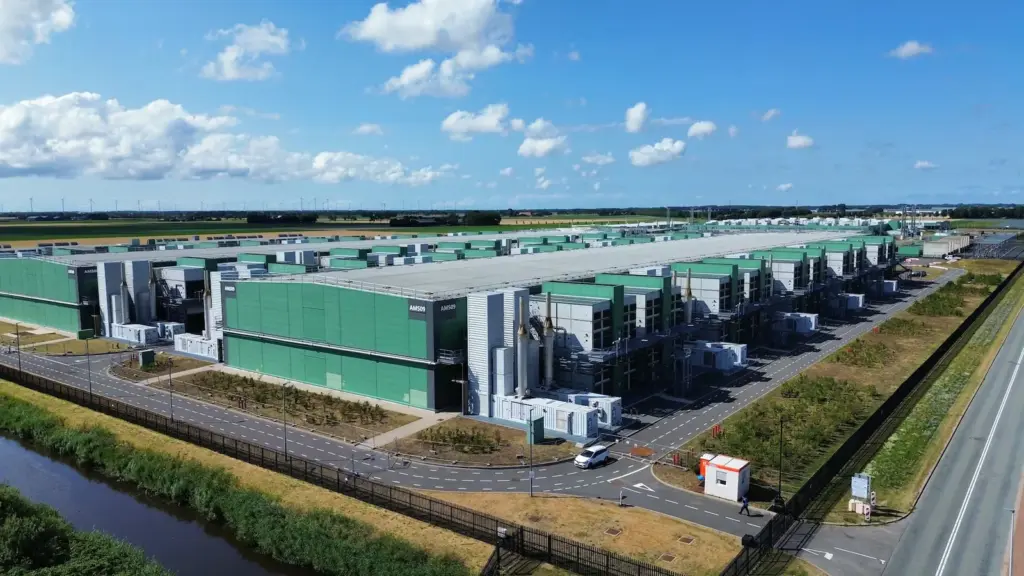
A hyperscaler is a tech giant that operates huge networks of data centers and offers other companies computing capacity, storage, and digital services on demand. Its power also comes from the ecosystems they have built: a company can start using storage and end up relying on the same provider for its databases, development tools, cybersecurity, data analysis, and artificial intelligence.
Here appears the so-called vendor lock-in, the customer lock-in within a technological platform. The more a company depends on a provider, the more expensive and complicated it is to change. Europe has been trying for several years to tackle this problem through legislation. The Data Act, which began to apply in September 2025, establishes measures to facilitate changing data processing service providers, including cloud and edge computing services. The regulation seeks to increase interoperability and portability and reduce technical and economic obstacles that hinder leaving a platform.
The next step is the Digital Markets Act. In June 2026, the Commission communicated to Amazon and Microsoft its preliminary position that AWS and Azure should be designated gatekeepers under the Digital Markets Act. Brussels considers both to be the main cloud providers of the Union, with consolidated positions, high switching costs, and strong lock-in effects. The decision is not yet final but represents taking the logic of regulating big platforms to the heart of cloud infrastructure. The cloud has ceased to be a simple IT services market for Brussels and has become a strategic infrastructure.
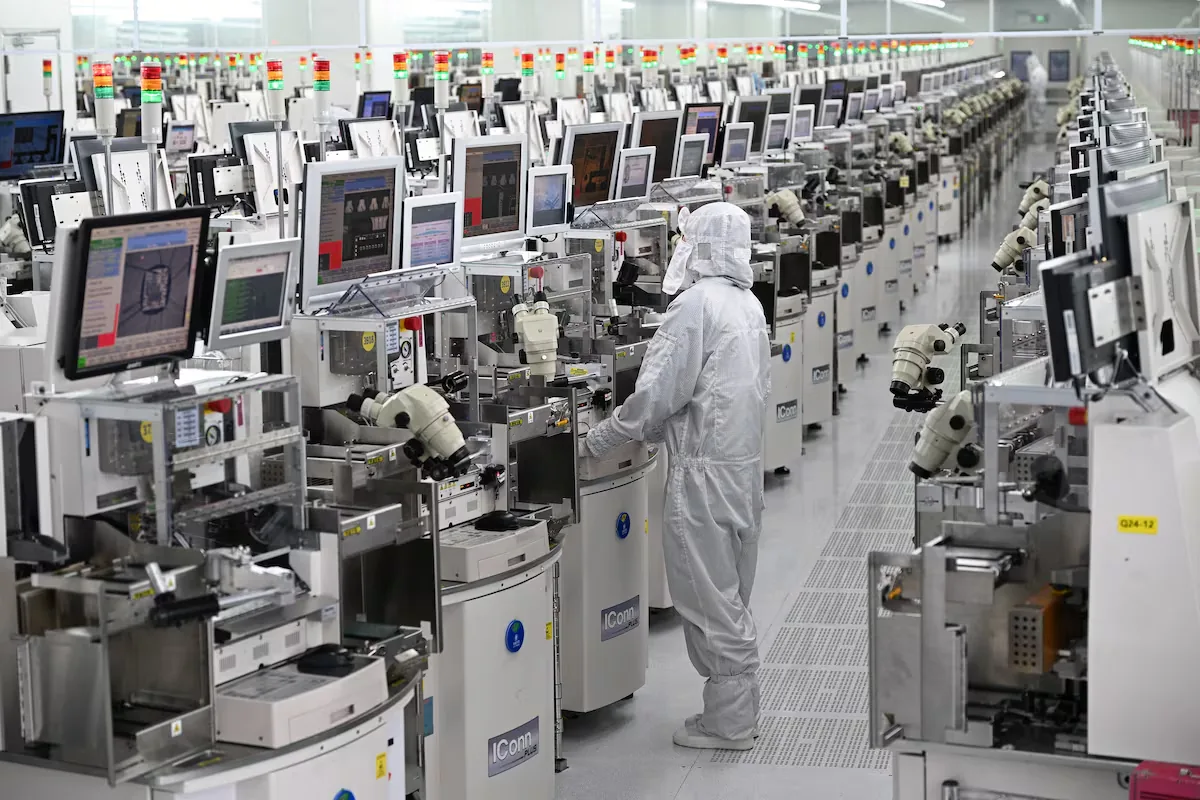
The reason lies in artificial intelligence. Advanced models need gigantic amounts of computing. To train and run them, specialized processors, data centers, storage, high-speed networks, and enormous amounts of energy are required. AI is turning data centers into the factories where much of the digital economy of the future will be produced.
The CADA Project
That is why the Commission has designed CADA. The proposal aims to at least triple the capacity of the Union’s data centers in the next five to seven years, accelerate and simplify permits to build them, facilitate access to energy, land, water, and financing, and guarantee sufficient computing capacity to support the expansion of artificial intelligence and cloud services. It also introduces a unique European framework to assess cloud and AI sovereignty and foresees that public administrations can use it in their procurement decisions.
The most innovative part of CADA is precisely that definition of sovereignty. Brussels wants to leave behind the idea that a cloud is sovereign simply because the data is physically inside the Union. The new framework contemplates four levels: the first requires that data be processed and stored in infrastructures located in the EU; the second adds independence from third countries and transparency about the software supply chain; the third requires that the provider be owned and controlled from the Union; and the fourth, the highest, requires full transparency and control over the software supply chain and absence of interference from third countries.
The issue is important because the server can be in Madrid and control can still be in Seattle. That is precisely the concern Sebastián Muriel, Telefónica’s chief digital officer, has brought to the European debate. In his article in the economic newspaper Cinco Días (from the PRISA group, publisher of EL PAÍS) on May 23, titled Europe, wake up: digital sovereignty is not built by signing rental contracts, he warned that “believing sovereignty consists only of hosting data on European territory is clearly insufficient.” Muriel pointed out that the U.S. Cloud Act can allow U.S. authorities to request information from companies subject to its jurisdiction even if the data is physically outside the country. “Madrid, Frankfurt, or Dublin don’t matter if the parent company is in Redmond or Mountain View,” he wrote. And he launched one of the phrases that best summarize the problem: “We are fostering sovereignty becoming a label stuck on a rental contract.”
That “rental sovereignty” is the leitmotif of the new European strategy. Europe does not want to stop using American technology but to prevent its use from being irreversible. Strategic autonomy does not mean absolute independence but sufficient own capacity so that dependence cannot become a vulnerability.
Read more Pogacar falls with 32 kilometers to go and abandons La Vuelta in the eighth stage
The Commission tries to apply that logic to semiconductors. The Chips Act 2.0 starts from the fact that Europe represents just under 10% of global semiconductor production, according to a Polytechnique Insights analysis of the European semiconductor industry. The new proposal aims to strengthen European capabilities, develop cutting-edge technologies, increase supply chain resilience, and stimulate internal demand for chips produced in Europe.
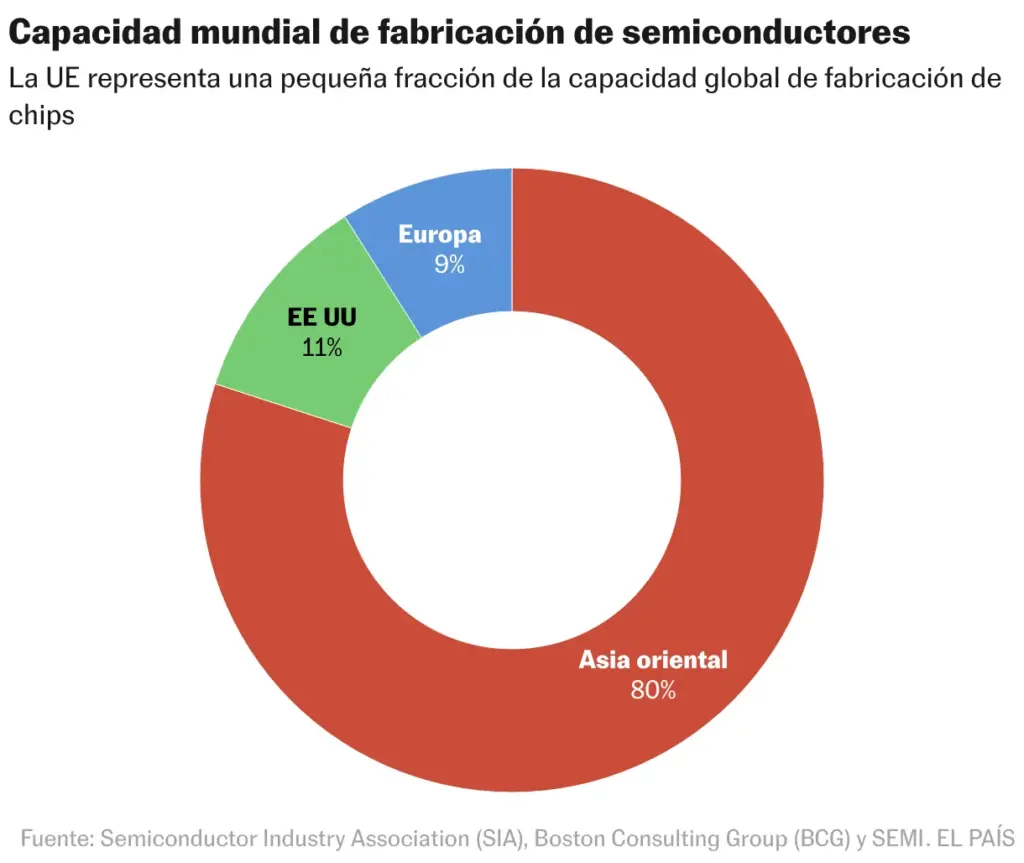
The goal is not for Europe to manufacture all the chips it needs. That would be unrealistic. What Brussels tries is that Europe does not lose the industrial capabilities that can be critical when a global chain breaks. The experience of the pandemic, trade tensions between the United States and China, and restrictions on certain technological components have shown that an apparently efficient supply chain can quickly become a source of vulnerability.
The third pillar of the package is open source. The Commission intends to strengthen open alternatives at different layers of technology and promote their use in public administrations. The reasoning is that the more an administration depends on proprietary software controlled by an external provider, the greater its technological dependence. Open source does not guarantee sovereignty by itself but can increase European control.
The fourth piece is energy. The Commission has understood that it cannot promote a massive expansion of data centers without resolving who will supply the electricity they will need. The roadmap for digitalization and AI in energy aims to integrate data centers into the European energy system and coordinate the expansion of computing capacity with electricity availability and decarbonization goals. Digital sovereignty thus begins to depend also on energy sovereignty.
Lack of Qualified Employment
There is another less visible but decisive problem: 60% of EU companies report difficulties hiring qualified workers in areas such as artificial intelligence, cybersecurity, and clean technologies, according to the European Parliament. The lack of professionals has thus become another bottleneck of technological sovereignty: Europe can have data centers, capital, and companies, but it needs engineers, AI specialists, and cybersecurity experts capable of making that ecosystem work.
Henna Virkkunen, Executive Vice President of the Commission responsible for Technological Sovereignty, Security, and Democracy, has framed the problem from a geopolitical perspective: “We are living a global digital revolution and a global race to shape the future of artificial intelligence. Europe must not limit itself to participating in this transformation but must lead it.” The change in tone is evident: Brussels no longer only intends for big tech companies to respect European rules but for European companies capable of developing technology that can compete with them to exist.
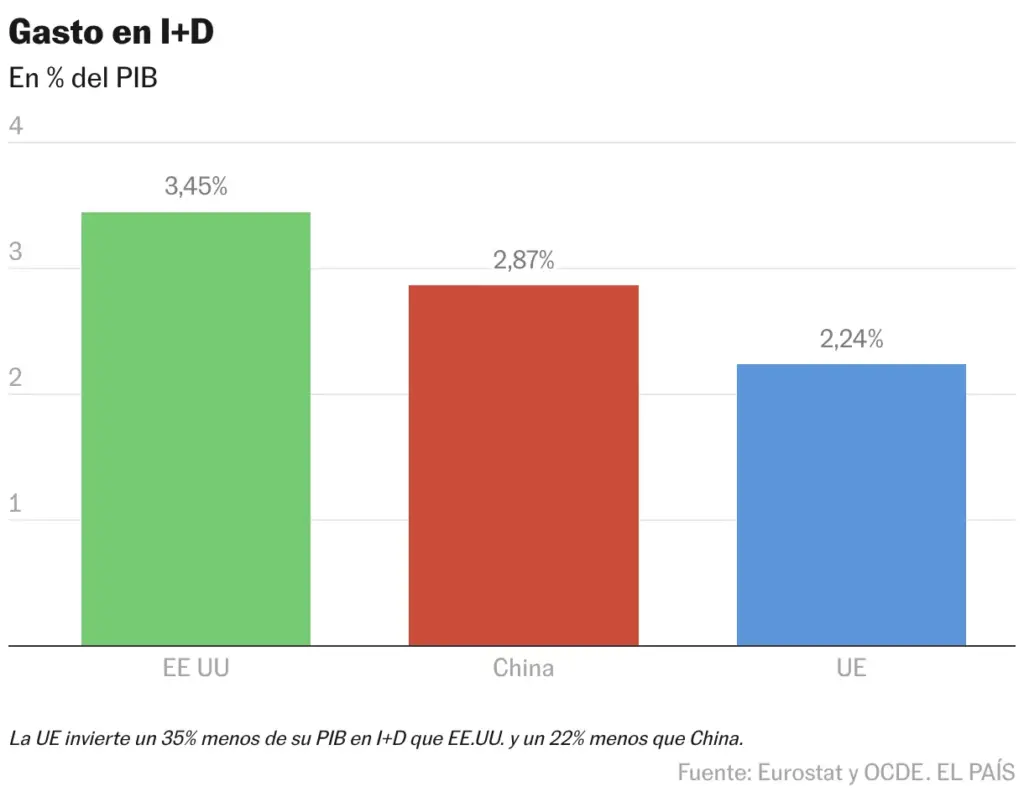
Investment effort is also below that of its competitors. The European Union allocated 381.4 billion euros to R&D, equivalent to 2.22% of its GDP, according to the European Commission’s Digital Decade State of Play 2025 report. That effort remains far from that of the United States and China: the community analysis places European spending 34% below the combined effort of both powers.
The result of that lower investment and the difficulty in turning it into world-scale companies is reflected in the business structure. Only four of the 50 largest tech companies in the world are European, a fact Mario Draghi already used in his diagnosis of the continent’s competitiveness. And the picture is even more revealing when the view is broadened: no European company is among the ten largest tech companies in the world by capitalization, according to PwC’s Global Top 100 Companies 2026 report.
The AI Gap
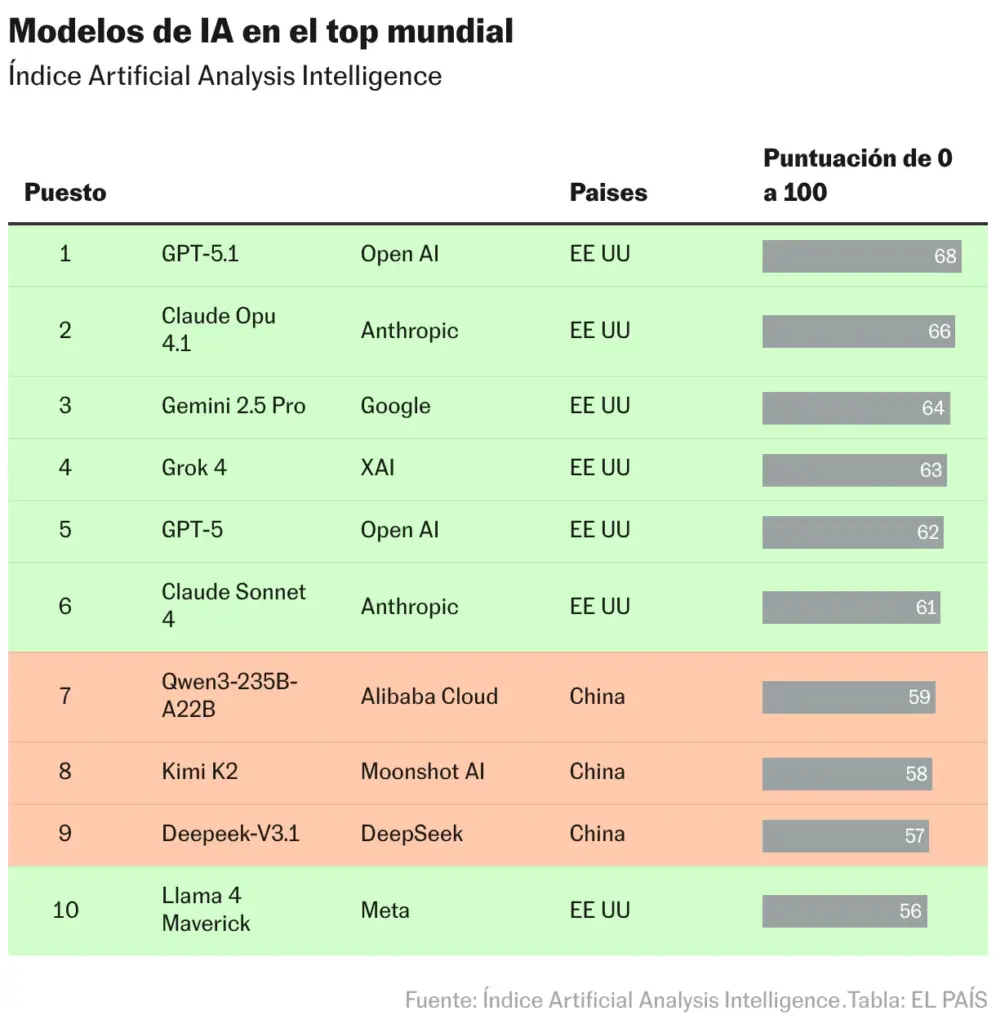
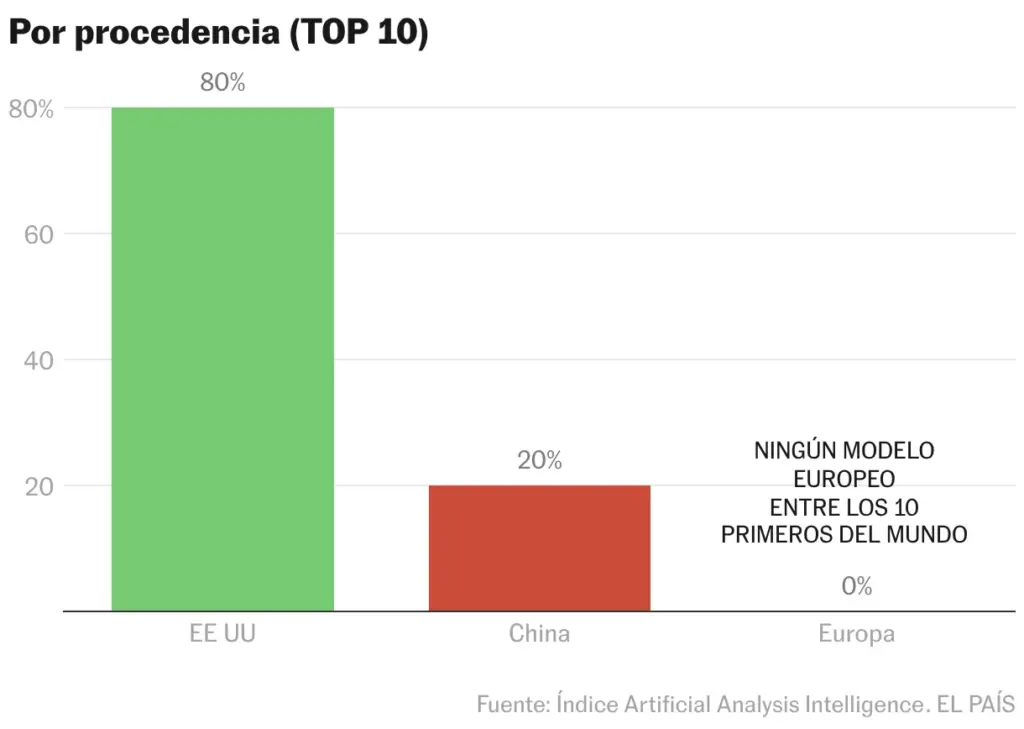
The gap becomes even more evident in artificial intelligence. The best European AI model ranked 89th in July 2026 in the Artificial Analysis ranking, according to the specialized firm’s classification. All models ranked ahead came from the United States or China. The figure almost brutally summarizes the distance between Europe’s ambition to build its own artificial intelligence industry and its current position in the technological race.
Draghi put much of this diagnosis on the table in his report on European competitiveness. Europe was not only losing ground in technology; it was losing the capacity to turn its research into world-scale companies. A year later, the Italian was even more direct: “Inaction threatens not only our competitiveness but also our sovereignty.” The word scale connects his diagnosis with the current debate.
Europe has tech companies, but many are too small; fragmented capital and a market divided by 27 national jurisdictions, tax systems, and regulatory barriers. The result is that Europe invents but does not always scale. Draghi also pointed out that nearly 30% of unicorns created in Europe had subsequently moved their headquarters abroad.
That is the problem Brussels now tries to address: not only creating technology but ensuring that technology created in Europe stays in Europe, finds financing, and becomes industry. That is why public procurement gains importance. In April, the Commission awarded contracts worth up to 180 million euros for sovereign cloud services intended for European institutions. The move cannot compete in volume with investments by American hyperscalers but can make the public sector a reference client for continental providers.
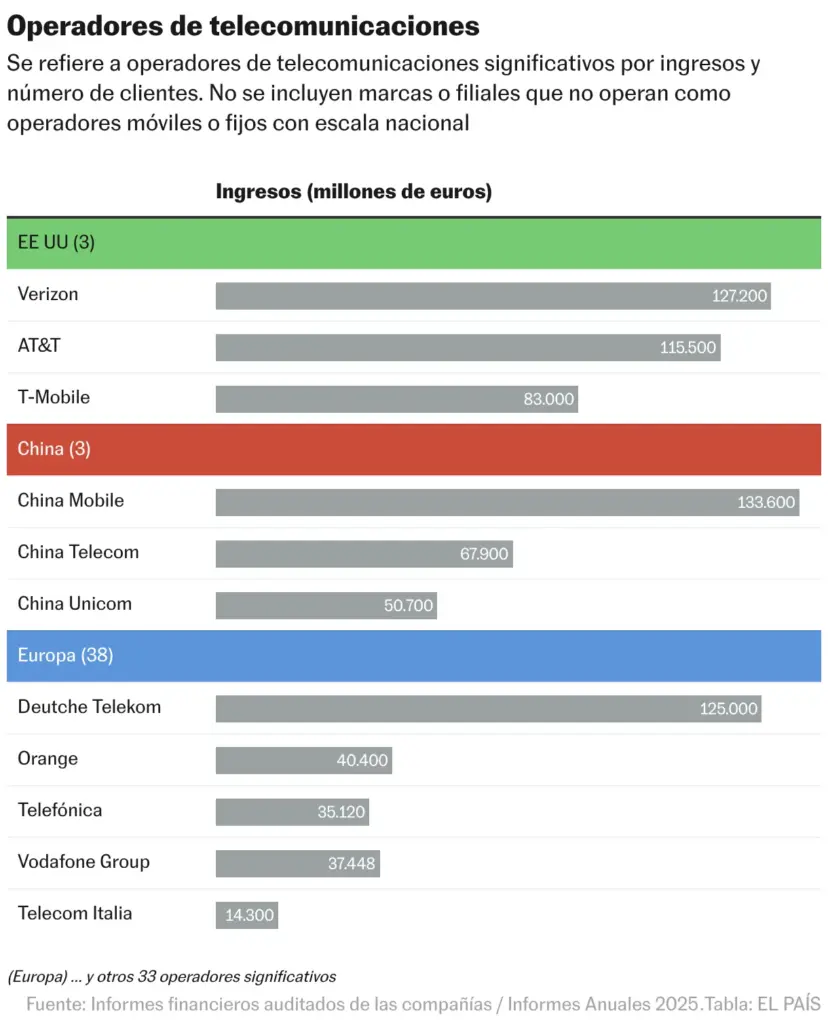
And the issue does not end with the cloud or data centers. Europe needs 475 billion euros of investment in mobile networks by 2035 to complete its 5G deployment and regain digital leadership, according to a GSMA Intelligence study published in May 2026. Under current conditions, European operators could only mobilize about 270 billion, leaving an investment gap of 205 billion euros, according to the same study. The figure is relevant because data centers and artificial intelligence cannot operate independently of the networks that connect companies, users, and infrastructures.
Financial Times recently analyzed this shift in a report by Barbara Moens published at the end of May. The journalist described the move from a strategy focused on regulating big tech companies to one that aims to favor European alternatives in semiconductors, cloud, and artificial intelligence. Moens summarized that purpose with a significant expression: Europe must “regain its place in the global race for geoeconomic power.”
Because digital sovereignty is no longer just a matter of privacy: it has to do with who controls data, chips, computing, networks, and critical infrastructures. And Europe is beginning to understand that it cannot guarantee all that solely with laws. It needs companies, scale, and investment and, above all, European companies capable of becoming protagonists of that infrastructure.
Read more A group of military personnel attempts to carry out a coup d’état in Niger