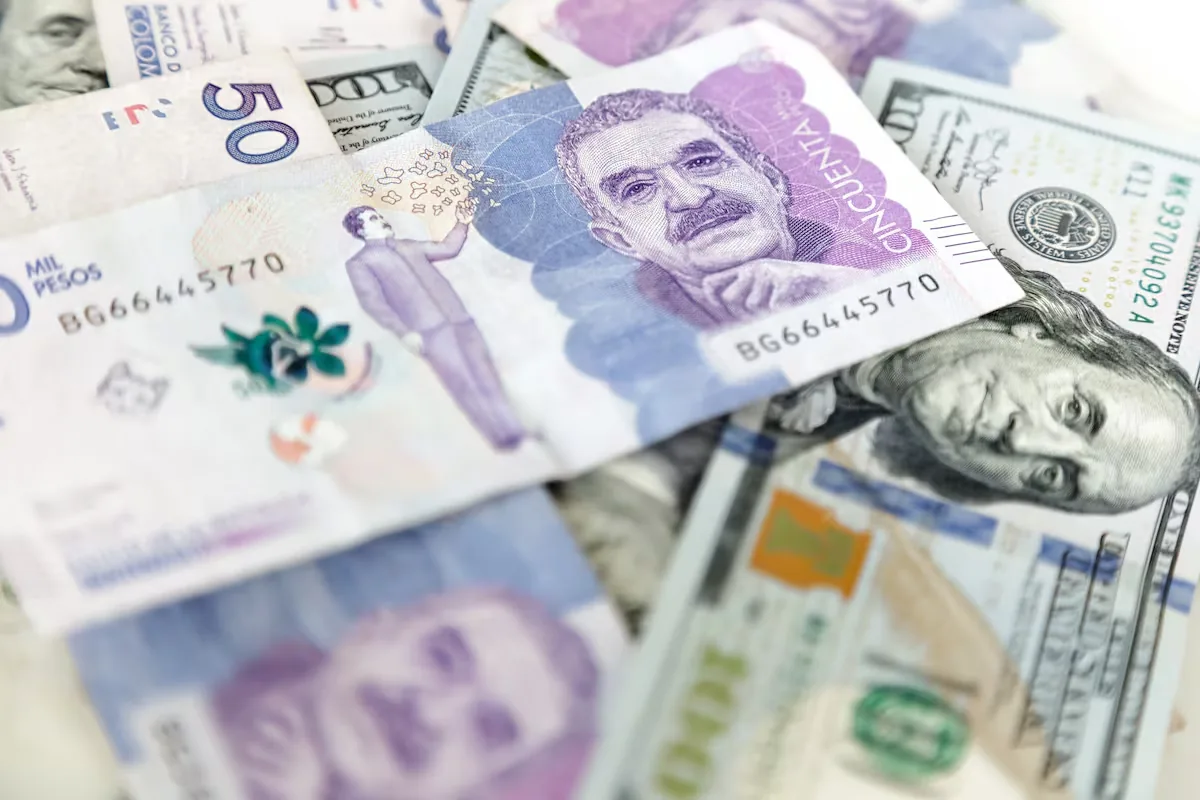
Public debt in Colombia will continue to be pressured and increasing. After the Minister of Finance, Miguel Gómez Martínez, presented the new budget, which he calls “the truth,” the State’s financing needs skyrocketed. By 2027, primary spending, which includes operations and investment but not debt payments, rises from 457.7 trillion pesos in the previous project to 479.5 trillion, a 4.8% increase. In contrast, debt service, the sum of interest and principal payments the Government must make, increases by 31.7%. Finance calculations show that, for 2027, this item rises from 5.5 to 7.3 percentage points of GDP between the project submitted by Gustavo Petro’s government and the current administration, reaching 155.4 trillion pesos (44.9 billion dollars).
Read more Mexicans divided over the causes of the visa cancellation for Andy López Beltrán
The Executive has said that these increases are “a sincere accounting” of the country’s finances, a view that has found resonance on Wall Street. JPMorgan, the largest US bank, in a report dated August 28, described the exercise as a significant step in fiscal credibility, although it warned that the deficit, even with the proposed adjustment, would be the second largest in the country’s recent history. A day earlier, Goldman Sachs’ regional economist, Santiago Téllez, described the fiscal starting point as worse than previously understood. And although both banks recognize Minister Gómez’s effort to be transparent with the accounts, the market reaction has been the selling of Colombian bonds, devaluing them and pushing up the rates the State must pay.
https://app.datawrapper.de/elpais/edit/8Fyz3/publish
This is the yield investors demand from Colombia for lending money, which rises when their risk perception increases and has now risen for five consecutive sessions. It increased by 4.9% between Wednesday, August 26, a day before the Government submitted the budget, and the close of this Tuesday (from 12.15% to 12.75%), according to Investing data. On Friday, coinciding with the close of the Colombian Banking Convention and Kevin Warsh’s speech at the Jackson Hole Symposium, which left the door open for a Federal Reserve rate hike this year, pressure was felt across all Colombian assets simultaneously: the dollar rose to 3,205 pesos and the COLCAP, the main local stock index, fell 1.28%. On Monday, the deterioration continued: the dollar hit a high of 3,221.70 pesos and the COLCAP fell another 1.33%.
However, this Tuesday, the peso and the stock market corrected the blow. The dollar depreciated by 1.63% compared to the previous day and the COLCAP rebounded 1.87%. But the main State debt securities, the long-term TES, did not follow the movement and continued their course at higher rates. Meanwhile, the risk premium against the United States, the difference perceived by investors in the debt of the two countries, had touched its lowest point in the last month and a half on August 14, rising to 791 basis points at Monday’s close, an increase of 10.2% in 16 days.
The cost of the new debt Colombia will issue continues to rise at a time when large issuances are looming. The new project presented shows that this year’s financing needs increase by 35.8 trillion pesos compared to what the June Medium-Term Fiscal Framework forecasted, reaching 186.3 trillion, a 23.8% increase. Next year’s needs rise by 135.9 trillion, to 266.3 trillion pesos, double what the Ministry led by Germán Ávila estimated just two months ago.
https://app.datawrapper.de/elpais/edit/8bDyC/publish
The need for more money for the rest of 2026 will be partly covered by a bond issuance in dollars for about 3 billion, or 10 trillion pesos, explains Alejandro Rojas, senior economist at Banco de Bogotá. The other part will come from an increase in the issuance quota of TES in the local market by an additional 25 trillion. The quota for that debt, which the previous Government had practically exhausted, is not raised by decree but requires approval from the High Council of Fiscal Policy, or Confis, in a formal meeting, “under the justification that needs are higher than expected” for the remaining months, explains the analyst.
Part of the additional pressure would also be absorbed by sacrificing the Government’s available cash, which started 2026 with 26 trillion pesos and, according to new forecasts, would start 2027 with only 5.1 trillion pesos. This is because for the rest of the year the Government must pay, according to the Public Credit debt profile, at least 132.4 trillion pesos for debts it already has, 98% of which is in pesos.
For 2027, the jump in debt payments forces seeking financing also in dollars. “You have to look for money abroad at highs and look for money domestically at highs,” notes Rojas from Banco de Bogotá. In the external market, the country would seek about 26 billion dollars next year, almost double the 14 billion it sought during the pandemic. Locally, the TES placement target rises to 150 trillion pesos, a 50% increase over the recent maximum of 100 trillion, which was unprecedented. Compared to the Medium-Term Fiscal Framework published by the Petro Government in June, the jump is even more marked in dollars: external disbursements, which that document projected at 6.7 billion, are now estimated at 26.1 billion, almost four times the original amount.
All these figures, however, describe what would happen if nothing changes between now and the end of 2027, the so-called inertial scenario. Whether this happens depends, first, on Congress approving the new General Budget of the Nation, which is still a bill, and also on the approval of the Fiscal Adjustment Law promised by the Government, aimed at cutting the deficit by 2.2 percentage points of GDP in 2027. So far, the Executive has not explained what its routes to achieve this would be.
Read more Scandal in Brazil over new data on Judge Moraes’s closeness to a jailed banker