









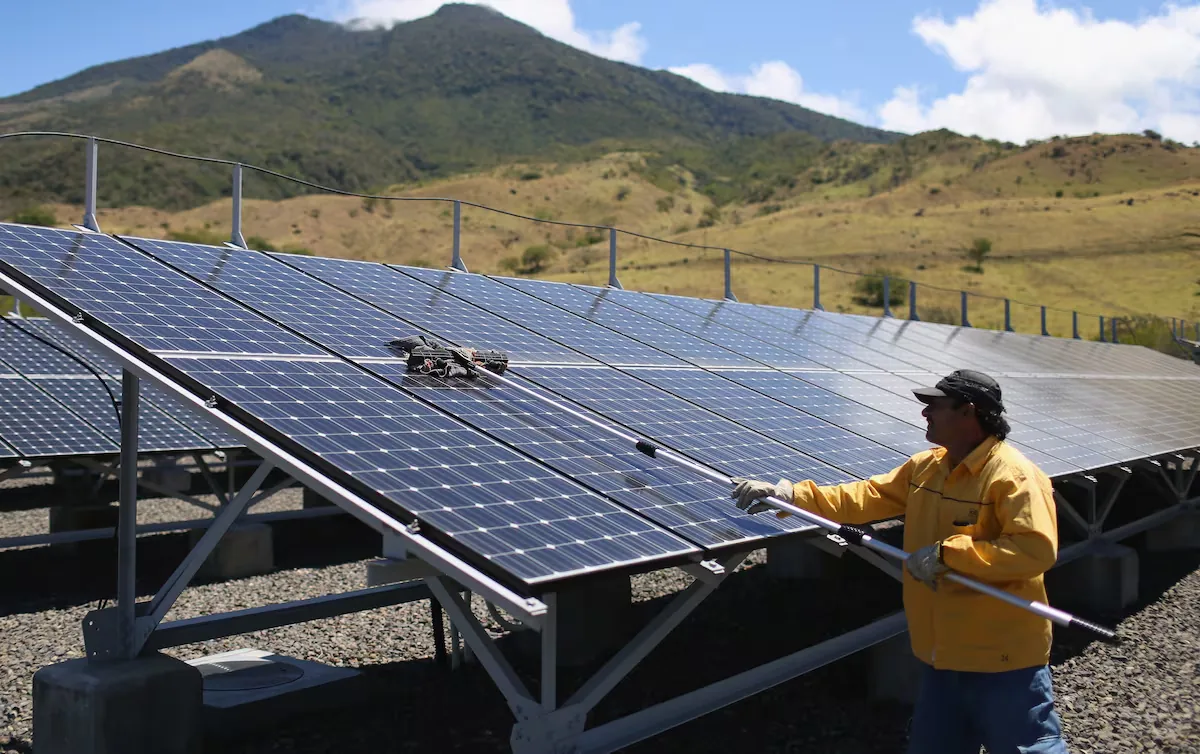
In 2025, 98.6% of the electricity produced in Costa Rica came from renewable sources: water, geothermal, wind, biomass, and sun. It is the result of decades of public policies that allowed the construction of one of the cleanest electricity matrices in the world. But that success hides a paradox: Costa Rica produces clean electricity, but continues to depend on oil and its derivatives to move people and goods and for much of its energy uses. Electricity is decarbonized; the economy is not yet.
Read more Carlos Rodríguez: “The heavy weight of the backpack dragged me to the ground”
There begins the second energy transition. It is not simply about building more power plants. It is about using the renewable electricity that the country already knows how to produce to replace, wherever technically and economically possible, oil, diesel, and other fossil fuels.
Transport should be at the center of this transformation. According to the State of the Nation 2025, transport accounted for 61.1% of secondary energy consumption in Costa Rica in 2024. That year, total consumption reached 170,297 terajoules, 60.4% more than in 2005, driven mainly by the increase in hydrocarbon consumption.
The figure shows the scale of the challenge, but also where one of the greatest opportunities lies. Every electric vehicle running on renewable electricity replaces part of the consumption of an imported fuel with energy produced within the country. The same goes for an electric bus, an electrified commercial fleet, or certain industrial processes.
Electricity is decarbonized; the economy is not yet. There begins the second energy transition.
It is not only an environmental issue. It is also a matter of economic security. Costa Rica imports the fuels used by its transport. Therefore, every increase in the international price of oil, every geopolitical conflict that disrupts markets, or every interruption in supply chains ends up affecting the national economy.
Electrification allows changing that equation: progressively replacing an energy we must buy from outside with another that we can produce within the country.
Electrifying the economy
For this transformation to happen, Costa Rica will have to invest in new energy infrastructure: grids capable of managing a larger and flexible demand, charging infrastructure, storage, and digitalization. But the most important change is in planning. For decades, the central question was how to produce enough electricity to meet demand. Now we must add another: how do we use our renewable electricity to replace the fossil fuels that still support much of the economy?
Read more In cash, in cash, in currency…
The answer must start with those uses where direct electrification is already viable and can generate greater benefits: public transport, cars, commercial fleets, freight transport, certain industrial activities, and some thermal uses. Not all processes can be electrified immediately. But wherever possible, renewable electricity should become the first alternative.
This also requires a coherent mobility policy. It would make no sense to multiply electric vehicles while maintaining congested cities and public transport systems dependent on diesel. Electrification must favor collective transport, efficiency, and less energy-intensive urban mobility. The second transition, therefore, is not simply about changing engines. It is about changing the energy source of the economy.
The real second transition
Costa Rica has an advantage that many countries are still trying to build: a predominantly renewable electricity base. The challenge is to turn that environmental advantage into an economic and strategic advantage.
An economy less dependent on oil is less exposed to the international volatility of energy prices, supply crises, and geopolitical conflicts. It can also reduce currency outflows and generate new opportunities for investment, innovation, and employment. But this requires a political decision: to treat electrification as a national strategy and not only as an electric sector policy.
An economy less dependent on oil is less exposed to the international volatility of energy prices, supply crises, and geopolitical conflicts
Renewable electricity must stop being seen only as a means to light homes and power businesses. It must become a tool to transform transport, industry, cities, and other sectors still dependent on fossil fuels. Costa Rica’s own Nationally Determined Contribution for 2025-2035, the national climate commitment presented during COP30, points towards a more resilient and intelligent electric system that maximizes renewable sources, reduces fossil thermal generation to the minimum operable, and develops flexible storage. That is the way. The first transition allowed Costa Rica to demonstrate that a country can build an extraordinarily renewable electricity matrix.
The second must demonstrate that this clean electricity can progressively replace oil in the economy. Costa Rica has an advantage that few countries possess: it does not need to start by building a clean electricity matrix. It already has it. Now it must use it. The next frontier is not only producing clean energy. It is using it to build an economy less dependent on the outside.