









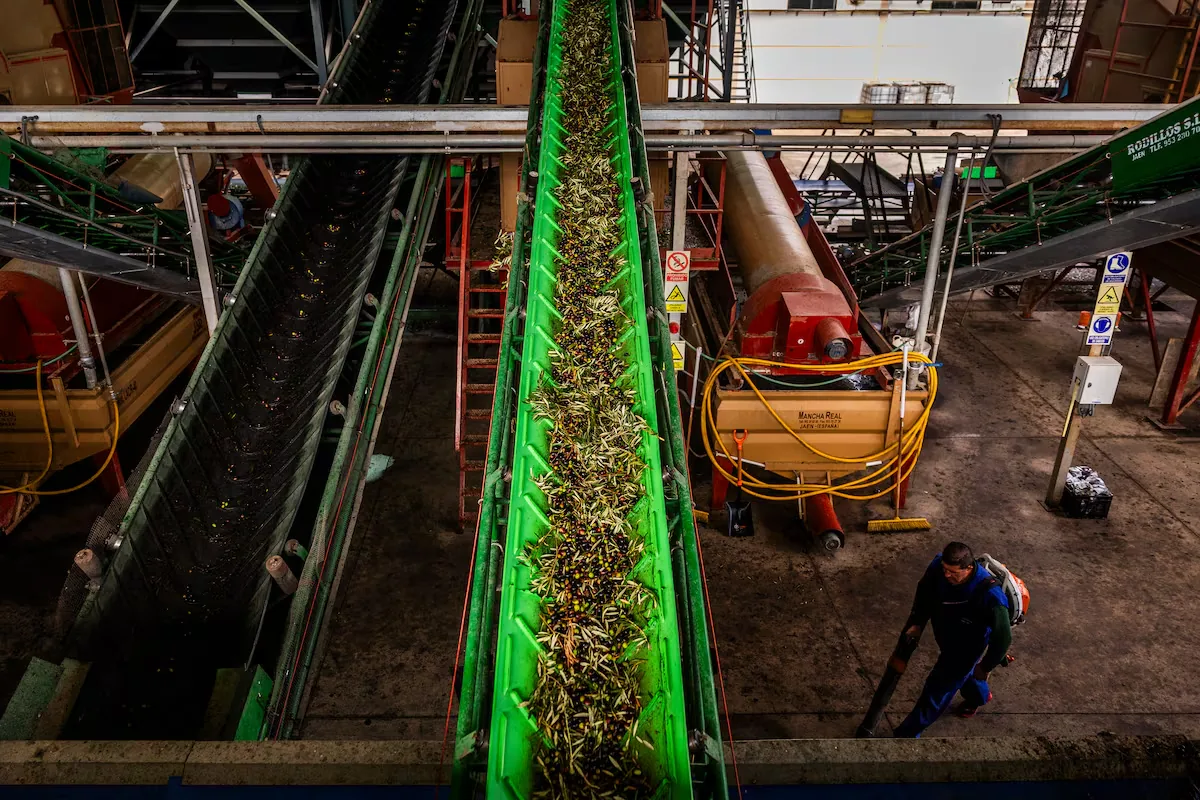
In Spain and Portugal there are currently 2,219 olive mills producing olive oil. This fragmentation is the main breeding ground for the imbalances that occur in the olive oil sector, where on the other side of the chain only about a dozen large packaging and distribution groups dominate the markets. A study endorsed by experts from the International University of Andalusia (UNIA) predicts that more than 600 olive mills (27% of the total) will close in the next decade on the Iberian Peninsula due to lack of competitiveness and profitability of the oil produced in their factories.
“Only the olive mills that capture more volume and are more efficient will survive,” predicts Juan Vilar, who, along with Sergio Caño, authored the study promoted by the Oleícola Innova university classroom of UNIA and the Jaén Olive Group. “The increase in competitiveness, cycles of low harvests, rising input costs, and labor shortages mean that Iberian olive mills need an extra 1.3 million kilos of olives annually to reach their economic break-even point,” explains Vilar, a consultant specialized in oil and university professor.
“In environments of fruit scarcity, the only possibility is cannibalization among them to achieve that increase. This would push some, over several years, to disappear due to sectoral natural selection,” adds Vilar. The organic growth of campaigns since the last decade on the Peninsula is 15% in volume, which is not enough to cover the extra 35% that olive mills need in the new cost context, the study’s author maintains.
“In the short term, the only solution, in industrial terms, to achieve sufficient volume to cover scale costs is to increase volume and efficiency,” explains Vilar. In his view, in short campaigns, the most modernized and efficient olive mills push to reach the appropriate scale that improves their costs. The less efficient ones are left without volume and outside profitability margins, the study states.
And not all compete at the same level. In Portugal, only eight olive mills process 46% of the country’s total olives, and in Spain there are facilities that produce up to 60 times the national average.
Of the 2,219 Iberian olive mills, 1,047 operate under the cooperative formula, and the rest, 1,172, are industrial olive mills. The former process 40% of the production and the latter 60%. “If olive mills oriented towards an efficiency strategy through scale continue to grow during the next decade, 603 olive mills will disappear, integrate, or close on the Iberian Peninsula, 131 in Portugal, and 472 in Spain, due to lack of competitiveness,” concludes Vilar.
Read more ‘Gender theory’: an anti-academic speaker teaches you to read freely
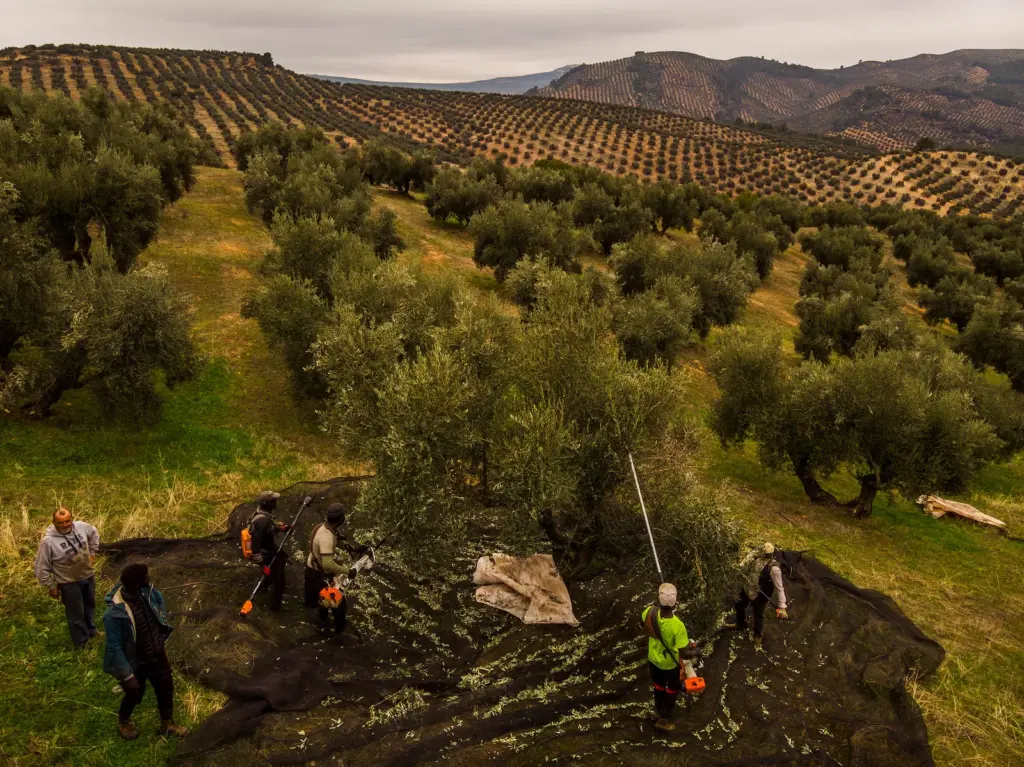
Thus, the study concludes that the most optimal way to seek the viability of olive mills is through their integration into large cooperative groups that currently lead the olive oil market, such as DCOOP, Oleoestepa, Jaéncoop, Interóleo, or MIGASA.
The seriousness of the situation has been reflected in the updated cost study by the Spanish Association of Olive Municipalities (AEMO). The work, carried out by the technical team coordinated by José María Penco, anticipates especially worrying conclusions: with an average price of 3.51 euros per kilogram (at the end of June), more than 75% of the Spanish olive-growing area is operating at a loss or on the verge of unviability, especially that linked to traditional and mountain olive groves.
According to the AEMO study, the average cost increase has been 57% in just six years. The data are conclusive. The study places the production cost of oil at 5.31 euros/kg in traditional non-mechanizable rainfed olive groves (mountain olive groves), 4.55 in traditional mechanizable rainfed, and 4.18 in traditional mechanizable irrigated. But AEMO emphasizes that the problem no longer only affects the most vulnerable olive groves: even in the most efficient systems, such as intensive and hedgerow olive groves, costs are already above three euros per kilogram, with values of 3.52 euros/kg in rainfed intensive, 3.19 in irrigated intensive, 3.29 in rainfed hedgerow, and 3.07 in irrigated hedgerow. These costs include operating expenses, milling, land rent, and investment amortization.
“Traditional olive groves have a future if we guarantee the profitability of our farms. And that is achieved through the differentiation of the extra virgin olive oil we produce, which must have an origin price that allows farmers to obtain profitability,” emphasizes José Gilabert, president of the Protected Geographical Indication (PGI) Aceite de Jaén and the OliveA Tradition and Progress Association. This association, which brings together olive growers from Jaén, Córdoba, and Granada, provinces exemplifying traditional olive growing, considers that the key lies in decisively betting on the valorization and differentiation of oil from traditional olive groves, a product whose uniqueness is closely linked to quality, the health benefits of the Mediterranean diet, environmental sustainability, and the maintenance of the social and economic fabric of producing areas.
Read more Federico García Lorca lights up the autumn of cinema in Spain