






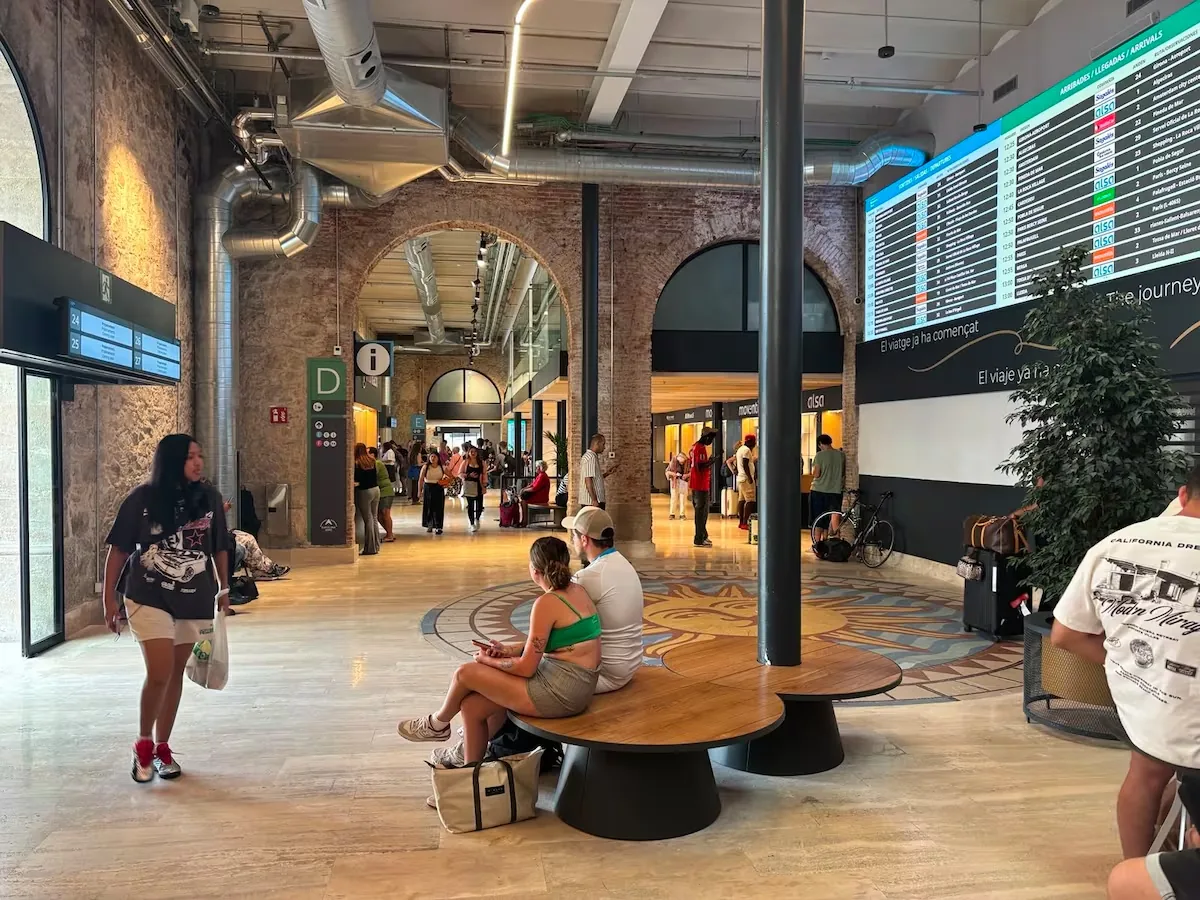
In 1862, the Estación del Norte —a name it would not have until 1878— was inaugurated as a railway station. Half a century later, in 1910, it was expanded with the construction of the showcase facade, which has become a symbol of the facility. In 1983 it began to operate as a long-distance bus terminal, and with the Barcelona Olympic Games in 1992 it underwent a major renovation. Since then, the Estación del Norte has remained the same in its structure, but the flow of buses, people, and routes has increased exponentially. A year ago, the executive of Mayor Jaume Collboni began the terminal’s renovation with an investment of 14 million euros —4.8 from the Next Generation funds— to turn it into the “model of the future” that was unveiled this Tuesday with a new brand: Barcelona Nord.
“It’s like a small airport,” added the mayor at the station’s inauguration, which he described as “organized, rational, with all services and security.” Precisely, the latter is one of the points that has raised the most complaints from neighbors in recent years, along with noise and environmental pollution. Laia Bonet, first deputy mayor, highlighted the role of the neighbors —“without them this station would not be what it is”— while excusing these problems due to the increase in trips —7,000 buses enter and leave the city every day— and the lack of other modern stations in the city: “Sagrera and Plaza España will be a reality in the coming years.”
The mayor also spoke about future plans, stating: “This investment must extend to the entire city.” Only at Estación del Norte, trips have increased by 50% in five years, added to “the Rodalies crisis,” buses must be “a real, effective, and economical alternative,” he emphasized. Now the station has only one floor for all services, 1,500 square meters of lobby, and a single entrance and exit door to “facilitate the user experience” in what the mayor called to be interpreted as “a shift” that prioritizes buses as an element of urban mobility. The renovation also sought to maintain what the mayor defined as a “historical detail”: the mosaic of Helios and the lunar phases, restored and relocated in the new lobby.
Read more Vic closes the Remei social shelter after 14 years of operation due to «security issues»
Bonet wanted to emphasize the improvement of information: “It’s not just infrastructure, it’s quality information.” This philosophy will be maintained in the rest of the planned station works, as well as in shorter-term actions such as the stops on the Diagonal corridor, according to the councilor.