







Mexico is about to launch its comprehensive plan against sargassum. The strategy aims to solve one of the main environmental and tourism problems of the Mexican Caribbean, and will be focused on the beaches of Quintana Roo. The plan, announced by President Claudia Sheinbaum during her morning conference this Thursday, establishes actions for collection offshore, expansion of containment barriers, and a final management of the macroalgae to prevent its accumulation on the beaches through an investment of 2.635 billion pesos
Read more Costa Rican Grynspan leads the first informal vote to choose new UN leader
The authorities hope that the plan will become a model to follow in other regions affected by sargassum. The proposal, they say, stands out from other international strategies because it is not limited to beach cleaning, but prioritizes the interception and collection of sargassum before it reaches the coast.
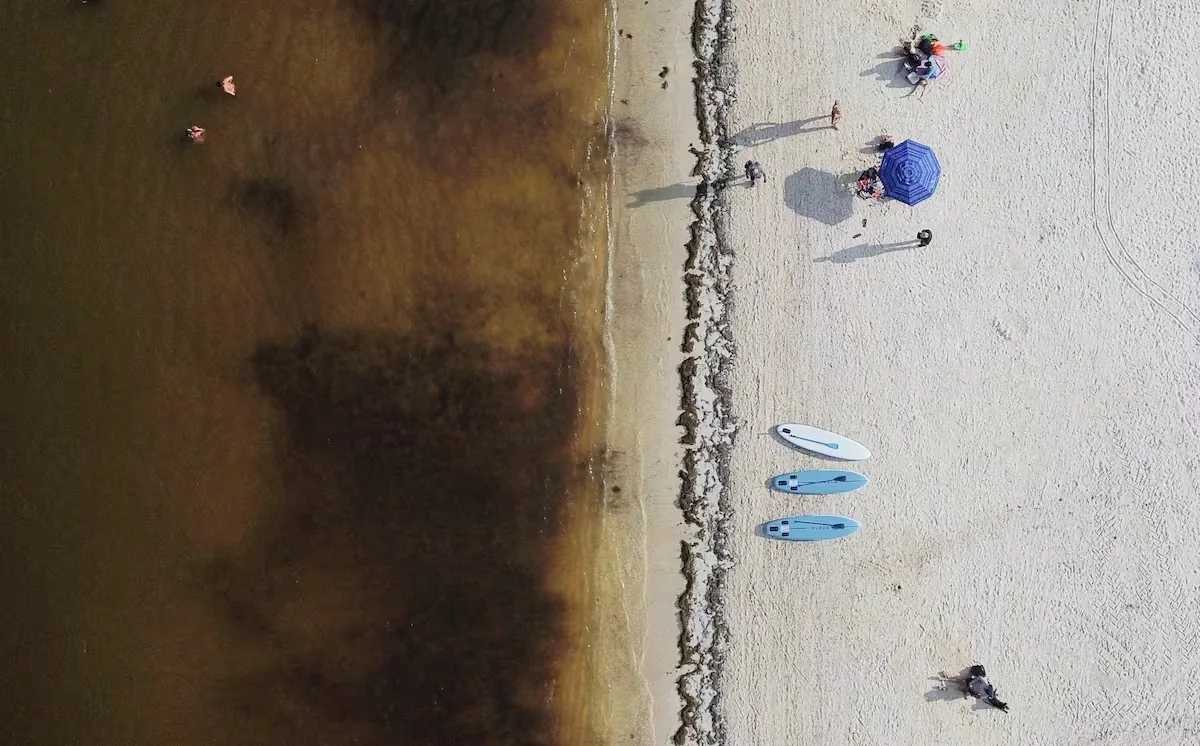
Quintana Roo faces a negative perception among some tourists due to the presence of sargassum, a phenomenon that has grown in recent years and affects the image of the destination.
Sargassum is a marine algae that began to cause alarm in Mexico since its first massive arrival in 2011. There are two main species, Sargassum natans and Sargassum fluitans, native to the Atlantic, which float thanks to air vesicles and arrive in large quantities to the Caribbean and the Gulf of Mexico.
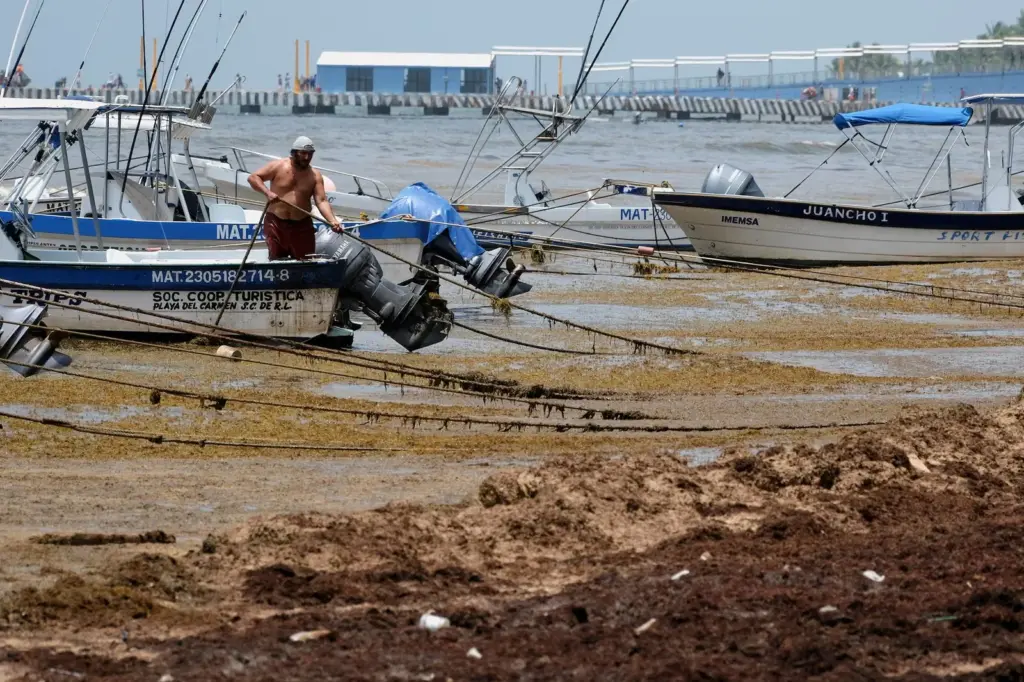
Although in open sea this algae serves as refuge and food for marine species, its massive accumulation on the coasts — as has happened in Cancun and Tulum since 2013 — brings serious consequences. Sargassum blocks sunlight, affects the photosynthesis of other marine plants and, when decomposing, releases toxic gases such as hydrogen sulfide, with risks both environmental and for human health, according to the National Autonomous University of Mexico (UNAM).
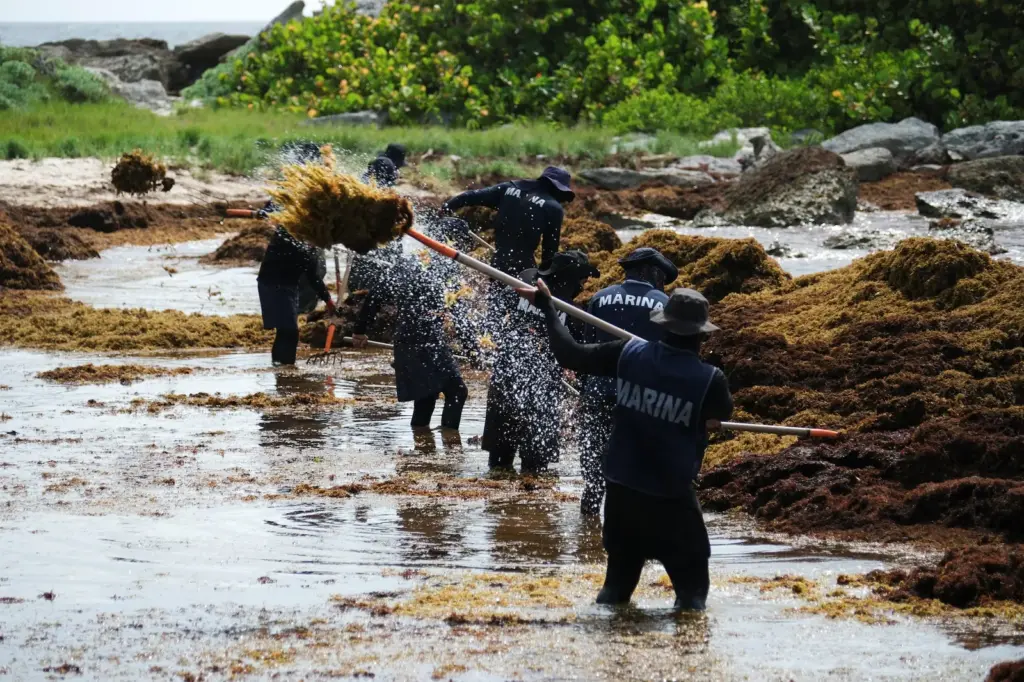
The plan, to be implemented in stages, consists of strengthening the fleet and specialized personnel in sargassum collection, with 11 sargassum vessels, an oceanic vessel, an amphibious sargassum vessel, 18 smaller boats and 16,000 meters of containment barrier, as well as brigades for collection at sea and on the beach.
The operation will be carried out in Cancun, Tulum, Puerto Morelos, Playa del Carmen and Mahahual, municipalities selected for concentrating between 40 and 50 kilometers of beaches with high tourist influx in summer 2026. Work will also be done on recycling the macroalgae to prevent it from causing problems on the beaches.
The president has added that the strategy will be supported by satellite monitoring to identify which beaches are free of sargassum and which register the highest arrival. “We are going to buy more boats to capture it at sea, which is the best way to do it, and work so that sargassum is recycled, so it does not cause problems on the beach, among other actions,” she has stated.
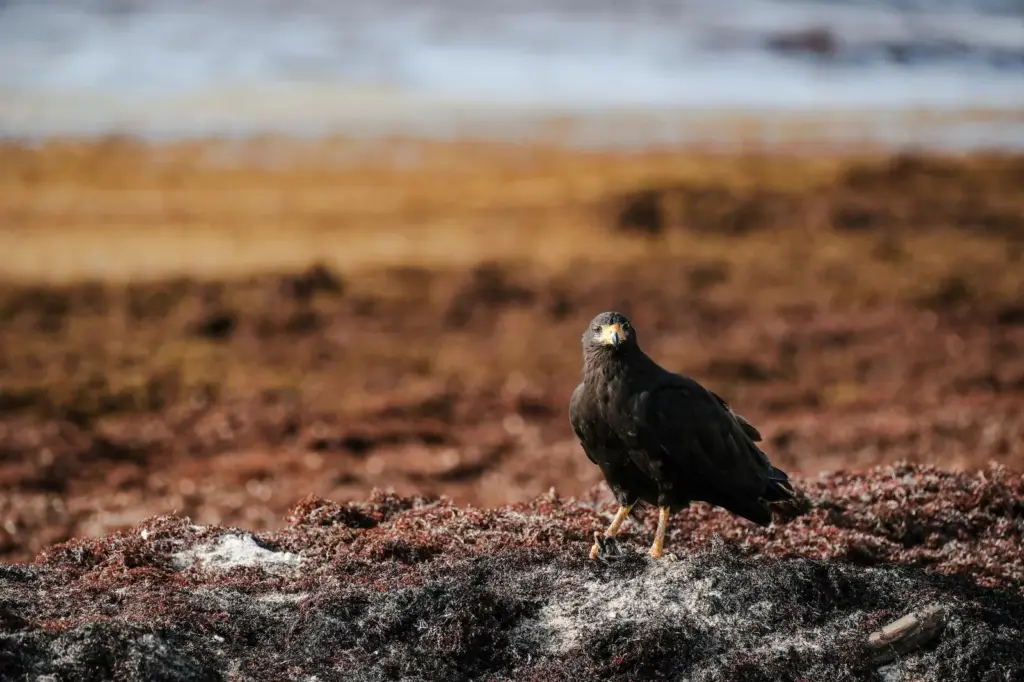
Alongside the ecological damage, sargassum hits the coastal economy, as it drives away tourism and affects local businesses. Added to this is a health risk, as sargassum can contain arsenic, copper, manganese, and molybdenum, elements that in high concentrations are harmful both to people and to the region’s flora and fauna.
In studies led by UNAM, aluminum, lead, zinc, and other metals have also been found, with arsenic being the greatest concern, as it has appeared in various sargassum samples and in most cases has exceeded the limits allowed for human and animal consumption.
Subscribe to EL PAÍS Mexico’s newsletter and to theWhatsApp channel and receive all the key news about the current affairs of this country.
Read more The Valencian bullfighter El Niño de las Monjas suffers a severe goring in the neck in Peru