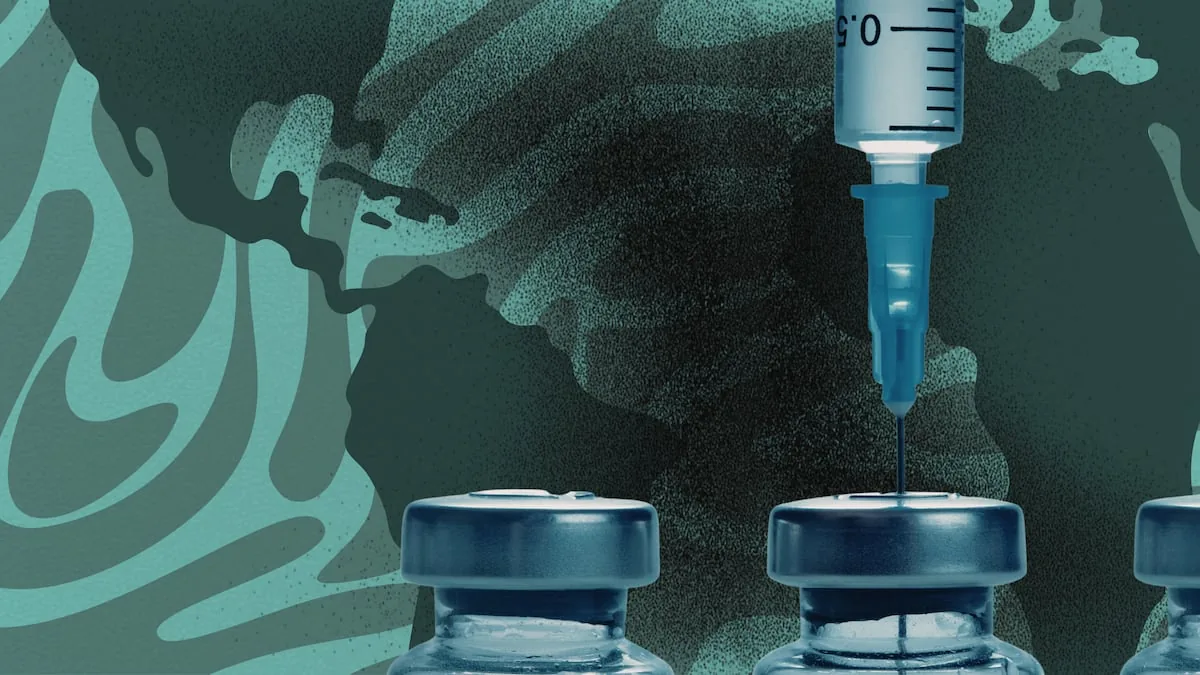








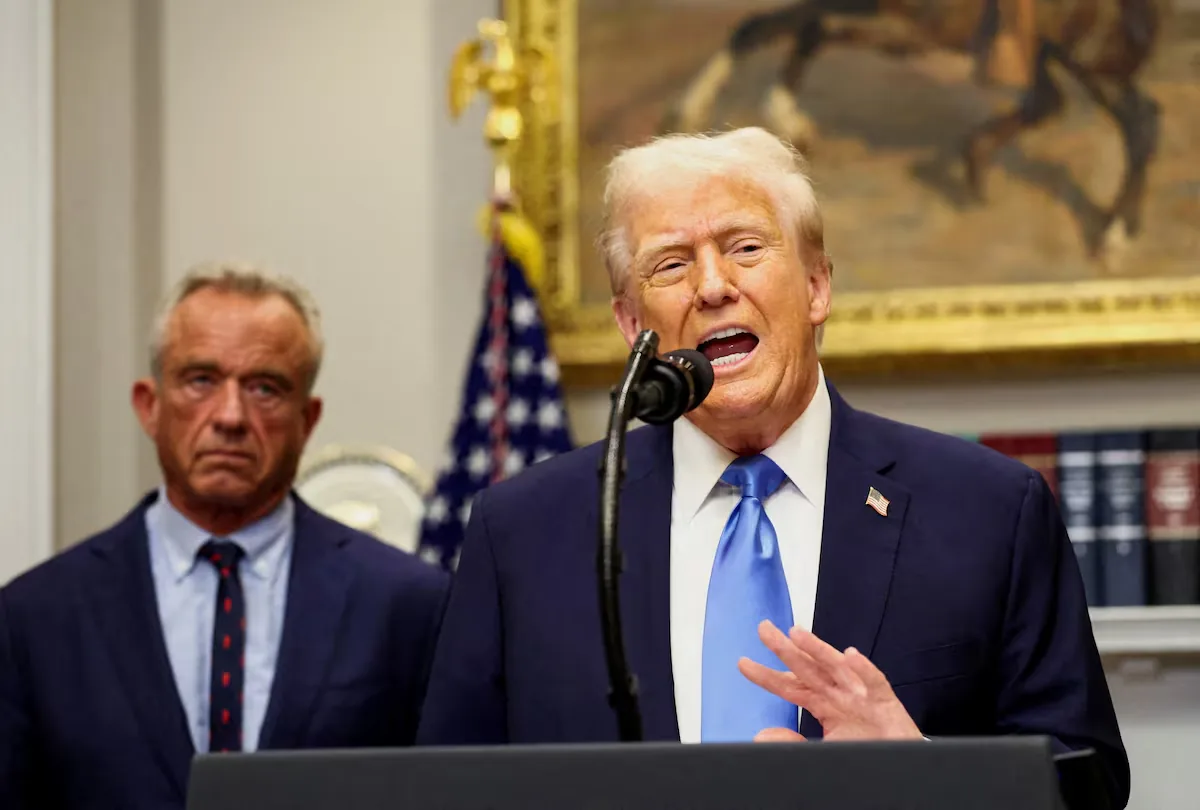
Donald Trump’s demand that pharmaceutical companies raise drug prices in Europe to lower them in the United States is now more than just another bombastic claim from the president of the world’s leading power. The leading scientific journal The Lancet publishes this Monday a pioneering study warning about the real risk that measures promoted by Washington will “reconfigure global pharmaceutical markets,” “lead companies to raise drug prices” in other countries — such as Spain — and “delay” the launch of new therapies there. The study was conducted by experts from renowned institutions such as the London School of Economics and the universities of Harvard and Zurich, among others.
Read more The United States remains the unbeatable team
The “most favored nation” policy, as Trump’s initiative is called, aims for the US to stop being the country with the most expensive drugs in the world. The measure plans to compare the prices paid by Medicare — the public insurance covering 68 million Americans over 65 — for each drug with those in selected reference countries (the most developed, including Spain). “When Medicare prices are higher than those in comparable countries,” pharmaceutical companies will have to refund the US government the difference through “additional rebates,” the study states.
The potential savings for Washington are enormous. After analyzing a sample of 195 patented drugs on which Medicare spends nearly 76 billion euros annually within the GLOBE purchasing system — hospital drugs — and GUARD — pharmacy sales — the researchers conclude that the bill could be reduced by 16% to 18% “in its initial phase” and up to three times more after five years. “South Korea, Norway, and Australia are the most frequently used reference countries by Medicare to set prices,” the authors reveal.
The problem with this policy is that, for three out of four drugs studied, pharmaceutical companies would have to return to Medicare much more money — “about 3.8 times more” — than they earn thanks to “annual sales of the drug in the chosen reference country.” In other words, “keeping prices low in these countries would cause manufacturers to lose more Medicare revenue than they gain by marketing their drugs there.” This creates “a strong incentive to raise prices” or not sell their drugs elsewhere in the world to avoid penalties in the US.

“US policies can impact access to medicines globally. Policymakers should ensure that the availability of important medicines is not delayed as a result,” warns Kerstin Noëlle Vokinger, from the University of Zurich (Switzerland), one of the study’s authors.
Despite limitations of the study, such as the need to estimate actual prices of many drugs due to the opacity of contracts between governments and pharmaceutical companies, consulted experts highlight its relevance because, among other advances, it quantifies for the first time the consequences of Trump’s policies on the global pharmaceutical market.
One of them is Jaume Puig Junoy, economist and professor at UPF Barcelona School of Management, who has just published the book The Geopolitical Disruption in Health Policy: “Most Favored Nation” Policy in the United States and International Reference Prices, edited by FUNCAS. “The study provides very useful evidence confirming one of the book’s theses: when a low price in a small market causes a much greater loss for a pharmaceutical company in the US, incentives increase to delay launches, raise prices, or make confidential discounts.”
However, Puig Junoy warns, this policy could harm other countries without bringing significant benefits to Medicare: “If the US remains the primary market and sets high initial prices, these may end up rising in other countries. This would make the savings obtained by Medicare insignificant.” The key idea is that the reduction in US spending “is not an isolated result but depends on how companies and health systems in reference countries react.”
This position raises a key question for Spanish public health: the impact Trump’s most favored nation policy will have on it. Jaime Espín, professor at the Andalusian School of Public Health (EASP) and former advisor to the World Bank and the European Commission, considers that “a possible delay in the launch of some drugs and attempts to raise prices” is foreseeable.
“These increases, however, can be mitigated with innovative financial instruments,” adds this expert referring to clauses that can be included in contracts between governments and pharmaceutical companies to keep final prices confidential. Regarding The Lancet study, Espín highlights that “it makes a novel quantitative assessment of the impact of these policies on public procurement in the US,” although he notes that “it does not estimate the implications on prices or possible delays in the launch of new drugs in the EU.”
Beatriz González López-Valcárcel, professor at the University of Las Palmas de Gran Canaria, does not yet see “tangible consequences” of Trump’s policies in Spain. “It is not something we have observed, at least not generally,” she states. In her view, among other measures, other governments may activate formulas to “get off the radar” as a reference country for the US “by modifying the presentation and packaging so they are not comparable to those in the US.” These changes would make the price comparisons sought by the Trump administration impossible.
A recurring issue in this situation is price confidentiality, which experts like González López-Valcárcel believe could now “intensify” to avoid unwanted increases due to Trump’s pressure on pharmaceutical companies. Spain, for example, has followed this strategy in recent months by legally ensuring that prices remain secret.
The Director General of Pharmacy at the Ministry of Health, César Hernández, admits that the pressure caused by Trump’s policies “is real” in the relations the administration maintains with the sector. “There is a risk that the industry will try to prevent European prices from conditioning those obtained in the United States,” he explains. Despite this, this senior official maintains that so far he has only observed “a certain slowdown” in some commercial proposals, something he considers may be due to a kind of impasse while “the real consequences of US policies are clarified.”
Hernández rejects as “simplistic” the argument that “Europe pays too little for medicines” and defends that “European health systems contribute very significantly to innovation through funding drugs, public research, clinical trials, scientific infrastructure, and evidence generation.”
Therefore, and although he considers it “legitimate to debate how to fairly distribute the global effort in innovation,” the director general maintains that “the characteristics and internal problems of the US market cannot be automatically transferred to European systems.” Nor, he adds, “is there any reason to apply general or automatic price increases in Spain, the EU country that dedicates the most to medicines in proportion to its GDP.” Health is, in any case, “willing to adequately recognize innovation, but each decision must be based on evidence, therapeutic value, and budget impact,” Hernández concludes.
Read more The magical spontaneity of Alison dos Santos colors the end of the Ultimate with happiness