








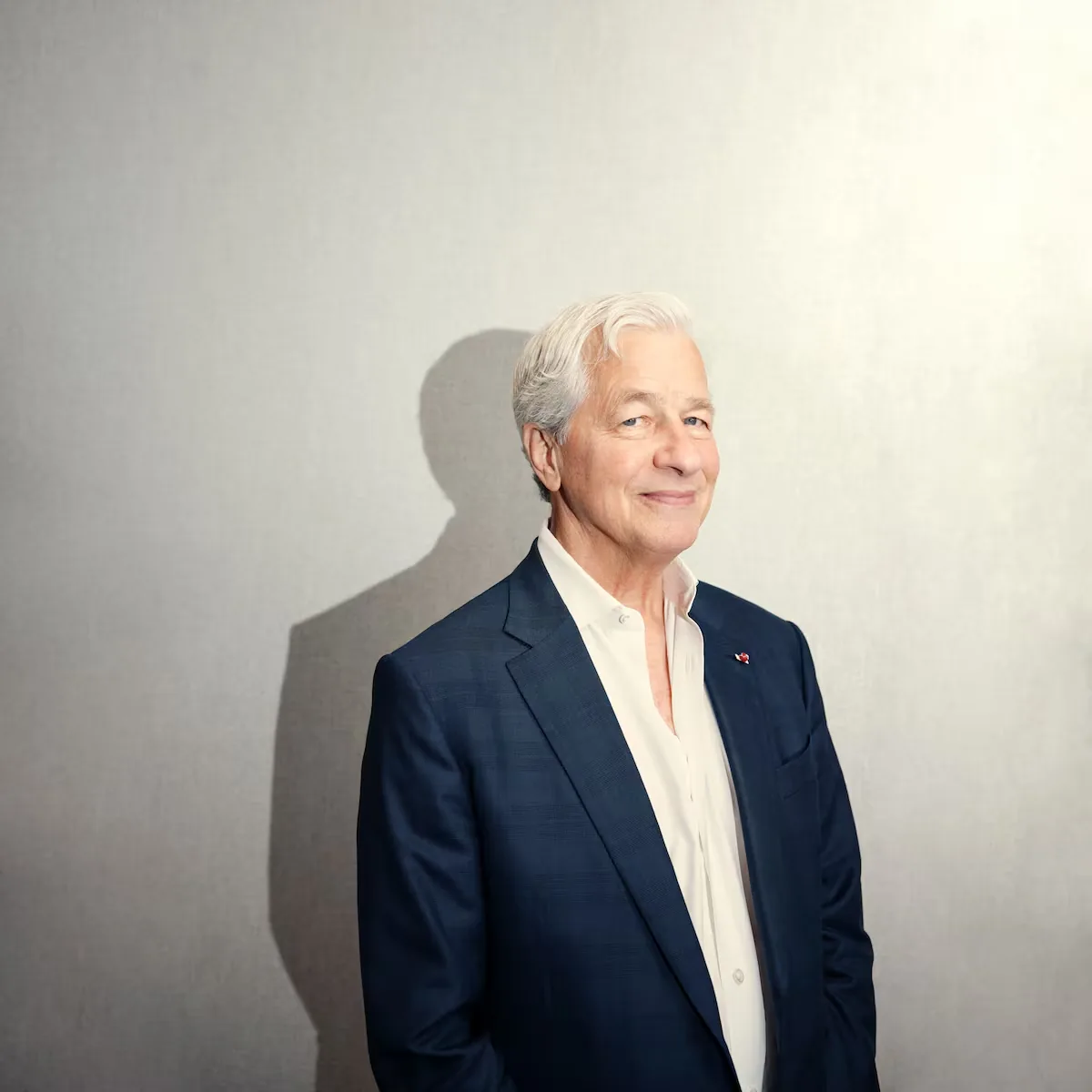
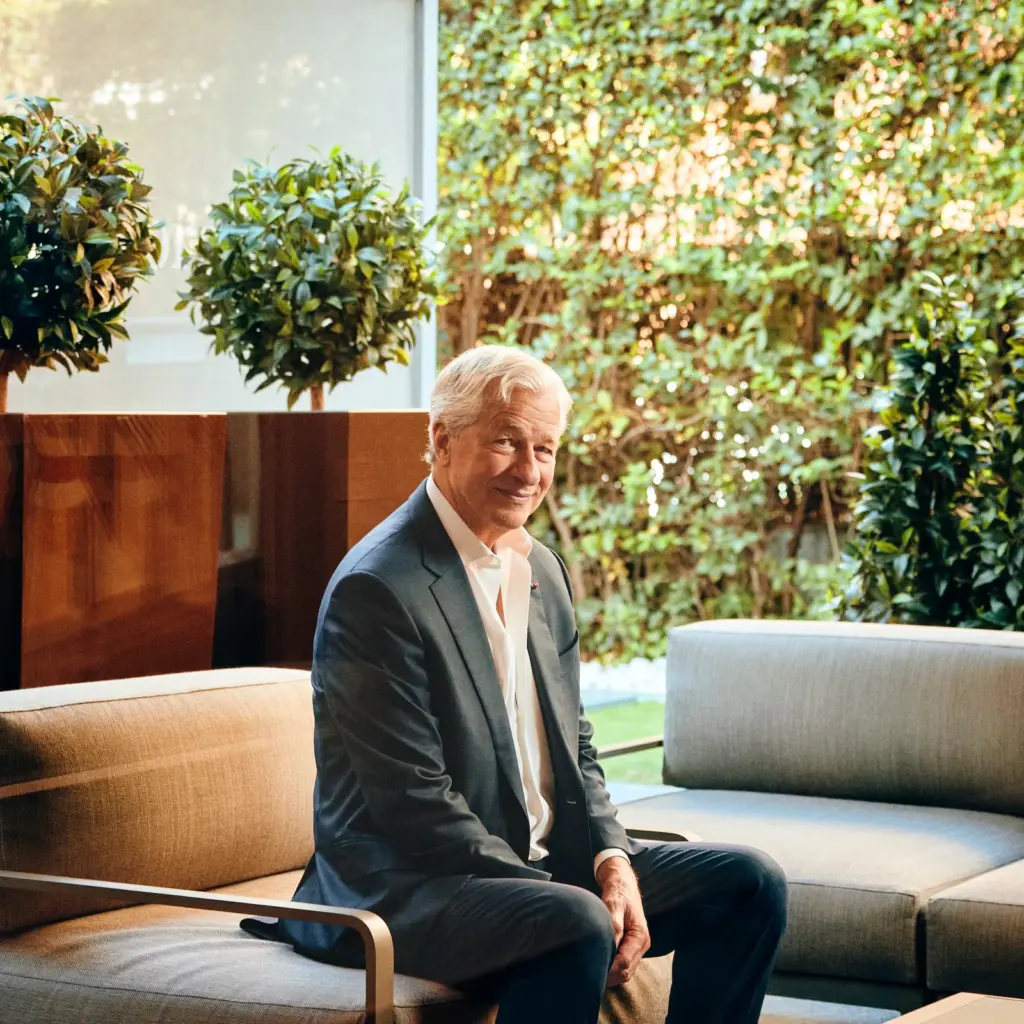
In the Pirámide Building, located on the Paseo de la Castellana in Madrid, some of Spain’s most important business operations are designed, and the great fortunes come seeking investment alternatives for their money. It is the headquarters of JPMorgan, the largest bank in the world (excluding Chinese firms with state control), and on July 10th, the atmosphere of great occasions was palpable. Everything was arranged, including rose centers with the colors of the flags of Spain and the United States, to receive the “boss.” None other than Jamie Dimon, the last banker before the financial crisis who still holds the position. Born in New York 70 years ago, he has served as chairman and CEO since 2006.
Read more At least eight dead in a Ukrainian bombing of facilities of a major logistics company in Russia
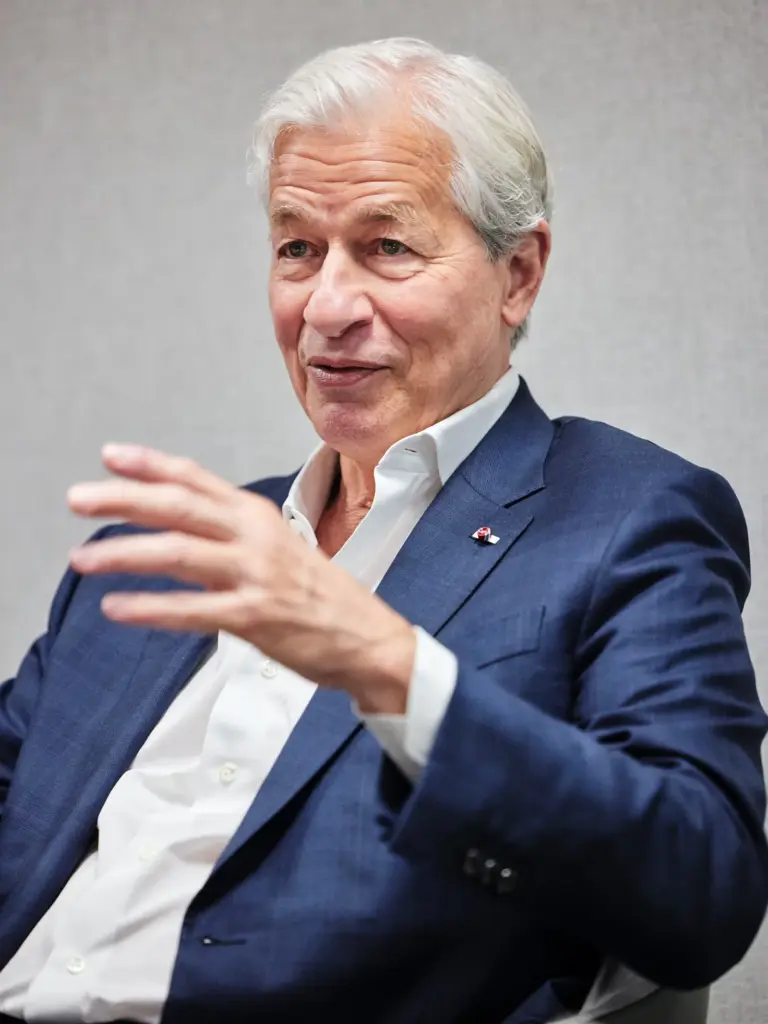
Under his leadership, the entity has become a giant with assets valued at five trillion dollars. Dimon, who dined the night before with about twenty of Spain’s top businessmen, gives an exclusive interview to EL PAÍS accompanied by Ignacio de la Colina, the bank’s head in Spain. He arrives without a tie, with the last buttons of his white shirt undone. He greets in an executive manner. He conveys the feeling that when you are with him, there is never time to waste. The interview takes place days before JPMorgan presented its second-quarter results, a period in which it earned 57.347 billion dollars (50.304 billion euros), 27% more, and its profit improved by 41%, up to 21.155 billion. Never before had a bank earned so much money in three months.
Question. What are your prospects for the second half of the year?
Answer. In general, I don’t usually focus much on the short term because it is subject to conjecture, but so far everything is going well. My experience, however, tells me that in life there are inflection points that no one knows when they will arrive. The United States seems to be in good shape, but there are other problems in the world that could alter this situation.
Q. Which business areas are performing better and which need improvement?
A. Most business areas are doing well. This gentleman [pointing to De la Colina] is doing an incredible job in Spain, but when we delve into the situation in other countries or specific divisions or products, we see that in some cases they are not performing as expected. It is important to recognize that we are not excellent at everything, that others do some things better. Only then can we address our weaknesses.
Q. Will JPMorgan’s growth be only organic? Or are new acquisitions considered?
A. The important thing is that we can grow 100% organically. Sometimes people don’t give organic growth the importance it deserves, but to achieve it, you have to hire good professionals and have the best systems. That’s what we do in all areas. For example, we have now launched a strategy to open 500 branches in small towns in rural areas of the United States. Although our own momentum is enough for growth, we are always looking for opportunities to grow inorganically as well. You learn a lot when looking for these alternatives, but it should never be an excuse, as happens with some companies, not to grow organically.
Q. A few months ago, you said that after certain regulatory reforms, you had freed up capital and had 20 billion that could be allocated to acquisitions. Do you already have any targets in sight?
A. We are not obligated to spend that money; it is not a self-imposed limit. If we wanted, we could move up to 200 billion to finance a new operation, but we are not going to do it. Among other things, because in the United States we cannot buy a bank. It is more likely that what we finally do will be a smaller, more specialized operation that improves what we already have, in areas such as data management or payment methods.
Q. The problem is that right now everything is very expensive…
A. I am a very patient person.
My goal is to create a pan-European digital bank with Chase, and we aspire to be in the main countries of the continent”
Dimon’s control of timing is a hallmark of his management style. Always waiting for the right moment for the big move. The financial crisis caused by subprime mortgages was his big opportunity. After reluctantly accepting state aid because he argued he could function without assisted breathing, he took advantage of the Great Recession to bring JPMorgan, then the third-largest bank in the United States, to the top spot. The Federal Reserve needed solvent firms to take over the weaker ones, and Dimon seized the opportunity. Bear Stearns and Washington Mutual came under his control. These were risky operations because no one knew at the time what was really on those banks’ balance sheets, but the price was a bargain. In May 2023, he repeated the move when he took control of First Republic Bank after the massive deposit outflow that caused the collapse of Silicon Valley Bank in certain regional banks.
Q. The Trump administration introduced regulatory changes that favor the financial sector by freeing up capital. However, you insist that reforms must go deeper to allow banks to help the real economy even more. What exactly do you mean?
A. I am not asking the administration to make changes to favor banks. In the last 15 years, many rules affecting the financial sector have been introduced, and the question they should ask is whether the results sought with this regulation are being achieved, whether they have made entities finance the real economy. If there were real dialogue between regulators, governments, and banks, more could be done for the common good. When capital is freed, there is the idea that banks are less safe, and that is not true. In recent decades, two large banking groups failed in the United States, and it had nothing to do with this but with poor management and lack of balance.
Q. JPMorgan launched Chase, its digital bank, in the United Kingdom three years ago, and since last May it also operates in Germany. When will it arrive in Spain?
A. In the United Kingdom, we already have more than three million customers, and in Germany, in just a few months, the deposit figure reaches 12 billion dollars. These good figures confirm the goal we set ourselves, to create a pan-European digital bank, is possible. We are incorporating credit cards and investment products into our services. In the future, the intention is to reach more European countries, the most important ones, but we have not yet decided which.
Q. In digital banking, especially among younger customers, neobanks are gaining market share. How can a giant like JPMorgan compete against smaller, more agile entities?
A. Some neobanks and fintech are excellent. JPMorgan gains market share in many businesses and countries, including consumer banking in the United States, but to achieve this, you have to invest and hire the right people. There is nothing neobanks do that we cannot do. If we don’t succeed, it will be due to our own weaknesses such as excessive bureaucracy, complacency, or slowness, and not due to a genetic issue.
Q. What do you think about Revolut’s success? It plans an IPO with a valuation close to 200 billion dollars…
A. I applaud Revolut’s success. Seeing people succeed this way seems great to me. When I read about their IPO, I think it could have been us if we had started earlier, but I think it’s fabulous because it means there are good things we can aspire to if we keep our competitive spirit alive.
The resilience of the global economy is partly due to financing everything with more debt and deficits. I’m not sure how long we can continue like this”
Dimon’s origins fit well with the pattern of the American dream that now seems to be fading with Donald Trump and his crusade against immigrants. He spent his childhood in Queens and still retains a rather strong accent from that time, combined with great speed when speaking. His grandfather, born in Greece, arrived in the United States penniless. Panos Papademetriou changed his name to Panos Dimon and, after trying his luck in various trades, made a career as a financial agent at Shearson Hammill & Co, where the current JPMorgan chairman’s father also worked.
After graduating in Psychology and Economics from Tufts University and earning an MBA at Harvard, Dimon continued the family connection with the financial world. His professional godfather was the legendary banker Sandy Weill. With him, he went to Baltimore to work at Commercial Credit. This entity, which over time became Travelers, merged in 1998 with Citicorp in a mega-operation worth 70 billion dollars that gave birth to Citigroup. He was at the top, but his mentor fired him at the end of that same year, ending 15 years of professional relationship. Weill confessed to The New York Times that Dimon aspired to the CEO position, but he was not willing to retire yet.
After some time on the sidelines, Dimon became the CEO of Bank One in 2000, a position he held until the merger with JPMorgan in 2004. He spent a year as chief operating officer of the resulting entity until January 1, 2006, when he arrived at the main office of the entity — whose origins date back to 1799 — a place he has not left since.
Q. When you presented the first-quarter results, you warned shareholders that your mission was to prepare the bank for a wide range of scenarios. With the current geopolitical chaos and volatility, how do you manage a multinational?
A. The economy has its ups and downs, and you have to know that there are global movements causing changes. The most important thing is to serve customers better and faster, regardless of the economic cycle phase we are in. In such a volatile world, internal controls are also very important; authorities conduct a stress test on banks once a year, but we do 100 a week. The geopolitical situation is quite serious. It is important to maintain cohesion among allies, and from the bank, we try to contribute to this with initiatives like “Security Resilience” to help the Western world ensure its resistance not only in military matters but also pharmaceutical or technological.
Q. Despite wars, tariff increases, and energy shocks, the global economy has accumulated five years of sustained growth. To what do you attribute this strength?
A. I will give you two explanations, one good and the other not so much. The good one is that the economy is much larger, and energy is a component with less weight than a decade ago. It is possible that we have a more diversified economy with greater capacity to better withstand crises. That does not mean we will not reach an inflection point where the economy slows down or enters a recession, but perhaps more factors are needed to cause it than before. The less good explanation is that we are financing everything, that is, much of the economy’s resilience is due to increased deficits and public debt. I am not sure how long we can continue like this before sovereign debt becomes a risk in itself.
Q. What other risks would you highlight?
A. There is a long list: Ukraine, the Middle East, terrorism, the West’s relationship with China, oil… And I would also highlight cyberattacks and their impact on public and private security. With artificial intelligence, this factor is even more delicate.
Q. What does JPMorgan do to combat cyberattacks?
A. We invest a lot of money and time, as well as allocate many resources to this issue. But even though we have systems that make it seem like we are in Fort Knox [the U.S. military base where the gold bullion deposit is], it remains a permanent risk, as it is for all companies.
Central banks do not have absolute control over monetary policy”
Although accompanied by an undeniable aura of success, Dimon, married (his wife, Judy, accompanied him this time on his visit to Madrid) and father of three daughters, has had several setbacks, both personal and professional. Among the professional ones, perhaps the most serious occurred in 2012, when all the bank’s controls failed and one of its traders caused losses of more than 5 billion due to very high-risk derivative operations. That case was dubbed “the London whale,” and Dimon had to apologize publicly and answer to shareholders.
On a personal level, the banker has had to go through some serious health problems. In 2014, he informed his employees and the market that he had been diagnosed with throat cancer. After overcoming it, in 2020 he had to undergo surgery for a heart problem. Despite these setbacks, he appears in great shape and maintains a hectic schedule. In fact, an interview explaining what a normal day in his life is like has gone viral on social media: he gets up at 4:30 a.m., reads five newspapers (some entirely; others only the economic or opinion pages), exercises a bit, and then goes to the office.
Q. The Federal Reserve has a new chairman. What is your opinion of Kevin Warsh?
A. He is a capable and intelligent person. I am glad he was chosen. Also, I think his first decision to take a step back to review everything that has been done and how it has been done is right. When someone takes a new position, they have to do it from a new perspective. And in the last 20 years, the Federal Reserve has done nothing but add new rules. Perhaps Warsh wants to change things. In my opinion, he should because we have had excessive quantitative easing and too many rules and regulations that have harmed the economy.
Q. Will we also see changes in strictly monetary policy?
A. Central banks do not have absolute control over monetary policy. If analyzed from a historical perspective, when inflation rises unpredictably (and price increases are usually unpredictable), they have to react by raising rates. So the idea that they have control and can do whatever they want based on data is wrong. And then there are two types of data, current, which are seen, and future, which are uncertain. The latter are usually not included in models, but the increase in deficits, higher trade costs, or state rearmament are all factors with an inflationary impact.
Q. During Jerome Powell’s last stage at the Fed, Trump exerted heavy pressure to lower interest rates. Do you think the reputation of this important institution may have been damaged?
A. It is true that there has been pressure, but other central banks face the same. I doubt there has been any president or prime minister in any country who has not wanted interest rates to be lower to boost the economy. Powell did his job and made the decision he thought was best regardless of the pressures. Warsh probably also has those pressures, and I hope he does the right thing. But the decision does not depend only on the Federal Reserve chairman; there are 12 people at the table who decide.
Q. The market has started to price in rate hikes, both in the United States and Europe. What do you think?
A. Sometimes market expectations are wrong, but maybe this time they are right.
Q. Stock markets are at historic highs. Many indices have risen more than 200% since the pandemic. Do you think there is a risk of a bubble forming?
A. Stock prices are very high, and it is a risk. If something goes wrong, the fall could be big. To sustain current levels, corporate profits should grow significantly over the next two years, and that is a future possibility; no one is certain it will happen. I think the probability of something going wrong in the economy is higher than the markets price in. I am not saying the probability is 80%, but neither the 15% investors expect; I would say there is a 30% chance that stocks fall. No one saw the 1974 crisis or the 1987 stock market crash, the internet bubble in the 2000s, or the 2008 housing crisis coming. But you have to be prepared in case it happens again. There are many problems in the world right now, and it is difficult for all to be resolved well.
Q. You are very critical of the growth of the private credit market where private equity firms or fund managers finance companies. Are you critical because this trend means more competition for traditional banking or because you believe there is a systemic risk?
A. Competition does not bother me because I think it is good. I would not say I have been critical, more analytical. I am not talking about systemic risk because the size of the private credit market is relatively small compared to the entire financial system. What I have said is that the parameters for granting those loans have become more lax. There is a refinancing risk, and that means many companies will have to borrow at higher rates, and many are not prepared to refinance their bonds or leveraged loans with rates 400 basis points higher. And that would put great pressure on the system in general, including banks and the real estate sector.
My retirement will not be soon. I will continue for a few more years and then could stay as ‘chairman”
JPMorgan has a market value of nearly 920 billion dollars. Since Dimon has been at the helm, shares have appreciated 720%. His own bank account has benefited from this rise, as much of his compensation is in shares. Last year, he earned a total of 43 million dollars, and his total net worth, according to Forbes, is valued at 3.1 billion dollars. Besides consolidating JPMorgan as the world’s top bank, Dimon leaves a spectacular new headquarters inaugurated in 2025. At 270 Park Avenue stands a 60-story, 423-meter skyscraper designed by Norman Foster, which has become the sixth tallest building in Manhattan (New York). It is a vibrant moment on Wall Street thanks to all the investment AI is driving.
JPMorgan was one of the entities involved in the placement of SpaceX shares, the largest IPO in history.
Q. It is clear that AI will not only transform the economy but also our lives. However, don’t you think the valuation of companies in the sector is excessive, many of which are still cash-burning machines?
A. I think this question has two answers. On the one hand, the revolution AI brings is clear; it will bring many valuable things, and even its application in medicine will save millions of lives. Therefore, much of the expectations being priced in now are justified. Now, is there a bubble in valuations? Maybe. But the same happened at the beginning of the century with the early days of the internet. Was all that euphoria amortized over time? Of course. Was it partly a bubble? Also. I think this example reflects what can happen with AI now. This game has just begun, and there will be winners and losers because there is a tendency toward self-sufficiency, for companies to build their own data centers and even their own semiconductors or advanced language models.
Q. How does JPMorgan use AI to transform the way it does banking?
A. There is a team of more than 1,000 people dedicated to AI development, and we have more than 500 very specific use cases. For example, the bank moves 15 billion dollars a day in operations worldwide, and one of our concerns is fraud prevention. We have developed a system that recognizes patterns, and with that, we have reduced risk in this field. Also, we use AI in marketing, idea generation, customer error detection, document reading… AI is a great tool to achieve our goal, which is nothing other than providing better service every day.
Q. One of the biggest fears is AI’s impact on the labor market. Are many of us going to be left without jobs?
A. People make a huge mistake. Most technological developments in history, from the steam engine to the internet, have brought enormous benefits to society, and AI is already doing so. It increases productivity, and new and better jobs will be created. It is true that some sectors have been or will be harmed by AI. Therefore, as a society, we must think about how to face this challenge, prepare for what is coming, which is something we still do not have clear. Companies, public administrations, unions… We all have to think about how to retrain those whose jobs are replaced by AI and train new generations in the skills that will be required in the future.
The US must remain in NATO and strengthen it, not weaken it”
Dimon’s succession has been a topic of much discussion for a long time. Every time a possible successor seemed to consolidate, they ended up out of the running, as happened to him with Weill. However, in June, the bank took a step that seems to have started the succession race. Specifically, two co-presidents were appointed: Doug Petno as head of commercial and investment banking, and Troy Rohrbaugh, leading the consumer unit. The promotions caused the departure of veteran Marianne Lake, who until then was leading the bets to take the reins.
Dimon’s hypothetical departure also opens another issue. He has always been linked to a possible political career, something he has fueled with statements like those he made a couple of years ago to Bloomberg: “I love my country, and maybe someday I will serve it in one way or another.” In a context of extreme polarization in the United States, many see him as someone who can unite wills. In 2023, Bill Ackman, a fund manager and one of Wall Street’s most respected voices, posted on his X account a message declaring that Dimon was the ideal person to occupy the White House: “He is centrist, supports businesses and private initiative, but also supports well-designed social programs and rational fiscal policies that can help the disadvantaged.”
Q. Does the appointment of the two co-presidents mean you plan to retire soon?
A. Well, not soon. I will continue in my position for several years, and after that, I could stay as chairman [non-executive chairman] or a similar figure. But it is true that both appointments are extraordinary. It is not a succession race, but the most suitable person — for their heart, soul, mind, ethics, and work spirit — should finally take the position.
Q. Have you ever considered running for the presidency of the United States?
A. It is something I could do, but I have no intention of running.
Q. You have no intention now, or do you rule out that possibility?
A. I have no intention of doing it. I love my job. From my position, I can make the world a better place, and that is what I intend to keep doing.
Q. You are critical of Europe and warn that if it does nothing, it will lose the competition against the United States and China. What is your recipe to prevent that?
Q. It is not just my opinion; within Europe, there is also consensus that measures must be taken to be more competitive. A fundamental step, to which we would like to contribute, is the creation of a genuine capital market. If Europe does not gain competitiveness, all citizens will lose, both the poor and the rich. The development of a genuine capital market is essential to finance rearmament, social programs, talent training, and aid to people with lower incomes. Because Europe is not only facing the United States but also China, which acts in a totally different way. I know that now in Europe, the United States is not seen as a friend, but it is. We have been military and trade allies since World War II, and I believe that relationship, with some modifications, will continue.
Q. Are you concerned that Europeans no longer see the United States as a reliable partner?
A. I think it is legitimate for them to be concerned about the relationship, and probably Americans have contributed to generating that concern. What I wonder is what can be done to fix it. When someone criticizes, you have to listen to know where they are wrong and where they may be right. The U.S. administration has pointed out a set of things that need fixing. Regarding NATO, for example, everyone agrees: “Trump brought us to the negotiating table, and he was right that members should spend more on defense,” they tell me. My opinion is that the United States should remain in NATO and strengthen it, not weaken it. And I think that is what is being done.
Q. And what about tariff threats? Is the United States also right?
A. The ultimate goal has to be to work to strengthen our trade relationship with Europe. There are some legitimate trade issues that, by the way, go both ways; it is not a one-way situation. Europe must be made stronger and the United States strengthened as well. Foreigners have 30 trillion dollars in U.S. assets, and a significant part is in European hands. Add to that foreign direct investment. All European companies I have relationships with have huge investments in the United States, and the same happens with American companies in Europe. These ties make us want the other to succeed.
Read more Aemet issues warning for the third heat wave of the summer