







Iran announced this Saturday that it is suspending the ceasefire agreement signed with the United States last June 17. “We have suspended our commitments under the memorandum of understanding and are no longer implementing them,” said Iranian Deputy Foreign Minister Kazem Gharibabadi to the Iranian agency Tasnim.
Read more Aemet issues warning for the third heat wave of the summer
Gharibabadi’s announcement, after accusing the Donald Trump Administration of having “trampled” the obligations it signed in that agreement, represents a new nail in the coffin of the provisional ceasefire. The pact, reached under Pakistan’s mediation, was already seriously weakened after three weeks of U.S. attacks that, according to the Ministry of Health of the Islamic Republic, have killed 50 people and injured another 500 in Iran.
U.S. President Donald Trump declared the truce dead last Wednesday — although he later qualified his words — and the Islamic Republic is now taking the same direction. It does so amid an intensified crossfire resembling the worst moments of the open war started on February 28, when the U.S. and Israel launched an offensive against Iran.
During the night from Friday to Saturday, the seventh consecutive in which the United States has launched attacks against the Asian country, Tehran recorded eight more fatalities. It also reported the destruction of six bridges, railway tracks, and a desalination plant in the southern province of Hormozgan, where a local deputy noted impacts on the drinking water supply of 30 municipalities.
“We will never allow the spilled blood to be in vain,” warned Iranian Foreign Minister Abbas Araghchi on Saturday, joining the language of other leaders, who also seemed to consider the provisional ceasefire as concluded.
Hossein Kermanpour, head of public relations of the Iranian Ministry of Health, detailed in a statement that most of the fatalities in these last three weeks — 38 of the 50 — and of the injured — 400 of the 500 — have occurred “since the start of the war in July,” a reference to the offensive that the U.S. resumed last Wednesday.
Washington presented these aggressions as a response to Tehran’s attacks on commercial vessels in the Strait of Hormuz, through which 20% of the world’s crude oil passes and whose control is disputed by both powers, making it the biggest obstacle in peace talks.
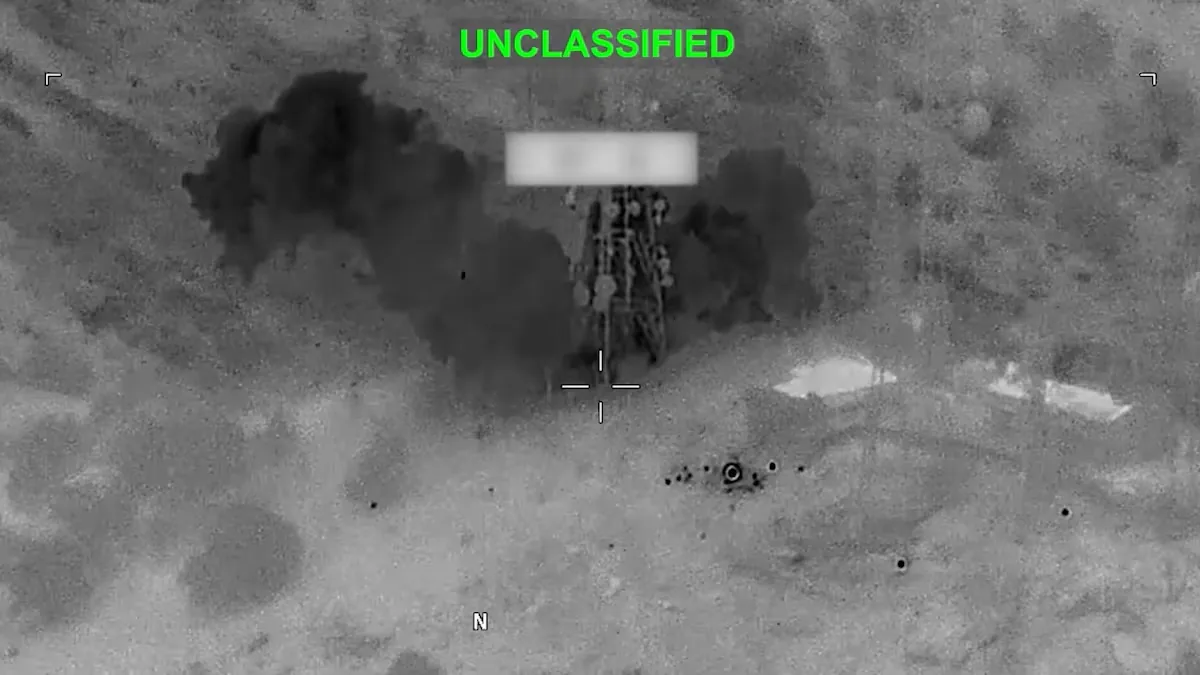
The United States Central Command (CENTCOM), the military unit coordinating the war in Iran, reported during the early hours of Saturday a new round of attacks “designed to continue degrading Iranian military capabilities” in areas near the Strait of Hormuz.
“More than 50,000 U.S. uniformed personnel are deployed in the Middle East and remain vigilant, lethal, and prepared,” CENTCOM warned. At the same time, the U.S. is reinforcing its fleet of refueling aircraft in Israel — absent from the latest attacks since the collapse of the memorandum of understanding — to consolidate its military deployment in the Persian Gulf.
Iranian authorities are betting on matching the challenge with words and deeds. After Major General Mohsen Rezaei warned on Friday that the armed forces “will stop restraining themselves” if the U.S. continues its attacks, Iran responded this Saturday with renewed attacks against U.S. interests in the region.
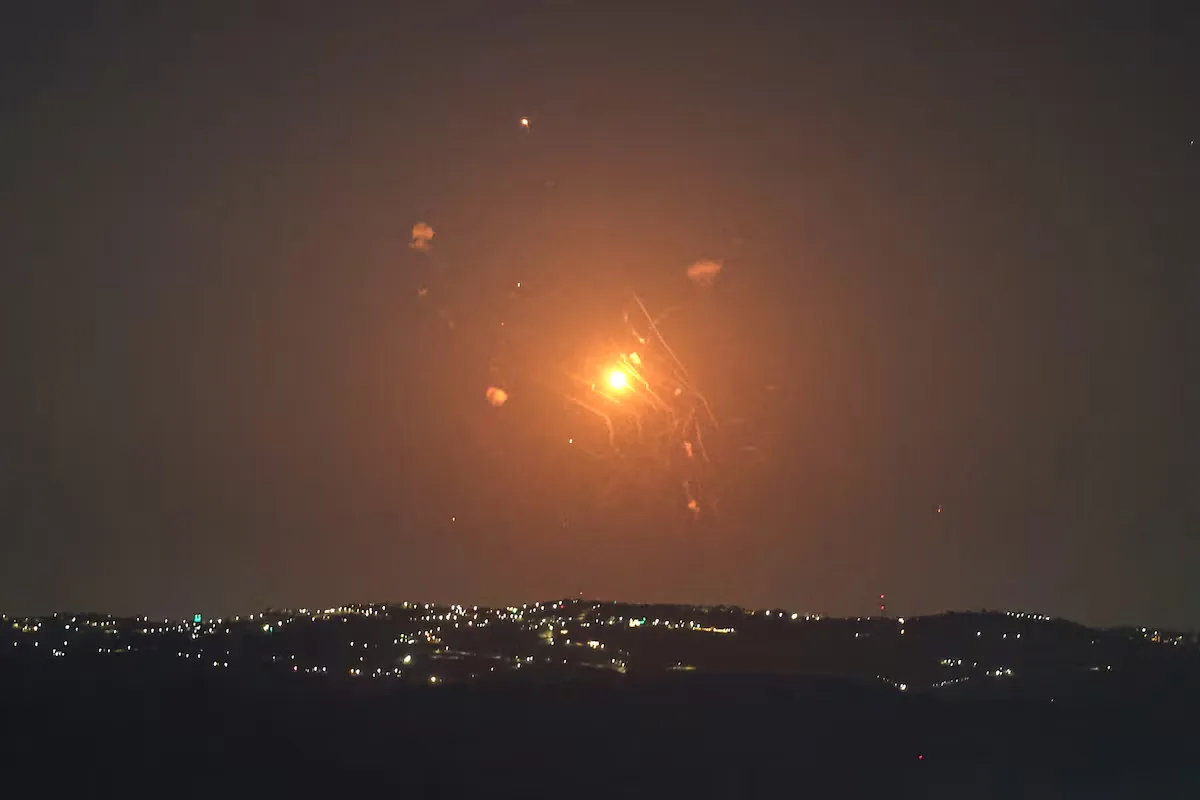
Tehran fired drones and missiles at Kuwait, Bahrain, Jordan, and Saudi Arabia. Most were intercepted, although Kuwait acknowledged that a projectile hit another desalination plant and an oil facility. Despite this, Iranian agencies report successful strikes against a military communications center in Kuwait and the destruction of two military aircraft in Jordan.
Meanwhile, the Islamic Revolutionary Guard Corps — the parallel army that protects the regime — stated on Friday night that two oil tankers “exploded and burned” after attempting to cross “a mined route south of the Strait of Hormuz.” The statement reiterated that this strategic maritime route “remains completely closed due to ongoing U.S. aggression,” issuing a thinly veiled warning for other ships to avoid navigating the strait, which constitutes a blockade contrary to international law.
Despite this, Iran’s representative to the United Nations, Saeed Iravani, has requested in a letter to UN Secretary-General António Guterres that the Security Council “fulfill its responsibilities” and end U.S. aggression. Iravani accuses Washington of “war crimes” for killing civilians and destroying key infrastructure, as well as blocking Iranian ports and attacking ships intending to use them.
A week after Trump declared the ceasefire agreement broken, Iran does the same, and the region sinks even further into uncertainty. Washington sought a quick success in Iran similar to that in Venezuela, but the conflict has already lasted almost five months without any end in sight to the current escalation, which seems to be entering a new phase of open war. In recent days, Trump has stated that Iran is asking him to reach a new agreement, but at the same time threatens to bomb “all electrical facilities” and “all bridges” if Tehran does not sit at the negotiating table.
Read more Woman assaulted by two men allegedly hired by her husband dies in Sevilla la Nueva (Madrid)