









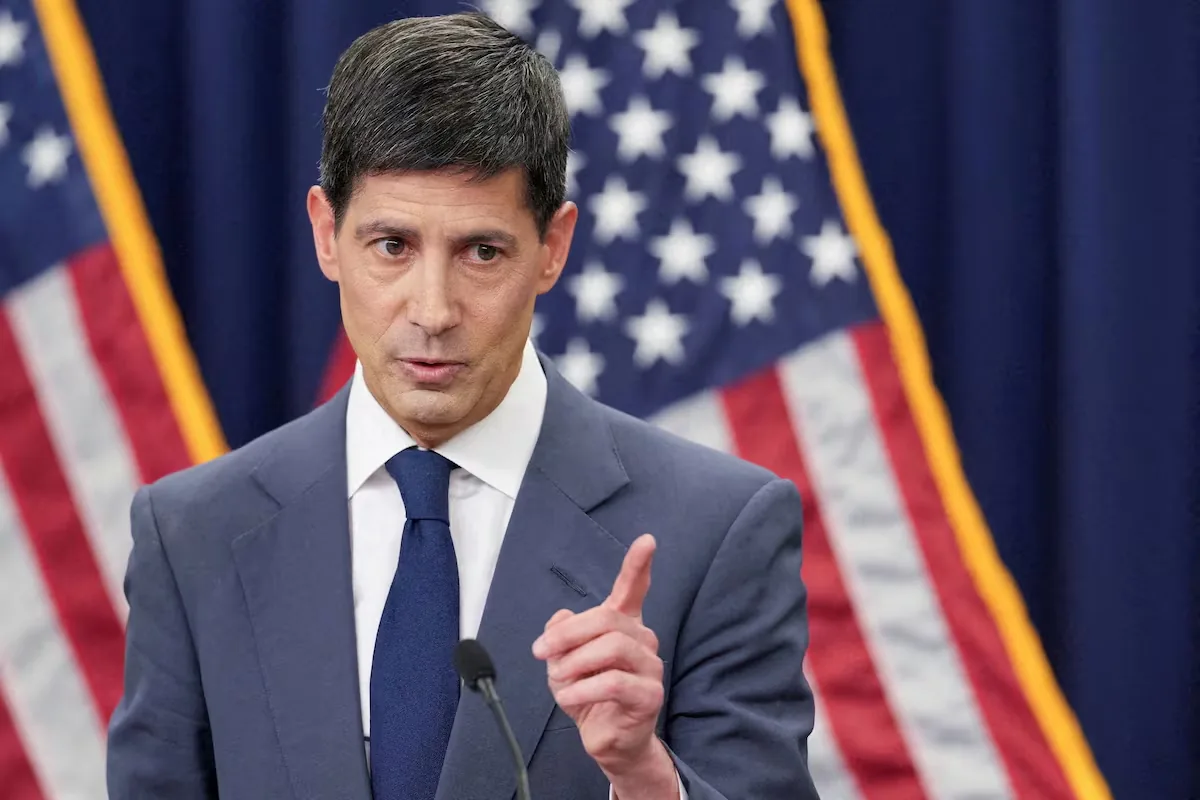
In one of the most unpredictable meetings of the last decade, the United States Federal Reserve has decided to keep interest rates unchanged in a range between 3.5% and 3.75%. This is the fifth consecutive meeting in which the central bank maintains its monetary policy intact despite increasing inflationary pressures derived from the war against Iran. The Fed has not changed the cost of money so far this year, after lowering rates three times in a row at the end of 2025. The decision was opposed by three governors, who preferred to raise rates by a quarter point.
The secrecy imposed by Kevin Warsh, the man who has led the institution since last May, has contributed to increasing uncertainty about the direction of monetary policy at a time when there are as many reasons to leave rates as they are as to raise them, according to most analysts. Markets showed the confusion with the greatest dispersion of options in years, with probabilities of up to one third for a rate hike.
“Economic activity is expanding at a solid pace despite high uncertainty, partly due to the conflict in the Middle East,” the agency said in a statement released this Wednesday. “Productivity growth and capital investment are strong. Job creation has kept pace with the labor force and the unemployment rate has remained virtually unchanged.” The central bank acknowledges that inflation remains high relative to the 2% target, “which partly reflects supply disruptions that have caused price increases in certain sectors, including energy.” And it emphasizes its commitment to ensuring price stability.
The minutes of the last Fed meeting, held in mid-June, also revealed the internal division of the Federal Open Market Committee (FOMC), the body that decides on rates. At that time, most governors were in favor of a hike in upcoming meetings, although others preferred to wait: of the 18 Fed members who expressed their opinion (Warsh avoided commenting), nine opted for at least one hike this year; eight others preferred to remain on hold and avoid moves; and one for lowering rates.
The new strategy of the Fed chairman to eliminate forward guidance, the strategy that offered investors clues about next steps, has increased financial market volatility. “A reduction in forward guidance is not a problem as long as markets understand how monetary policy responds to incoming information. A more worrying combination would be the absence of forward guidance along with a reaction function less dependent on data,” warns Afonso Borge, analyst at Julius Baer.
Read more The Watchtower sweeps the ashes of the fire and faces the looting
Precisely, the reaction function has become the new mantra among analysts. In the absence of the trail of signals that Jerome Powell’s Federal Reserve used to leave, investors seek to interpret how Warsh reacts to statistics. Analysts expect this Wednesday’s meeting to help refine the understanding of the statistics. The data, however, are ambivalent with market sentiment. The latest inflation data for June was more moderate. It recorded the first decline since 2020, reflecting the relief of the truce of those weeks, which seemed to bring a peace agreement closer in the Persian Gulf. But the collapse of the ceasefire has again raised tension on energy markets. The escalation of attacks has increased concern that inflationary pressures will be more persistent.
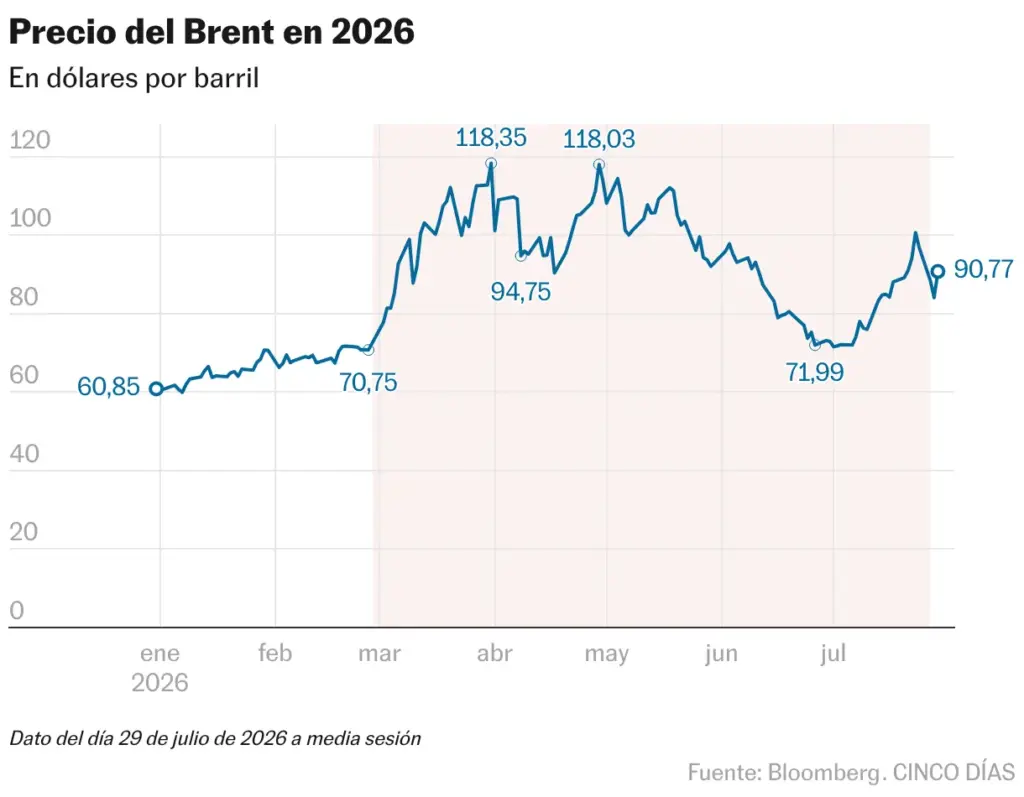
Since Warsh took command of the Fed, he has emphasized his commitment to combating the price spiral. He highlighted it during his inauguration speech at the end of May; at the press conference after his debut leading the Federal Reserve last June; and two weeks ago in his statement before Congress. “Members of our committee do not tolerate persistently high inflation,” he said a few weeks ago. But the growing pressures on energy prices due to the Iran war have not been enough to tighten economic policy. Warsh trusts that price disruptions are nothing more than a supply problem, due to the blockade of the Strait of Hormuz, and will ease once a new truce in the Middle East occurs.
In any case, the decision does not clear doubts about the role Warsh will play at the head of the Federal Reserve. The economist born in Albany 56 years ago built a reputation for years as a hawk, with a tough stance against inflation. However, he gained Donald Trump’s endorsement to reach the Fed presidency, suggesting he would do his best to reduce financing costs with an attitude more inclined towards economic growth than price control (dovish). Perhaps Warsh is neither one nor the other, but behaves like an albatross, the bird capable of spending more time in the air without putting a foot on the ground, while scanning the horizon. Warsh’s wait-and-see strategy fits that comparison. Meanwhile, concern grows about inflation that has chained five years above the central bank’s 2% target.
Read more A Brazilian ‘influencer’ accuses a ski resort instructor in Chile of xenophobia