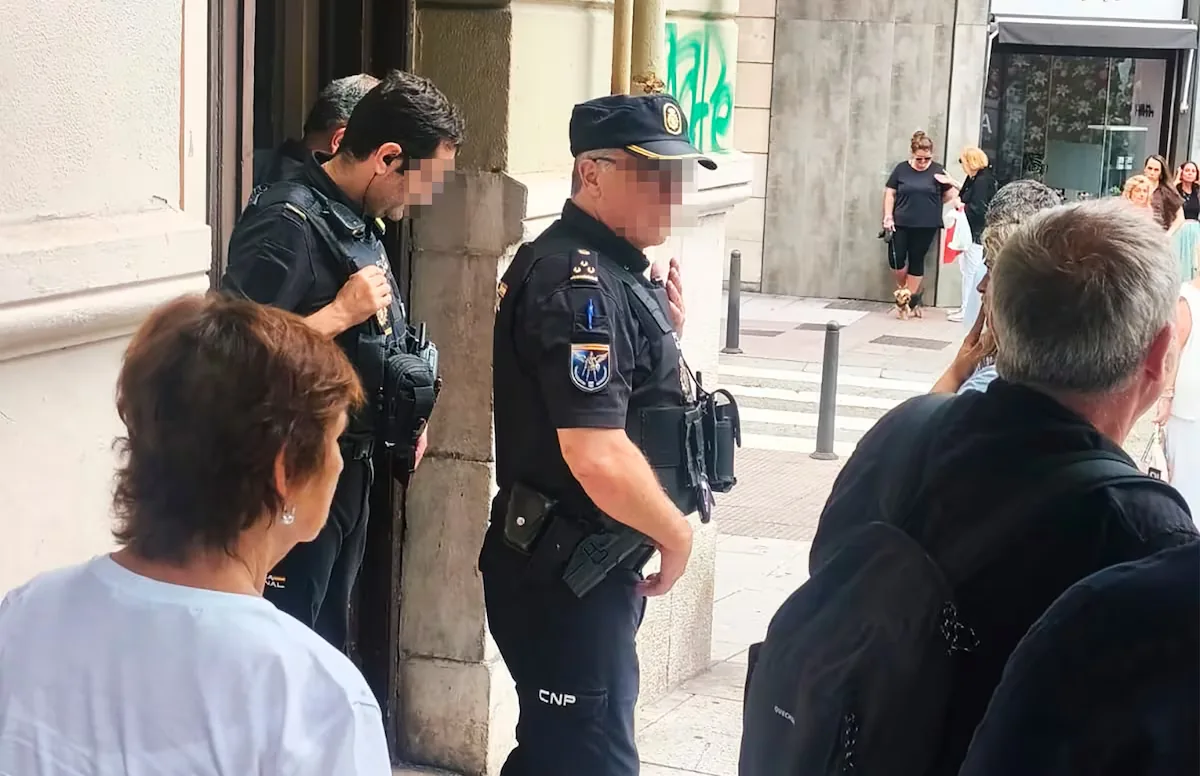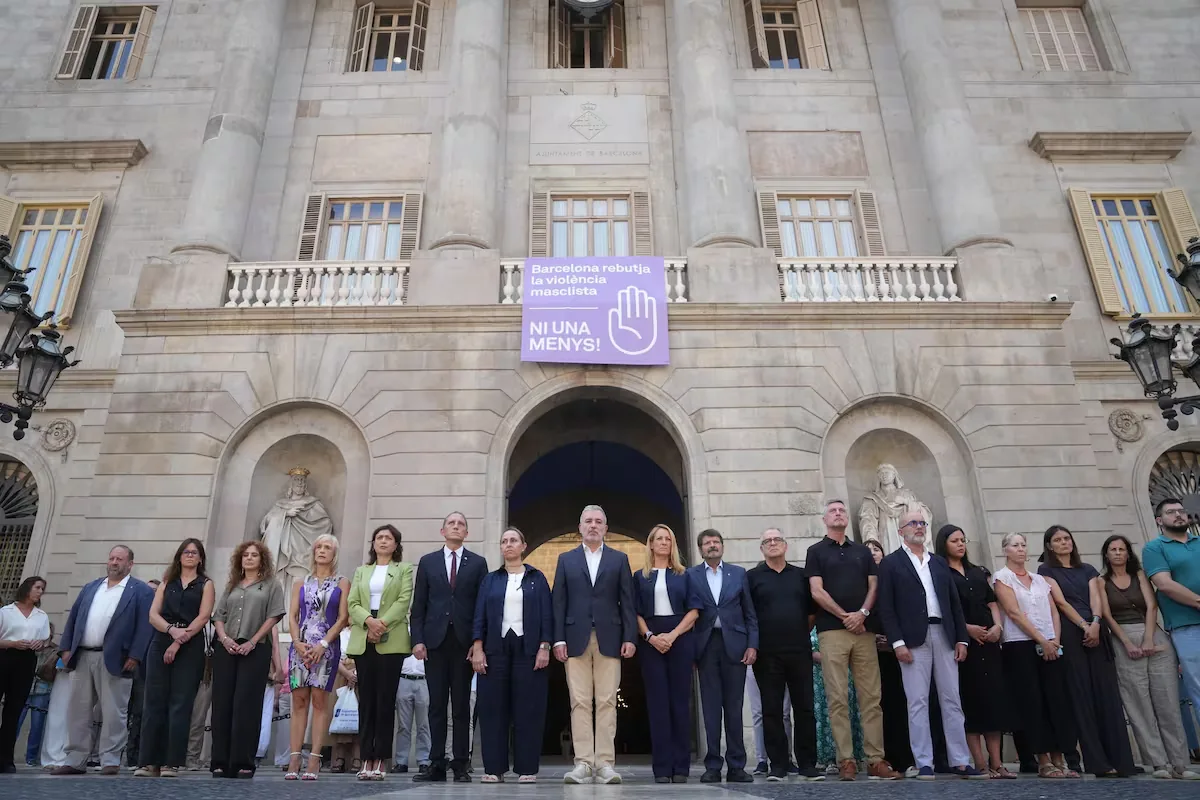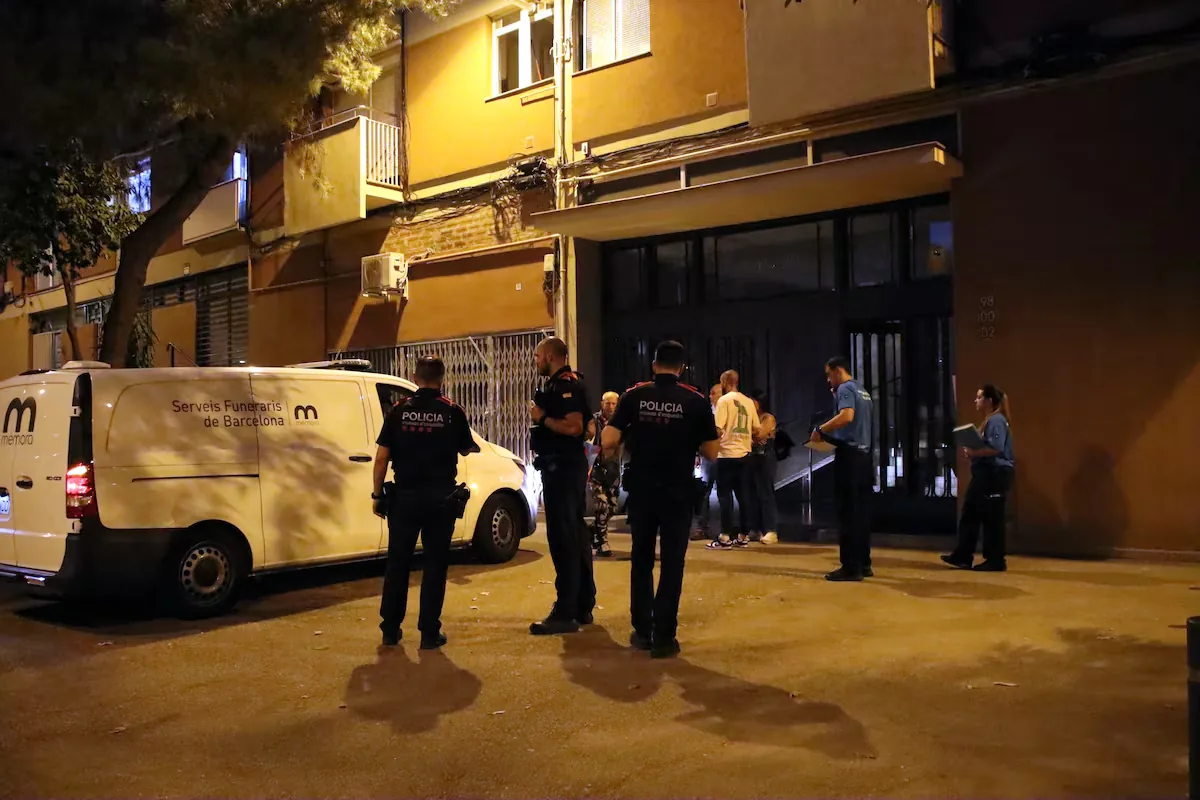






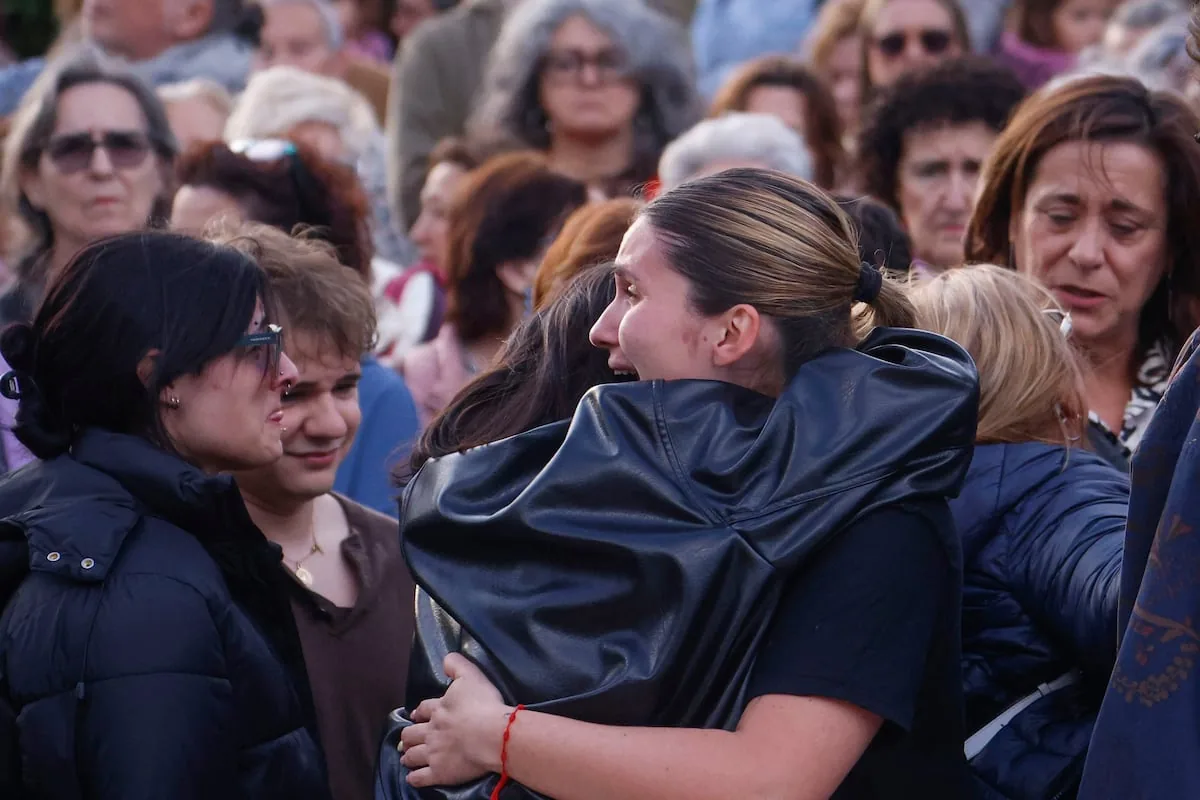
Last Sunday, before dawn, Arelis Jiménez was climbing down from a third-floor window in Pamplona using a bedsheet. She was trying to escape from her ex-partner, a man she had reported and who had a restraining order in effect. But she fell into the void and died. On Monday, in Córdoba, a fast trial was to take place against a man who three days earlier had entered the home of Tulia Ester, his ex-wife, with a hammer: he destroyed her music system, grabbed her by the chest, and threatened to destroy the entire house. The police arrested him and a judge decided to impose a restraining order. However, he was released until a trial could take place, which never happened: he killed her that morning in the doorway of her home.
This Wednesday, the Minister of Equality, Ana Redondo, stated that the VioGén system ― the system for monitoring victims and aggressors with 102,567 active cases currently ― “works,” but it needs to be “strengthened, evaluated, and see what is failing.” She also highlighted a figure: of the 16 women murdered since the beginning of 2026, seven had reported and six of them had measures in effect (37.5%). This is a percentage well above the historical average. Since records began in 2003, 304 of the 1,359 women murdered had alerted the authorities, 22%.
Why do femicides occur involving women who reported, who are in the system, and who have protection measures and restraining orders against their aggressors? Specialists from various fields repeatedly say that some murders are very difficult to prevent but are isolated cases. In the rest, and starting from the fact that the perpetrator is always the aggressor, there is also a responsibility of the State. And the errors made can be related to multiple factors: from decisions made by security forces to those of judges or prosecutors, including other links in the protection chain. Even the victims themselves, who must be taken into account and understood within the circle of violence in which they live, by all the aforementioned professionals.
Immediate arrest
Vicente Magro, magistrate of the Second Chamber of the Supreme Court and one of the leading experts on violence, recalls a December 2021 murder, that of Eva Jaular and her 11-month-old baby in Liaño de Villaescusa, Cantabria, because that crime occurred after she called the Civil Guard to tell them that her ex, José Reñones, was violating the restraining order, was at her house, and she was afraid.
“The Civil Guard arrived and told her ‘leave’ instead of arresting him. He left, yes, but he came back and killed them. In the sentence, we included a criterion that we consider very important: when there is a breach, there must be an arrest, because it implies an increased risk,” says Magro.
That sentence, from last January and with Magro as rapporteur, confirmed the permanent prison sentence for Reñones and states that the facts, “execrable and extremely serious […] could have been avoided,” that Reñones’ presence in the house “should have led to the immediate arrest of the appellant” both for violating the order and because “the subject’s dangerousness was evident,” as it was not the first time he had breached it, “which made clear the high risk involved in allowing him to approach the victims as he did, ending the lives of both.” The ruling referred to the “immediate arrest” as an “unavoidable” decision by the security forces in these cases.
Proper risk assessment
Restraining orders “are not an impenetrable protective shield,” but what can never happen “is that there is a breach and nothing happens, of course something must happen: immediate arrest, judicial custody, and, likely, imprisonment,” says Magro. For that to happen, there is something “fundamental” that must occur: a “proper risk assessment.” Not only when deciding what to do after a breach but also to decide whether or not to impose the measure. Magro has written several sentences emphasizing this as “the most necessary to avoid errors.”
Tulia Ester, the woman murdered in Córdoba on Monday, originally from Colombia, with two children aged 23 and 25 who, when remembered in the minute of silence, wanted to emphasize the word “vitalist” to describe her, entered the VioGén System with a medium risk level. With that risk level, the judge made a decision. Sometimes, the magistrate points out, “an erroneous risk assessment can determine that a protection order is not issued.” According to official data, since they were activated in 2009, of the 644,961 orders requested, 426,393 have been adopted, 66%; and just last year, 40,205 were requested and 22,845 imposed, just over half.
“We need enough restraining orders,” the Minister of Equality pointed out this Wednesday. For lawyers specializing in gender violence, “too few are given,” says María Andrés, one of these lawyers. She believes it has to do with “the perception of gender violence depending on which judges and prosecutors.” She assures that there are courts where they know in advance that such an order will not be issued.
Especially when what is reported is psychological violence: “When you go with a report of injuries, the risk assessment changes because, in their opinion, they can assess the risk situation and the certainty of violence in a much more objective or reliable way. But when you report coercion, insults, psychological violence, or continuous abuse over years in the family home, things change.”
That, according to the lawyer, means that when women are explained the criminal procedure and the options they have to obtain a protection order, many do not want to do anything, “because often if there is no order, they have to return home with the man they just reported.”
For that reason, “there is an immense amount of unreported violence.” Something also mentioned by another lawyer specializing in violence, Eva Vázquez, who agrees with Andrés and assures that, from her daily experience, “much more gender perspective and trauma perspective are still needed because most women who have suffered violence have it, and it is necessary to know how to deal with them.”
For example, when they themselves describe what danger they believe they are in: “Assessments are sometimes not very technical and above all unrealistic. We need a deep understanding of violence: we know that sometimes they do not realize they are at risk, that they will open the door to the man they reported, that they will return to him. We know this and must reformulate measures accordingly.”
Arelis Jiménez, the Nicaraguan woman who fell from a third floor fleeing her ex-partner, with two minor children who remained in her country of origin, had an active restraining order since last September, and they had only recently resumed living together.
Magistrate Magro emphasizes the many times it has been explained that “the victim cannot be blamed, who is in a tremendous psychological and total vulnerability situation, nor for some kind of complicity or cooperation in the breach. The victim is never responsible for the order being broken; the perpetrator is. He has the order, and the rest of us must make the best decisions to protect them.”
And what about the anti-abuser bracelets?
Gender violence is one of the most complex structural problems in societies worldwide, among other reasons, because of the hidden pool of unreported cases. Vicente Magro, magistrate of the Supreme Court, points out that the figures are “about 200,000 reports per year” but that the justice system estimates “there are around 600,000 annual incidents, meaning that about 60% are still unreported, even after the enormous advances of recent years.” According to official figures, since records began, the number of reports has increased from 135,539 in 2009 to 204,342 last year. In 27,030 of those cases, protection orders were activated, and in 4,420 cases, the activation of one of the so-called anti-abuser bracelets was decided.
These devices, despite multiple flaws, have so far been the only 100% effective measure to prevent femicides. None of the more than 22,000 women who have worn them since they were introduced in Spain in 2009 has been murdered while wearing one. Would it be feasible for all women with protection measures to wear them? Not at the moment. Neither is the technical system prepared, nor would it be possible due to the human factor to manage and respond to incidents at a volume almost seven times greater. There would not be enough technical staff or security forces agents. Magro recalls that this could only be done if it could be guaranteed that there would be no errors. Also, “there are women who do not want to wear them for various reasons, and although victim awareness of the need for the State to protect them is very important, they have the right to decide.”
The phone number 016 serves victims of gender violence, their families, and their environment 24 hours a day, every day of the year, in 53 different languages. The number is not recorded on the phone bill, but the call must be deleted from the device. Contact can also be made via email 016-online@igualdad.gob.es and WhatsApp at 600 000 016. Minors can contact the ANAR Foundation phone at 900 20 20 10. In an emergency, call 112 or the National Police (091) and Civil Guard (062) numbers. If calling is not possible, the ALERTCOPS app can be used to send an alert signal to the police with geolocation.