





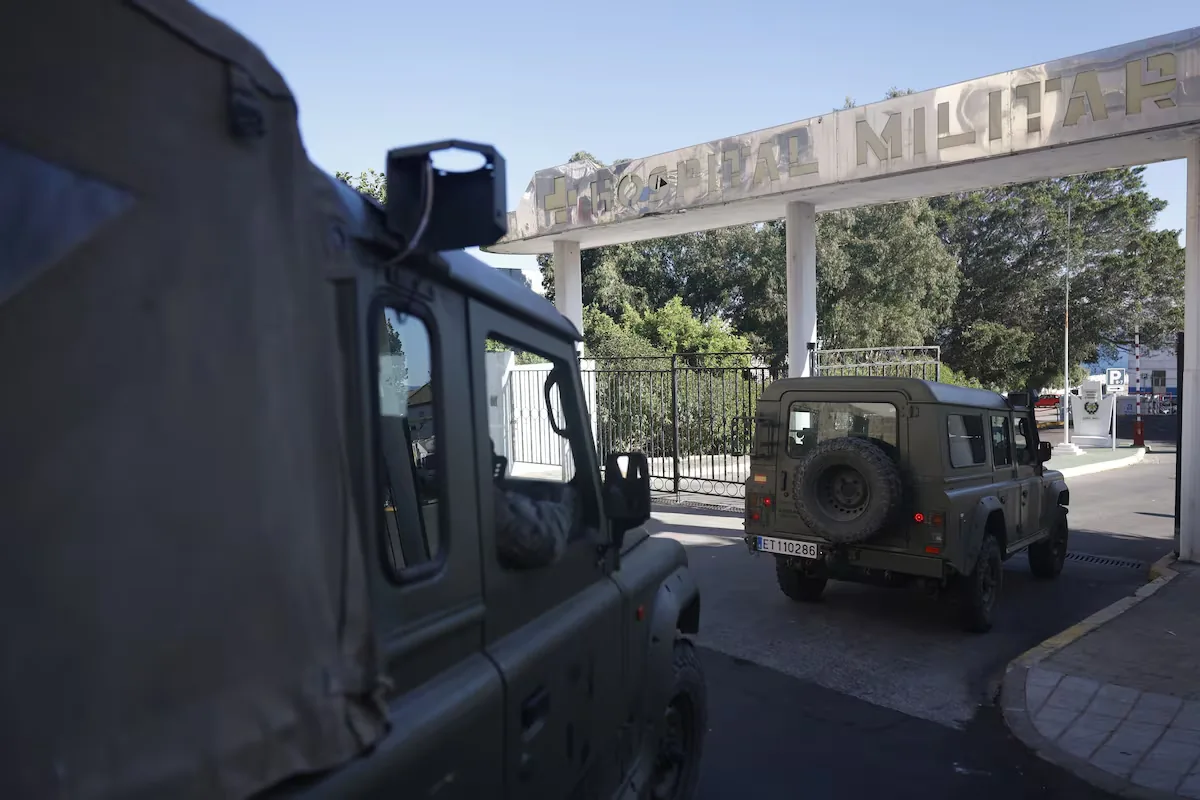
The provisional morgue installed in the old military hospital of Ceuta after the massive influx of immigrants last Thursday, already equipped to house up to 200 bodies, continues to receive the bodies of those who lost their lives crossing the border pier or swimming along it. The Government raised the number of victims to 72 this Sunday, but the Autonomous City government, led by the Popular Party’s Juan Vivas, has counted the loss of 88 people. On the Moroccan side of the border, 11 deceased have been recovered, according to the Ministry of the Interior of the neighboring country. 10 of them drowned and no details have been given about the other.
Read more Grandmother travels to Chile to sign for Colo Colo: “The next chapter is on its way”
The old military hospital, a municipal facility that still has an autopsy room, remains tightly closed. A checkpoint prevents unauthorized persons from entering and the work area of the Civil Guard, Army, and forensic experts remains hidden behind a wall from view.
The Civil Guard agents have continued their work at sea to recover bodies, as well as the identification efforts of those who rushed toward the border, attracted by messages on social networks promising that no one would stop them from crossing.
Not all died in the stampede that occurred on the pier last Thursday, when crushes happened in the desperate attempt to reach Spain. Some bodies show a more deteriorated appearance because arrivals on the Ceuta coast have been ongoing for more than two weeks and the swim crossing is a journey that usually leaves victims submerged for some time. They are discovered over time because currents carry them to different points in the city. Among the deceased, funeral home sources have counted many teenagers, some women, Moroccans, and sub-Saharan Africans.
The Tarajal border was again covered with fog on Sunday, a thick curtain that encourages migrants waiting in Fnideq (formerly Castillejos) to cross the border by swimming. August is the quintessential month of the taró, as this dense fog is called, and it started by fulfilling tradition. The Civil Guard agents guarding the pier introduced the 500-meter buoy rope and the submerged mesh to hinder migrant entry and allow the rejection of those who access by swimming, complying with the recent Supreme Court ruling. Several of these returns occurred during the night. The Army controlled about ten people who tried to enter by sea.
As tradition holds, after a foggy day, Sunday was especially hot. In the downtown streets, far fewer migrants were seen, mainly because they hide from soldiers and police who approach them asking if they are from the city or if they speak Spanish. They insist that they must leave the city and do not allow them to move around. The Government delegate, Miguel Ángel Pérez Triano, assured that authorities will work to speed up the processing of people who have entered the autonomous city irregularly in recent days with the aim of carrying out returns “as soon as possible.” The city has nearly 3,000 agents from Security Forces and Armed Forces to guarantee security and who will remain in Ceuta “as long as necessary.”
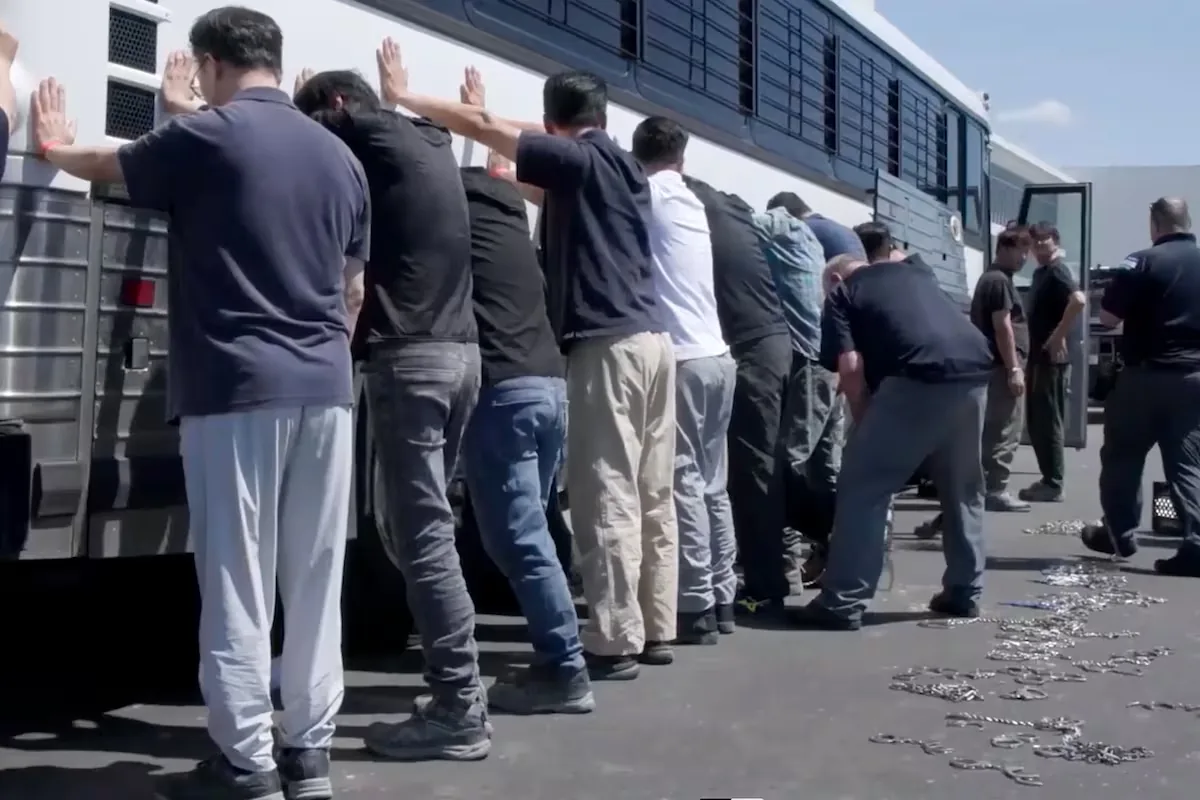
The city has not fully regained its normality. Migrants have been arrested in the streets, to the dismay of the population spending Sunday on restaurant terraces. Suddenly, voices and running from the Regulares — elite units of the Army stationed in Ceuta and Melilla — wearing their red berets, and the Police are heard. The young men run but are caught and taken to police cars, where they will likely be transferred to police stations and undergo identification and the start of expulsion. Some images, captured by the local newspaper El Faro, show buses full of migrants being taken to the border to be made to leave.
Read more USMCA Negotiation: Strategic Readjustment
Many migrants have moved to Benítez beach, in the northern bay of Ceuta, following the path to the Temporary Stay Center for Immigrants (CETI). There, with their clothes dirty from the passing days and their few belongings in a bag, they spend time trying to avoid the military. At night, they say, they sleep in the mountain area near the reservoirs and change location so they are not found.
The Ceuta government, responsible for the care of migrant minors and overwhelmed, estimates that they have attended to about 1,200 boys, figures very similar to those produced with the massive entry of 2021, when 10,000 people entered. In recent days, there were 50,000, according to Interior data.
On the other hand, the Ministry of Health reported this Sunday that Ceuta’s health services have provided 1,622 assists to migrants since Friday, after recording 473 attendances between 9:00 on August 1 and 9:00 on August 2, compared to 1,149 assists counted the previous day. According to INGESA data, of those 473 assists, 291 corresponded to Primary Care and 172 to Specialized Care at the Ceuta University Hospital, where one patient remains admitted in the ICU, another in Pediatrics, two in Obstetrics, two newborns in Neonatology after a twin birth, four in the surgical ward, four in medical hospitalization, and four more in Emergency Observation. No deaths have been recorded.
In Melilla, no irregular entries were recorded on Sunday night. The situation contrasts with the two previous nights, which ended with a total of 149 entries, 99 of them minors.
Abascal: “Militarize the border”
The Vox leader, Santiago Abascal, stopped in Ceuta this Sunday, three days after the crisis broke out and when other far-right politicians like Alvise Pérez had been heckled this Saturday by Ceutans of Maghrebi origin. Abascal demanded “drastic” measures and called to “permanently militarize the border,” as well as to decree “the permanent closure of the border crossing until Morocco gives us guarantees that this will not happen again.” He also urged the European Union to suspend its preferential agreement with Morocco as long as it does not commit to “respecting our borders” and attacked Pedro Sánchez, pointing out that the president “shares guilt with Morocco” for what he calls “an invasion” and an “act of war.”
From the PP, Alberto Núñez Feijóo remains in Ceuta although he has not had public events. Through his X account, the Popular leader published a video showing dozens of people who have entered Ceuta from Morocco. Several of the images are presumed to be near the Temporary Stay Center for Immigrants (CETI) of the autonomous city. “It is enough to step on the street to see that the normality the Government talks about in Ceuta does not exist. For humanity, coexistence, and security, we must continue working to end this crisis and ensure it never happens again,” Feijóo said, who was also interviewed on Telecinco. “Spain’s territorial integrity is not negotiable, it is defended, we are respectful to everyone, but we are not fools, we are not weak. We cannot accept that anyone laughs at us or humiliates us,” he declared on this Sunday’s news.
Read more The invincible sprinter Lorena Wiebes achieves her second victory in the women’s Tour in Geneva