

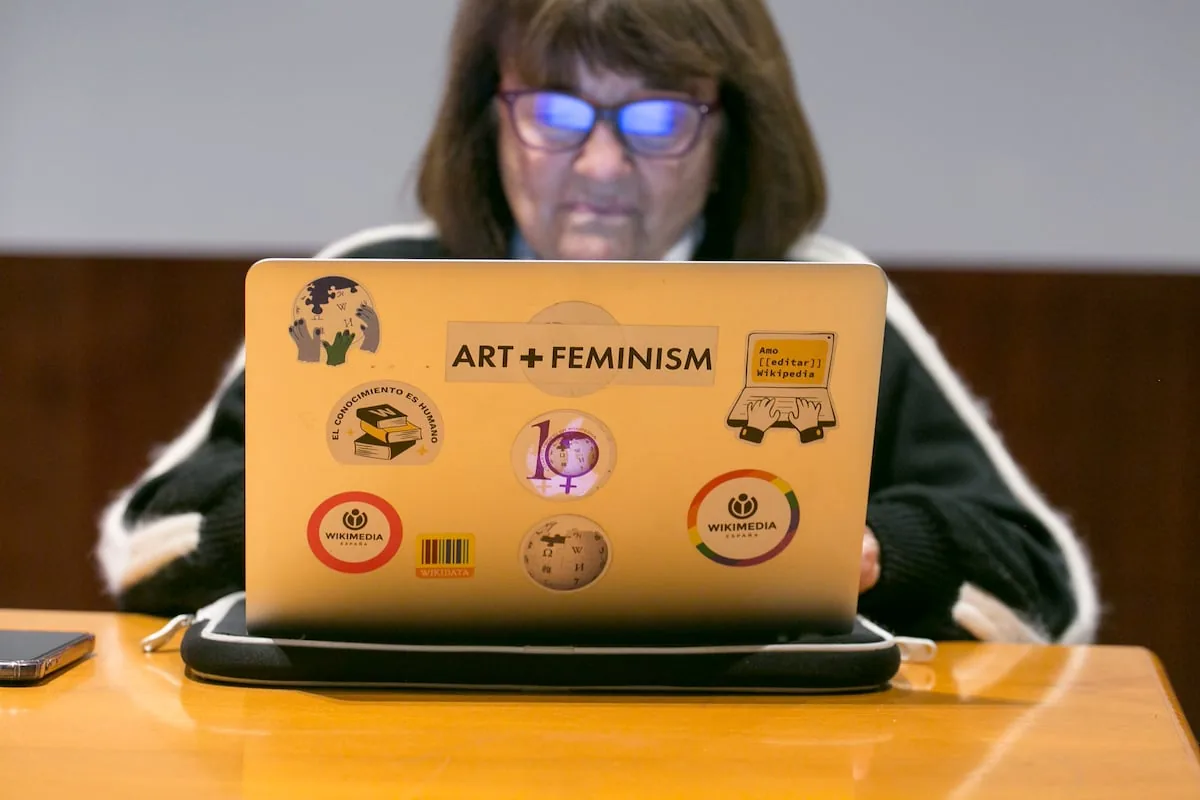
A group of editors meets every Tuesday —computer in hand— to correct a blind spot in digital knowledge: the absence and bias in how the history of women is told on Wikipedia, the platform co-founded 25 years ago by Americans Jimmy Wales and Larry Sanger, in an internet era that now seems remote.
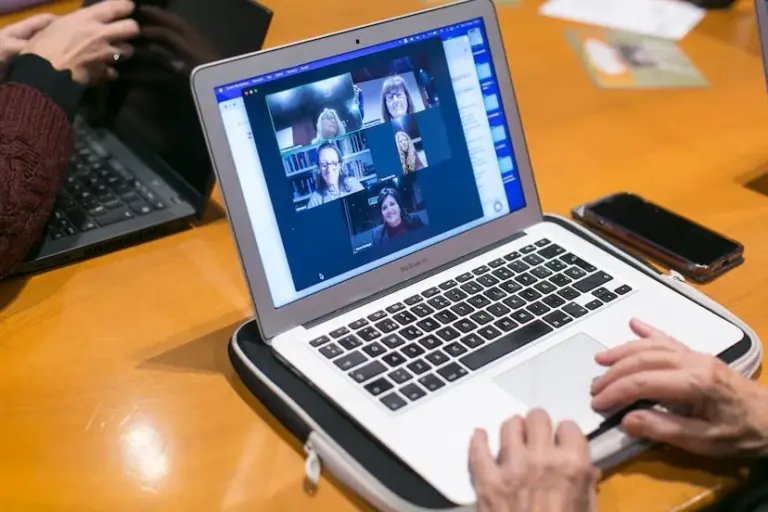
In the library of the Reina Sofía Museum in Madrid, eight of them sit around a table on a March afternoon. On their computer screens, a Wikipedia window coexists with a Zoom window to talk and coordinate with other participants online. They have been editing voluntarily and for free for more than ten years. “Whoever comes is welcome,” says Carmen Galdón (Madrid, 61 years old), doctor in Social Sciences and founder of this project.
Their commitment comes alongside others of this caliber in different parts of the world —such as Wikiesfera or Arte+Feminismo— and contrasts with the first initiatives of this type, where the scholarly and male elites of their time were the majority, as in the Encyclopédie by D’Alembert and Diderot, a project cited by journalist and writer Arturo Pérez-Reverte in his novel Hombres buenos about the coveted loot of two RAE academics in the 18th century. Learning to detect how a biography reduces a woman to being “the wife of” or “the daughter of,” the editors comment, is part of their work. “Language says a lot and it is not enough to include women,” says its founder. “How you include them is fundamental. If you don’t follow up and if you don’t take care of the approach, you reproduce stereotypes,” she points out.
In more than a decade —they started in October 2025— they have created and improved hundreds of entries: contemporary scientists, forgotten athletes, those repressed under dictatorship, key gallery owners in Spanish art, environmental leaders, a list of pseudonyms and stage names of writers and Latin American collectives such as the Association of Women Affected by Forced Sterilizations, an organization representing women who were victims of forced sterilizations in different provinces of Peru during Alberto Fujimori’s government. Stories that were scattered, poorly told, or absent.
A space not immune to gender biases
A study published inPLOS One states that only 11.6% was the percentage of active female editors on the platform in 2021. Another study with an exploratory review of the well-known free encyclopedia from 2007 to 2022 concluded that the gap was significant between volunteer editors and caused gender disparities in content. The work was carried out by researchers from the University of Barcelona and the STEAM group of the Open University of Catalonia (UOC) and mentions some barriers that prevent women from participating more in Wikipedia, including experiences of rejection, lack of time, and ownership of knowledge.
The world’s largest virtual encyclopedia requires references. And finding them, especially for women from the past, can become a titanic task. “If it is already complicated to find sources about medieval male writers, imagine about female writers,” says Consuelo Fernández (Madrid, 72 years old), graduate in Economic Science, retired, and collaborator of the project since its beginnings.
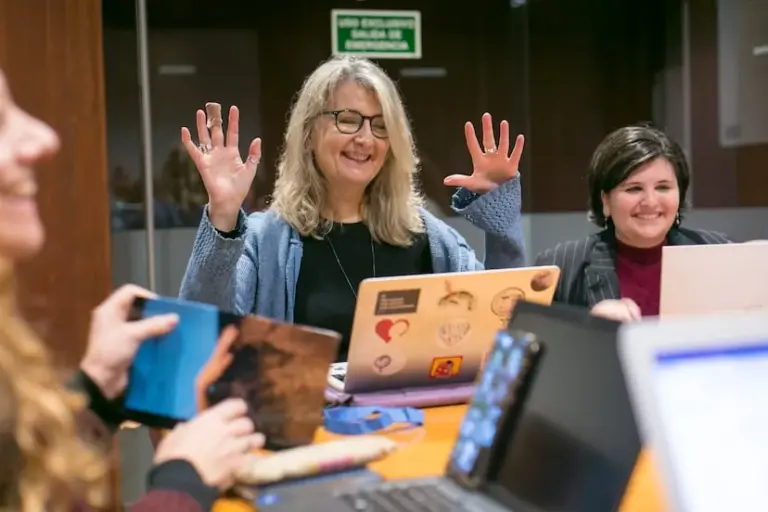
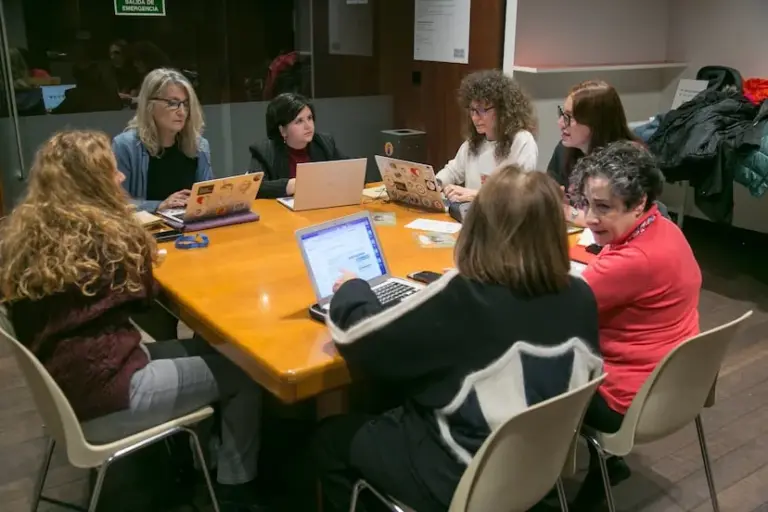
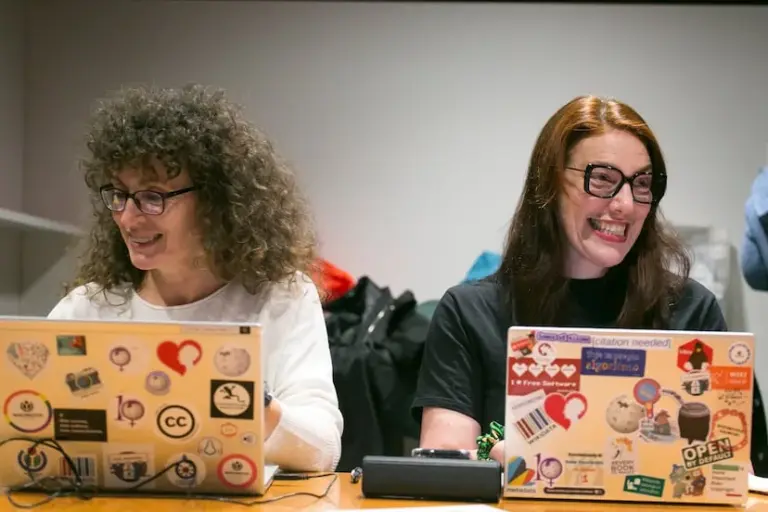
Much of that documentation was the result of talks they have organized. From there come names, topics, references, and questions that later become articles. “We talk about democratic memory, menopause, end-of-life support, science, feminism,” lists Galdón. “We listen, take references, identify possible entries, and then edit,” she says.
Read more How the Left Lost the Pulse (and How to Regain It)
Others appear in edit-a-thons (recovery of biographies of women narrated by other women) in large numbers or workshops. Men are also welcome. “We work with all possible details. We pull sources from under the stones,” says Marisa González (Bilbao, 82 years old), pioneering artist in the application of new technologies and member of the group for eight years. Editing Wikipedia, they say, is a job accompanied by curiosity and obsession. “Everything published on Wikipedia must be supported by solid sources: books, studies, press. Having that information is fundamental,” Galdón details.
AI and reactionary discourses
Wikipedia has just turned 25 years old and the anniversary has arrived at a delicate moment for editing and creating texts. Although it remains a central source of information, it receives fewer direct visits since the expansion of artificial intelligence in web search engines. “The paradox is that AI feeds largely on Wikipedia, but makes it invisible,” explains Galdón.
The collaborative encyclopedia is funded through small donations. “If people stop visiting, they stop donating,” warns the sociologist. Added to this are ideological attacks like those from Elon Musk, who has openly questioned the project and launched his personal and conservative alternative written with AI. “If he wants to replace it with something else, it’s because something worries him. Wikipedia does not respond to a single way of thinking,” Galdón states.
The advance of reactionary discourses also crosses their work. Its founder recognizes the existence of an anti-feminist reaction, especially among some young people, but resists defeatism. “I prefer to focus on the percentage that is not there,” she says. And continues: “Discouragement leaves you without voting, without editing, without speaking.” Feminism, she affirms, is not exclusive, men also fit in: “They must be there. Without them, we are going nowhere.”
After 10 years, the group has gone through motherhood, caregiving, illnesses, and grief. In the end, the idea returns to the beginning: to occupy the internet, to exist on the web with your own name. “That’s why it’s so important to be here,” says Galdón.
Read more Real Madrid: the weight of the invisible