The United States Department of State announced this Thursday a new round of sanctions against the Government of Cuba, in a tightening of the pressures from the Donald Trump Administration to force political and economic transformations on the island. The recent provisions directly punish three senior executives of the Cuban Institute of Friendship with the Peoples (ICAP) and include on the blacklist nine state entities linked to key areas of productive development such as mining, metallurgy, foreign trade, and the Ministry of Construction.
Read more The post-democratic condition in Chile
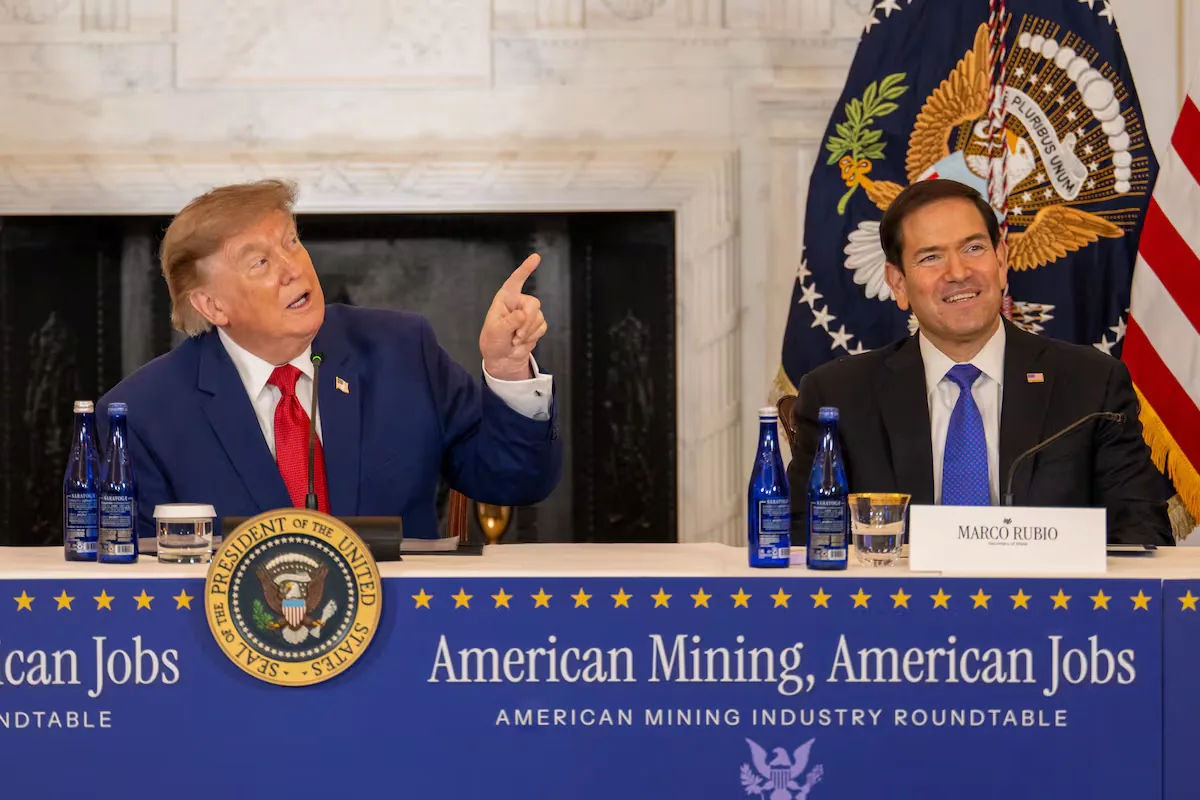
The measure was communicated by the U.S. diplomacy as part of the sustained effort of the Trump Government to weaken the financial and logistical structure of the Cuban Executive. According to the Department of State, the initiative seeks to stop what Washington calls “malign activities” and dismantle the mechanisms that support the institutional infrastructure of the island both internally and internationally.
.@SecRubio: The Cuban regime has been using front groups for decades to infiltrate, corrupt, and radicalize Americans. Today I impose sanctions on the leaders of ICAP, one of the main organizations involved in these activities, among whom is…
— USA en Español (@USAenEspanol) August 20, 2026
Among the people subject to the restriction are senior representatives of the ICAP leadership: its president, Fernando González Llort — remembered for having been part of the Avispa Network and having served a sentence for espionage on U.S. territory before returning to Cuba —; the first vice president of the institution, Noemí Rabaza Fernández; and the director of the North America division, Leima Martínez Freire.
Justifying the sanctions, U.S. Secretary of State Marco Rubio formally accused ICAP of operating as a front for destabilizing political operations within U.S. soil. Through a message disseminated on the social network X, Rubio stated that the Cuban regime has used front groups for decades to infiltrate, corrupt, and radicalize U.S. citizens through supposedly educational and cultural exchanges. The Cuban-American head of U.S. diplomacy specifically pointed out that Havana tried to capitalize on the calls and events organized around the centenary of Fidel Castro’s birth to transfer North American sympathizers to the island and establish direct contacts with the island government’s leaders.
On the institutional and productive level, the sanctions cover central bodies of the Cuban state economy. In addition to the Ministry of Construction, the administrative order blocks the operations of the Comandante Ernesto Che Guevara Nickel Company, the importer and exporter Metalcuba, the Geominero Salinero Business Group (Geominsal), and the metallurgical supplies marketer Acinox Comercial. The restrictive package is completed by the trade manager Coratur, the Central Supply and Sales Company of Heavy Transport Equipment and Parts (Transimport), the General Goods Marketer (Consumimport), and the agency Acorec, an entity dedicated to supplying and contracting local personnel for foreign companies based on the island.
Read more Juan Carlos I travels to Barcelona to say goodbye to his friend José Cusí
Rubio was emphatic in warning about the risks that third parties in the global financial system will assume if they maintain links with the mentioned entities. “Anyone who supports, sponsors, or provides services to these sanctioned actors risks being sanctioned. Foreign banks and other companies that offer services to these entities or hold their funds must take immediate measures to cease their support,” added Rubio, of Cuban roots. The official urged the urgent cessation of all commercial or financial support relations with Havana.
These actions are framed within the expansion of the sanction regime derived from the executive order decreed by President Donald Trump last May, which extended the margin of financial persecution against state officials, security forces leaders, and collaborators of the Havana Government. These measures add to previous provisions against high political officials, including the current president Miguel Díaz-Canel, and formal accusations against former president Raúl Castro.
The U.S. offensive increases pressure on a nation already going through a deep socio-economic and energy crisis, marked by the blockade on oil supply promoted by Washington and the serious structural problems derived from internal government management. The warnings sent weeks ago by Rubio anticipated that U.S. diplomacy will not grant “escape valves” nor space to delay dialogue awaiting a political change in the White House.
The Cuban Minister of Foreign Affairs, Bruno Rodríguez, publicly reacted through the X network blaming the U.S. Government for deliberately suffocating the country’s economy and preventing the functioning of essential public services. Rodríguez denounced that this type of prohibitions directly hinders the import of food, pharmaceuticals, and basic medical supplies, many of which are acquired through the emerging sector of small and medium private enterprises on the island. Finally, the Cuban Foreign Minister labeled the restrictions applied against the ICAP leaders as another reflection of the “failed obsession” that, in his opinion, Rubio maintains against the Cuban people and Government.
Read more The US aircraft carrier arriving in the Middle East to replace the troubled ‘Abraham Lincoln’