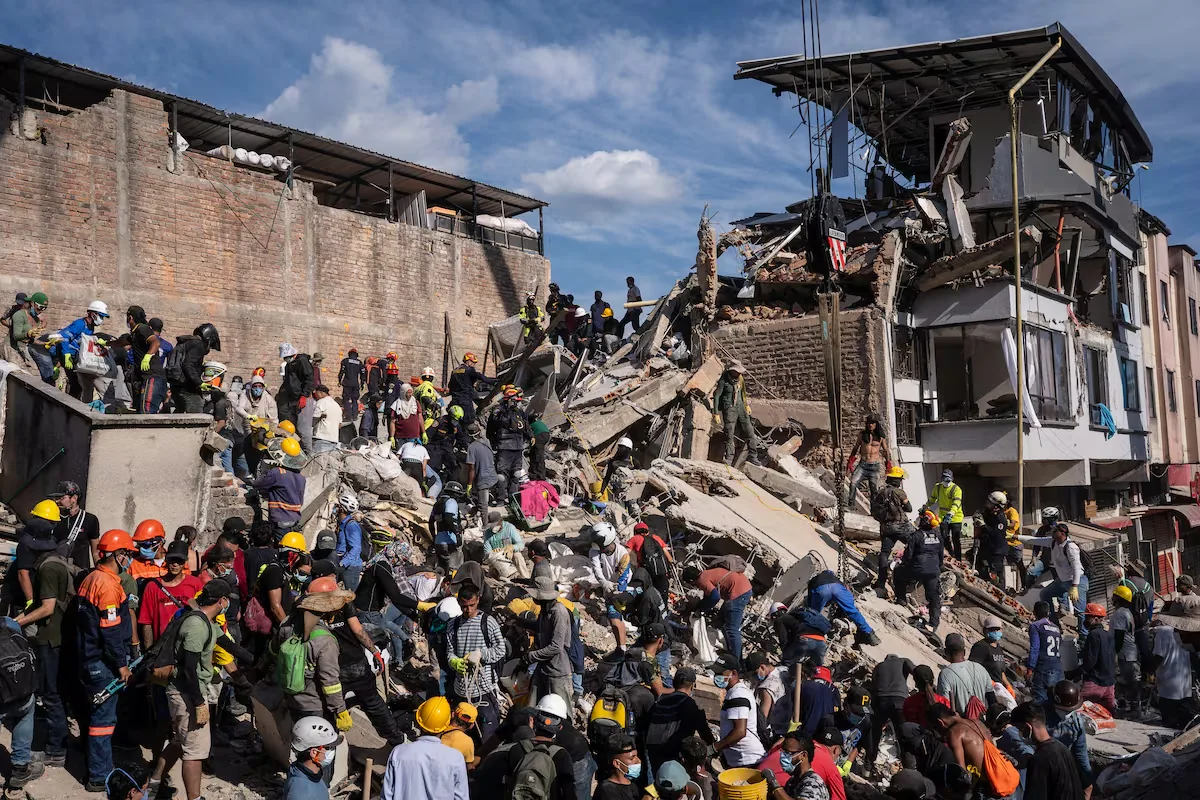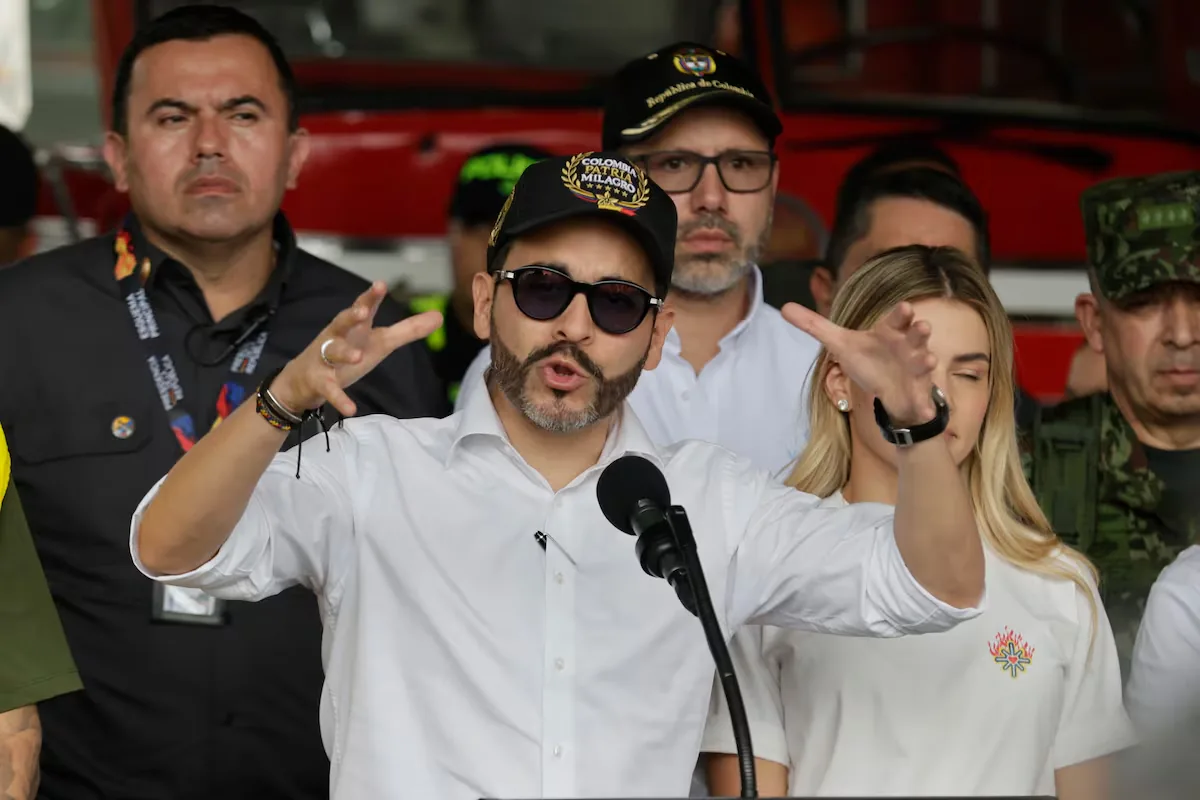
“I am drawing inspiration with the entire economic team from Forec [The Coffee Axis Reconstruction Fund], which responded to the earthquake [of 1999] to replicate the successes of that fund and avoid the mistakes made at that time,” said President Abelardo de la Espriella at the close of his speech last Monday about the 7.4 magnitude earthquake that affected western Colombia a week earlier. The president thus cited as an example a model generally recognized as successful, in which a temporary entity, created for a single purpose, managed to combine public and private efforts, companies and social organizations, and international funds.
Read more Amazon discounts hundreds of products this week with discounts of up to 65%
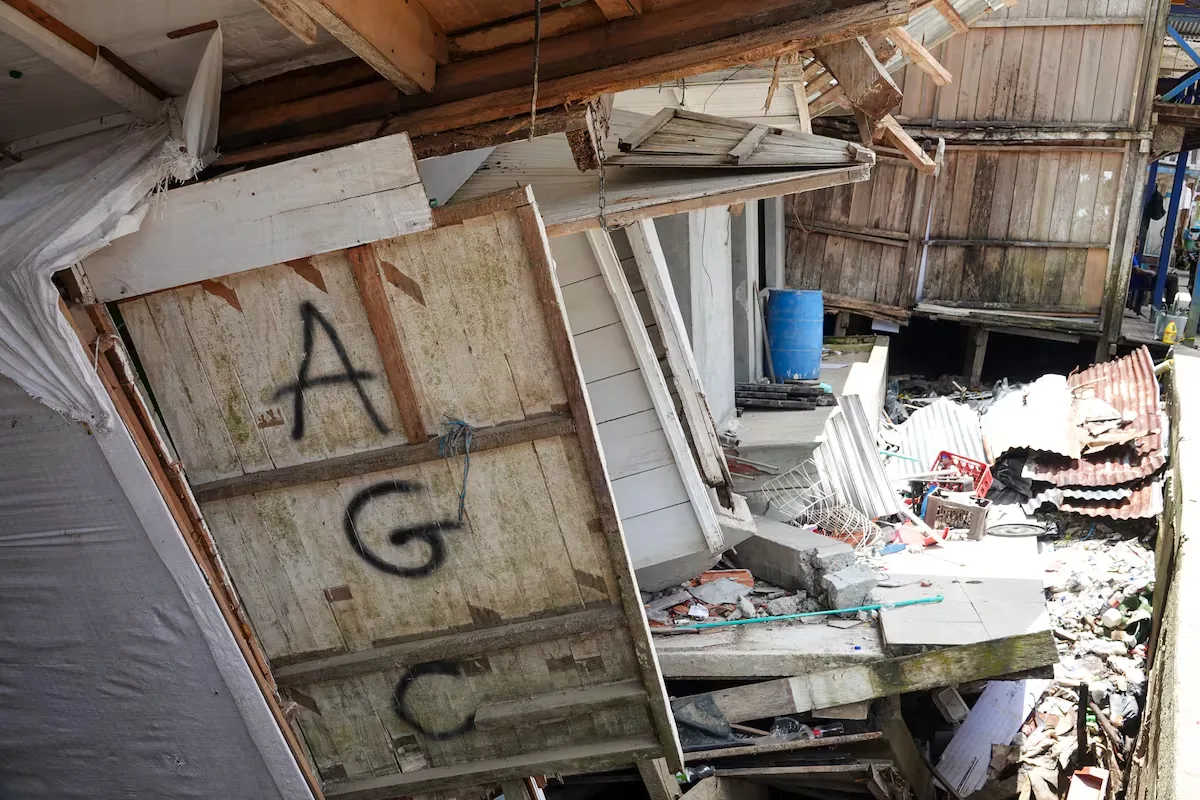
The so-called Forec achieved a rapid, although incomplete, recovery of a region that suffered more than 1,000 deaths and over 100,000 affected properties, a scale comparable to the more than 300 deaths, 262 missing persons, and over 165,000 damaged or destroyed homes in the most recent data from the August 10 earthquake. The fund was created when conservative President Andrés Pastrana declared an economic, social, and ecological emergency in the Coffee Axis just four days after the earthquake, a swiftness that contrasts with the 10 days De la Espriella took to issue a state of exception he announced after the earthquake. The day after the 1999 earthquake, in a demonstration of the urgency with which the catastrophe was faced, the Pastrana government created Forec.
The organization had several particularities. In a centralized country, it was headquartered in Armenia, the most affected city, which allowed it to make decisions on the ground. To facilitate contracting, the regulation allowed it to be governed by private law. To avoid the usual slowness of bureaucracy, it had only one public official, its executive director Everardo Murillo, while the administrative structure belonged to the Presidency. And although it created a governing council with nine delegates from the president, it could make decisions with only three of its members to avoid delays. The logic was urgency.
This general framework, led by then coffee leader Luis Carlos Villegas as president of the Governing Council, was a particularly innovative response. Jorge Iván Cuervo, who was recently Minister of Justice under Gustavo Petro and is a native of Armenia, studied it as an academic. In the document resulting from his research, the professor from the Faculty of Government, Finance, and International Relations at the Externado University of Colombia explains that the scheme was essentially successful. “It managed to recover the affected area in a relatively short time given the magnitude of the disaster, a fact about which there were many doubts,” he explains in the text. And it did so through a particular, then-novel way of joining forces. “All internal and external actors in the process recognize that the complexity of the intervention unleashed large-scale collective action dynamics among the national state, local governments, and civil society,” says Cuervo.
Read more The Korean solar serum from Biodance that hydrates, illuminates, and firms while protecting the skin
He refers to the fact that, once established, Forec became a kind of parallel state, distinct from ministries and national entities or local mayors and governors. While these maintained their normal programs, Forec channeled reconstruction money through zonal managements awarded to NGOs. As Roberto Gutiérrez explains in a case study for the Faculty of Business Administration at the University of Los Andes, Armenia was divided into 15 of these, managed by traditional foundations such as Restrepo Barco, Solidaridad por Colombia, or Carvajal, as well as public universities like Antioquia and the National University, and organizations like the Colombian Association of Sanitary and Environmental Engineering or the social organization Central Nacional Provivienda. In the rest of the affected area, this logic was repeated by municipality or, in Valle del Cauca, for a group of them.
Although local politicians helped select the entities that managed and defined the frameworks of each contract—for example, by deciding where housing could be built—the delivery of aid avoided clientelist networks, and those managers of each zone defined the programs, works, or recipients of subsidies and aid. That was the heart of Forec’s operation, the model De la Espriella has indicated he seeks to replicate. It was not without criticisms and questions: the victims had no representation on Forec’s governing council, the debate remained open about how centralized the knowledge was, and the opportunity to strengthen the mayors’ offices was missed. Cuervo collects doubts about the model’s “housing-ism,” referring to the emphasis on delivering structures beyond the capacity of their inhabitants to maintain them. “It is very good that housing solutions were given to those who did not have them; it is the first physical asset to fall in an earthquake and the first one people want to restore. But it is not enough to deliver a house: conditions must be created so that beneficiaries can provide for its maintenance,” he writes.
After three years of work, Forec was liquidated, as expected from the start. Cuervo and Gutiérrez agree that one of the central elements of its functioning was the capacity and necessity to adapt to a changing and variable reality: the reconstruction of Armenia, a city with thousands of tenants, was not the same as the recovery of coffee-growing rural areas. In this chaos, the earthquake affected areas from the jungle zones of Chocó to Cali, a city of more than two million inhabitants. “We learned, firsthand, that reconstruction is done with the people and not for the people; that social capital matters as much as cement; that governance is saved in honest interaction between the State,” wrote Luis Carlos Villegas this week, after De la Espriella spoke of Forec as his example to follow. For a president who has not even been in office for two weeks, it will be the opportunity to set the tone of his government.
Read more This Nivea cream is a 3 in 1: moisturizes, firms, and tans for less than 8 euros