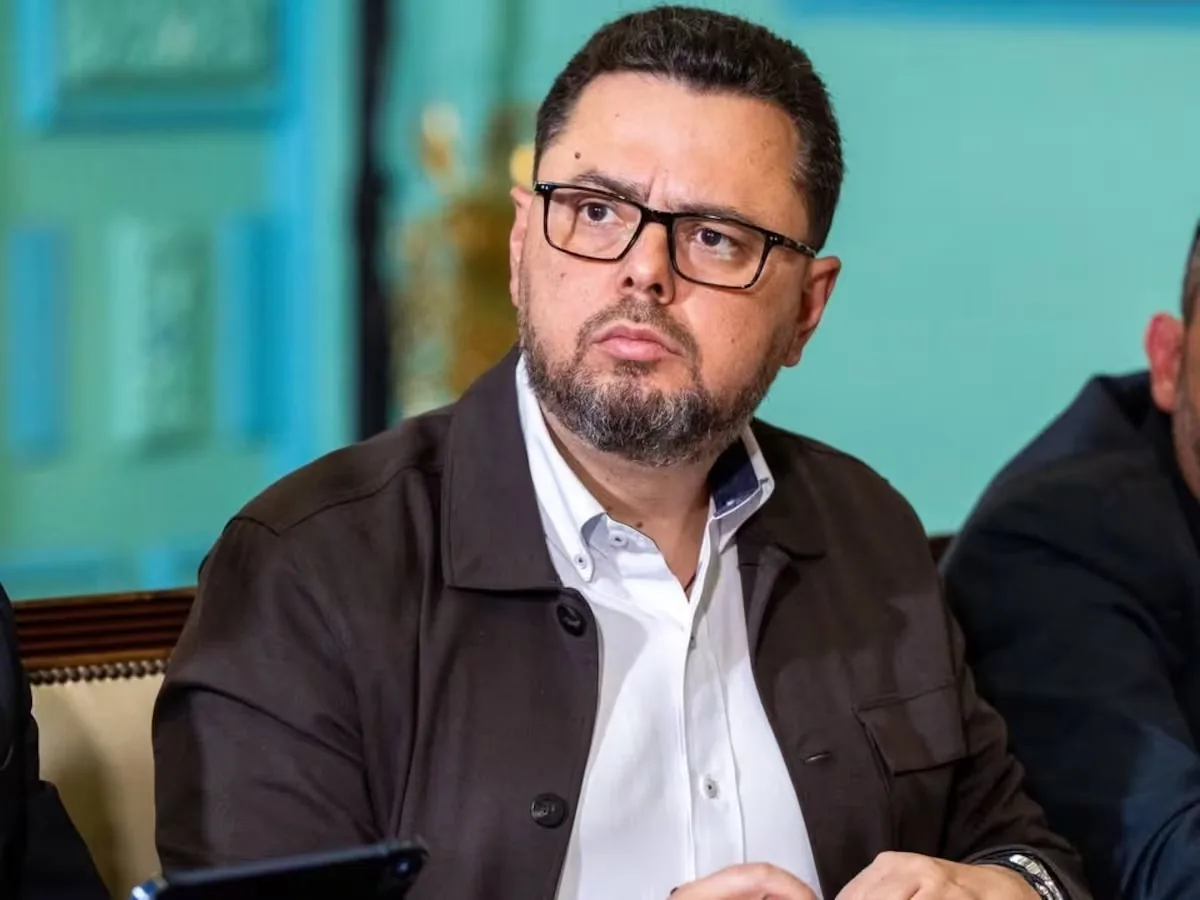
Deputy Antonio Ecarri, from the Alianza del Lápiz party, was removed a week ago from the presidency of the Venezuela-United States Parliamentary Friendship Group — a position he had held for only two months — in a measure announced by the president of the National Assembly, Jorge Rodríguez. The reason: Ecarri’s announcement to start talks with American economist Steve Hanke to evaluate a plan to dollarize the economy and eliminate the bolívar. Many believed the version of formal dollarization before Rodríguez denied it, calling it “false, absurd, and crazy,” while announcing an investigation against Ecarri for undermining the credibility of the Legislative Power.
Hanke — a scholar at Johns Hopkins University and known for advising countries like Montenegro, Ecuador, and Zimbabwe on similar initiatives — has already drafted a bill for Parliament that, according to the economist himself, respects the jurisdiction of the Central Bank of Venezuela (BCV) and constitutional guidelines. Ecarri’s initiative quickly gained traction on social media and was received sympathetically by a significant sector of local public opinion.
In a country mired in a chronic exchange crisis and with the highest inflation in the world — exceeding 500% annually, according to private firms — the promise of the dollar offers an illusion of stability that is hard to ignore. The disastrous economic management of Chavismo and international sanctions have kept Venezuela in a prolonged financial storm. The outcome includes three failed monetary reconversions (2008, 2018, and 2021), historic hyperinflation during the past decade, and a depreciation of the bolívar approaching 100% in the last five years.
Since 2018, largely driven by Delcy and Jorge Rodríguez, Nicolás Maduro’s government promoted a de facto dollarization that momentarily curbed the inflationary spiral and restored some predictability to daily life. Today, most goods are priced in dollars with their equivalent in bolívares at the official rate. A precarious cash circulation of foreign currency coexists with frequent digital transactions from U.S. banks.
The bolívar remains, however, the official currency, and the use of the dollar remains subject to BCV criteria. Since 2024, within this dual scheme, the Executive tried to reduce the influence of the dollar to strengthen the national currency, but macroeconomic results have been unfavorable: insufficient growth and a new inflationary surge.
Labeling the sanction against him as an “aberration,” Ecarri defended his position: “As a lawyer and deputy, I can have the advisor I want, especially if it is Professor Steve Hanke, an authority on the subject and my personal advisor for some time.” The parliamentarian claims he has been studying dollarization for years to eradicate the country’s structural problems and assures that the measure has popular support: “We are at a key moment to have this debate. Venezuela is already dollarized de facto. The government itself just approved a law allowing rent payments in foreign currency.”
“Venezuela has no currency,” emphasizes Ecarri. “We created a National Economic Forum to debate the proposal and present the bill. We must establish a financial and energy alliance with the United States. The dollar will accelerate investments in gas, electricity, rare earths, oil, and infrastructure, as well as curb inflation and capital flight,” he explains.
Opposition from economists
Despite the enthusiasm of its promoters, formal dollarization faces opposition from most economists. “I understand it is a popular option because people are desperate for a stable reference,” says José Guerra, economist at the Central University of Venezuela. “The advantage is that it quickly stops inflation and allows long-term credit. But for an oil country, it is a straitjacket: without a central bank issuing currency, an external shock will cause deflation, inability to pay salaries or finance public spending, as happens in Ecuador. Also, it generates high dependence on the United States and is a one-way path,” he adds.
In the same vein, Rodrigo Cabezas, professor at the University of Zulia, former Finance Minister under Hugo Chávez, and promoter of the 2008 reconversion, states: “I am completely opposed to losing the national currency. It is not reasonable for a nation to give up two essential economic policy tools like monetary and exchange policy. Control over interest rates and credit for investment is lost, as well as the external competitiveness that allows industrializing the country.”
For his part, Omar Zambrano, chief economist at Thinkanova and professor at Andrés Bello Catholic University, agrees: “The country comes to this debate out of exhaustion. The problem is that, even if dollarized, inflation will not immediately converge to U.S. levels. During that transition period, internal costs rise above international ones, and production becomes very expensive. Dollarization stifles any activity other than the extractive sector that generates foreign currency and puts a ceiling on growth.”
Hanke, meanwhile, details the mechanics of his plan: “The transition would begin with establishing a fixed exchange rate. From there, accounts in bolívares would be converted to dollars. The Central Bank would maintain its administrative functions but would not be allowed to execute discretionary monetary policies.”
Between 1940 and the mid-1980s, the bolívar traded between three and four units per dollar, making it one of the strongest currencies in Latin America and a magnet for European and regional migration. That reputation as a strong currency lasted for three generations and today survives in the memory of Venezuelans over 60 years old.
Read more Mexico reduces its support for Bachelet’s candidacy to the UN