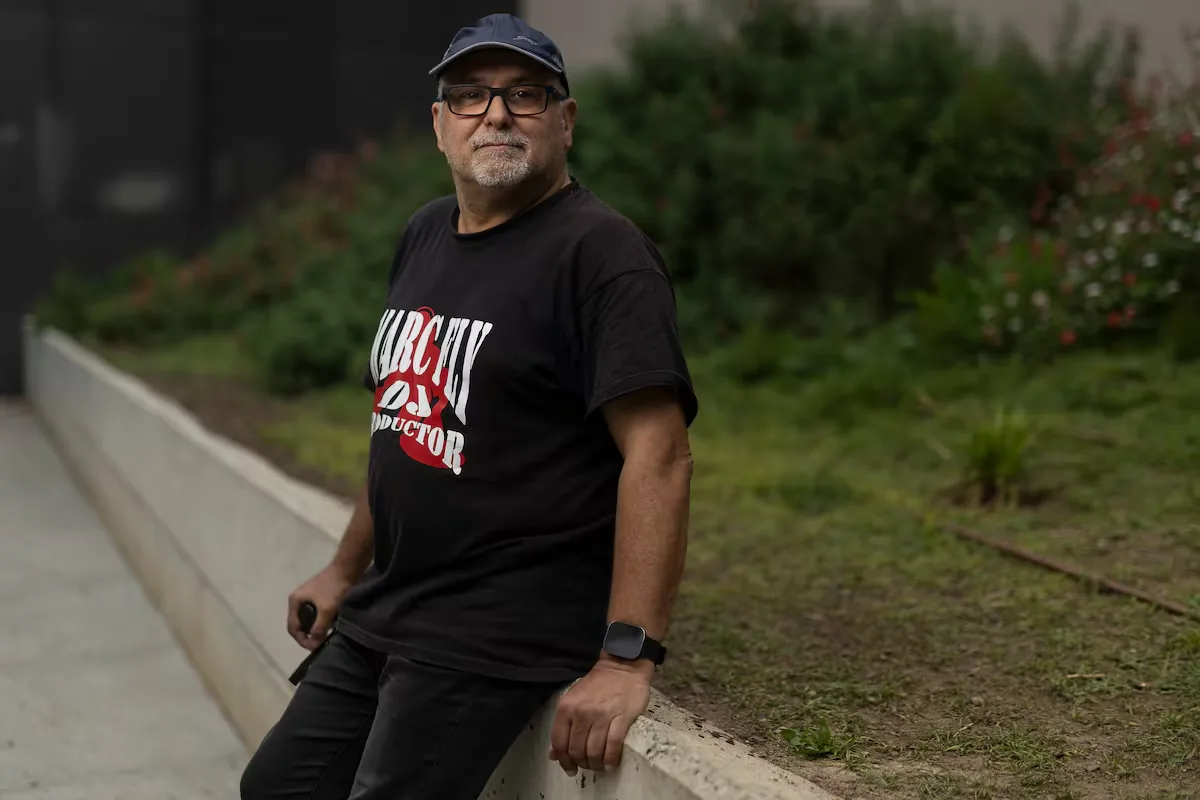
For more than two years, Francesc Augé (56 years old) has had the approval of the Catalonia Guarantee and Evaluation Commission — the independent body made up of jurists, doctors, and bioethics experts — to receive euthanasia, scheduled for September 2025 but not carried out. His case is stuck in the courts, including a position from the Supreme Court, due to opposition from his father. But things have changed. The father, tired from this fight at 96 years old, has decided to throw in the towel and not continue the battle. He leaves the way clear for his son to resume the path of assisted dying.
Read more Beatriz Luengo wins ‘Maestros de la costura Celebrity 2’ against her ‘Un paso adelante’ co-star
A Supreme Court ruling in May agreed that granting euthanasia was not only the applicant’s decision and that those “with an especially close bond” could intervene in the decision to the point of stopping it. That ruling was a response to Augé’s case and allowed his father to file a motion in court and request the reopening of the trial, as explained by his lawyer Valentín Gómez, to definitively halt the request. But he will not do so, according to eldiario.es. “The father is tired and has decided to withdraw from the game,” Gómez told EL PAÍS, pleased that the Supreme Court had previously clarified his client’s claim: the legitimacy of a father to decide on his son’s euthanasia.
Francesc Augé’s father’s lawyer considers that their relationship has not been affected by the opposition made in court to stop assisted death. Due to the care he requires, being a victim of two heart attacks and four strokes, Francesc Augé has left his father’s residence and moved in with relatives. This newspaper has not been able to find out what judicial steps he plans to take in this new context, in which he has the support of the Generalitat but not the Prosecutor’s Office.
The battle has been long and tedious. Augé sarcastically stated in 2025: “Even to die, one needs lawyers. I want to go now!” The initial judicial paralysis of assisted dying was followed by a first-instance ruling validating the request, holding that the family relationship alone does not grant the father legitimacy to stop that decision. There was an appeal before the TSJC, which ruled in his favor and again tested the limits of the euthanasia law by endorsing the legitimate interest of the parents. This last decision is what brought the Supreme Court to plenary in May, again siding with Augé’s father.
Its ruling stated that various factors must be taken into account to discern the “emotional closeness” necessary to be able to stop euthanasia: living “in the family or residential nucleus,” the duration of that cohabitation, the “possible empathy between both,” “the interest or concern the appellant has previously shown about the applicant’s situation,” and above all, “if he has somehow involved him in his reflections prior to his decision to have the assisted dying applied.”
The door that the Supreme Court did close is that no one nor any intermediate institution could arrogate that right, as happened in the case of Noelia Castillo, the young paraplegic woman who suffered severe pain and requested assisted death but did not receive it until 600 days later due to the legal battle opened by the ultra association Christian Lawyers on behalf of her father.