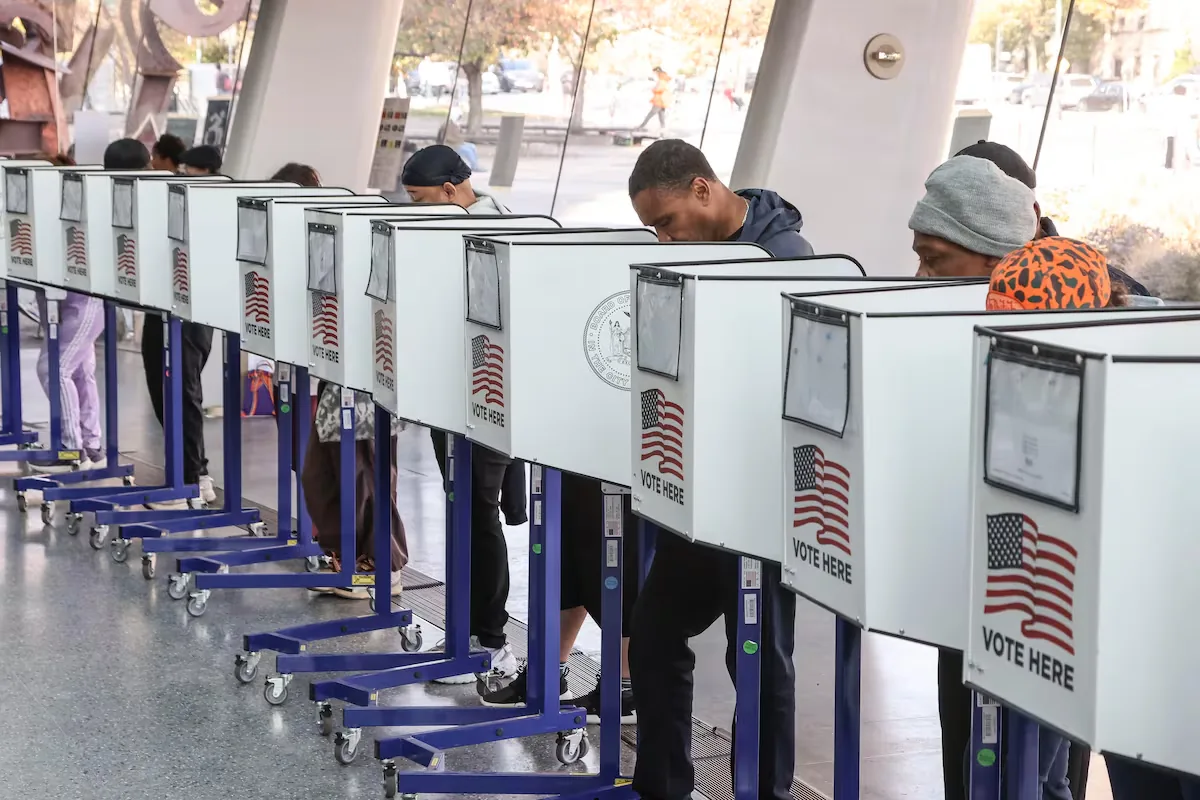
Less than two months before the November midterm elections, the Donald Trump Administration has asked the Supreme Court to allow it to resume reviewing the records of millions of voters through a federal database. The request filed on Tuesday seeks to suspend the decision of a federal court in Washington that blocked the updated version of the system known by its English acronym as SAVE (Systematic Alien Verification for Entitlements) originally used to verify immigration status and determine eligibility for certain federal programs.
Read more The Army warned on the 30th of a “massive” and “very likely” entry when it was already happening
The Trump Administration modified the system after the president ordered the creation of mechanisms that would allow state and local governments to verify the citizenship and immigration status of voters. Among the changes, Social Security Administration records were incorporated and states were allowed to conduct mass searches of their voter rolls, instead of reviewing voters individually.
The Administration maintains that the update made the process more efficient. According to the argument presented to the Supreme Court, the system was processing more than one million requests per day and could verify the eligibility of records more quickly.
Attorney General John Sauer asked the judges to lift the block and described the lower court’s decision as an “indefensible” order that, in his view, threatens the integrity of the upcoming elections. Sauer argued that preventing the use of the updated version forces the Government to revert to an earlier version, which he described as “older, more complicated, and less reliable.” He also maintained that the harm to the Administration would be irreparable because a possible later decision in favor of the Government could come too late for the midterm elections.
The dispute began after organizations dedicated to voting rights and privacy sued the Government over the expansion of SAVE. The League of Women Voters and the Electronic Privacy Information Center questioned that the system had been transformed into a tool capable of facilitating large-scale reviews of voter rolls.
The plaintiffs argue that Social Security data can be incomplete or unreliable and that errors could cause eligible citizens to be incorrectly identified as non-U.S. citizens. The fear is that those results could later be used by states to remove people from voter lists.
A judicial halt
Federal Judge Sparkle Sooknanan blocked the modified system in June, concluding that it violated federal laws related to privacy, Social Security records, and the operation of administrative agencies. In her ruling, she stated that the federal Government had “deliberately trampled on the privacy rights of U.S. citizens in a way that threatens the sacred right to vote.” The judge also noted that some states had used the database and were removing U.S. citizens from the rolls based on inaccurate information.
Read more The need for a new pact for democracy
The Government, however, denies that SAVE is responsible for any improper removals. Sauer argued before the Supreme Court that the system does not directly remove any voter, but only informs states if the federal Government can confirm a person’s citizenship. Therefore, he argued, any harm resulting from a removal would correspond to the state authorities who make that decision.
The Administration also maintains that federal legislation requires the Department of Homeland Security to provide citizenship verifications and that reviewing Social Security records is a necessary measure to fulfill that responsibility. A federal appeals court upheld the block in a 2-1 split decision, although it ordered the judicial process to be expedited. Faced with that setback, the Administration appealed to the Supreme Court.
The case comes as the highest court considers other conflicts related to the November elections. The Administration has also asked it to intervene in the matter of an executive order seeking to limit mail-in voting.
For the groups that sued the Government, the dispute poses a risk both to privacy and to the right to vote. Skye Perryman, president and CEO of Democracy Forward, said in a statement that “what is at stake could not be greater,” considering that millions of Americans and the integrity of the elections are involved.
President Trump has made the search for possible non-citizen voters a central part of his electoral agenda, despite studies showing that this is extremely rare.
Now, the Supreme Court must decide whether to allow the Government to reactivate the expanded system for now while the legal battle continues. Chief Justice John Roberts gave the plaintiff groups until September 15 to submit their response.