




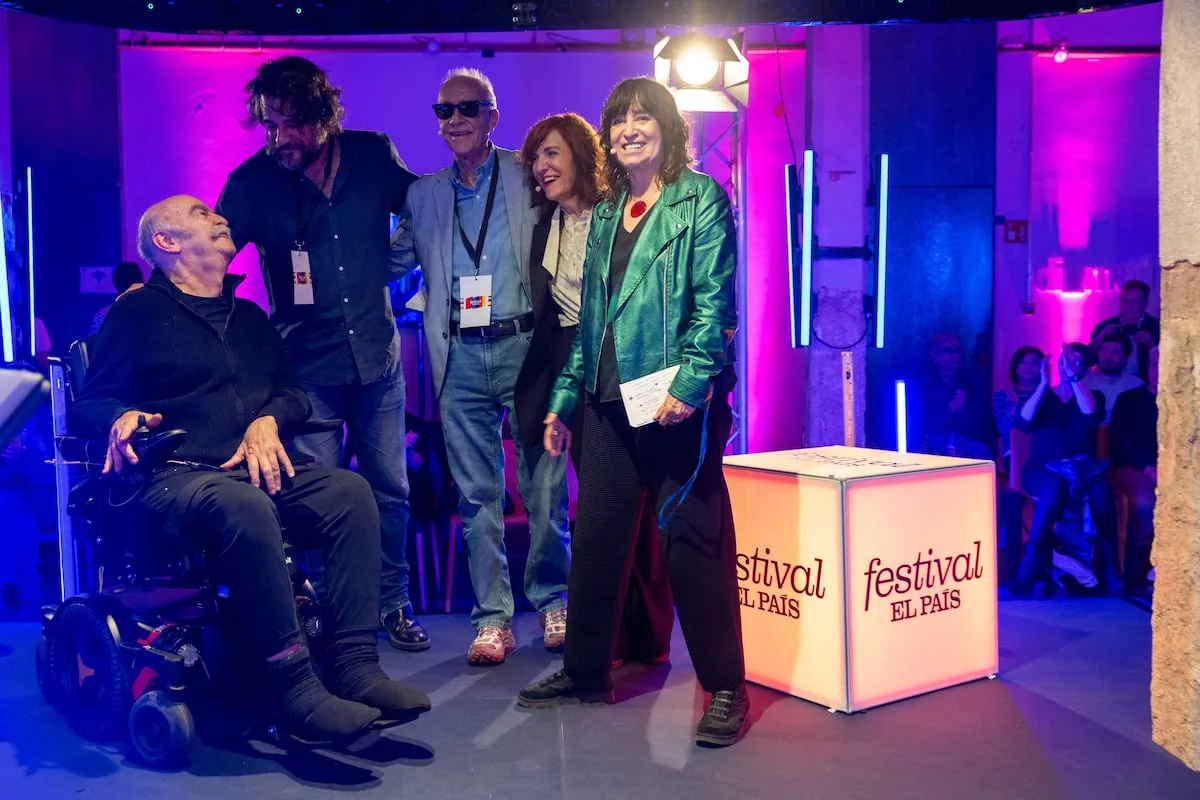
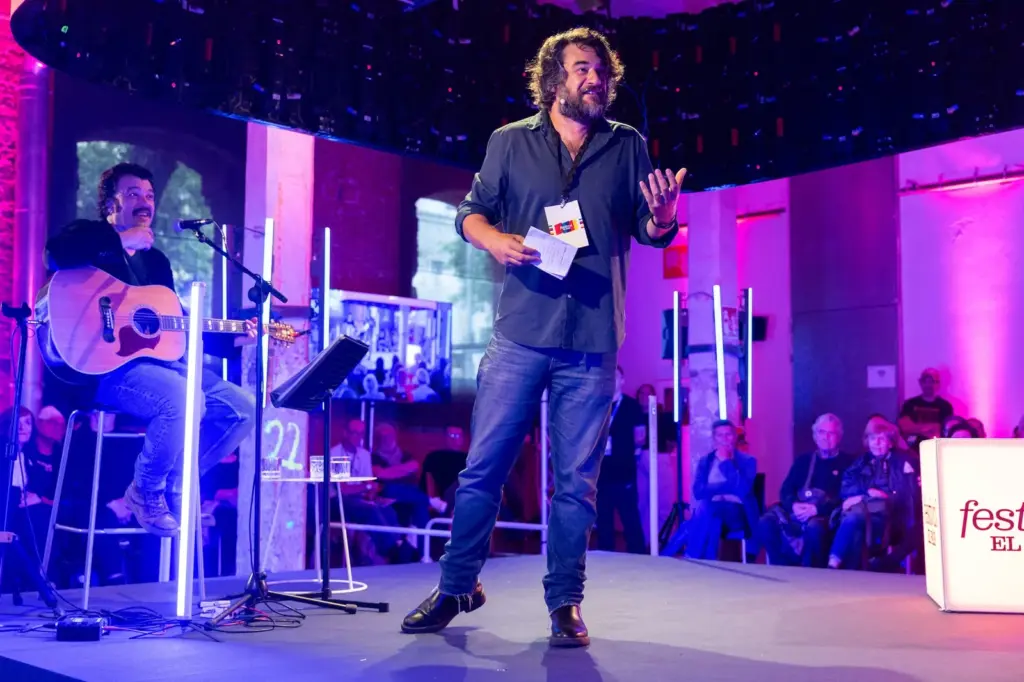
“Although it is too early, I have been told that we could sing,” says Pablo Moro, while strumming the guitar on a stage in the middle of the gloom. Around him, the audience has just sat down but is already silent, expectant. “I think if we sing it will be more fun,” people hear and, quietly, as concerts usually start, as demonstrations start where you have to get rid of shame to raise your voice, they sing a times are changing from the chorus of La buena estrella by Fito Páez, following Moro. It is noon. It is raining outside. Inside, the audience does not know it yet but is about to experience a catharsis.
Read more Alma Guillermoprieto, at EL PAÍS Festival: “We are living the failure of the utopia of capitalism”
The first to take the stage, Juan José Millás, with superstar black rayban glasses, receives an ovation that confirms he really is one. “My dream is to write a column that ends columnism,” he says and the audience, already in tune, bursts into laughter. But how is this man going to end columnism if it is his essence? Millás, who has occupied a space on the Friday last page since the 90s, “when the newspaper was read on paper because on the internet the last page no longer makes sense,” confesses that writing for EL PAÍS has always been a great responsibility and that, to avoid being gripped by fear, he decided to create an alter ego, someone who was not him, someone who could write without anxiety. “The problem is that many times, the other wants to write his own column,” he assures amid the hilarity of the readers. “That is why, if ever, any of these columns ends columnism, I want you to know that I did not write it. It was the other,” he warns.
By the time Rosa Montero takes the stage, the audience is already engaged, in tune with what we have come to do, which is to listen to how texts are cooked, what you have to add to the broth to give it flavor. “I have been writing columns for 40 years and it is the most boring thing I have done,” says Montero and you can hear the crunch of reader expectations that have just been broken. “What I am going to do is tell my interview with Ayatollah Khomeini,” says Montero and a big “oh” runs through the room, confirming that hopes have been rebuilt because the audience is eager for stories and on stage is living history of the newspaper, someone who has been signing articles since 1977. The journalist and writer then goes on to tell how she interviewed the ayatollah in 1979. “It was the most ridiculous and pathetic interview I have done,” she confesses before recounting how they made her wear a veil and forbade her head to be higher than the ayatollah’s, so since he was sitting on the floor, she had to kneel and bend so much that all she could see was the carpet. “Let us not forget Iranian women and also Afghan women,” she claims before leaving the stage.
Pablo Moro, who has accompanied the columnists throughout the event, changes mood with his guitar and by the time Manuel Jabois steps under the lights, the atmosphere is ready to be relaxed again. The Galician starts at the beginning, which is how he became a columnist and tells the story of a column he wrote in El diario de Pontevedra, called Ruth and about a friend of his with the same name. At the newspaper’s closing, someone pasted the headline but did not copy the column into the layout (things that happen and are only funny years later), so the previous one about the pianist from Schindler’s List remained and not about his friend Ruth. “It started with the phrase ‘long and cadaverous bones.’ I turned pale,” he recalls amid the laughter of the room and continues: “But Ruth’s mother called me and said she loved it. That’s when I understood that you can write whatever you want and the reader will understand whatever they want and I said: this is my place.”
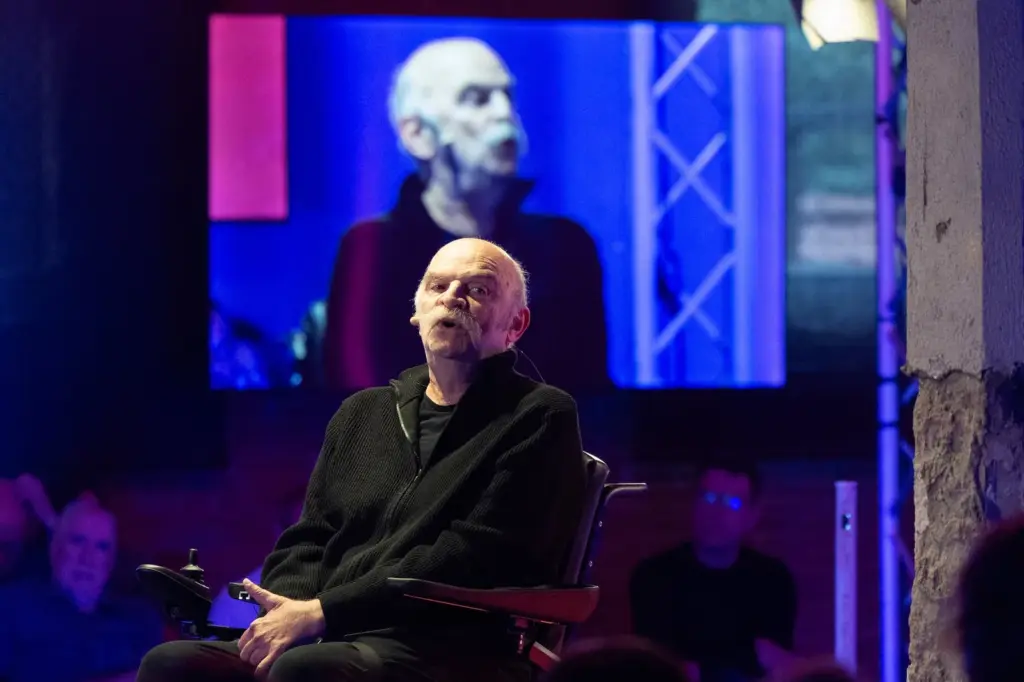
Moro plays Nada de esto fue un error and the audience sings eagerly, until silence falls and Martín Caparrós takes the stage in his wheelchair. Then, the room breaks. Applause bursts like it had not until now. When it stops, Caparrós says he had prepared a story, but is too embarrassed to tell it. Instead, he prefers to give a scoop: to talk to the readers who have just applauded him about a new format he is creating with a program that turns columns into songs. And he plays one that has not yet been released, but will soon be. “I prefer to talk about the future,” he says as if apologizing.
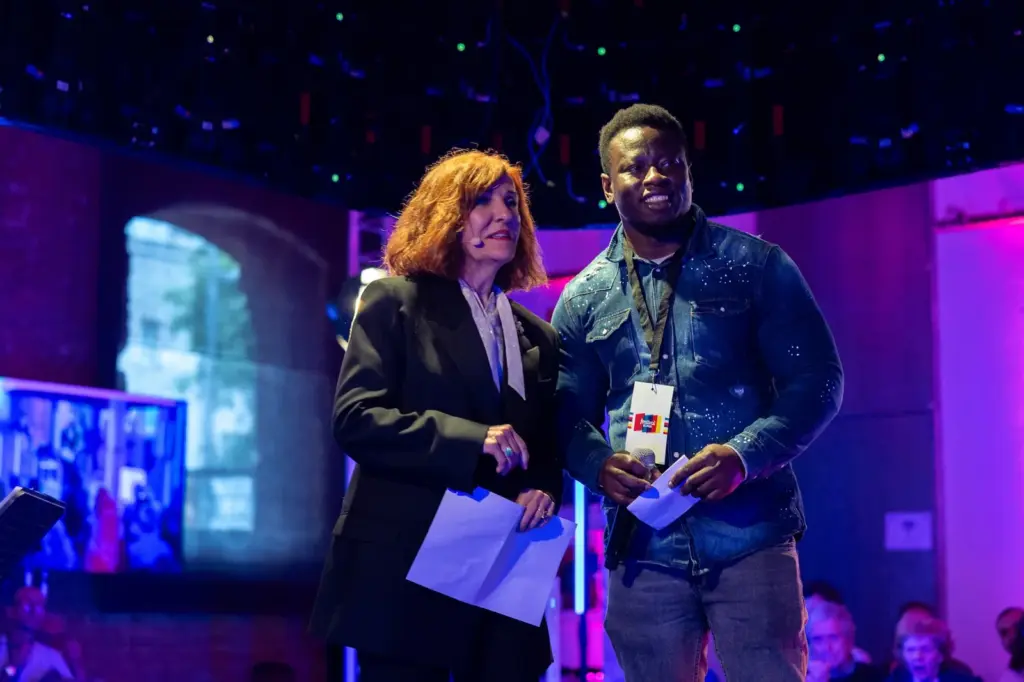
“I was moved to see colleagues I admire here,” says Elvira Lindo when she takes the stage and recalls: “I met Martín in Buenos Aires but he doesn’t remember.” “Yes, I remember,” he shouts from the audience, “it was a place of dubious reputation,” he adds amid laughter. “Journalism didn’t work out for me, fiction worked better,” confesses Lindo. She, who started writing in the now-defunct supplement El pequeño País, received a call in 2000 from Juan Cruz to write a column she called Tinto de verano in the newspaper’s summer supplement. From there, she modulated her tone until she made it what she wanted, what it is now: reflective and more serious than in her early years. Also, more focused on other people’s stories like the one she told in her article Historia de Abdul, about the Ghanaian immigrant Abdul Azizu who arrived in Valencia in a wooden box, still a minor, in a container. In Valencia, he was first welcomed by institutions and then by a family. “I want you to see that this column is about a real person,” announces Lindo before asking Abdul to come on stage.
The readers, after hearing the story of a terrible journey that so many people face, listened to Abdul read a paper in which he thanks all the people who have helped him in Spain. In the gloom, some, most, wipe away tears that now roll freely down their cheeks. A new ovation breaks out: for Abdul, for the woman who welcomed him, for Elvira Lindo who told it, for Caparrós, for Montero, for Millás, for Jabois, for EL PAÍS, which is a megaphone, for themselves because, without them, none of these people would be on stage, we would not be here today, a rainy May morning, celebrating that we have reached half a century of life.
Moro returns to the guitar. He plays Un beso y una flor, by Nino Bravo. The readers sing quietly like in a mass, as one sings after a relief. It is no longer raining outside. The sun has not come out, but the air is lighter. None of the columnists have told how a column should be written, but they have told something better: that behind each column there is a human being who fights to make this world a little better place.
Read more José María Cruz Novillo dies, the man who designed the great logos of democratic Spain