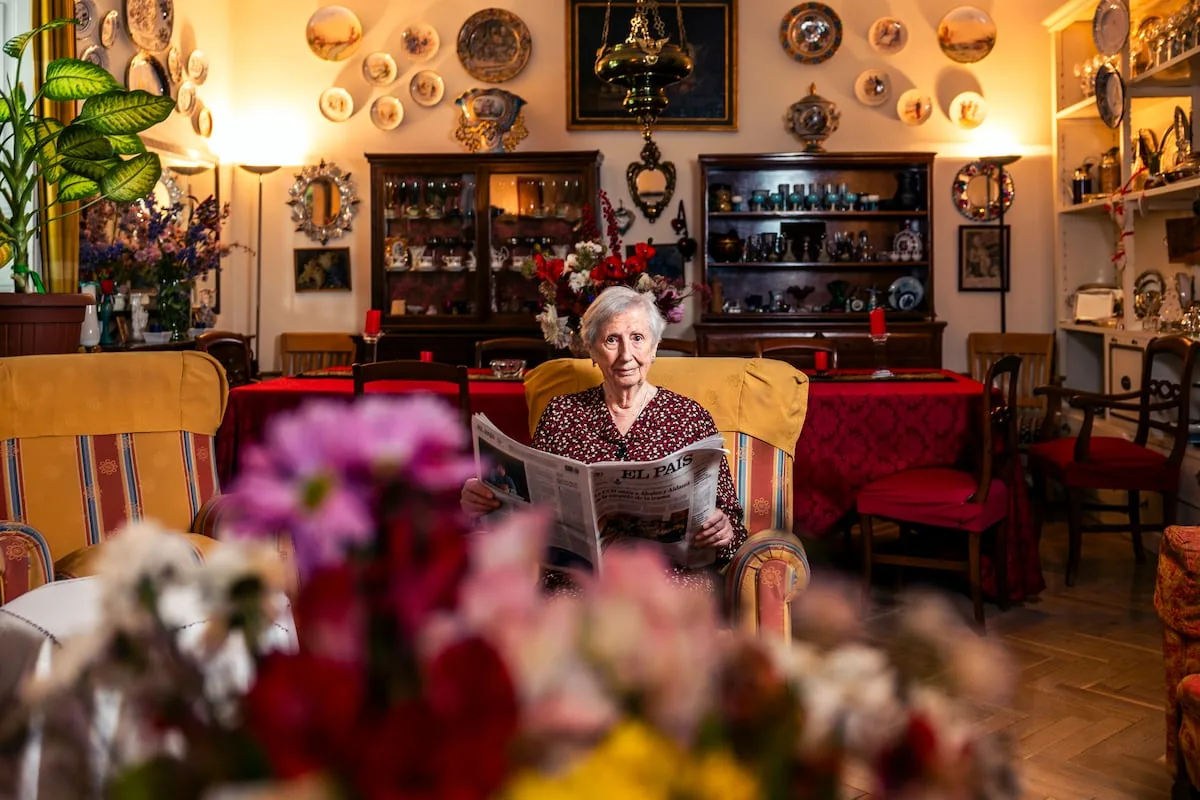

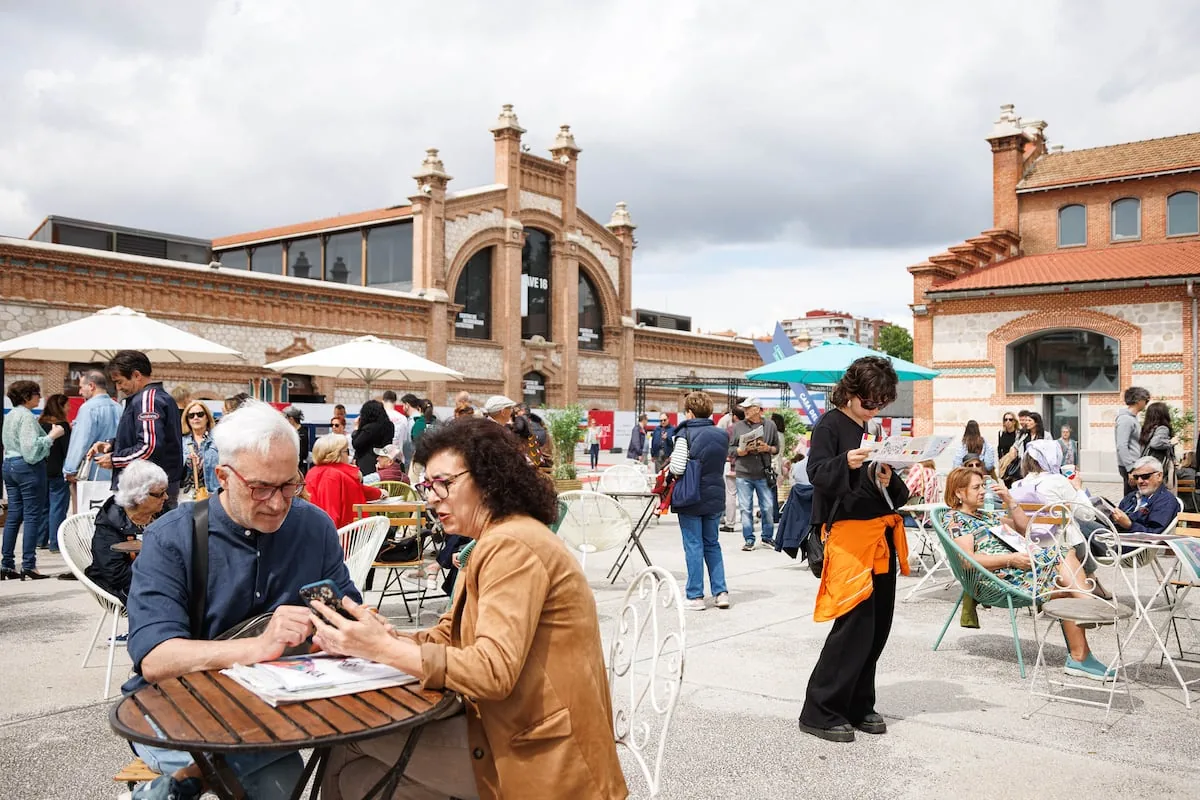
Among the 40,500 people who over these three days have passed through the halls of the Matadero de Legazpi in Madrid to attend the 50th anniversary festival of El PAÍS was a historic secretary, Rosi Rodríguez Loranca, who, along with a driver and other employees, moved typewriters and wastebaskets to the empty building on Miguel Yuste Street 40 so that journalists could start working. Some streets were still unpaved in San Blas, the peripheral district where the newspaper’s headquarters was established. The neighborhood was then a collection of poorly patched vacant lots populated by small workshops, family factories, and shacks. If anyone working in that building on May 4, 1976, had been told that 50 years later information would travel through the air to all parts of the planet — and even further — and that one could write, edit, send, and publish an article with a photo included almost instantly from a mobile phone, they would have made a face worthy of a selfie. The same face anyone might make if a future EL PAÍS reporter arrived to explain how the newspaper of May 2076 is made.
Read more Álvaro García Ortiz: “With my sentence we have all lost, including the Supreme Court”
During these three days, present-day EL PAÍS journalists have been content to show what the newspaper is like and how it is made every day: to show the backstage, what is behind, the apparent magician’s tricks that precede each issue and each news story with a single purpose: to demonstrate that there is no trickery and that the news, reports, and editorials are made by men and women with skill, method, and experience and that, despite that, they often make mistakes. Every journalist stores a good collection of blunders, something normal in a job carried out hurriedly and with a good dose of improvisation. And often, one remembers the mistake more than the success. And even grows fond of it. Javier Casqueiro, a recognized journalist and political analyst, recalled yesterday the freezing afternoon when he listened to Mariano Rajoy at a rally held on December 1 in Benavente (Zamora) during the 2015 election campaign. Standing on a bench in a park, the then Prime Minister suddenly uttered that gibberish of “it is the mayor who wants the neighbors to be the mayor,” which Casqueiro discarded as inconsequential and confusing and did not include in his report. Rajoy’s most famous phrase had just been pronounced two meters away from a journalist who decided not to include it among the more than 1,500 words he was going to write. Very shortly after, the audio began to go viral and Casqueiro — and his boss — started pulling their hair out.
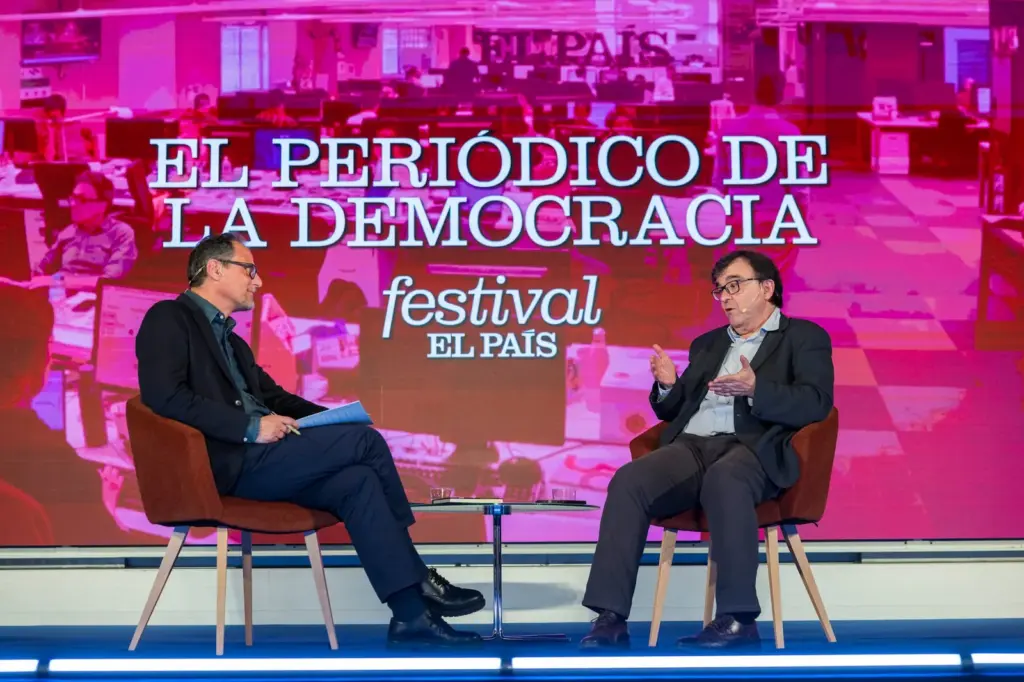
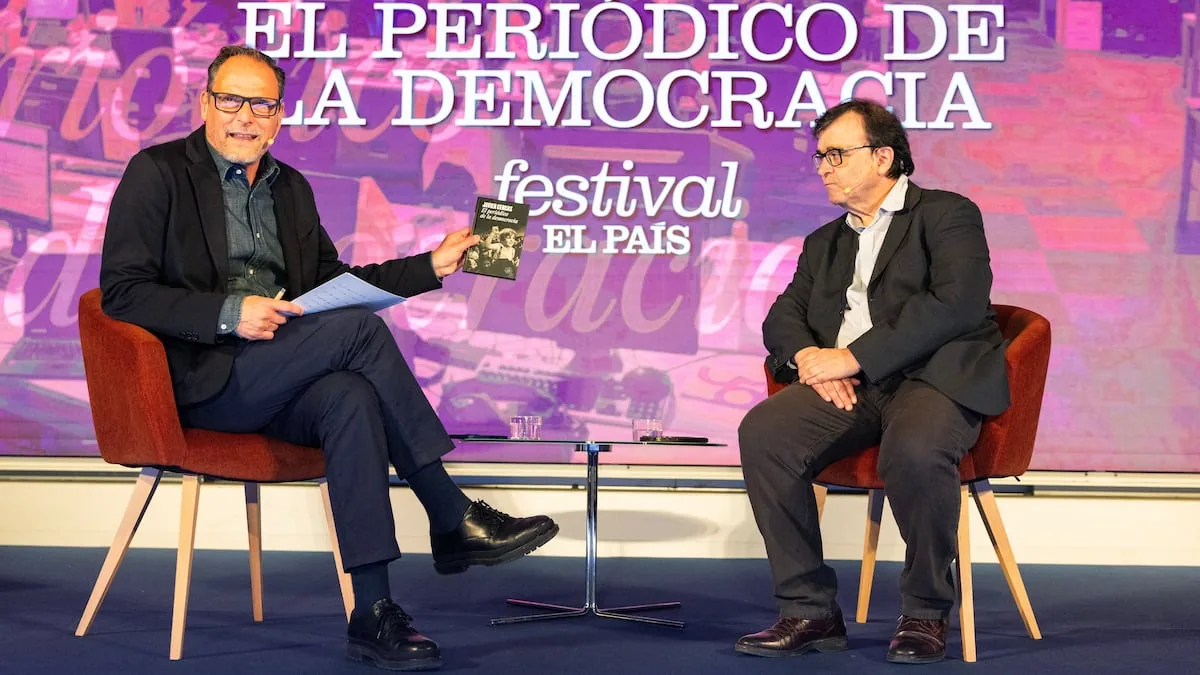
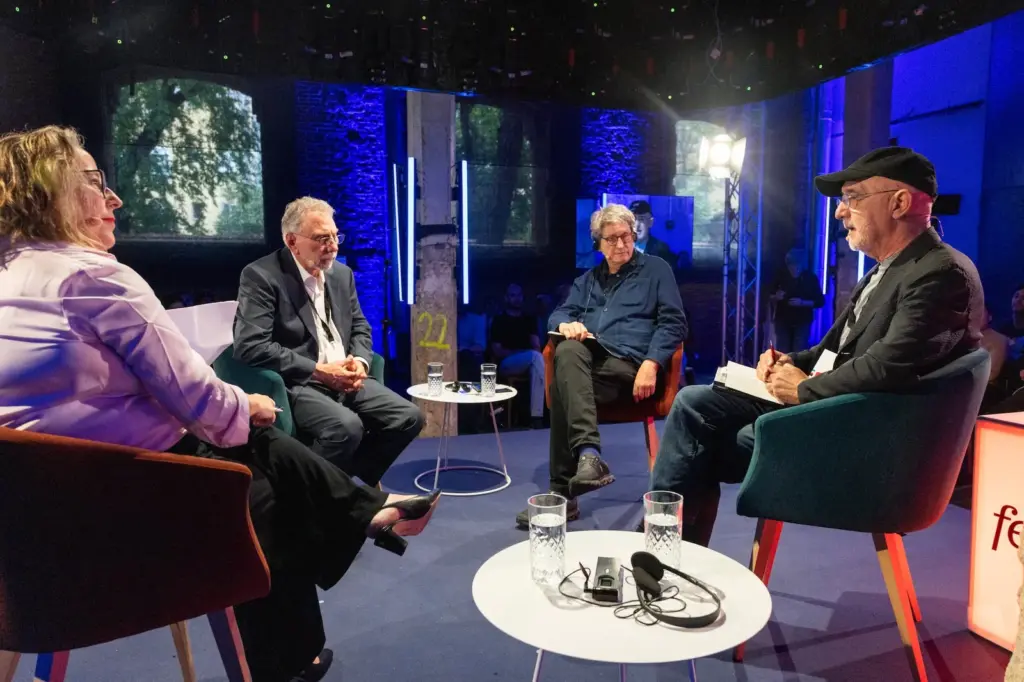
The three days of the festival in which El PAÍS showed the backstage began on Friday with a special meeting: that of the editorial committee, which brings together editorialists, experts, and experienced journalists, responsible each week for deciding what EL PAÍS thinks about almost everything. The writer Javier Cercas, a collaborator of this newspaper, in a dialogue he held yesterday with director Jan Martínez Ahrens, stated that EL PAÍS “is the newspaper that carries the most legends.” Friday’s meeting will help dismantle some by making clear that reality is simpler, more prosaic, and, deep down, more reassuring: editorials are conceived after a civilized meeting of a group of people willing to reach some conclusion about the topics that the slippery current events put on the table. Nothing more. Nothing less.
After the editorial committee meeting, which took place before 300 people who kept an almost religious silence, the events multiplied, all aimed at the same thing: a sort of come and see. While in one room the deputy director, Miguel Jiménez, explained how the so-called Bárcenas Papers arrived at the newspaper (it was not Bárcenas who leaked them), Kiko Llaneras, a Data journalist, along with several colleagues, showed how to make an animated graphic, using the Adamuz (Córdoba) train accident as an example. Llaneras noted the attendees’ interest in knowing how the data were obtained, how measurements were established, how the pertinent conclusions were reached before starting to prepare the information.
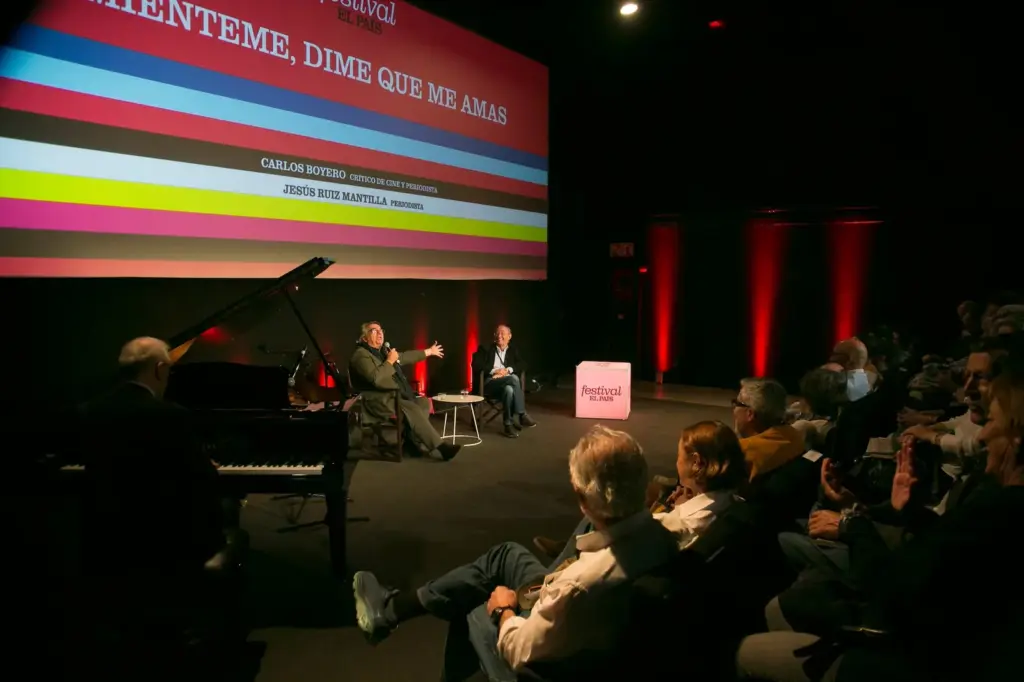
Carlos Boyero talked about cinema, photographers Carlos Rosillo and Claudio Álvarez taught how to take photos in street workshops, and the cartoonist José María Pérez, Peridis, received live and in front of the audience the daily assignment he has been receiving since the first issue of El PAÍS. That distant May 4, Peridis drew José María de Areilza, then Foreign Minister, carrying out an official trip to Morocco. This Sunday, 17,805 issues and 17,805 drawings later, Fernando J. Pérez, editor of the Spain section, recommended that he draw something about the Andalusian elections: María Jesús Montero next to Sánchez and Moreno Bonilla without Feijóo’s company, for example.
The current correspondent in Brussels María Sahuquillo spoke about the smells of the Ukraine war when she was a special envoy to the area: the smell of coffee made by the guards at a border post, the gunpowder from the bombings, the food prepared by welcoming neighbors… And Luis de Vega, also a special envoy to the Ukrainian war front, recounted how on one of the trips an airline lost his suitcase and how he discovered, after hearing harrowing stories from people who had lost absolutely everything, that the contents of the darn suitcase — which remained rolling forever on a baggage carousel at a Paris airport — were superfluous, like so many things we consider essential but are not. This, recording what special envoys think and feel in a war zone, may seem unnecessary and, if you ask me, obscene. It is a trifle compared to the mountain of suffering of the victims. But, for once, it is worth remembering that behind a news story written on a war front is a heart that also suffers.
Read more Three dead from a possible hantavirus outbreak on an Atlantic cruise that departed from Argentina
The audience attended on Saturday afternoon a meeting in which the section heads together with the director decided — as they do every day — the contents of the front-page news. On another day, journalist and columnist Luz Sánchez-Mellado interviewed actor José Sacristán in front of hundreds of people as if he were one of the characters she interviews every week for the last page on Sunday. In different rooms, there were talks about sports, gastronomy, Latin America, column writing, pedophilia, crosswords, or chess; also about the challenges and dangers of AI, letters to the editor as messages in a bottle, the end of the world, the beginning of the world, when Pedro Sánchez woke journalists mid-flight to tell them he was going to break with Feijóo. And when Manuel Jabois sent a column to the Diario de Pontevedra about a councilwoman friend who had just been dismissed named Ruth and the person in charge of placing the text on the page forgot, and the next day the column appeared with the appropriate title, “Ruth,” but with the text of the previous day’s column, which was about a movie. No one really noticed except Jabois and his friend.
Cercas stated that, as part of the collection of legends that accompany this newspaper, he has sometimes heard that today’s EL PAÍS is worse than EL PAÍS of years ago. And he added that this is false. He supports it with knowledge: For the book about EL PAÍS he has just published, The Newspaper of Democracy, he has consulted many old issues. “If the disciple is not better than the master, the master is bad,” he added, referring to the journalists who preceded the current EL PAÍS editors. “And you,” he added, “have had good teachers.” Some of these old teachers have passed these days through the Matadero de Legazpi and have crossed paths with those who were then their disciples. Those who were 50 are now 70, and those who were 30 are now over 50. And life goes on and the newspaper remains.
In one of the talks, the current Reader’s Ombudsman, Soledad Alcaide, wondered, along with the writer Sergio del Molino, what should be done, what things should be changed, to reach more people, so that, for example, their young children would read the newspaper. The Portuguese writer Lídia Jorge, after hearing them, said: “You aspire to perfection; I am content with imperfection. Because what you have, EL PAÍS, is worth a lot, and not everywhere is there something similar. It gives a voice to everyone, there is money to make reports. I want a newspaper in which this one who does not think like me appears, but with whom I want to dialogue. You are important. Because the press is a guardian.” Martin Baron, the former director of The Washington Post, assured that the future of newspapers lies, among other things, in strengthening their values and not being afraid of changes. In reality, no one knows the answer. Maybe it does not exist.
In San Blas, in the neighborhood surrounding the newspaper, almost all the workshops have disappeared. There are no more vacant lots, no low houses, and of course no shacks. Nor unpaved streets. Now new companies proliferate, newly built apartments, restaurants with a modern air. There are also Peruvian taverns, nursing homes, and giant office buildings. Everything has changed. But the noble and plain building of El PAÍS remains there, in the same place, on Miguel Yuste Street 40. Perhaps the secret, as Cercas assures, is simply “to tell things as they are.”
Read more Morena endorses Ariadna Montiel as party leader: “This leadership will not tolerate corruption”