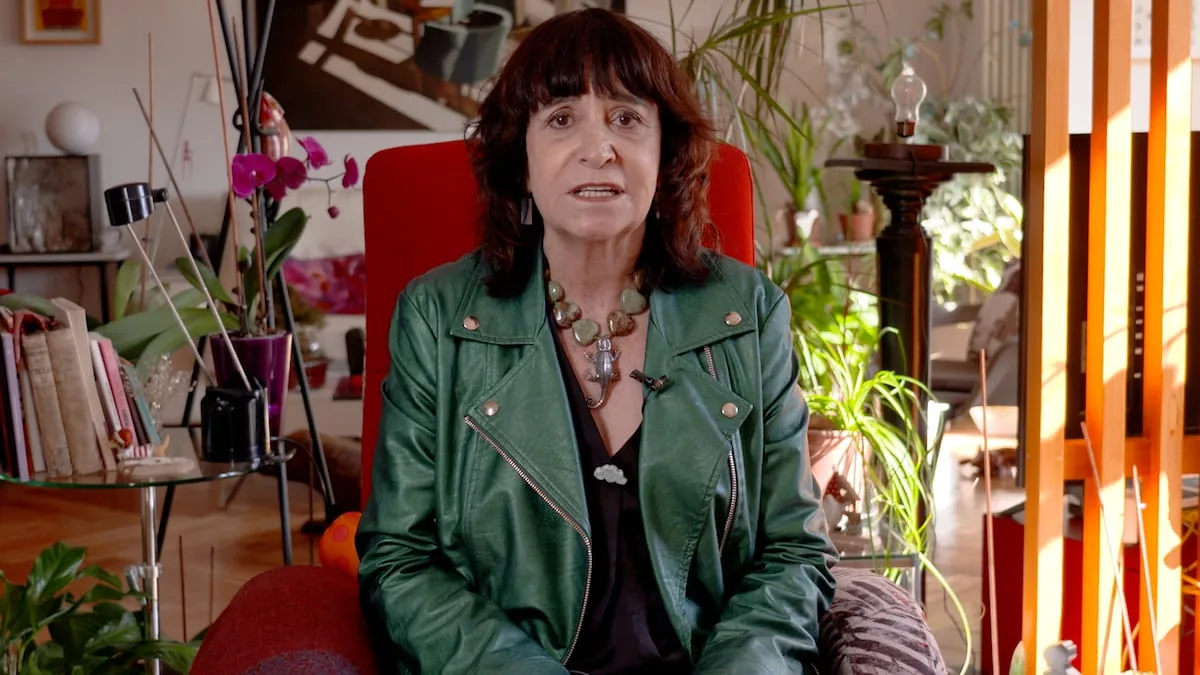






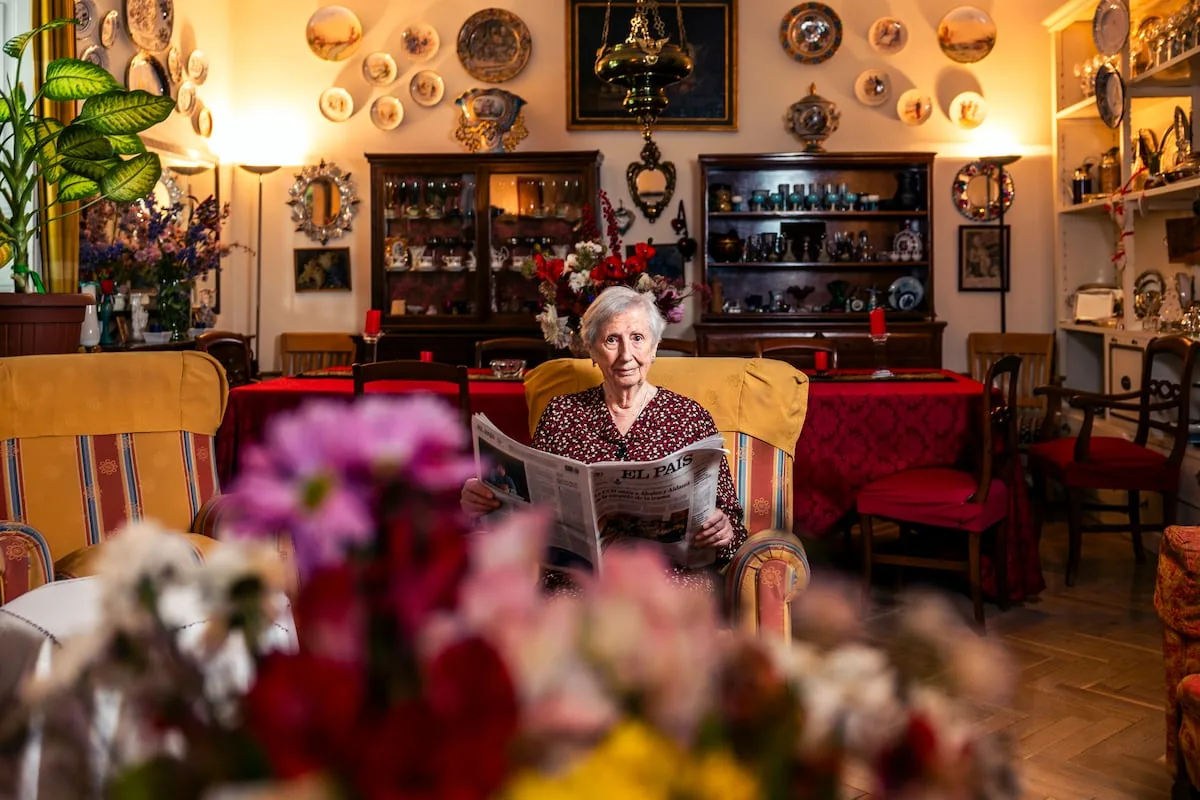
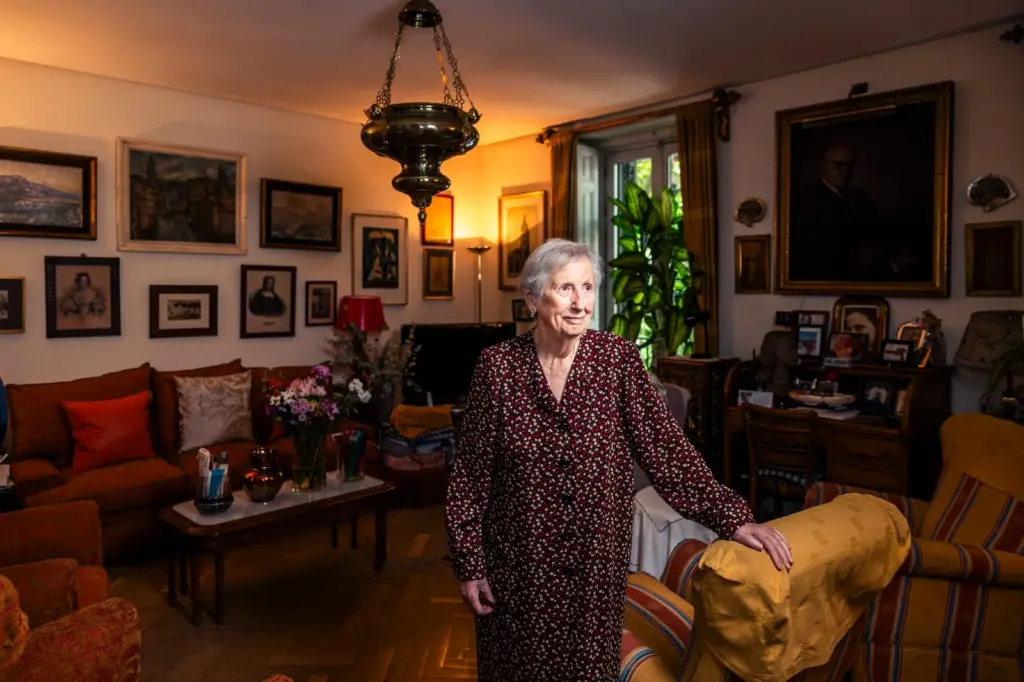
Antonia Talavera Pérez (Madrid, 93 years old) and her husband were friends of José Ortega Spottorno, founder of EL PAÍS and Prisa, so they closely followed the birth of the newspaper. On May 4, 1976, the day the newspaper was published for the first time, they ran to the kiosk to buy a copy. “I still keep it. We bought it out of friendship, but also out of ideology. We wanted a change and EL PAÍS was the change,” she says sitting in the living room of her home, an apartment filled with memories on Madrid’s Serrano street. Many things have changed in these 50 years. Below Antonia’s house, for example, there used to be a butcher shop and a florist. Now there are only luxury stores. Her husband passed away a long time ago. “Don’t ask me when, I forget the dates,” she apologizes. They met working at La Paz Hospital. She was a nurse and he was a cardiologist. “Before he died, they tried to make us leave this house. I negotiated and managed to get them to let us stay. And here I am.” Now she is the only neighbor left in the building. “No one lives here anymore, I don’t see anyone,” she laments. But there is something that has not changed for her: she has breakfast every day at her kitchen table reading EL PAÍS.
Read more Daily ONCE coupon dedicated to the 50th anniversary of EL PAÍS
Question. You were born in 1933, during the Second Republic. You lived through the dictatorship, the Transition, and the arrival of democracy. How do you remember ’76?
Answer. With a lot of hope. We expected everything to change. We didn’t want anything to be forgotten, but we wanted to let go. Now it makes me very sad to read some things. I feel sadness.
Q. What makes you sad?
A. Seeing the confrontation between one side and the other and that no one wants to reach any kind of agreement. The climate of confrontation saddens me. Sometimes I’m ashamed to see the behavior of some people.
Q. At 93 years old, what things worry you?
A. The hatred towards immigrants worries me a lot. Those who put a stop to immigration don’t realize that Spaniards have always been emigrants. We have emigrated all over the world. Let these people come, live their lives, rebuild them, help us and let us help them.
Q. You suffered through almost 40 years of Francoism…
A. Well lived and well suffered. My father was in prison during the dictatorship. My husband too. My father was arrested a year after the war ended. It was because of an anonymous denunciation, for being a “red,” as was common then. I was very young, but I remember going to see him in prison. My husband managed to get out, but then he was unable to work for a while. Things typical of the time.
Q. So many years later, we see movements towards the far right again.
A. I see those movements as so clumsy. Creating enemies when we are not. All that seemed overcome and look where we are.
Q. What do you like about EL PAÍS?
A. I like the tone it has to deliver the news. It doesn’t offend anyone. It tells things as they are, without offending or mistreating people.
Q. Do you think there is something we need to improve?
A. Well, I would like a page that was removed to come back, one that talked about events in the city: conferences, premieres…
Q. Noted.
A. Very well, let them know. The newspaper is information and everything must be reported.
Q. What news would you like to read?
A. That the Republic is coming. I have everything prepared for when it arrives. If you want, go see what I have in that hallway or I’ll show you later [in a corner of the house hangs a tricolor flag, old republican posters, and other memorabilia]. Oh, how wonderful it would be to see the Third Republic. Every April 14 I meet with my friends, the few who are still alive, to remember.
Q. What do you remember?
A. I was a child. My mother lived in Madrid, but her family was from Jaén. When the war broke out, we went with her family to Andalusia. They were all right-wing, some were Falangists. But there no one mentioned anything. There was no conflict of any kind. I have not forgotten that they helped us a lot.
Q. Has any news made you angry lately?
A. I get angry about many things, but then I forget.
Q. For example?
A. The lack of housing for young people, for example. It’s horrible. And the hospitals that are becoming private. Public healthcare has me desperate, very anguished. We had such comfortable, such good healthcare, and how they are squeezing and ruining it. Throwing it out the window like that… they don’t know what they’re doing. It’s very sad. I know what I’m talking about because I worked all my life in a hospital.
Q. Are there not enough good news in the media?
A. The main one is missing, the one I told you, that the Republic is coming [laughs]. Let’s see when they put it.
Q. In general, the media focus more on bad news than good news.
A. It’s just that many bad things happen and they have to be told.
Q. That’s true. Do you have children?
A. No. I have nephews.
Q. And do they read the newspaper?
A. No, they follow my mother’s family tradition and are right-wing [laughs].
Q. Next year there are elections. Will you vote?
A. Of course. I always have to vote. If I can vote twice, better than once. Young people don’t vote because they find everything already done. That’s why they don’t care. They only think about succeeding, their businesses, and their things.
Read more Elvis Crespo, singer: “With ‘Suavemente’ alcoholism came into my life”