









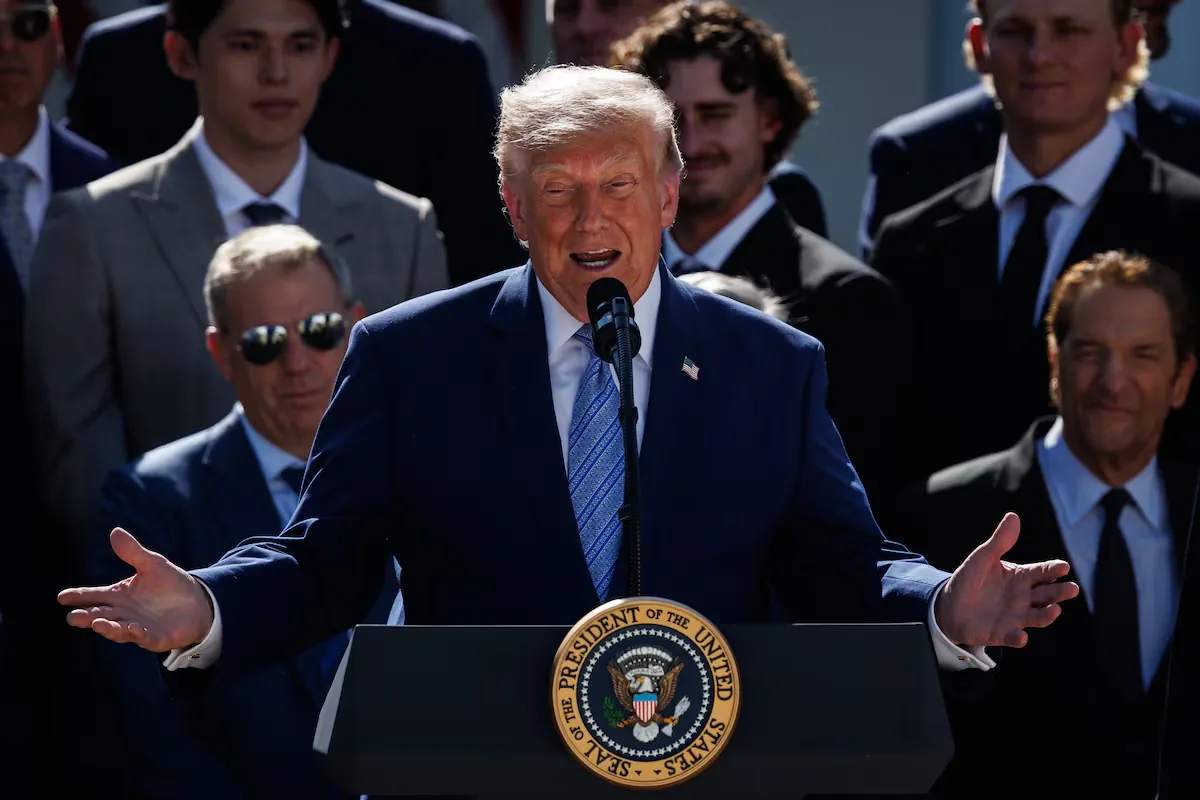
The European Commission has cautiously welcomed the entry into force of the new tariffs —between 10% and 12.5%— approved the day before by the United States Government. In a scenario of constant blows and threats from the Donald Trump Administration to the EU and some of its partners, Brussels believes that what is now on the table is much less bad than expected. It considers, in fact, that these new taxes that the US imposes on dozens of countries —arguing that they violate rules on the import of goods from forced labor— do not contravene the trade agreement between Washington and Brussels signed a year ago.
That agreement established that the US would apply a tariff to most European products, while the EU eliminated taxes on a large part of industrial products from the North American country.
However, the Community Executive does not delve into the merits of the matter: that Trump is rebuilding his desired tariff wall —the previous one having been annulled by US justice— with a chaotic tangle of regulations. He does so, moreover, relying on an argument, that of forced labor, which the EU believes should not be applied to it, because precisely the community bloc has protective laws guaranteeing workers’ rights.
“The EU positively notes that this outcome is consistent with the tariff commitments undertaken by the United States under the EU-US Joint Declaration,” a European Commission spokesperson said this Friday, adding that the decision provides a “positive impetus” to continue exploring new tariff exemptions and deepen cooperation between both blocs.
The United States announced new tariffs of between 10% and 12.5% on products from 60 trading partners, including the European Union and China, on Thursday, alleging that these countries were not acting sufficiently to prevent the import of goods made with forced labor. The levies theoretically came into force that same night, because the universal 10% tariff approved by Trump last January expired this Friday.
The EU is among the reduced number of US trading partners for whom these new tariffs are not added to pre-existing “most favored nation” customs duties, community sources explain. The measure also reintroduces additional tariff exemptions for the European Union, such as those applied to cork and diamonds, which are added to existing ones for aircraft and their components, generic medicines and active ingredients.
Brussels is treading carefully given Trump’s volatility and has stressed that it expects Washington to continue respecting the terms of the agreement reached in July 2025 at the Turnberry golf resort in Scotland, owned by the Republican magnate. “This is essential to continue providing our respective markets with the much-needed stability and predictability,” a community spokesperson emphasized.
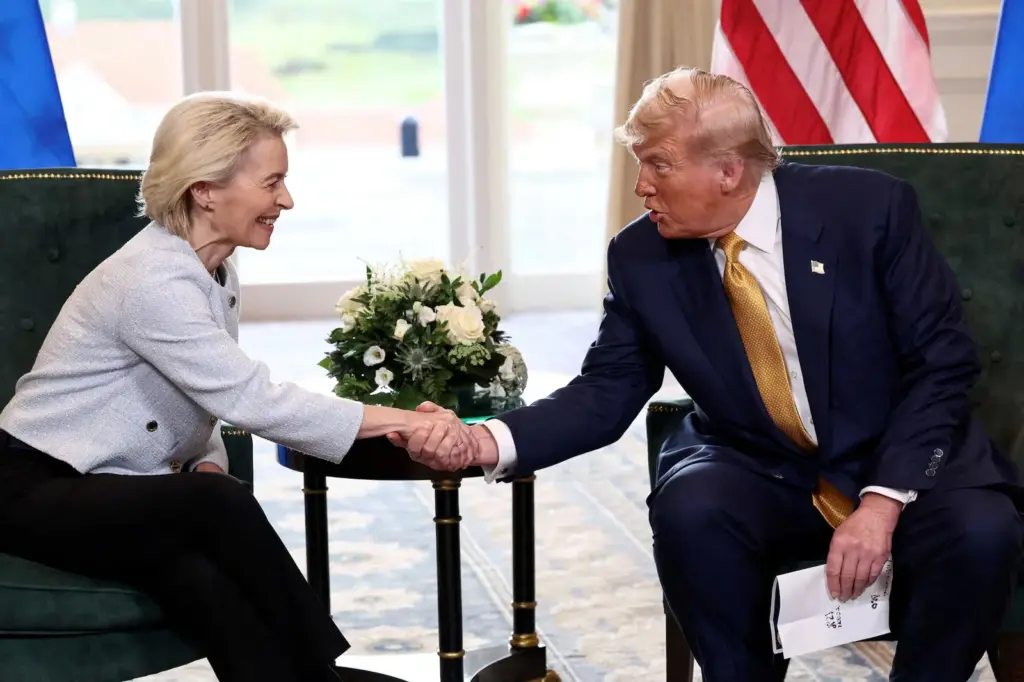
However, this institutional relief coexists with a much more critical reading within the Commission itself. The EU High Representative for Foreign Policy, Kaja Kallas, on Friday questioned Washington’s justification for imposing new tariffs on European products and stressed that accusations of deficiencies in the bloc’s forced labor controls are unfounded.
Read more Vall d’Hebron performs the first transplant in Spain between people with HIV
“You cannot say that for the European Union,” Kallas told Reuters in Manila, where she participated in the meetings of the Association of Southeast Asian Nations (ASEAN). “If you compare our labor laws with those of the United States, I mean… We pay holidays, we have very good working conditions for our employees. It’s not really substantiated,” she added.
The head of community diplomacy also summarized the feeling of many regarding the chaos of Trump’s successive announcements: “Who can keep track of the tariffs that are being made?” she asked.
The Google fine
Relations between the EU and the US have been extremely tense since Donald Trump’s return to the White House in January 2025. The latest dispute has arisen from the multi-million euro fine imposed by the European Commission on Google for violating the Digital Markets Act (DMA), among other things for favoring itself in the search engine. The sanction against the US tech giant has deeply displeased Washington, which has again threatened Brussels with retaliation.
US Trade Representative Jamieson Greer has accused the Commission of maintaining “an increasingly aggressive approach” against US tech companies. He also stated that the DMA measures against Android and Google’s search engine effectively constitute “a forced transfer of technology and a theft of intellectual property,” in addition to imposing “disproportionate financial penalties.”
Greer warned in a statement that these actions create “a real risk to the continuity of transatlantic trade stability” and stressed that genuine dialogue can only occur “during a truce.”
This is not the first episode of this struggle. Since Ursula von der Leyen and Trump sealed their agreement in Turnberry in July 2025, the EU has lived under a kind of permanent threat that has been renewed each season: first there was the warning of a 50% tariff if there was no agreement before July 9, 2025; then, with the pact signed, doubts arose about its ratification, which the European Parliament even froze in January of this year after a new coup de grace from Washington.
In May, Trump returned to the charge, setting an ultimatum —July 4, coinciding with the US national holiday— and threatening to raise tariffs on European cars to 25% if Brussels did not fulfill “its part” of the deal. And, in June, the Office of the US Trade Representative opened a Section 301 investigation against Germany, while Trump threatened to impose 100% tariffs on any country that applied a digital tax affecting US companies.
Read more Trump imposes a chaotic trade system in his third round of tariffs