









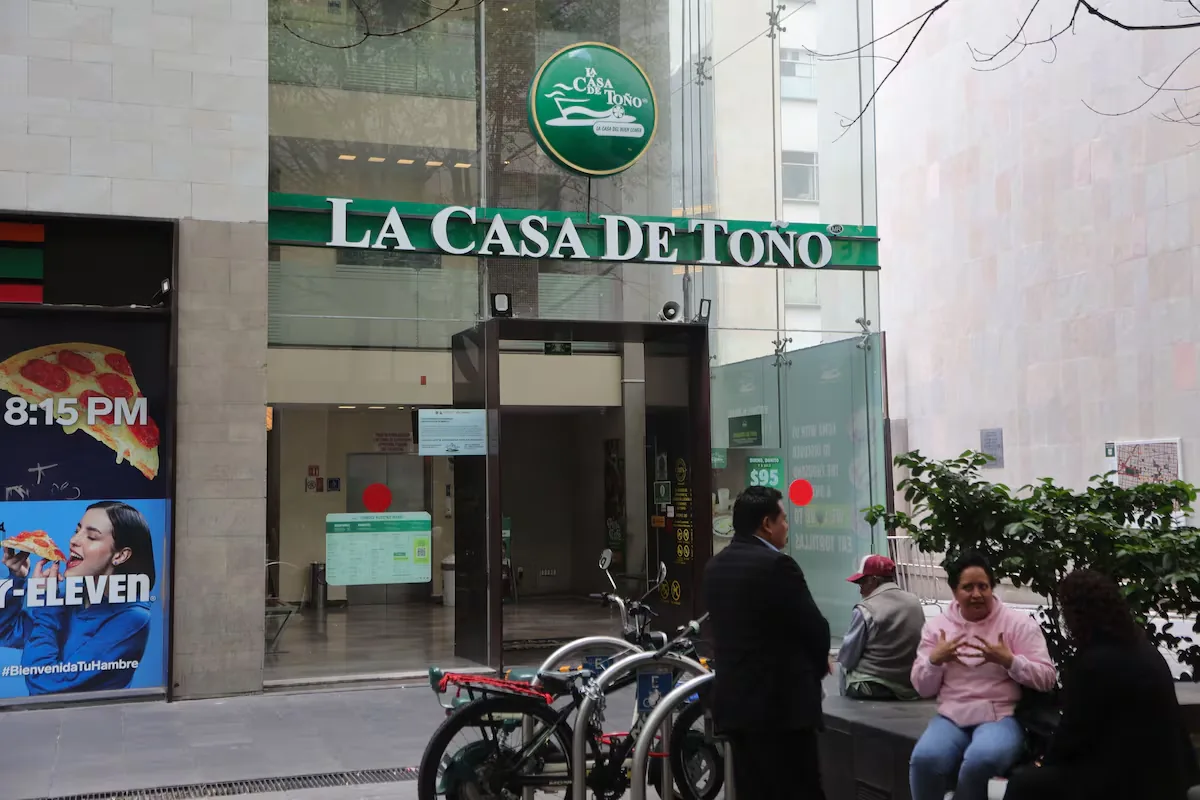
The potential multi-million dollar sale of a traditional Mexican food restaurant has stirred up emotions; as many as the aroma of its pozole. La Casa de Toño, a prominent chain that combines the fundamentals of Mexican cuisine with a fast-food model, standardization, and cost optimization, is exploring the sale of its assets in a deal close to 400 million dollars, with an eye on building an exportable model to the United States, Latin America, and also to other cities in the country. While thousands of consumers fear that scale might affect their favorite flautas or cochinita pibil recipe, financiers are calculating the multiples of the operation and asking an equally ambitious question: if the acquisition of this antojería will demonstrate that family recipes can also become global chains.
Read more ¿Quién protege a Alito?
Toño’s story is, in itself, a journey where the classic elements of a good story converge: a young entrepreneur, seeking sustenance for himself and his family, founds a small eatery in Mexico City to sell his mother’s and grandmother’s produce. Soon the stall becomes too small, so he moves it to his house. Neighbors christen it “La Casa de Toño,” and decades after decades, since 1978, it creates a chain of almost 80 branches, visibility, brand value, and customer loyalty. And behind it, a model of efficiency for table rotation, ingredient and kitchen management, and customer service, which allows for standardized preparation and service without sacrificing affordable prices. The creation of dark kitchens to serve the mass of diners at home, along with a robust marketing and promotions strategy, ended up turning a family kitchen into a large-scale operation.
Grupo Gigante, a Mexican company responsible for brands like Shake Shack and Office Depot, as well as founder of restaurants like Toks and Farolito, reported that it is preliminarily evaluating the acquisition, though it added that it constantly evaluates opportunities. The conglomerate clarified that it has not yet entered into contracts or agreed on prices or considerations, so there is no certainty whether the operation will materialize. However, the mere possibility opened a viral discussion about whether the chain is being sold at a good price, leaving money on the table. No less important, whether it will manage to maintain its consistency and quality, despite its growth. La Casa de Toño did not respond to requests for an interview.
Financial analyst Sebastian Hanhausen estimates that the potential valuation, reported by Bloomberg citing sources, is equivalent to more than eight times the chain’s adjusted earnings, a multiple higher than that of much larger operators, such as Alsea, owner of Starbucks and Domino’s Pizza in Mexico, or Arcos Dorados, the largest operator of McDonald’s franchises in Latin America.
“When a family brand with 81 restaurants is valued above giants with hundreds of units, the obvious question is who can pay that premium,” adds the financier. “And that’s where Alsea, whom we all would have seen as a natural buyer on any industry list, starts to be out before the conversation even begins.”
In a context of constrained consumption and declining sales, Alsea closed the second quarter of 2026 with a net profit of 528 million pesos, 52% less than the same previous period, a number that disqualifies it from the race, at least for a cash purchase. Gigante, on the other hand, enters the contest with a diversified portfolio of brands, less exposure to the country’s economic stagnation, and a declared appetite for continued growth.
For other investors, however, the sale price implies underselling a brand with potential. Its restaurants are concentrated in Mexico City and its metropolitan area, a geography that still leaves millions of potential consumers to capture through a multichannel distribution strategy, from its own premises to delivery platforms, both proprietary and third-party.
In a LinkedIn post that went viral, businesswoman and founder Patricia Armendáriz criticized what she considers the “worst financial mistake of the year” or a “gift.” In the hundreds of subsequent comments, financial, marketing, and product directors debate whether the group’s next move is appropriate. “Valuing La Casa de Toño at 400 million dollars (at 8X EBITDA) punishes the model’s potential: they measure it with the yardstick of the traditional restaurant sector, when it operates as an industrial mass consumption platform,” reads one of the entries.
Read more Bernabé Malacalza: “Progressivism has to think about how to stop men from war”
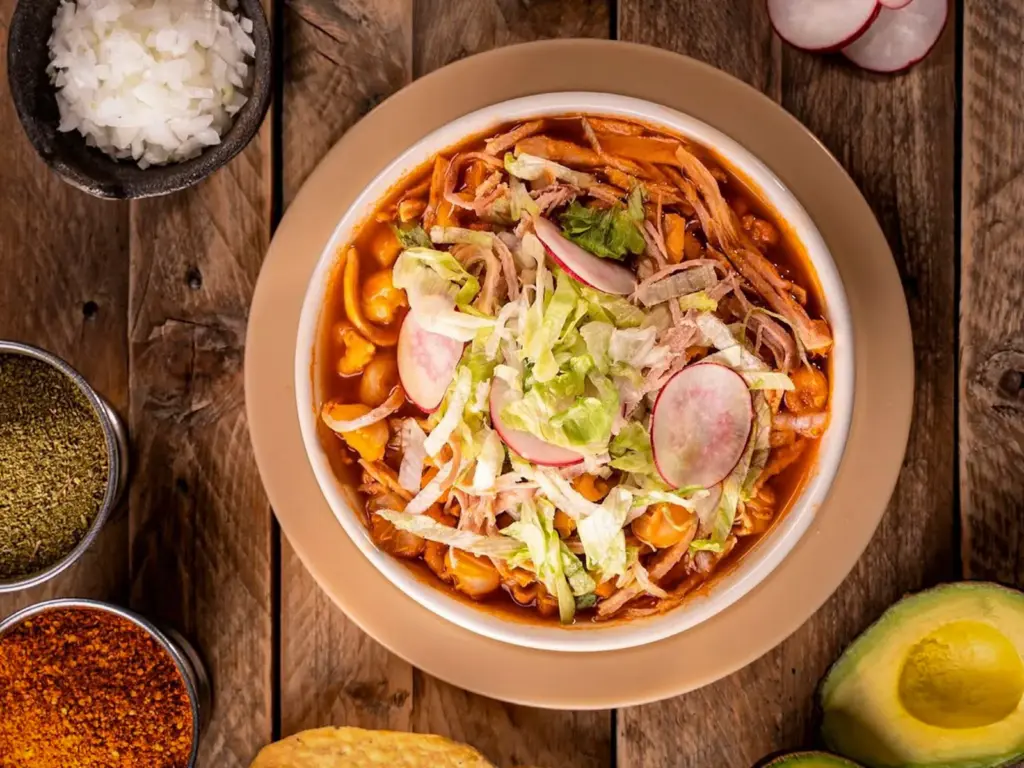
The argument of those who consider the valuation low points precisely to assets that do not easily appear on a balance sheet: brand value, the ability to standardize complex culinary processes — such as the preparation of a pozole that can involve up to 25 ingredients — high table turnover, and a loyalty that translates into lines of diners, without the need for permanent collaboration campaigns or launches.
Added to this is another huge latent market. In the United States, at least 40.5 million people of Mexican descent or roots live, an audience that could offer La Casa de Toño a first base for its international expansion and allow it to compete with Mexican or Tex-Mex food chains like Taco Bell or Chipotle, which recently made its debut in the north of the country.
“For me, La Casa de Toño is a unicorn disguised as delicious Mexican gastronomy,” adds Armendáriz, an investor (shark) for four seasons on the television show Shark Tank México. She refers to Mexican technology companies valued at more than 1 billion dollars, such as vehicle seller Kavak or cryptocurrency exchange Bitso.
In that sense, the operation also encapsulates a vibrant moment for Mexico and the tradition of its comal. The country, with its 29 Michelin-starred restaurants and a robust regional offering, has been gaining notoriety and expansion, although it is still far from major gastronomic powers like France or Japan. In terms of value creation, the restaurant industry is one of the country’s largest sources of employment, with some 2.4 million direct jobs, and contributes around 2% of the Gross Domestic Product (GDP), according to industry data.
And then there’s the emotional value that Mexican consumers place on sustenance. Mexico is a country where food marks the calendar: pan de muerto in October, rosca de Reyes in January, bolillo for scares any season. The original land of āhuacatl (avocado), xocolātl (chocolate), and tomatl (tomato) has, in that vein, a cultural pantry with room to export.
However, despite the public conversation, the final decision will rest with Toño. According to the Public Registry of Commerce (RPC), La Casa de Toño belongs to Grupo Restaurantero LCT, where founder Marco Antonio Campos owns 95% of the shares and serves as the sole administrator. “It’s a complex issue because, being a private offer, we don’t know the facts, other than the few confirmed by Gigante and La Casa de Toño,” adds Hanhausen.
Read more Malas noticias