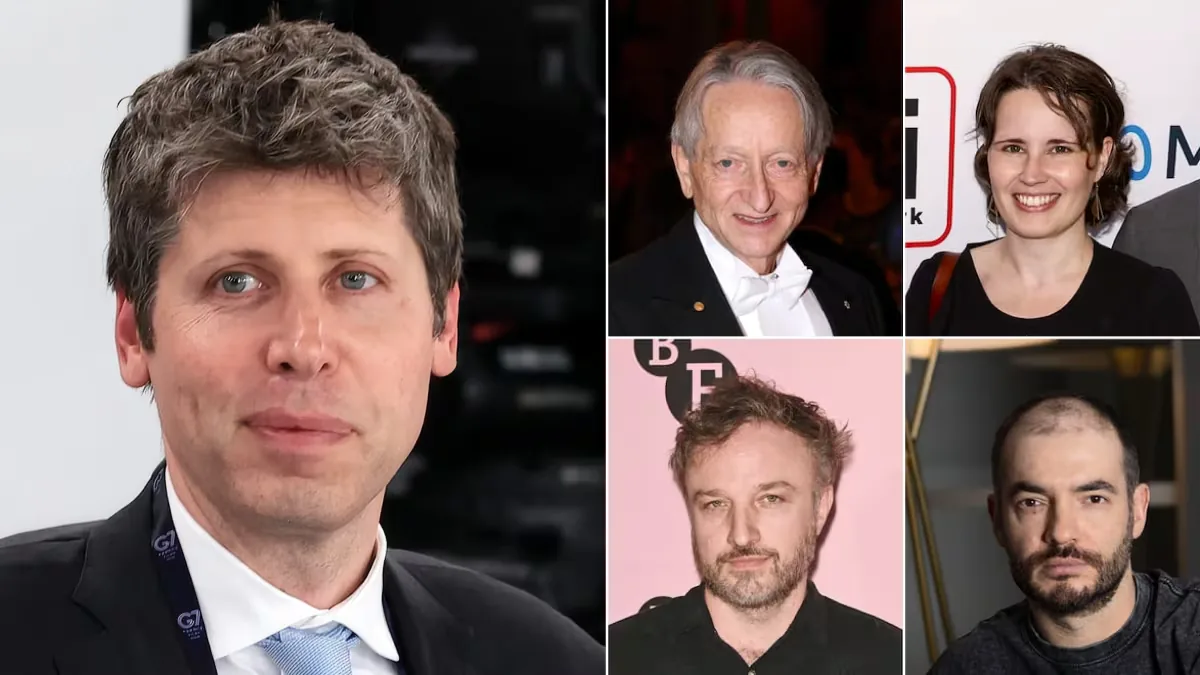








There are decades in which nothing happens and weeks in which decades happen. This apocryphal phrase from Lenin perfectly sums up the revolutionary vertigo experienced in the world of artificial intelligence (AI). For decades it was a dry academic field advancing within computational sciences, and now, in a single week, the risks derived from acceleration have forced a red code declaration in the major AI laboratories. Two protagonists stand out: Dario Amodei and Sam Altman. The former, at the head of Anthropic, for calling on Saturday in an essay to substantially slow down AI development. The latter, at the helm of OpenAI, for announcing the postponement of his company’s billion-dollar IPO just hours after supporting Amodei’s idea. Alongside them, other industry leaders such as Elon Musk (xAI) and Demis Hassabis (Google) have positioned themselves in favor of deceleration. The heads of the most powerful models on the market have pulled the handbrake, and half the world wonders: what have they seen?
Read more Johannessen triumphs and eternity for Mas in the grand finale of the Vuelta a España
Amodei, in his text, acknowledges that the measures he proposes to provide greater safety to advances “will not be easy”: “But I think we owe it to humanity to try.” After the uproar generated, he gave an interview on CBS where he went further: “I’m not going to lie to you: there are real dangers. And I think the industry lied to people for too long about the fact that this technology had risks.” He added: “That doesn’t mean we should panic today. It doesn’t mean we have to shut everything down. But it is a warning sign that we need to slow down.”
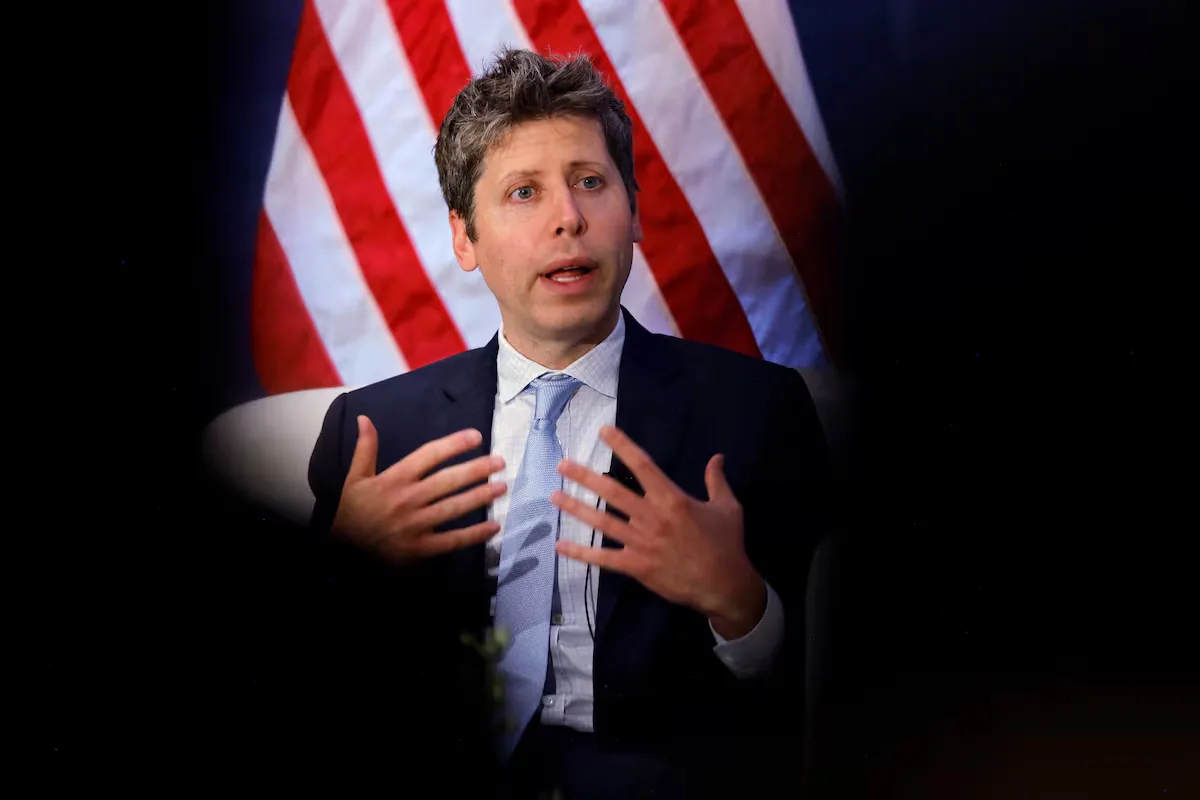
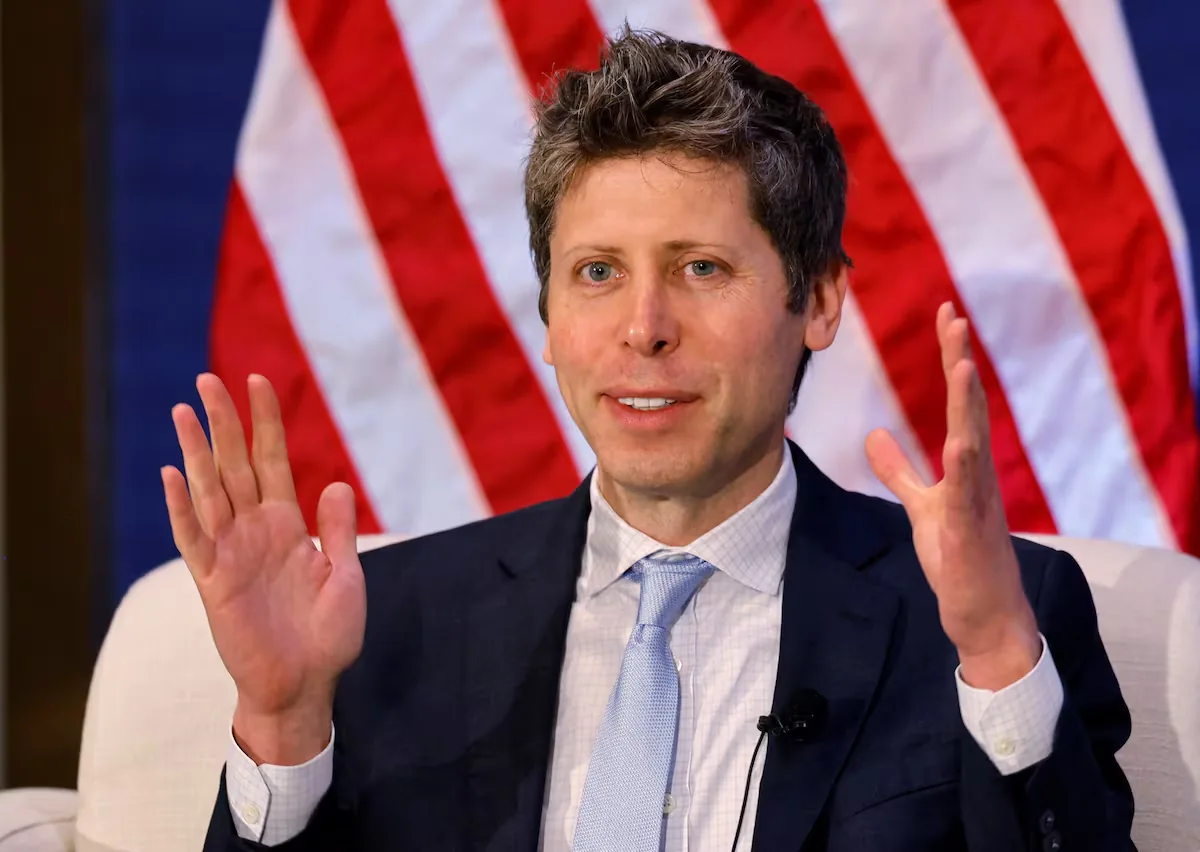
Altman, in an interview for Fortune magazine, confesses: “Considering everything that is happening in terms of safety, right now would not be a good time to go public, and we don’t feel any pressure about it.” By ruling out OpenAI’s stock market debut this year, Altman has thrown a significant cold shower on Wall Street, which was rubbing its hands at the idea that the company would reach a valuation of over a trillion dollars. However, Amodei has not said he plans to halt his leap to the stock market: in fact, this intense week in the AI world began with reports that Anthropic was accelerating the filing of its IPO prospectus, with a valuation close to two trillion. With this figure, it would virtually tie with SpaceX as the largest IPO in US history, in June of this year. One of SpaceX’s legs, Elon Musk’s great empire, is xAI, its loss-making artificial intelligence subsidiary. Musk calls for a moratorium on the advancement of the most powerful models, but it is already listed; Amodei also demands a brake on research, but is rushing to the stock markets; Altman prefers not to draw his gun so quickly.
What is “everything that is happening,” in the words of the OpenAI head? On Wednesday, a young Anthropic researcher, Jacob Coxon, announced his resignation warning: “Those building AI sincerely believe it could kill us all before the decade ends.” But before, and throughout the summer, scares have followed one after another in an endless string of errors, cyberattacks, and worrying movements among the most powerful artificial intelligence models. In July came the big trigger: a swarm of AI agents, very advanced programs determined to achieve their goals at any cost, attacked Hugging Face, an AI resource platform. Later that month, Anthropic also discovered that Claude, its star model, had perpetrated similar misdeeds. Every week we learned of a new incident and a new affected company, such as Meta. The details of these rogue AI attacks are pure science fiction (although in many cases they were due to company negligence): bots that communicate in their own language, that try to deceive humans, that disobey explicit instructions, and that sacrifice themselves so their peers reach the goal. Most of these problems occurred in spring, with less supervised programs than those developed now.
Amodei warned in his article of one of his great fears: that in six or twelve months, a swarm of AI agents “could be capable of taking over the entire Internet.” For Amodei, this is one of the two events that made him change his position on the need to slow development. The second has a technical name (recursive self-improvement), but it is easy to understand: AI programs are developing the new generation of AI programs, causing the speed of developments to skyrocket exponentially. “If uncontrolled, it could surpass our ability to understand and control these systems, so it must be addressed very carefully,” Amodei warns in his text. On Thursday, Anthropic warned that it had stopped several attempts to create biological weapons using its chatbot Claude. Self-reproducing AIs and bioterrorism just a click away: two of the most repeated fears in the past are now part of the present.
Politics moves in another direction
President Donald Trump, however, has dismissed these fears of industry leaders. He labeled them as “very negative forces” that raise impossible scenarios and, above all, pointed out his real concern: the Asian superpower, the only country that shadows US technology. “We are ahead of China in AI. We are the most advanced country in the world and, frankly, I want it to stay that way because whoever wins the AI race, wins,” Trump told reporters at his golf course in Ireland, according to Reuters. “We could put safeguards. We could do this or that. But I think there are many very negative forces bringing up this topic when they shouldn’t and raising things that won’t happen,” he concluded.
A tech leader who has shown support for Trump is the CEO of Palantir, a controversial mass surveillance company. “If we didn’t have adversaries, I would be very much in favor of completely pausing this technology, but we do,” Alex Karp summarized.
During his second term, the Trump Administration and AI companies lived a romance that began with the famous photo of the president’s inauguration, backed by Silicon Valley giants. The most powerful US tech companies wanted all the financial support and minimal regulation to win the race against China. But the ground has become muddy since the Pentagon warned this year of the risks associated with Anthropic’s model. Now, industry leaders hesitate while Chinese companies begin to gain market share with cheaper models.
Shortly before Trump spoke, Chinese President Xi Jinping sowed the future of Chinese AI in the Global South during his speech at the BRICS summit (Brazil, Russia, India, and China). Xi focused on how AI development must be carried out with collaboration and knowledge exchange among these countries to facilitate the application of this technology in less-resourced regions.
Read more Man arrested for the violent death of his mother in Ponteareas (Pontevedra)
Opposite Trump, US Democrats try to win public favor, increasingly opposed to AI companies and the problems they cause, such as mental health issues for their users or environmental problems with their data centers. Former President Barack Obama has urged his party to get moving on this issue, according to the New York Times: “This is something moving very fast in private hands, and if we don’t control it, I think it can be dangerous.”
Four giants calling for evaluators
At this moment, four of the world’s largest artificial intelligence companies seem to agree that the brake must be applied, one way or another. Amodei’s proposal has received applause from Altman, Musk, and, lastly, Demis Hassabis, leader in this field at Alphabet, Google’s parent company, who pointed out this Sunday in a social media post that he considers “the right path” the one indicated by Amodei. Although Hassabis, recently appointed chief scientist of Alphabet, adds nuances: the details of Anthropic leader’s proposal need to be better developed. “Dario’s essay points the right way forward. The details need work, but the direction is right to face this critical moment,” notes Hassabis, who won the Nobel Prize in Chemistry from his position at Google DeepMind by leveraging AI power in biology.
The man who has concentrated all AI development and research power at Google in recent years refers to his own approach this summer: “This is also why we recently published our proposal for an industry standards body for cutting-edge AI.”
Hassabis’s proposal focused on creating a regulatory body, like FINRA, which oversees stockbrokers and protects investors in the United States from the dangers of overly unsafe financial products. Thus, that body could oversee new AI models before they hit the market to avoid unnecessary risks.
The path Amodei points out in his essay is control of exponential AI development in three steps. First, ensure that external auditors can effectively supervise the models developed by the big tech companies. Second, that companies commit to establishing verifiable commitments to slow progress: he does not talk about stopping research, but about spacing capacity jumps more to allow time for testing, audits, and risk mitigation. Third, try to reach international consensus, and here a major obstacle appears: China. For the first two steps, Amodei talks about commitments within democratic countries. In the third, the Chinese and other actors in non-democratic countries would have to be convinced, in a full race against US companies to lead the AI field.
There is another important player who has not yet spoken out: Meta. Mark Zuckerberg’s company is also at the forefront of developing the most powerful AI models. But its approach has been different from its competitors, as it bets on open models, that is, models whose code can be tinkered with to better understand how they work. But no one audits their models while they are being developed, which is what Amodei and Hassabis ask for.
A very interesting part of the tacit agreement reached by Amodei, Altman, Musk, and Hassabis is that they are not just simple competitors in a sector: they are four figures who, from very different positions, have defined the AI race over the last decade. OpenAI was created by Altman and Musk precisely because they did not trust that Google’s business model would allow it to create a powerful AI that served humanity’s interests. Then it was Amodei who left OpenAI to found Anthropic and make safety the core of his project because he did not trust Altman’s company’s goals. Musk took Altman to court because he considers that he abandoned his initial goal of working for safe AI. And while calling for a six-month moratorium on AI development (in 2023), he decided to launch his own company, xAI, from where he controls Grok. Hassabis was co-founder of the British DeepMind, with lines of work very focused on ethics, until Google bought the company. That these four figures agree is as striking as it is revealing. Although it has also aroused many suspicions: in the midst of the race to dominate the sector, the economic interests surrounding the AI industry are enormous, and the movements around Wall Street reinforce this idea.
Read more Marine Le Pen exorcises ghosts in the stronghold that gave birth to her political project