María is about to enter the operating room. She is 51 years old and was diagnosed a few days ago with advanced stage III ovarian cancer. This means that the tumor has spread outside the organ, but in her case, it can be removed. She smiles. “I have been lucky,” she says. Ovarian cancer is a tumor that usually presents with such nonspecific symptoms that it can go unnoticed for too long. From a bed a few meters from the operating room at Vall d’Hebron Hospital, she recounts that her first suspicion came after a long walk: “I felt a sensation of heaviness in the pelvic area and it caught my attention. I had that discomfort for three days, although it wasn’t unbearable. But I decided to go to the doctor.” An ultrasound revealed the disease.
Read more Hayden Panettiere, ‘Heroes’ actress, dies at 36 years old
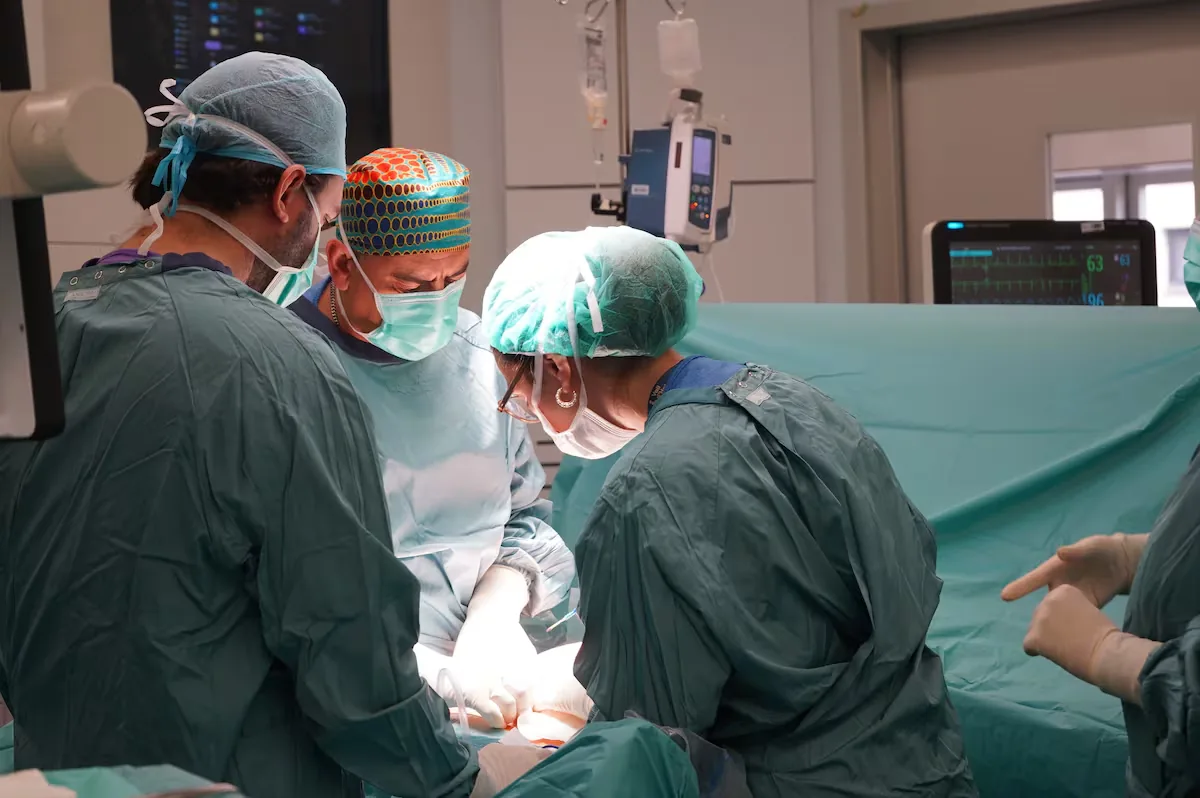
In the operating room, José Luis Sánchez Iglesias, an oncological gynecologist at the Barcelona hospital, examines María’s abdomen (a fictitious name) looking for tumor lesions. Ovarian cancer tends to grow in the abdominal cavity, and a fundamental part of the treatment is surgery, which is responsible for locating and removing all tumor remnants, even outside the primary organ. Visibly, these tumor fragments appear as tiny white spots. “There is a low tumor burden, but there is carcinomatosis [malignant cells spread across the abdominal wall],” Sánchez Iglesias points out. He removes a small white spot located above the patient’s bladder. The operation will last four hours, and a subsequent analysis will confirm that they have managed to remove all visible tumor. This is the best news to face the second phase of treatment: chemotherapy.
What happened to María is not unusual. In fact, three out of four cases of ovarian cancer are detected when the disease has spread. “This tumor is my great frustration,” admits Gemma Mancebo, head of Gynecology and Obstetrics at Hospital del Mar. “It grows in the abdomen, which is a very large cavity. But it can also grow for an indefinite time without showing obvious symptoms. When it is very small, it does not interfere with other organs and can cause very nonspecific symptoms.” Sometimes, it is a feeling of bloating, early satiety, abdominal discomfort. Nothing more specific. “Who hasn’t experienced this? Ovarian cancer is not so prevalent, and if you start with these symptoms, it is usually something digestive. But we have to be prepared to think about ovarian cancer,” Mancebo suggests.
Antonio González, director of the Department of Medical Oncology and the Cancer Center at the University of Navarra, agrees: “Since the symptoms are vague and imprecise, diagnosis can be delayed. What we recommend is that if a woman has new and persistent abdominal, urinary, and digestive symptoms despite symptomatic treatment, and there is no explanation, she should consult a doctor.”
The myth of the silent killer
In the book Don’t Be Exaggerated, oncologist Elizabeth Comen criticizes that ovarian cancer has historically been labeled as “the silent killer.” She cites a survey conducted by gynecologist Barbara Goff of 1,700 patients with this tumor: according to the doctor, 95% of patients reported noticeable symptoms between three and 12 months before diagnosis.
And when patients were asked what their doctors told them about the cause of their symptoms, 15% attributed them to irritable bowel syndrome, 12% to stress, 9% to gastritis, 6% to constipation, 6% to depression, and 4% to some other cause. Thirty percent were treated for a different condition. And 13% were told they had no problem. “The problem is not that ovarian cancer is silent, it’s that we don’t listen,” Comen agrees.
For Mancebo, “the great challenge is early detection.” To date, there is no screening or early diagnostic biomarkers. A British study with 200,000 women tested using transvaginal ultrasound and blood tumor marker detection as an early detection strategy, but the results were not positive: although it detected tumors at earlier stages, it did not translate into reduced mortality.
“We are far from finding how to detect cancer early,” Mancebo laments. At most, they can closely monitor patients with some mutations that predispose to cancer, such as those with alterations in the BRCA gene or those with Lynch syndrome, but these are barely 20%.
Making the tumor chronic
The only good news is that medicine has more and more therapeutic tools to treat the tumor. “We have treatment. We are managing to make it chronic. The problem is to get to it as soon as possible with those treatments,” Mancebo insists.
According to the Spanish Society of Medical Oncology (SEOM), it is estimated that more than 3,700 new cases of ovarian cancer will be diagnosed in 2026 (breast cancer, the most common in women, is expected to have 38,000). On average, five-year survival is around 40%.
González, who is also vice president of SEOM, points out four major tools against the tumor: surgery, molecular diagnosis, chemotherapy, and maintenance therapy with targeted drugs.
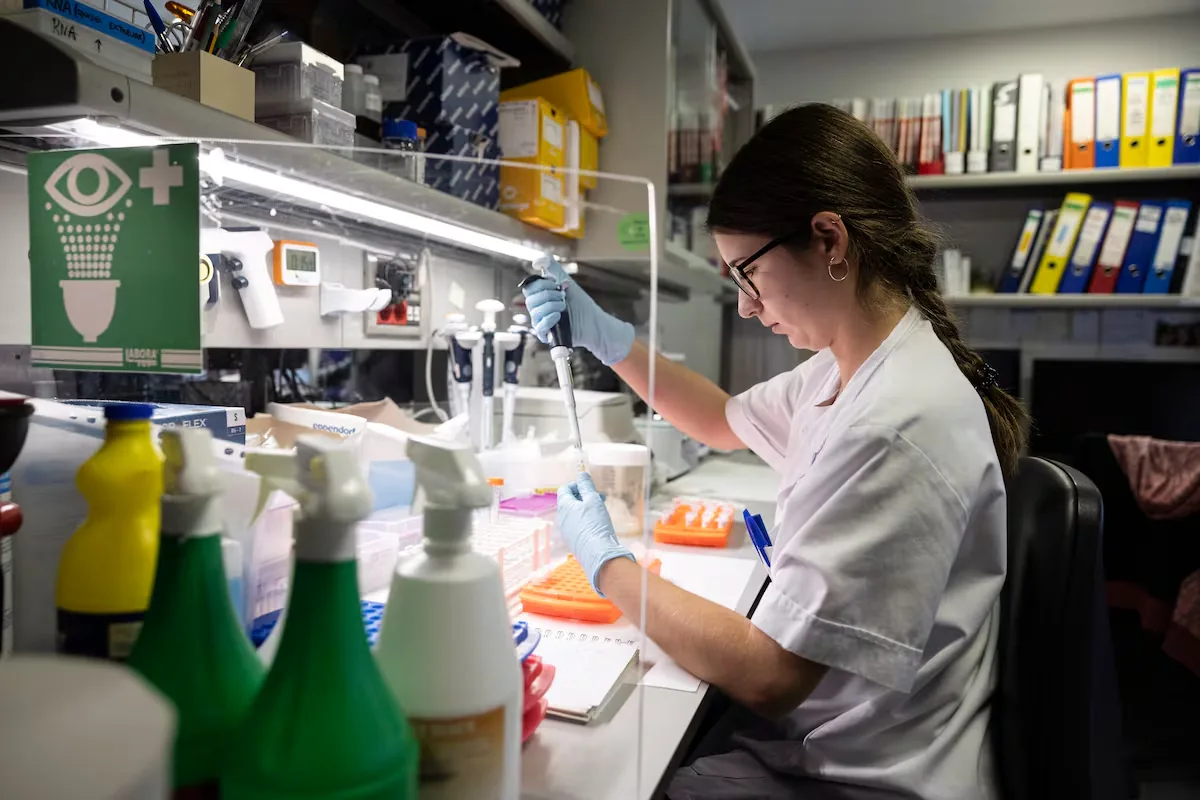
Sánchez Iglesias knows well about the first tool. Every Tuesday he operates on ovarian cancers. Sometimes, very widespread, with tumor implants throughout the abdomen: “They can be in the pleura, in thoracic lymph nodes, the spleen, the gallbladder… And that involves a lot of surgery, with many resections. These are surgeries lasting five to eight hours, where you remove many organs and then have to reconstruct the digestive tract, the urinary tract…”
The goal is to leave no visible tumor and they push to the limit. “What will improve a patient’s survival is that you leave no tumor, so you have to balance surgical aggressiveness, complications, and residual tumor. Can we operate on everything? Technically yes, up to the limit that the cure is not worse than the disease. But you have to be bold. Otherwise, the tumor beats you,” he observes.
Sánchez Iglesias acknowledges that there will be microscopic disease that the surgeon’s eye cannot see, but that’s where chemotherapy comes in, he says, to finish sweeping away invisible malignant cells: “That is what will ultimately cure the patient. In this tumor, chemotherapy and surgery cannot be independent.”
María is also aware of this. She speaks again with EL PAÍS a month after the operation, a week before starting chemotherapy: “After the surgery, they gave me a very hopeful message: the operation had gone very well, they had managed to remove all visible tumors. The next step was to treat any microscopic disease that might remain, something for which chemotherapy is essential.”
Extending survival
González adds that molecular diagnosis is also key in the therapeutic strategy “to understand the disease and its behavior.” In fact, there are already treatments targeted at specific genomic alterations used as maintenance therapies in some patients. “We already have patients with some molecular subtype who, with current treatments, still do not relapse at five years. That is the closest thing to a cure we have: if they do not relapse after the fifth year, the probability that they will continue that way is very high,” reflects the oncologist from CUN.
Nevertheless, experts admit that most patients with very widespread tumors end up relapsing. “Eighty percent of the serous type, which is the most common, will relapse with a median of 23 months. But this is not the end. There are patients who can undergo surgery again, which will be the best option, and combine it with more chemotherapy or trials,” Sánchez Iglesias points out. His team has even performed second, third, and fourth surgeries in some cases.
The scientific battle against ovarian cancer today is fought on several fronts, one of which is the study of new drugs to expand the therapeutic arsenal: there is a kind of Trojan horse in development to deliver chemotherapy directly to malignant cells, and research continues on how to attack that hostile tumor microenvironment that has so far prevented immunotherapy from penetrating.
The other front of combat is early detection, which would help cure more patients and improve prognosis. “The revolution will be how we manage to diagnose it earlier because the prognosis changes a lot when tumors are localized and do not contaminate the abdominal cavity. There, survival is 90%,” Mancebo concludes.
María was offered to participate in some studies after the operation and accepted “without hesitation,” she says: “As a patient, it reassures me to know that research continues to improve treatments and, hopefully, to achieve that in the future this and other types of cancer have better chances of cure.”
Read more Alarm at the PP of Madrid: “We got complacent. In politics, nothing is set”