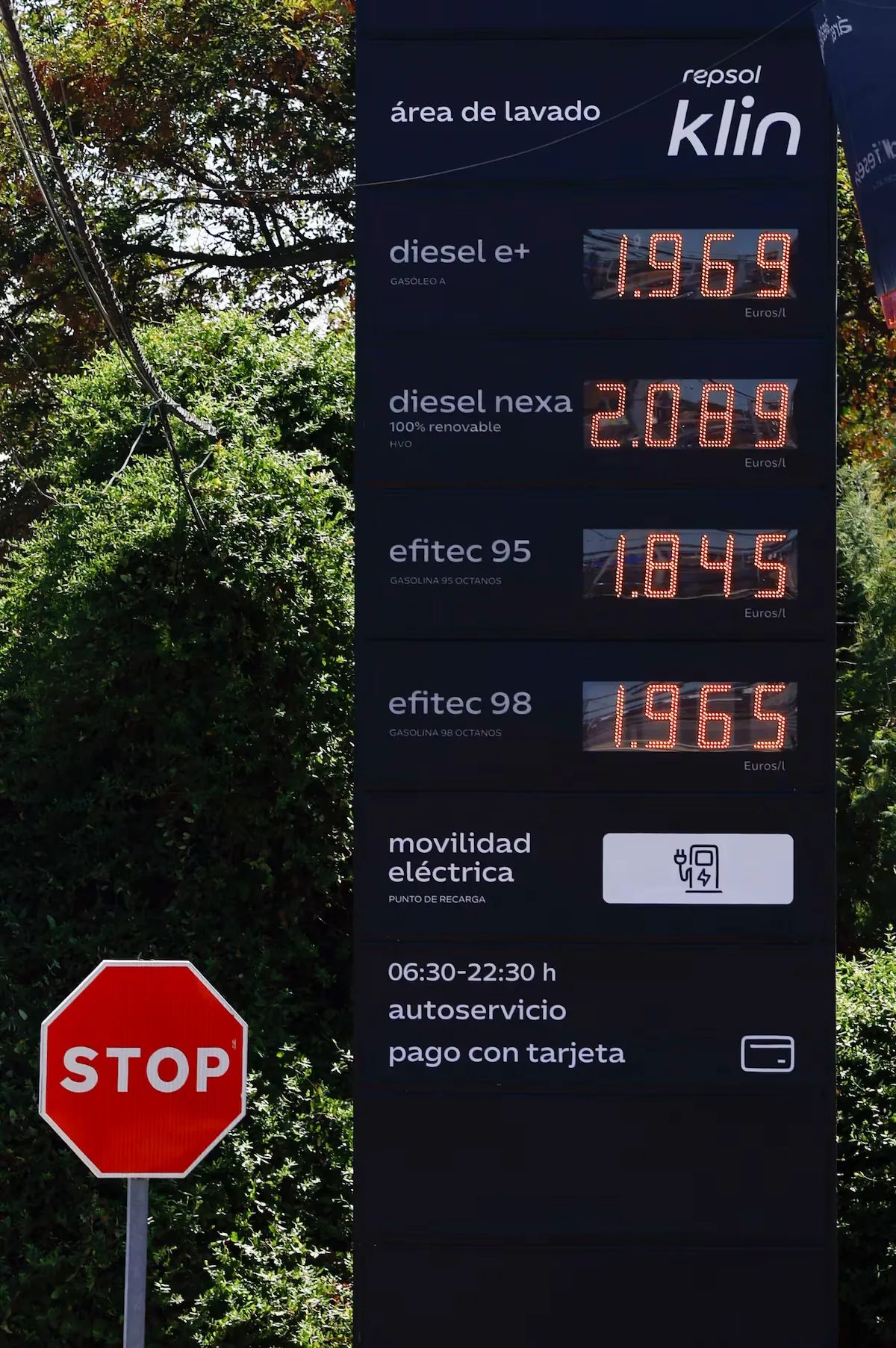
The end of the meteorological summer and the stalemate of the conflict in Iran are putting European institutions on the ropes when it comes to facing the rise in prices. Winter arrives with gas reserves at their lowest for this time of year in Europe, and gas prices are rising above 70 euros per megawatt hour (MWh). Although the increases are far from the 2022 records, when there were real supply problems, inflation will rise in a context of citizen exhaustion, who emptied their pockets in the previous price surge. Within this framework, Sumar has already asked its Government partners, who are in charge of economic portfolios, to adopt extraordinary measures similar to those of 2022: VAT reductions on bills and food; a cap on the gas price in the wholesale market; and a tax for large oil companies.
Read more How have Russian and Israeli networks participated in the Ceuta migration crisis?
The Government, through the Vice President of Economy Carlos Cuerpo, has asked to reopen the debate on the tax on energy companies but at the European level, after having suffered intense lobby pressure from Spanish companies that threatened to halt investments and derailed the national tax in 2024. To avoid this threat, and bypass the opposition of the two parties closest to the energy companies, Junts and PNV, the Executive and five other European countries want it to be implemented at the community level, as was done temporarily in 2022. Sources from Sumar say that “support measures cannot simply translate into a transfer of public resources to the margins of oil companies.”
In the first half of the year, Repsol saw its profits grow by 265% and increased shareholder remuneration in the form of dividends. Oil companies with business outside the Persian Gulf report similar upward results. The other sector benefiting from these inflationary crises, banking, has indeed seen its extraordinary tax consolidated, as in its current form it is in effect until 2027. The rise in prices drags a rise in central bank rates that ends up catalyzing an increase in loan interest rates and, therefore, an improvement in banking margins.
But the possibility of recovering a mechanism similar to the so-called Iberian exception now seems very distant. When Brussels allowed Spain and Portugal to set caps on the gas price used to generate electricity, it did so in a context of up to 300 euros per MWh, still far from current amounts. Although occasional moments during the nights of this scorching summer, when solar production is withdrawn, have been marking peaks at those levels.
Read more How to stylishly wear the windbreaker, the technical jacket that will be a hit this fall
The forecast of many analysts is that the global competition to secure gas supply that does not pass through Hormuz will be the gateway for the economy to suffer one of the feared second-round effects. That is, when the price increase filters through all layers and makes other goods and services more expensive.
Sources from the Executive point to the intention to wait for the detailed inflation figures for August, which will be known in mid-September, to see if there are already data confirming a transmission belt of hydrocarbon prices to electricity. The provisional inflation of 4.3% in August in Spain, and 3.3% in the eurozone, have led almost all analysis houses to revise inflation upwards for the whole year. The little fine print known so far indicates that services resist upward pressures, but fresh food has already begun to succumb.
The Executive launched a package of measures in the spring to face the first shock of the US attack on Iran. Several energy taxes were reduced and fuel was subsidized successfully, as inflation remained at 3.2%. But in anticipation of a de-escalation in the Strait of Hormuz, after an alleged truce agreed with pins by Washington and Tehran, the Executive approved in June a gradual withdrawal during the summer months of some of these aids. That plan ends this September, although the Government has always expressed its intention to review it quarterly. Spain already has the lowest fuel taxation in the EU, and generalized reductions are not viewed favorably from Brussels, which calls for surgical measures.
Read more US conservative gays lose the T of trans people: “We are an LGB organization”