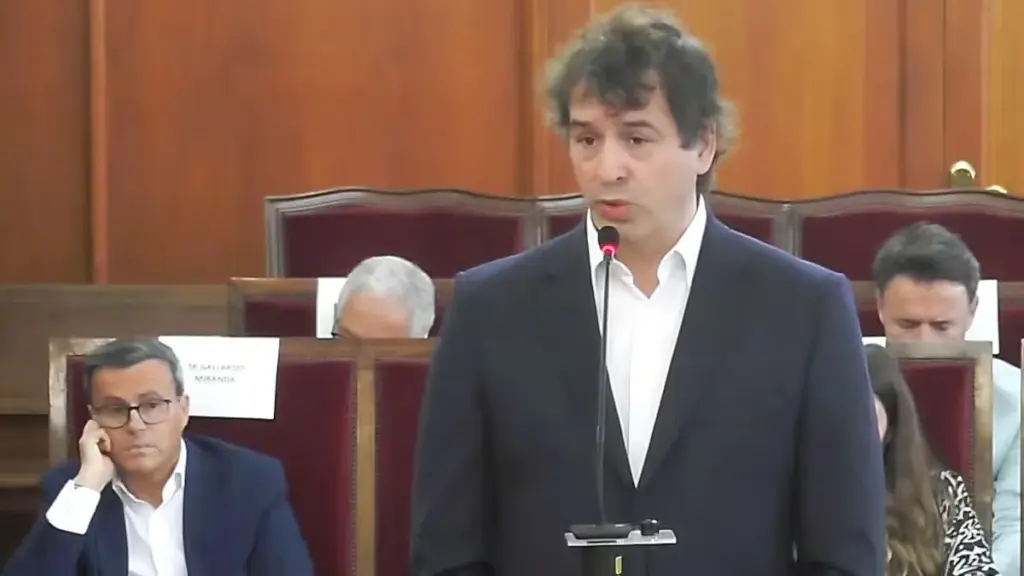
Magistrate José Antonio Patrocinio presides, with a silver bell by his side, over the court facing the most media-hyped trial in decades at the Provincial Court of Badajoz. And this despite the case seeming minor: alleged irregularities in the awarding of two job positions at the Badajoz Provincial Council. Or, as it is colloquially said, two alleged rigged appointments, a type of conduct that, if reported, usually ends up in the administrative contentious jurisdiction, but which on this occasion is being resolved through criminal proceedings with accusations of administrative prevarication and influence peddling, and requests for sentences of up to six years in prison.
Read more The day the Civil Guard began to suspect its director
The explanation lies, on the one hand, with the defendants. David Sánchez, brother of the Prime Minister, has been sitting there since May 28. Alongside him are the former leader of the PSOE of Extremadura and former president of the Provincial Council, Miguel Ángel Gallardo, and nine other people, including civil servants and officials of the public body. And, on the other hand, with the popular accusations, led by the pseudo-union Manos Limpias, which filed the complaint that initiated the judicial investigation in May 2024, and which also includes PP, Vox, and other ultra-conservative organizations, such as Hazte Oír, Abogados Cristianos, Liberum, and the Iustitia Europa party. All of them have turned the case first and now the oral hearing into a major platform against the Government.
In fact, they have sustained the case until bringing it to trial, because the Public Prosecutor’s Office never saw a crime and, in fact, requested its dismissal, considering that it was based on “conjectures and hypotheses.” Starting Monday, the prosecution, defense, and public prosecutor will present their final conclusions. The “rumors” surrounding the word “hermanísimo”, thousands of emails, reports from the Civil Guard’s Central Operative Unit (UCO), and a maelstrom of administrative regulations will hover over the courtroom until Magistrate Patrocinio rings the bell accompanying him for the last time and pronounces “seen for judgment.”
A senior management position. The creation in 2016, and the awarding the following year, of the position of coordinator of activities for the conservatories of the Provincial Council of Badajoz are the epicenter of the case. The prosecution asserts that there were multiple irregularities throughout the process and that their sole purpose was for the president’s brother to end up occupying the position. The Public Prosecutor’s Office and the defense insist that everything was absolutely legal and that it even proved beneficial for the promotion of music in the province. The latter base their conclusions on the self-exculpatory testimonies of the accused, but also on those of a dozen civil servants and officials of the public body who have stated during the hearing that everything was done in accordance with the rules governing these hirings.
The prosecution, however, bases its accusation on alleged anomalies in the documentation and on one testimony, that of orchestra conductor Cristina de Frutos, who was one of the applicants in 2017 for the position finally awarded to David Sánchez. De Frutos spoke of a “rumor” that the position had been previously awarded to the president’s brother. To lend credibility to her testimony, she named the person who told her: Antonio Luis Suárez, director of the Plasencia Conservatory. He denied his colleague’s claims at the time through the media, but he has not been heard in court. No one has called him to testify. The defense attempts to discredit De Frutos’s testimony due to the fact that she took seven years to report events for which, she claimed, she felt “discriminated against” at the time. “It wasn’t like my life depended on it,” was her explanation to the court.
Thousands of emails. The prosecution supports its version of irregularities with reports that the UCO prepared based on thousands of emails intercepted from the corporate accounts of the accused and other officials and civil servants of the Provincial Council of Badajoz. After their analysis, its agents could not pinpoint the exact date of the decision to create that position —they believe it was in early October 2016, precisely when Pedro Sánchez was going through his most critical moment within the PSOE after losing the general secretariat— nor who gave the order. Nevertheless, during the hearing, Lieutenant Colonel Antonio Balas, head of the investigation, stated that they had found “considerable evidence” in them that the position was “predetermined” for David Sánchez and that the initiative, at least politically, to create the role came from Gallardo, then mayor of Villanueva de la Serena and president of the Provincial Council. When the politician’s defense lawyer asked the Civil Guard officer if they had found “any relevant email” in this regard, his response was emphatic: “Does that seem little to you?”.
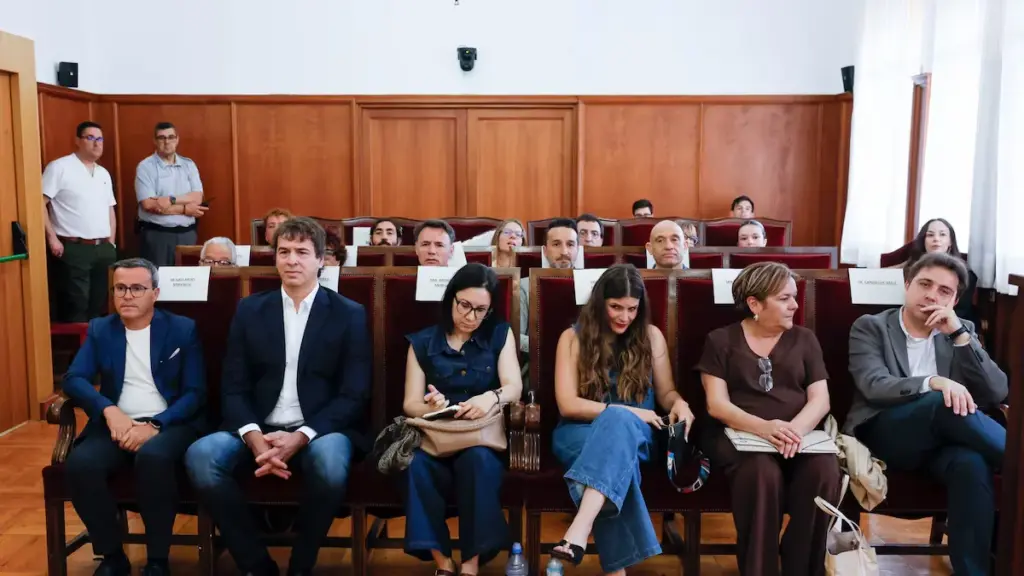
Before the court, the former socialist leader dismissed all of it as a “fiction novel” by the Civil Guard and made an effort to emphasize that when the decision was made to create the position, his relationship with Pedro Sánchez was not “fluid” —he had supported his rival, Susana Díaz— and, therefore, he had no reason to ingratiate himself with him by giving a position to his brother, which he didn’t even know he had, he stated.
Read more Visit of Pope Leo XIV, live | The Pope leaves the Nunciature to officiate mass in Cibeles
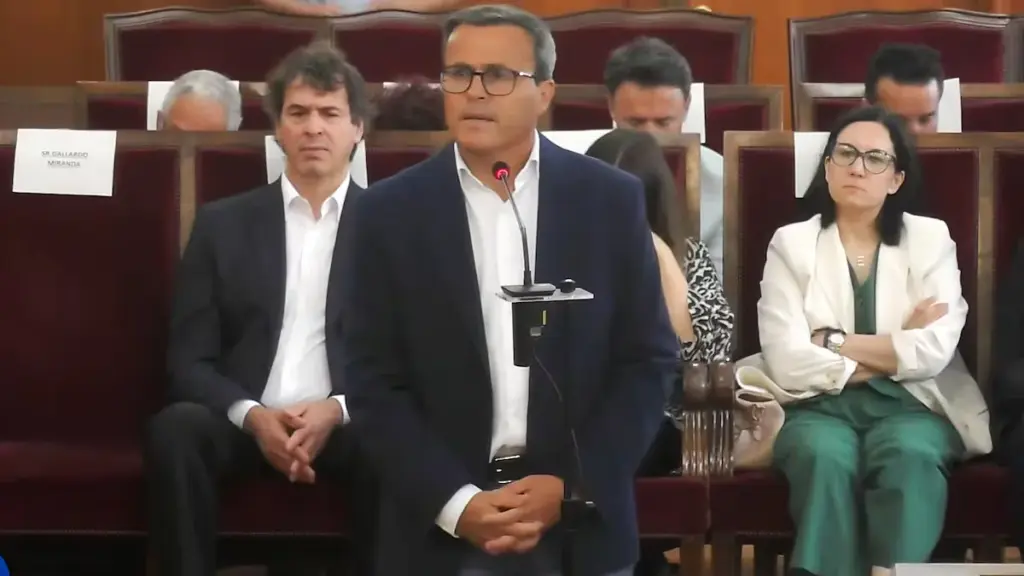
During the hearing, David Sánchez surprised everyone by not testifying to defend himself on this point. He only answered his lawyer’s questions, and his lawyer asked him none. His defense’s strategy, after the court at the beginning of the hearing dismissed one of the charges due to prescription —the lightest one, that of accepting an illegal appointment, punishable by a fine—, is based on the premise that these facts would also supposedly be prescribed and, therefore, he was not questioned about them.
The email about the “hermanísimo”. One of the prosecution’s key points is an email with the subject line “hermanísimo” that was sent by the then director of the Badajoz Superior Conservatory, Evaristo Valentí, to his colleague from the Professional Conservatory, Yolanda Sánchez, on the same day that the terms of the call for applications for the position finally obtained by David Sánchez were published. The prosecution’s thesis is that this word supports the idea that the awarding of the position was rigged to favor the president’s brother. At the hearing, the author of the email deflated this interpretation by stating that with that expression he was merely reflecting a “rumor” that, furthermore, he did not remember who, where, or when he had heard it, nor if it referred to the awarding of the position or simply to David Sánchez applying. The recipient of the email stated that she did not even notice that detail. On the contrary, the UCO reports assign an important role to this email as alleged evidence that the position was “predetermined” and that this was known to everyone. This discrepancy seemed to be resolved by the president of the court when he stated that “the court is not interested in rumors, speculations, or gossip.”
Work absenteeism. The prosecution has wielded alleged work absenteeism —which is not a crime, but a labor infraction— by Pedro Sánchez’s relative as an indication that his position was not only created for him, but also adapted to his personal preferences. However, during the hearing, several of the provincial council officials sitting in the dock vehemently denied these absences. “Yes, he worked, no one told me otherwise,” declared Cristina Núñez, head of Culture for the public body at the time. UCO agents declined to comment on this aspect during the trial. “We have not made any assessment or seen anything there,” they stated.
Change of nomenclature. One of the surprises of the trial has been the prosecution’s decision to include a new punishable act in their charges, which allowed them to raise the requested sentence for David Sánchez to six years in prison. This refers to the change of name received by the position held by the president’s brother, which went from being coordinator of conservatory activities to head of the Office of Performing Arts. The investigating judge noted in the indictment that this change had supposedly adapted the position to the “personal preferences” of Pedro Sánchez’s relative. David Sánchez disassociated himself from the change, which, he said, he learned about when it was already a fact and was communicated to him. Other defendants also denied that the modification of the nomenclature sought to favor the president’s brother and insisted that everything was done within legality and that, furthermore, it did not entail an increase in expenditure for the institution.
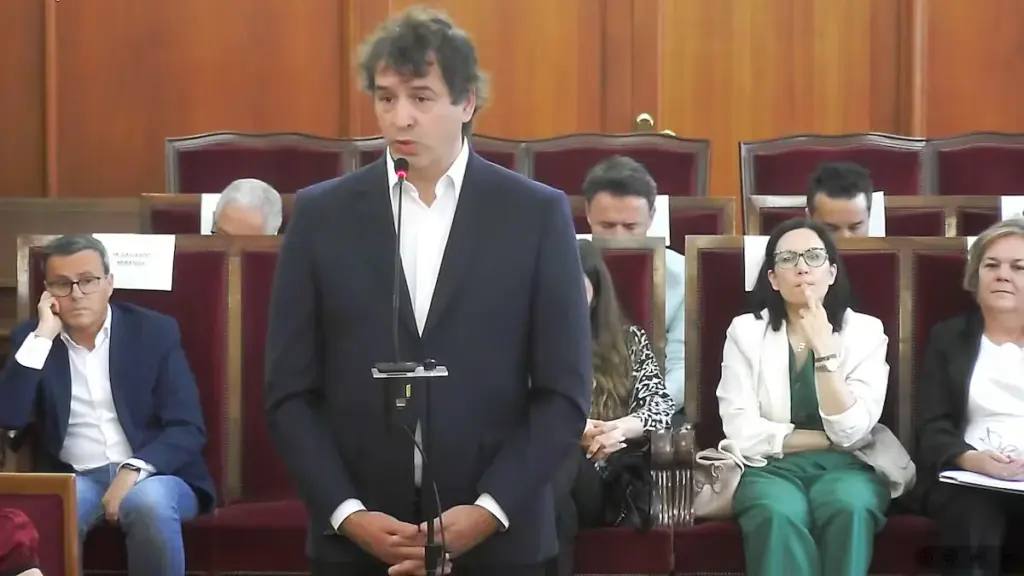
Fragments of the statement. David Sánchez’s hesitant answers to the investigating judge, Beatriz Biedma, loomed over Thursday’s session. One of the prosecution teams asked the court to retrieve parts of the two statements David Sánchez made to the magistrate, understanding that there could be contradictions in his testimony. Despite the defense lawyer’s protests, the magistrates allowed the viewing of specific fragments, including the one in which he could not say where the Office of Performing Arts was located. After viewing the images, the president of the court offered David Sánchez to expand his statement from that day, but his lawyer quickly made a subtle finger gesture to him not to do so.
A position and a friend. The third accusation against the president’s brother is having allegedly influenced the Provincial Council to hire his friend Luis Carrero in 2023, a civil servant who worked at the Palacio de la Moncloa and for whom the prosecution is requesting two years in prison. The main evidence against both is a chain of messages they exchanged three weeks before the job’s terms were published on November 24 of that year. “As soon as you join, I want to spend at least a week here to provide support.” To which the then-still Moncloa official replied: “I have no news or schedule for the incorporation; the last thing [Manuel] Candalija [director of the Culture area, also in the dock] told me was sometime in November.” Finally, Carrero’s arrival at the Provincial Council became effective in January 2024. During the trial, David Sánchez denied any irregularity. “I have no capacity to say anything, nor do I have administrative information about the status of that procedure,” he said. Both, who called each other “little brother,” agreed that the exchange of messages was a “misunderstanding.”