









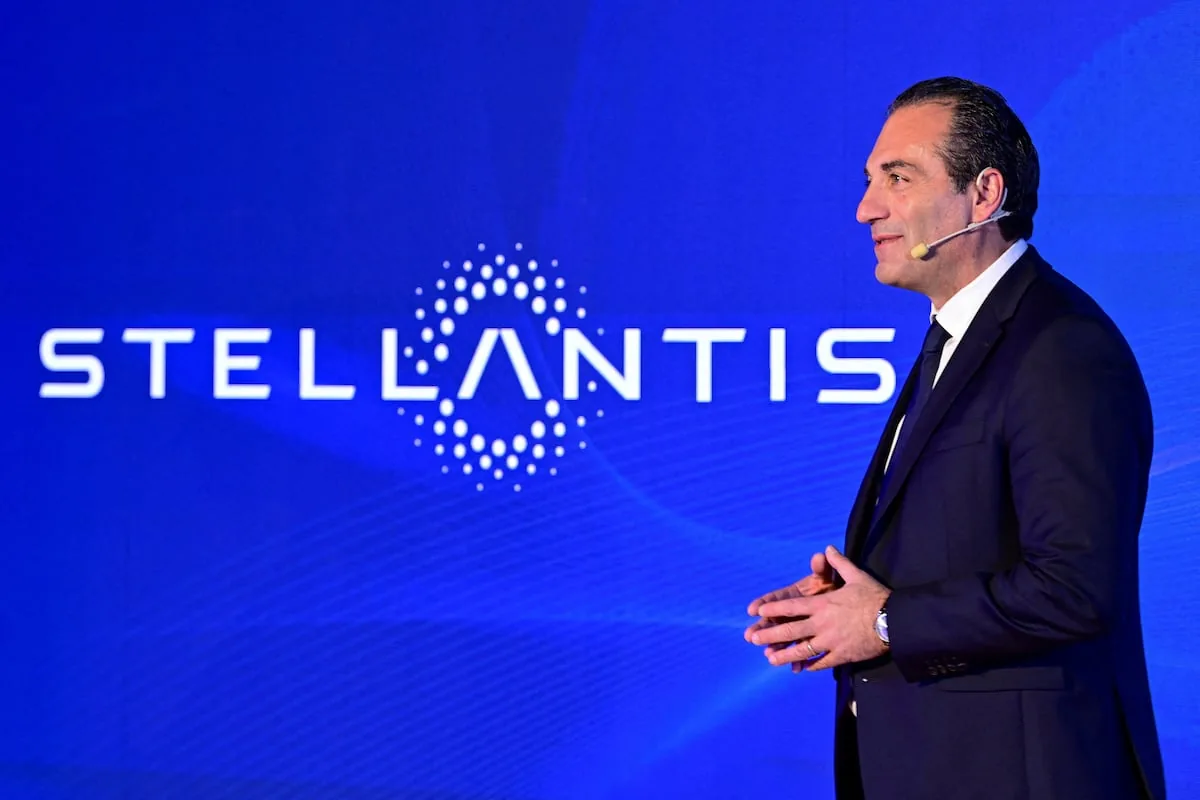
The automotive group Stellantis, owner of a constellation of brands such as Fiat, Jeep, Citroën, Peugeot, Chrysler, Alfa Romeo, or Maserati among others, makes a sharp turn with the launch of the new CEO, Antonio Filosa. The 52-year-old Italian presented this Thursday in Auburn Hills, the imposing headquarters of the group a few kilometers from Detroit (Michigan), the new strategic plan with which it plans to invest about 60 billion euros until 2030 to expand its range of vehicles, boost its ecosystem of global and regional brands and, above all, improve the efficiency of its production, reducing vehicle development time, in a sector where cost savings have become a mantra.
Read more Journalist Gemma Martínez, new director of ‘El Periódico’ replacing Albert Sáez
The bulk of the new investment, about 36 billion (60% of the total) will be allocated to the launch of 60 new models until 2030 and 50 updates among its battery electric, plug-in hybrid, and combustion propulsion models. Another 24 billion will go to the development of its three production and technological development platforms, in which artificial intelligence will play a prominent role.
The plan marks the debut of the new CEO, Antonio Filosa, who replaced the historic Carlos Tavares last summer, to take the helm of a company that was going through a complicated moment due to the numerous challenges affecting the sector.
Filosa outlined an ambitious but challenge-filled roadmap to investors. “The industry is more regional and fragmented. Europe and the United States are two very good examples of this. Europe is moving faster towards electrification, while the United States is easing CO2 requirements and redefining trade conditions.”
With this new framework, the group redirects much of its investments towards the United States, at a time of enormous pressure from the Donald Trump Administration, which threatens major car manufacturers to reinvest in North America.
In this reorganization of production and markets, Stellantis will reduce its capacity in Europe by 800,000 vehicles by leveraging some factories such as Poissy in France, and sharing facilities with partners, such as the agreement reached at the Figueruelas (Zaragoza) factory where it shares its STLA Small electric vehicle production platform with the Chinese manufacturer Leapmotor, one of the group’s strategic partners.
The automotive giant also announced a few weeks ago that it will assign a vehicle produced by Leapmotor to the historic factory in southern Madrid.
The business plan, named FaSTLAne 2030, has six pillars to renew the vehicle range, optimize production, boost technological development in models and processes, strengthen strategic alliances with other sectors, and enhance local and regional markets.
Filosa’s debut before investors focused on the group’s challenges, supported by significant financial and operational improvements. “Chinese or yen competition is intensifying in all major markets except the United States. Cost pressure is structural, not only coming from competition and inflation but also from the complexity of supply chains and the adoption of new technologies. Electrification continues with various technologies, but this depends on each region. And finally, the competitive battlefield is expanding beyond traditional automotive capabilities. Success now also depends on software, artificial intelligence, autonomous driving systems (ADAS), and battery technologies.”
The automotive conglomerate is a complex company with many brands in many markets. The group takes the opportunity to reorganize its presence. It selects four major brands (Jeep, Ram, Peugeot, and Fiat) on which it will build the new model. In fact, 70% of the investment in new models will go to these badges and also to the commercial vehicle subsidiary, which is expected to have significant growth.
The company will focus regional brands on their respective markets. In this way, the ties of Chrysler, Dodge, well established in North America; Citroën (France), Opel (Germany), and Alfa Romeo (Italy) will be strengthened.
“Stellantis is on the right track, but there is still much work ahead and we remain realistic about the challenges facing both Stellantis and the industry in general,” said the group’s chairman John Elkann during the investor conference. “Competition is intense, technology cycles are accelerating, and the external environment remains highly volatile, but we face this next phase with clarity, agility, and ambition,” said the great heir of the legendary Agnelli saga.
[Breaking news. Update coming soon]