









The G-20 countries maintained a steady growth rate in the second quarter of the year, although slightly lower than that recorded between January and March: the bloc’s economy registered an advance of 0.7% between April and June, compared to the 0.8% boost experienced at the start of the year. Once again, the armed conflict in the Middle East has taken a toll on the results, which are very heterogeneous depending on the country.
Saudi Arabia is the bloc partner that suffered the biggest economic blow between April and June: its GDP went from declining by 1.4% in the first quarter of the year, when the joint attack on Iran by Israel and the United States had already occurred, to collapsing by 4.8% in the second. “This mainly reflects a marked decrease in oil activities,” notes the Organisation for Economic Co-operation and Development (OECD) in a brief note published this Monday, which reports both on the activity evolution of the club of the 38 most developed countries in the world and the more select G-20 group.
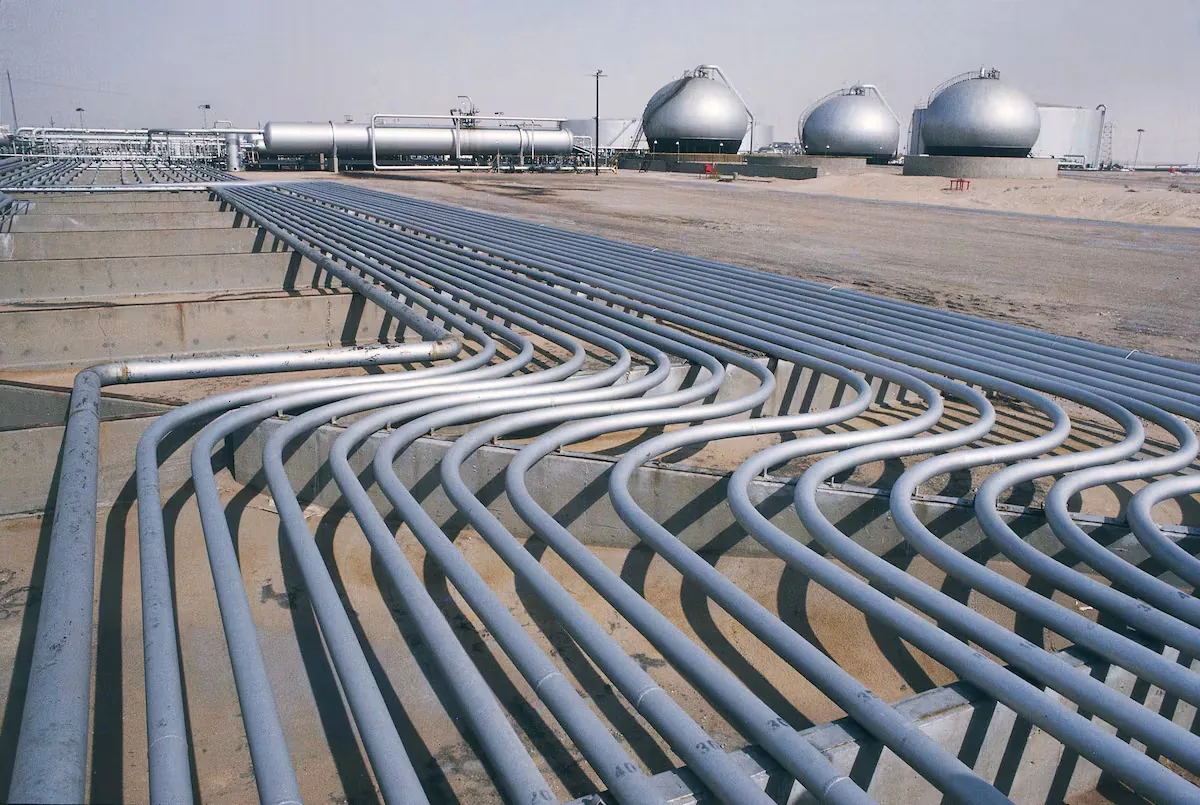
The Kingdom of the Desert, one of the largest crude exporters in the world, is experiencing firsthand the drop in oil activity caused by the war in the Middle East. The closure of the Strait of Hormuz, attacks on key energy infrastructures in its own territory, and the consequent halt of several megaprojects are taking a toll on Riyadh, which has also just closed its only alternative pipeline to the route in the Persian Gulf, which connects to the Red Sea, due to the offensive by the Houthi rebel militias.
OECD data also reflect how other countries in the club, despite not being in the eye of the conflict storm, have had negative or moderate performance in the second quarter of the year. This is the case for South Africa (-0.2%) and the major European economies: France (0%), Italy (0.2%), and Germany (0.3%), which have been trapped for months between low growth and inflationary tensions. Spain, which is not part of the statistics because it is not a G-20 member, recorded on the contrary an advance of 0.7% between April and June, according to the National Statistics Institute (INE).
Read more Pederast arrested in Gandía with sexual photos of his baby and his underage stepdaughter
Brazil’s GDP grew close to the average but suffered a significant correction compared to the first quarter (from 1.1% to 0.5%), as did South Korea’s (from 1.8% to 0.6%). Activity also slowed in China, with growth dropping from 1.3% recorded between January and March to 0.9% experienced in the April-June period. Other countries, however, registered a strong rebound. This is the case of Mexico, whose GDP advanced 1.4% compared to the 0.3% drop at the start of the year, Turkey (1.1%), or Canada (0.9%).
The statistics also break down the advance of the European Union and the eurozone, whose economies rebounded strongly in the second quarter after a start of the year marked by growth close to zero: they advanced 0.7% and 0.6%, respectively, despite the weakness of the major community partners. Across the OECD, the increase was 0.6%, in this case two tenths more compared to the first quarter of the year.
Read more Fears of AI entangle the largest financial operations in history