








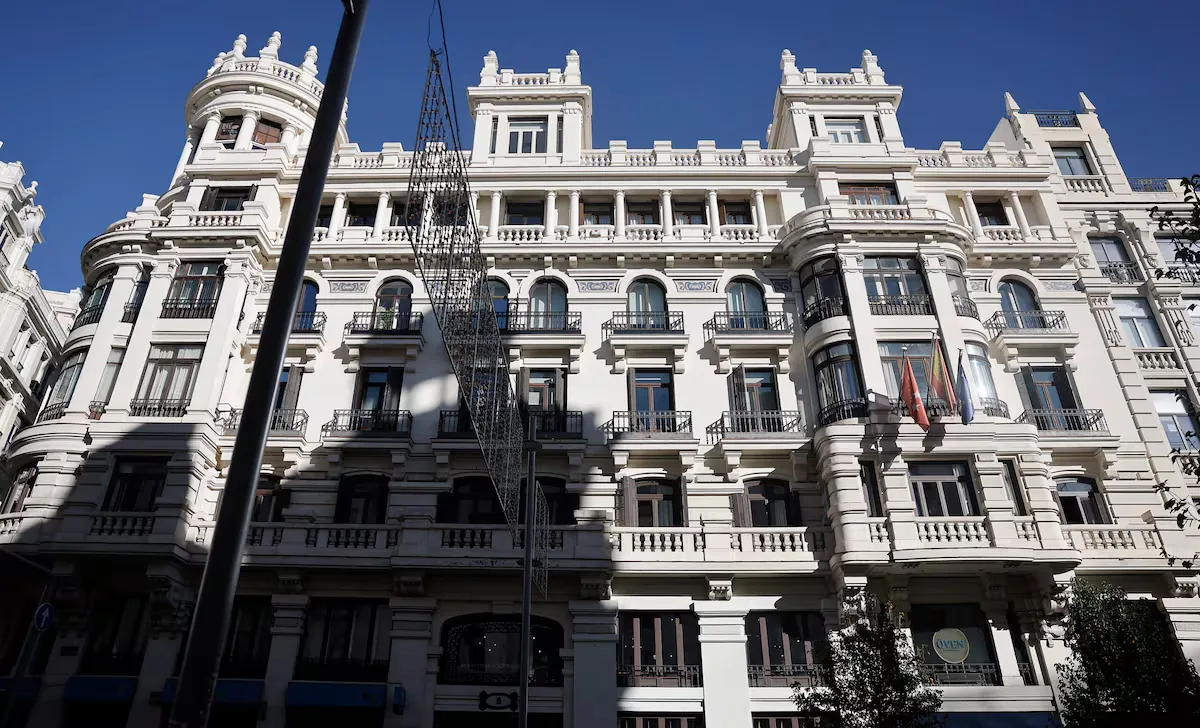
The Government of Isabel Díaz Ayuso (PP) announced this Thursday, surprisingly, that it will sell the 485 square meter penthouse in Chamberí, which it bought three months ago, to “help with the reconstruction” after the fires that have devastated the Sierra Oeste of the region. It did so two days after this newspaper revealed the strange acquisition of the property, which is residential and which the Madrid government said it would use for “offices,” something prohibited by municipal urban planning regulations. This is not the first time that the Community of Madrid has acquired and used apartments for offices in buildings where it is prohibited and from which it later has to dispose of.
Read more When culture is development
The purchase of the controversial penthouse does not appear in the accounts of the public company Planifica Madrid, which has been dependent on the Ministry of the Presidency since 2023. But in its budget for this year, the planned sales did appear: four apartments that have been used for several years as offices at Gran Vía 6 and another on Santa Catalina street, also a sixth. The reason they decided to get rid of them is that they did not have the license to set up offices there.
“Although historically both properties have been used as offices, their urban use is residential, with the impossibility of obtaining the required license for office use,” they explain in the budget document, in which only these two sales are recorded. And they continue: “Added to this is the favorable fact that the demand for this residential use is much greater, given the typology of the properties and the area in which they are located.” The starting price for the auction for the Gran Vía property was 11.74 million euros and for Santa Catalina, near Neptuno square and just behind the prestigious Hotel Palace, 21.15 million, the document specifies.
This newspaper has contacted the Ministry of the Presidency to gather information on why, after years of use, they decided to put the properties up for sale and when they realized that the use did not allow offices, but has not received a response to the publication of this information.
According to the contracting portal, the sale of the properties was announced in August last year and the period to submit offers ended in October. One of the apartments at Gran Vía 6 was used until a year ago by the region’s Legal Advisory Commission, attached to the Ministry of the Presidency, Justice and Local Administration. It is a “more than century-old” building, describes Planifica Madrid on its website.
The public company vacated it in autumn 2025 and planned to sell it without major problems “due to a process of restructuring and optimization of spaces occupied by the Administration.” They could not get rid of it because the tender was deserted. Now, they are going for the second attempt and the property is part of the million-euro sale announced by the Ayuso Government to, as they defend, help repair the fires that have destroyed 100 primary residences.
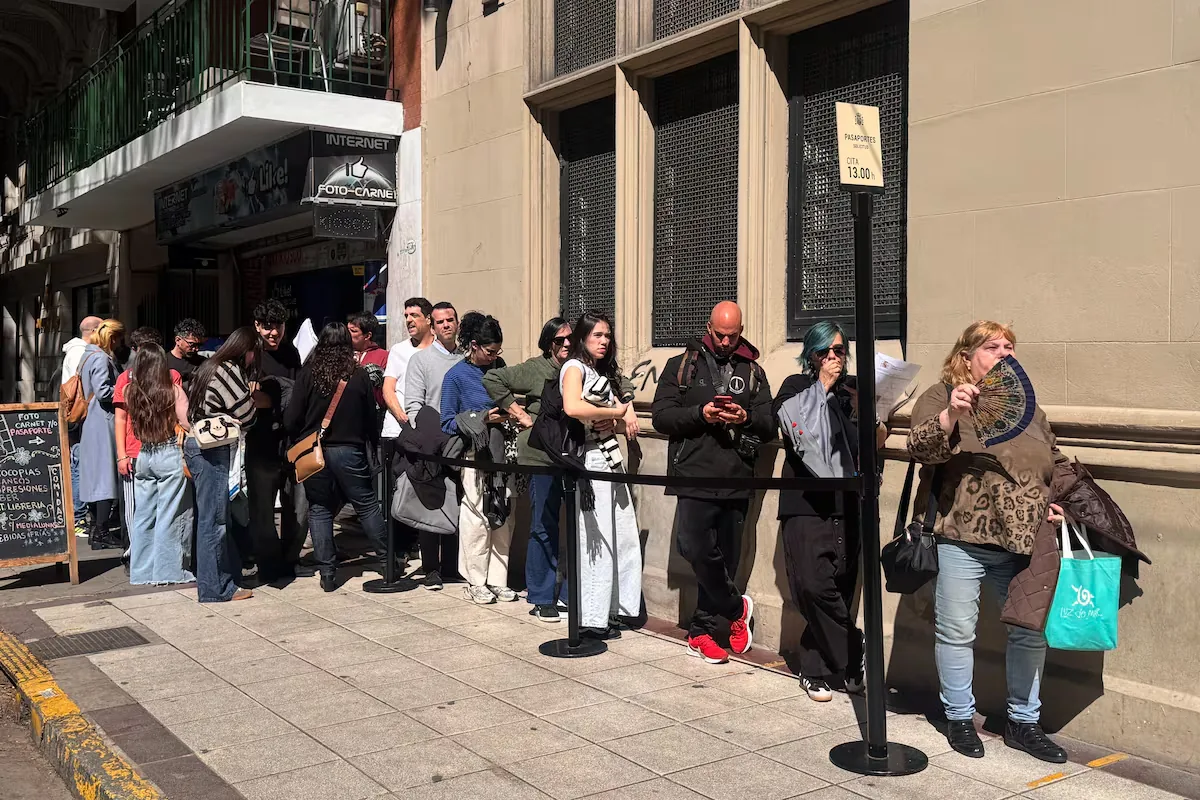
Among the services that occupied the building was also the area of Foundations and Associations, a citizen service office for procedures related to non-profit entities. The doorkeeper, who has been there for years, tells this newspaper that since the Administration left, people keep coming asking about those offices, because the address still appears on various official pages and the move was never communicated.
Read more A court rules that bail rights cannot be denied to migrants detained in the US
This also happens at numbers 31 and 43 of Gran Vía, which still appear on Google as headquarters of the Community of Madrid offices, although two hotels operate there: at 31 is the Hyatt Centric Gran Vía Madrid, opened in 2017; 43, where the Community rented several floors for administrative use, is occupied by the Room Mate Macarena, which opened in March 2020.
“Tourists come every now and then asking, but I never know what to tell them,” says the doorkeeper of number 6. The empty spaces correspond to the ground, first, second, and third floors. The rest of the property continues to be occupied by private companies such as Iberinve, Gos Real Estate, Arquitectura e Inversiones, G Construcción, Bteam Comunicación, Angels, and Ibercenter Business Center.
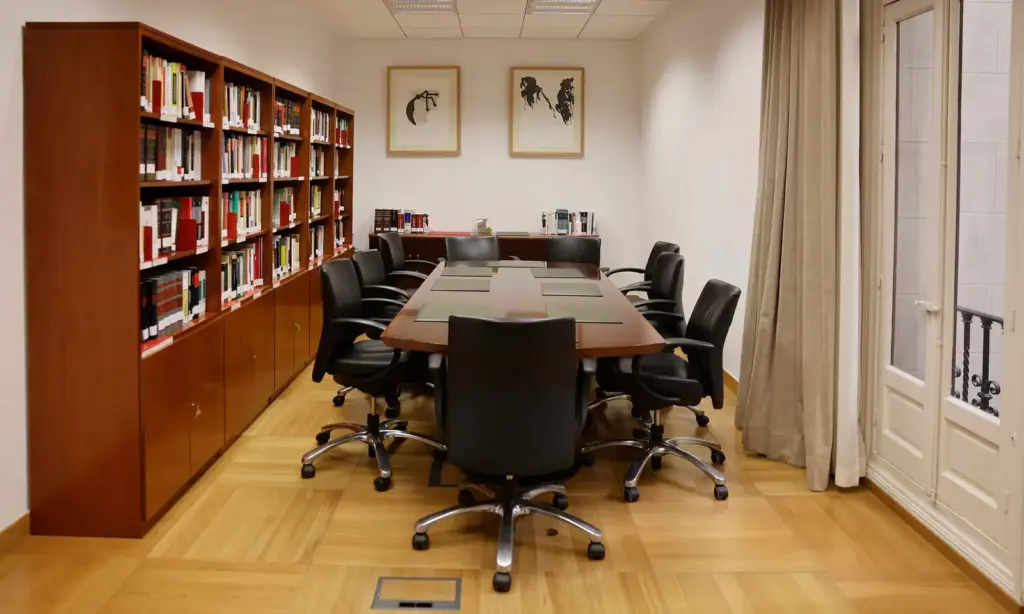
In addition to the penthouse, the Madrid government will get rid of these four apartments at Gran Vía 6 ―which they could not sell last year―, according to the announcement made Thursday by the Minister of the Presidency, Miguel Ángel García Martín. The operations could bring in 20 million euros to the regional coffers, he said, without detailing how much they expect to sell each for. “I have given instructions to the public company Planifica Madrid to put up for sale four properties that we have on Gran Vía in Madrid,” said García Martín.
The Community’s announcement came after 24 hours in which Ayuso’s government had received strong criticism for the acquisition of the penthouse and in which changing explanations had been given to justify it. First, a spokesperson said it was going to be the president’s temporary office during some works at the presidential headquarters in Sol. Then Ayuso’s team clarified that the decision “was not one hundred percent made,” and then the president herself said at a press conference that it could be used by one of her ministers.
A third floor for offices
The tender launched last year also included a property on Santa Catalina street, which is not among those announced this Thursday by Ayuso, but suffered from the same problem as the penthouse and the one on Gran Vía: there are offices where there cannot be any. Finally, it was awarded to the Mexican real estate company Be Grand for 26.01 million euros without taxes (31.47 million with VAT) to build luxury apartments. The building has 4,381 square meters and is very close to the Congress of Deputies. The Community had bought it from Metrovacesa in 2022 and housed until its sale the Territorial Registry of Intellectual Property.
Municipal urban planning regulations prevent a penthouse from being used entirely as an office. Specifically, the prohibition appears in the 1997 General Urban Development Plan of the city of Madrid, which establishes the rules to define where one can live or work. Article 8.1.30 contains the rules for buildings like the one housing the penthouse bought by the regional government: it is prohibited to establish an office or a public service use on the penthouse floor. Such uses would only be possible on the ground floor, lower than the ground floor (semi-basement), and first floor. This also affects the buildings on Gran Vía and Santa Catalina. With the penthouse, that makes three.