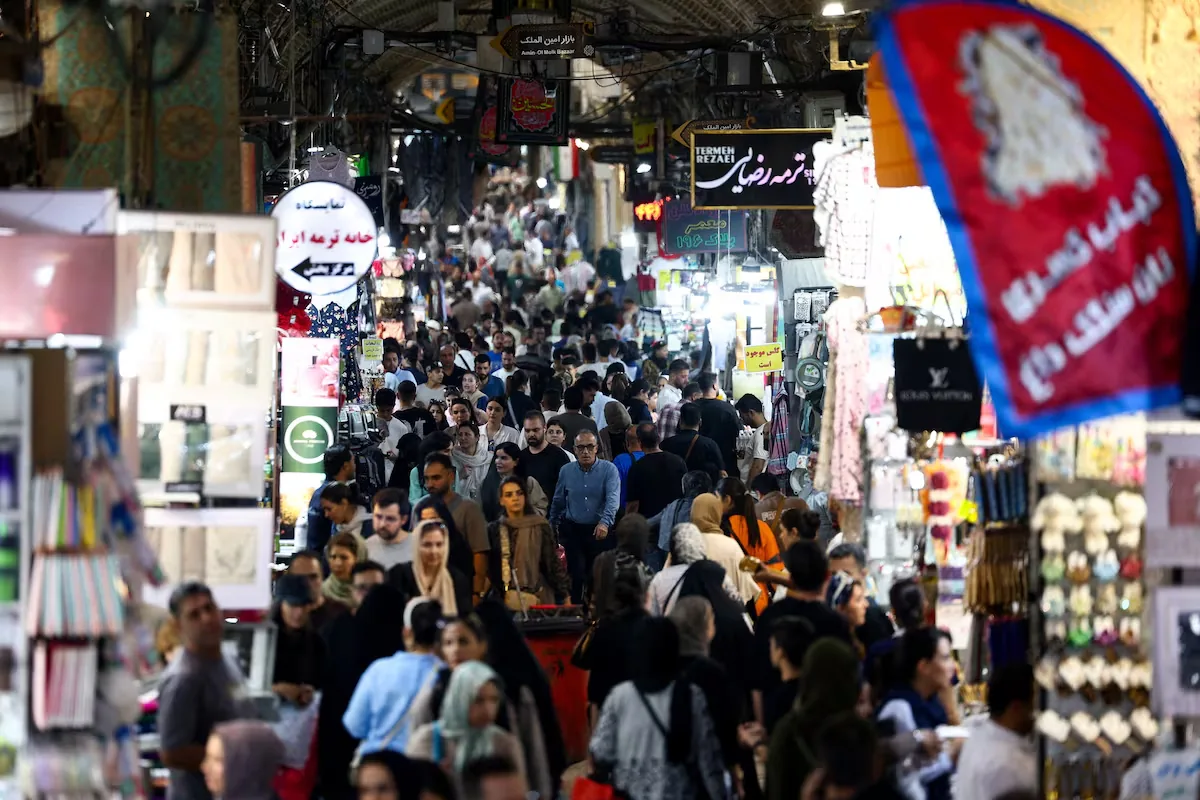
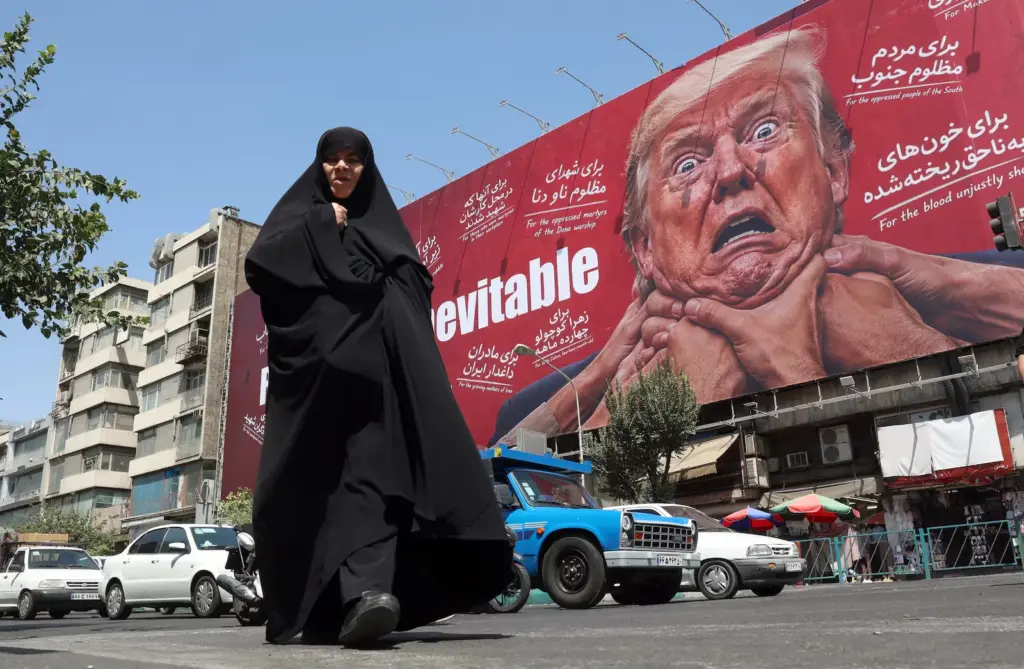
“An economic D-day.” Donald Trump’s vocabulary is as narrow as it is hyperbolic. The threat this Wednesday, however, enters a new category. Iran, said the U.S. president referring to that June 6, 1944, when the Normandy landing changed the course of contemporary history, is exposed to “the most destructive economic operation ever taken against any country.” At the halfway point of the U.S. offensive against Tehran, however, its economy, though damaged, is far from derailing: if a society is used to dealing with decades of sanctions and autarky, it is the Persian one.
After decades of Western sanctions, Iranian authorities had long been preparing for a resistance economy: import substitution, dispersion of power plants, and a well-oiled machinery to evade oil sanctions, drawing on recent lessons from the Russian case, itself built on learnings from Iran. Namely: a dense ghost fleet and a black market for crude especially deep and prolific in times of self-imposed global scarcity, as now.
“Time is a very important factor in this war of resistance. And, so far, Iran has shown greater resilience than the United States,” analyzes Alam Saleh from Tehran, honorary associate professor of Politics and International Relations for Iran and the Middle East at the Australian National University.
In March, the idea floated by senior Iranian officials was that they had enough economic ammunition to resist up to a year of war. Almost half a year later, the widespread feeling is that it is Trump who is most eager to end a conflict that, with midterm elections around the corner, has sunk his popularity to 33%, the lowest level since he became president and one of the lowest levels with which a U.S. president has run for legislative elections.
Iran today faces a deep U.S. trade and financial embargo. Also, a multi-billion-dollar asset freeze, which some recent estimates place above 100 billion dollars (86 billion euros) and whose thaw was on the negotiating table at moments when both sides seemed closer to a true peace agreement. In theory, the naval blockade prevents it from exporting fossil energy, although in practice evasion mechanisms seem to be yielding more results than expected. Many Revolutionary Guard officers and senior state officials are sanctioned for terrorism.
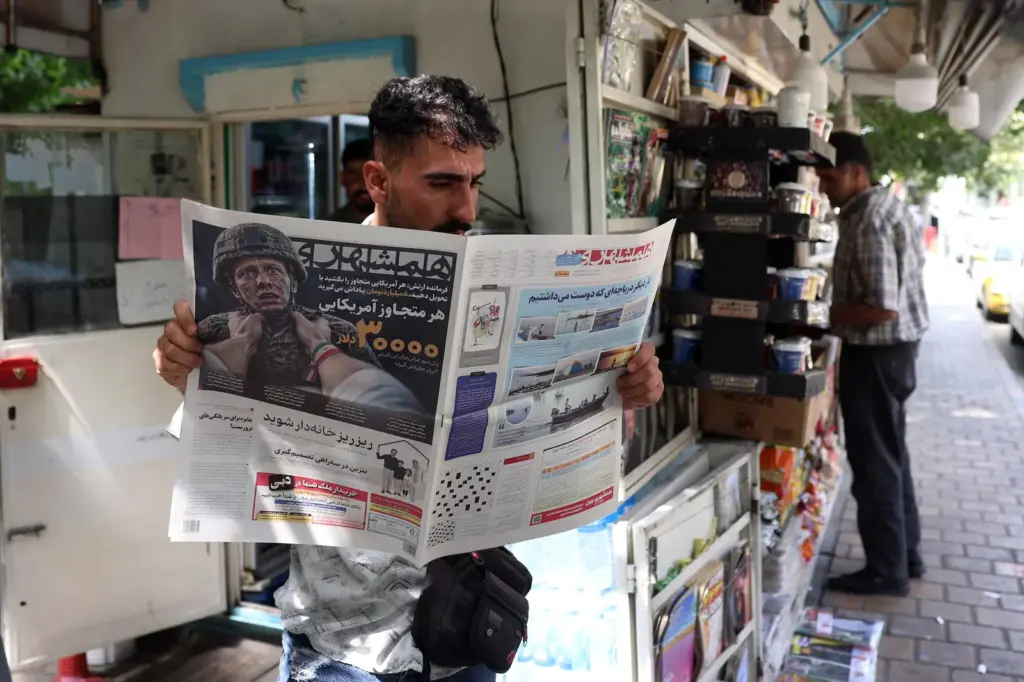
Iranian finances are a huge black box. Official data are scarce and unreliable, and those that are, such as , are outdated: between March 2025 and March 2026, according to their figures, GDP had contracted by 2.7% compared to the same period the previous year. That statistic, however, only captures a small part of the conflict, the beginning, and not the harshest period, after Washington announced its own siege of the Strait of Hormuz in April to prevent Tehran from selling oil and gas, its main source of funding.
Also in spring, the International Monetary Fund (IMF) forecast a sharp 6.1% drop for the current year, which, however, to 5.4% due to the “better performance of oil exports [although it has sold much less, it has done so at notably higher prices] and a certain relaxation of the restrictions weighing on the country’s exports.” This last part is now more uncertain than ever.
Whether 6% or 5%, a contraction that would be disastrous anywhere else does not seem so severe for a nation accustomed to sharp recessions in recent decades. “There is food security and the country does not depend on imports for many basic products,” adds Saleh by voice message.
The expert does acknowledge, however, that “prices have risen.” And not a little: inflation runs above 80% year-on-year, hitting the most vulnerable groups particularly hard. Food prices have soared even more: in the last 12 months, they have more than doubled, according to the latest available data.
From resistance to wear
Farzaneh (a fictitious name, for fear of reprisals), a public official living in Tehran, warns in conversation with EL PAÍS of the sharp deterioration in the purchasing power of families like hers: “All our salary goes to daily expenses.” The woman criticizes the insufficiency of public aid: the current ones, one million tomans (almost five euros at the exchange rate) per person per month “roughly equal a kilo of meat or two of chicken.” Many, she says, have had to cut even their medical expenses. “I don’t know how we will endure another six months or a year.”
Her testimony reflects a reality common to practically all historical episodes of economic sanctions: the main blow of the restrictions and —in the Iranian case— the subsequent U.S. maritime blockade has been suffered mostly by the population and not the regime. The already battered middle class has shrunk and weakened, eroding one of the main engines of social transformation. But the pressure on the high political spheres has barely increased a few points: it does not go much beyond where it was before thousands of Iranians took to the streets early this year to demand improvements in their living conditions.
That was the moment chosen by the United States and Israel to bomb Iran, while asking Iranians to rise up against the ayatollahs and take power. Far from that outcome, the opposite has happened: just when the regime seemed weakest, the missiles have made part of the population wrap themselves in the flag. Exacerbated nationalism against the common enemy. Boomerang effect.
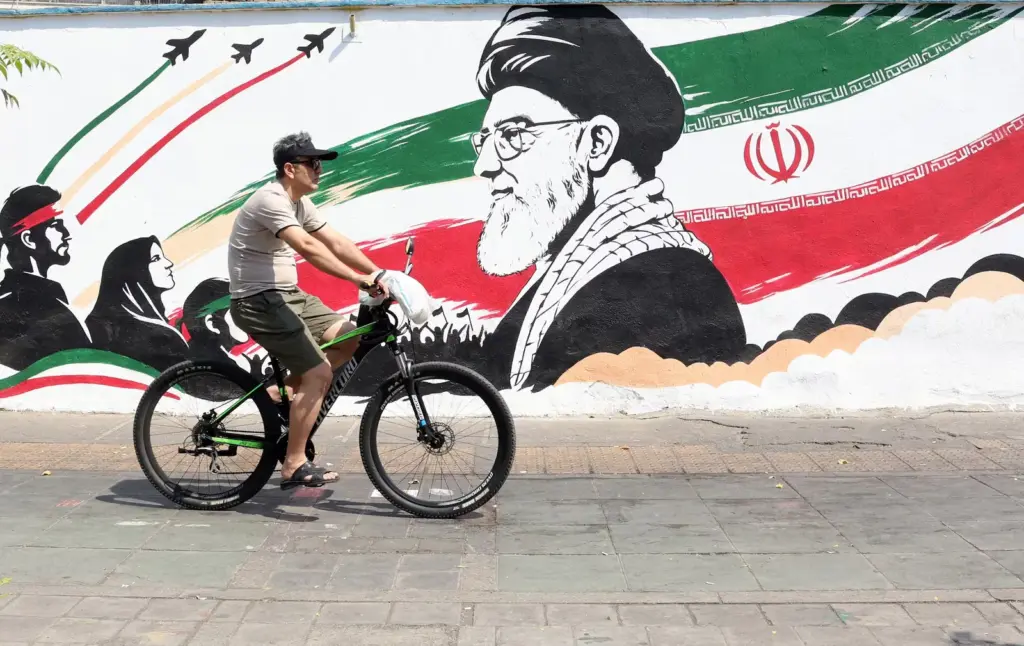
. It is also not unreasonable to suggest that the United States and Israel may be waiting for a new wave of protests, especially if pressure on the Iranian energy system increases, which, despite its endurance, remains one of its great Achilles’ heels.
A possible rise in gasoline prices or even the introduction of some type of fuel rationing could become a new focus of social unrest. The precedent of previous protests over fuel prices makes this scenario especially sensitive, although its political consequences are, for now, difficult to anticipate.
“Sanctions cannot be deemed failures simply because the economy continues to function,” argues a finance expert living in Tehran, under condition of anonymity. “Iran operates as a survival economy, but the depreciation of the rial [the national currency] makes practically everything more expensive, reducing household purchasing power,” he writes by message. “If the pressure continues, Iran could move from a survival economy to a wear economy,” progressively deteriorating its productive capacity.
“If the pressure continues too long,” adds the director of a petrochemical complex construction company, living in Shiraz, “the problem will be less and less how much oil we can sell and more and more the parts, maintenance, repairs, investment, and wear of the facilities.” Because Tehran has shown enormous capacity to circumvent sanctions, after years of experience managing its energy resources and seeking alternative trade routes, but everything has a limit.
Turn in Abu Dhabi
While waiting to see what concrete actions this latest round of Trump’s threats will materialize into, there is one element that invites thinking of greater damage than Tehran has suffered so far. And it does not come precisely from the White House, but from a neighbor —the United Arab Emirates— tired of receiving Iranian missiles and having Hormuz closed, the main channel through which its fossil fuel exports flowed.
The announcement, Tuesday night, of the end of trade and —even more importantly— financial exchanges with the Islamic Republic is a wake-up call of the today undecipherable consequences it may generate in its economy. Although estranged by their close ties with the West, the United Arab Emirates had become Iran’s main supplier and the third destination of its battered foreign sales, largely to then be re-exported to third countries.
“Iranian companies have been building large trade networks and making contacts in the United Arab Emirates for decades,” says Cyrus Razzaghi, founder and CEO of the consulting firm Ara Enterprise, based in Tehran with delegations in several Middle Eastern cities, to Bloomberg. “In this sense, the Emirati embargo can be much more effective and potentially more damaging than U.S. and European sanctions.”
Less than 48 hours after Abu Dhabi’s move, the strongest since the closure of its embassy in Tehran in March, came Trump’s warning of “tremendous economic consequences” for any country that allows its financial institutions, companies, airports, or government entities to provide “any kind of lifeline to Iran.”