









The European Court of Human Rights appears to have put an end 15 years later to the litigation opened by the three-year prison sentence for four protesters who participated in the siege of the Parliament of Catalonia in 2011, in protest against the cuts being imposed by the Generalitat. A ruling published this Thursday by the judges considers those penalties “disproportionate” which, however, the convicted did not end up serving. Despite concluding that none of them participated in violent actions, it does point out that the sanctions could have been justified by the intimidation actions carried out against the politicians who accessed the parliamentary headquarters: “[the sentences] were not proportionate in relation to the legitimate objectives of protecting public safety and the rights and freedoms of others, nor of preventing disorder.”
Read more More than half of the students at risk of poverty do not have a scholarship for the cafeteria
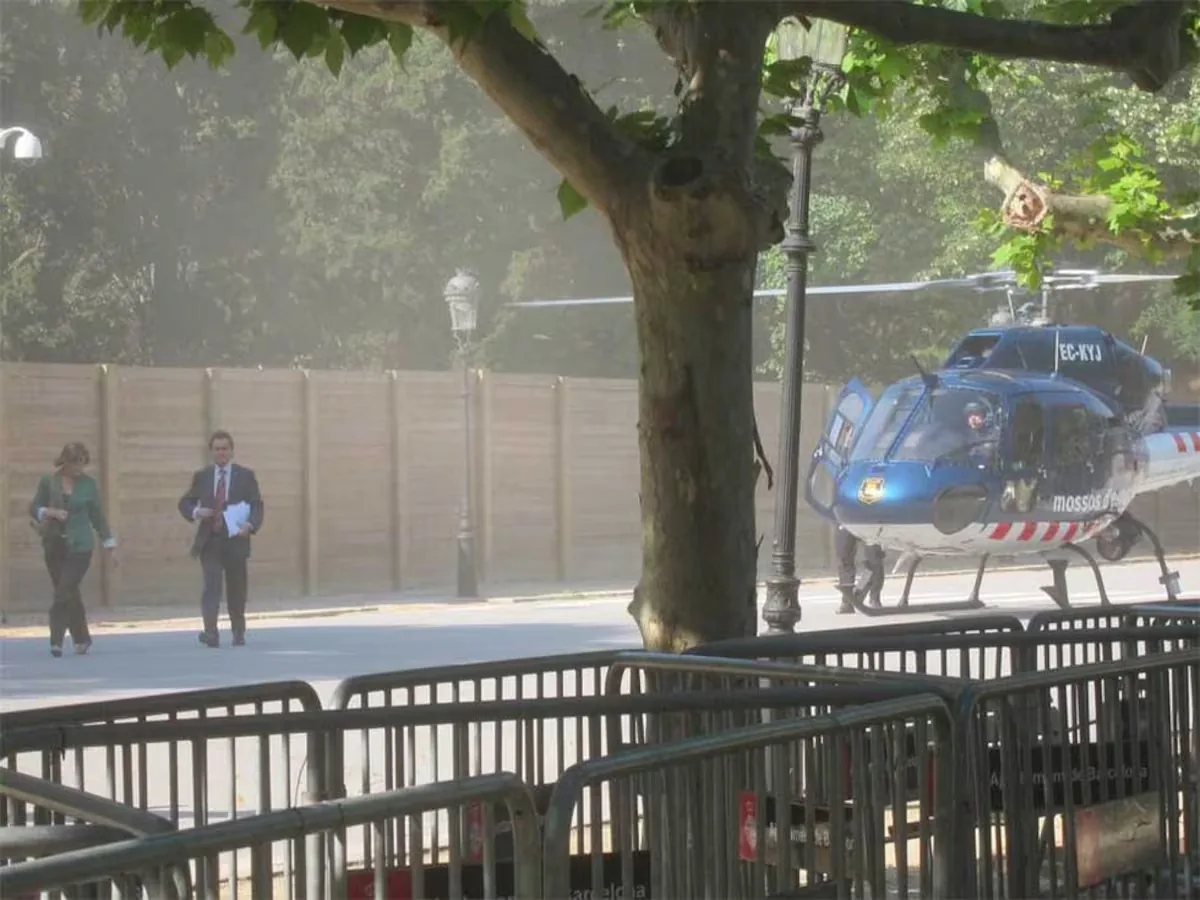
Despite siding with them, the ECHR rejects compensating with the 15,000 euros demanded by the four convicted, Rubén Molina, Ángela Bergillos, Francisco José Cobos and Carlos Munter, attendees of the demonstration “Let’s stop the Parliament, let’s not let them approve cuts” on June 15, 2011, at the height of the 15-M movement. As part of that protest, which surrounded the headquarters of the Catalan Chamber, access was hindered for many parliamentarians and the then president of the Generalitat, Artur Mas, had to access the Ciutadella premises by helicopter.
The sentence came preceded by appeals to an acquittal ruling by the National Court filed by the Generalitat, the Parliament and the Prosecutor’s Office. The Supreme Court ended up sentencing eight people on the grounds that the rights to freedom of expression and assembly could not be used to block other rights, such as the political participation represented by the Catalan deputies. The Constitutional Court endorsed that ruling.
Strasbourg considers that the intimidating nature of the protest could entail sanctions, but considers prison sentences out of place. It also highlights that previous rulings did not attribute any violent action to any of the four people who decided to go to the European justice, beyond participating in creating an intimidating atmosphere. The ruling holds that the four convicted pursued the deputies, chanted or shouted protest slogans and reproached the parliamentarians for their actions.
“Even assuming that such conduct could be considered obstruction and without disputing that it may have been annoying for the deputies they encountered,” the ruling states, “the Court considers that it did not constitute an act of violence nor an incitement to violence.”
The argument defended by the Strasbourg-based court considers that the severity of the imposed sentences —“the harshness,” it says— caused “the effect of deterring them, as well as the general public, from attending demonstrations and, more generally, from participating in an open public debate.” That is, that the sentences could undermine the right to exercise freedom of expression and assembly.
The Court recalls that the sentences were never served, as their execution was suspended during the processing of the applicants’ pardon request, which lasted nine years.
The ECHR ruling coincides with the dissenting opinion issued by Judge Perfecto Andrés Ibáñez, who also did not consider the existence of violence in the actions of the convicted. “The circumstance —he defended— that a group of those who protested did so violently, thus affecting some of the parliamentarians, cannot turn into violent behaviors that objectively were not […] and practically carried out actions completely devoid of such connotation.” Ibáñez denounced “political connotations” in the case in his text.