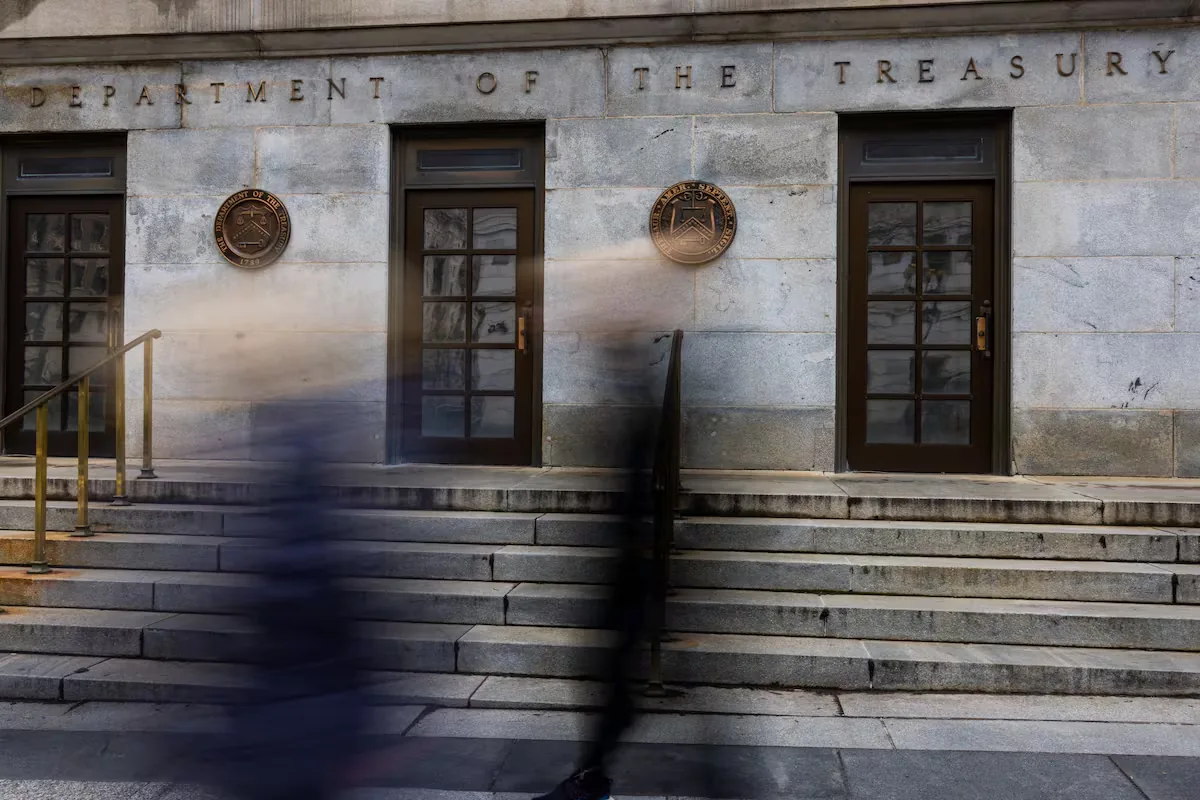
The Donald Trump administration took a new step this Thursday in its maximum pressure strategy against Cuba to force a political change on the island. The United States Department of the Treasury, through the Office of Foreign Assets Control (OFAC), announced a package of financial sanctions targeting Fidel Ernesto Castro Calis, grandson of the former president and nonagenarian leader of the Cuban Revolution, Raúl Castro, as well as the network of state companies that support the nickel, energy, and Cuban corporate banking sectors.
Read more Marcos Llorente announces his retirement from the Spanish national team
Castro Calis has been designated under Executive Order 14404 for “his status as an adult family member” of Alejandro Castro Espín — an influential figure in the regime’s intelligence — who was already sanctioned by Washington last June along with another of his sons, Raúl Alejandro Castro Calis. “These measures further restrict the regime’s ability to finance and provide resources to its repressive machinery,” the U.S. administration justified in a statement.
The Trump administration has maintained strong pressure against the communist regime since January, when it decreed an oil embargo that has hit the already weakened Cuban economy and forced constant blackouts that keep the island’s inhabitants on edge. In addition to sanctions against the regime’s hierarchy, Washington seeks to strangle Cuba’s productive and industrial apparatus.
Among the entities included in this Thursday’s sanctions list is the Banco Exterior de Cuba (BEC), a key financial institution specializing in corporate banking, foreign trade financing, and management of international transactions, accused by the U.S. Treasury of operating directly in the state-controlled financial services sector.
The economic blow also extends to the industrial and energy pillars, at a time when the island is going through one of the worst crises in its recent history, marked by a collapse causing constant and endless blackouts. The Department of the Treasury has penalized Comercial Cupet S.A. and the Empresa Importadora de Abastecimiento para el Petróleo (Abapet) — subsidiaries of the state giant Unión Cuba Petróleo (Cupet) — responsible for joint venture negotiations with foreign entities and the strategic supply of parts and tools for the hydrocarbons sector.
Similarly, OFAC has directed its sanctions against the strategic mining sector by sanctioning Nicarotec (Empresa de Servicios Comandante René Ramos Latour) and Cexni (Empresa Importadora y Abastecedora del Níquel), state firms essential for exploration, technical assistance, and importation of machinery dedicated to nickel and cobalt processing, two of the main sources of foreign currency for the island’s struggling economy.
With the application of this executive order, all assets and interests in property that the designated entities or persons hold under U.S. jurisdiction are frozen, while U.S. citizens and companies are strictly prohibited from dealing with them, according to the statement released by the State Department, led by Marco Rubio, who maintains constant pressure against Havana. Washington has also warned international financial institutions that any interaction with these actors will carry the risk of secondary sanctions.
These sanctions join a series of measures the U.S. government has adopted since June affecting the economic conglomerate Gaesa, controlled by Cuba’s armed forces and described by Washington as “the financial muscle behind the Cuban security repressive apparatus.” The United States imposed sanctions at the end of August on three senior executives of the Cuban Institute of Friendship with the Peoples (ICAP) and nine state entities linked to key areas of productive development such as mining, metallurgy, foreign trade, and the Ministry of Construction. Washington has also extended restrictions to Cuba’s Ministry of Tourism, one of the few economic engines left on the island, representing another severe blow to the country’s economy.
The United States thus increases pressure against President Miguel Díaz-Canel and the revolutionary leadership. The U.S. Department of Justice formally charged Raúl Castro himself in May with conspiracy to kill U.S. citizens, related to the downing in international waters of two planes from the exile organization Brothers to the Rescue in 1996. With this new blow to the financial network and the hard core of the group in power, Washington makes it clear that it will not ease the economic or political siege on Havana.