







Spain’s leading defense and security companies face the challenge of producing at a faster pace amid a strong increase in government investment in these sectors. Europe is rearming, and Spanish companies are seeking to position themselves to compete both on the continent and in the domestic market. Four of them —AICOX, Amper, EM&E Group, and GMV— participated in the third edition of ‘Dialogues for Security,’ an event organized by EL PAÍS with the sponsorship of the four participants and Indra, Mapas de Comunicación as a driving partner, and with the institutional support of the Ministry of Defense. “The Spanish industry is facing a historic opportunity,” they agree. The key is to grow in size to transfer innovation to production.
Read more Tarragona and Mérida join hands to collaborate and promote their heritage
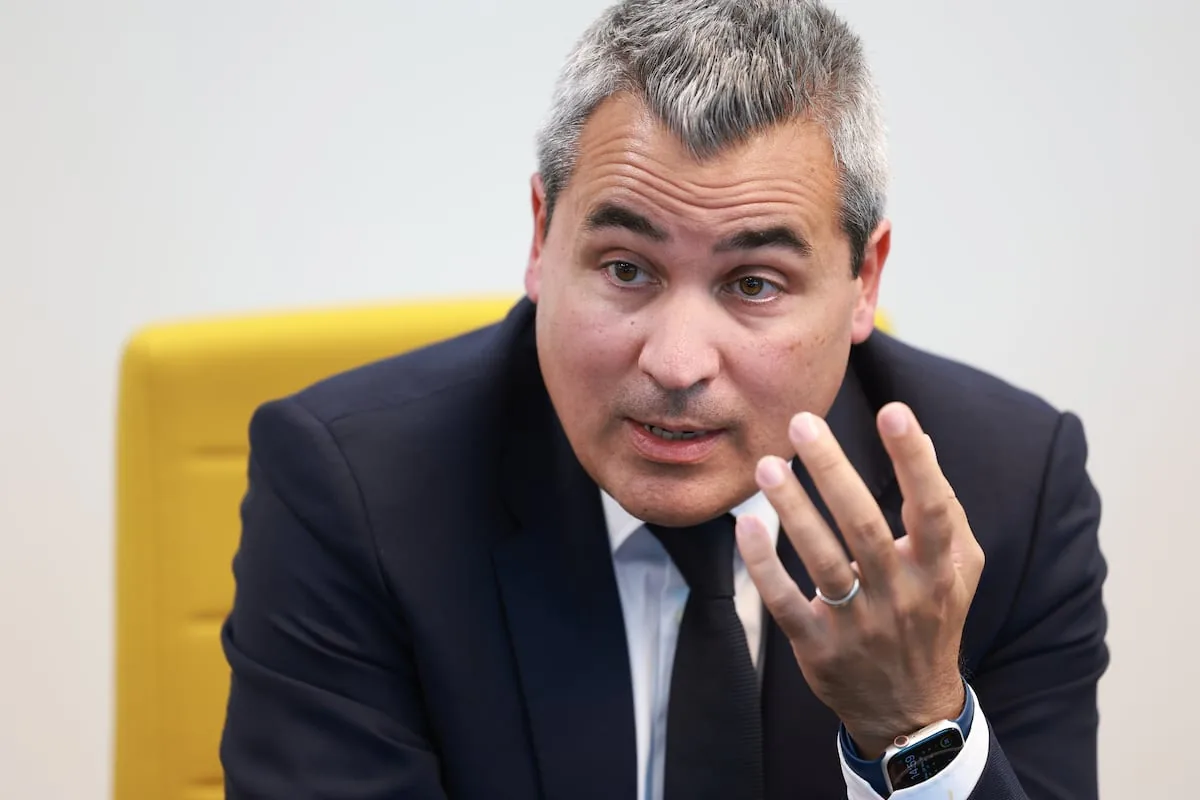
“Society has finally understood that, without security, it is very difficult to have almost everything else,” said Fernando Fernández, CEO of EM&E. The company of the Escribano brothers is one of the examples of the rapid growth the sector is experiencing: it tripled its turnover in 2024, reaching 355 million euros, and that year it hired more than 500 workers.
The four business executives agree on the change in mindset. “We are talking about very large budget increases, a geostrategic change that fosters the need for technological sovereignty and strategic autonomy, and finally, a social change,” agrees Enrique López Pérez, CEO of Amper.
The Spanish defense industry is the fourth largest in the European Union by turnover but maintains a very fragmented structure, with more than 400 companies and a small group of large contractors, such as Indra or Navantia. Their executives acknowledge that Europe starts at a disadvantage compared to powers like Russia and China, especially due to the fragmentation of its industry and its external dependence in certain areas. “The European industry is completely inefficient,” said Carlos Félix Laborda, CEO of AICOX. “Training our troops in maintenance, in knowing how to properly use machinery or software from 20 different companies, is more than inefficient. We start from a handicap.”
The executives are also aware that replacing American capability overnight is impossible. However, they claim national talent and Spanish technological and industrial potential. “Europe and Spain have the engineering capacity to do anything,” López Pérez emphasized.
Mass production
The leap demanded by the new scenario requires mass production, in the necessary quantities and within the deadlines required by Defense. Right now, around 60% of defense material acquired in Europe comes from the United States. “It is not enough to have adequate technology or adequate capabilities. It is a necessary condition, but not sufficient,” Fernández explained. “You have to be able to carry it out, to turn it into a useful product that is available at the right time.”
Ricardo Sáenz Amandi, general director of Defense and Security at GMV, has argued that Europe is already capable of competing with the United States in some technologies. The problem, he explained, appears in large weapons systems, too complex and costly for a single country to develop. “The differential lies in those large programs,” he pointed out. To be able to compete there, the GMV executive considers it necessary for European countries to buy together: “If we want the industry to scale, it is through an aggregation of demand.”
Company size has been a major part of the debate. GMV exemplifies the growing weight of these specialized tech companies. Founded more than four decades ago, it now has more than 4,000 employees and works in areas such as space, cybersecurity, and defense. “Those of us in the middle need more attention because we are fundamental; large programs would not happen without companies like those here,” he said, referring to the midcaps.
Félix Laborda has asked for the same. “We have to start losing the fear of failure, of trying things. We need to have the capacity for innovation, for development,” said the CEO of AICOX.
López Pérez has claimed, however, that being small can also be an advantage in a sector that demands rapid innovation. The Amper executive rejects the idea that the Spanish industry only needs “big champions” and advocates combining the size of large companies with the agility of small ones. “Many times large companies are inefficient, not agile, not flexible, and do not innovate,” he said. Spain, he argued, can “combine the best of both worlds”: “Having size when you need it, but also having agility, flexibility, and innovative capacity when you need it.”
Amper is one of the companies trying to gain scale. The group plans to almost double its contract portfolio, from 695 million euros to 1.3 billion by 2028, and has set a goal of making between three and five acquisitions of Spanish companies.
The increase in spending thus opens an unprecedented opportunity for an industry accustomed for years to much smaller budgets. “We have managed times of great scarcity,” López Pérez concluded. “I believe we can be prepared to manage this new situation.”
Read more An inmate of the Tarragona prison convicted of murder escapes during a scheduled outing