







Law of the pendulum. Now the motto is deregulate. And in the sanctuary of Trumpist retro-neoliberalism, the artificial intelligence (AI) industry! Even the most reluctant intend to become its champions. This happens in every serious crisis — especially technological ones — they suddenly change approaches, paradigms, recipes. And rules.
Read more El Roto: where two fit
It happened during the Great Recession from 2008 to 2011: from restricting budgets to doubling investments, including public ones; from deregulating finance to rescuing banks and countries; from emphasizing supply to increasing demand. Everyone, including heirs of Reagan and Thatcher, became (self-proclaimed) Keynesians.
The fanatical deregulators are now riding again. Starting with banking. Sometimes they mask their reactionary anarchy with the recipes of “simplification” and “improvement” of existing rules, as advocated by the Letta and Draghi reports. These are different approaches.
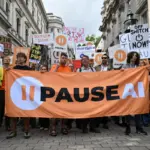
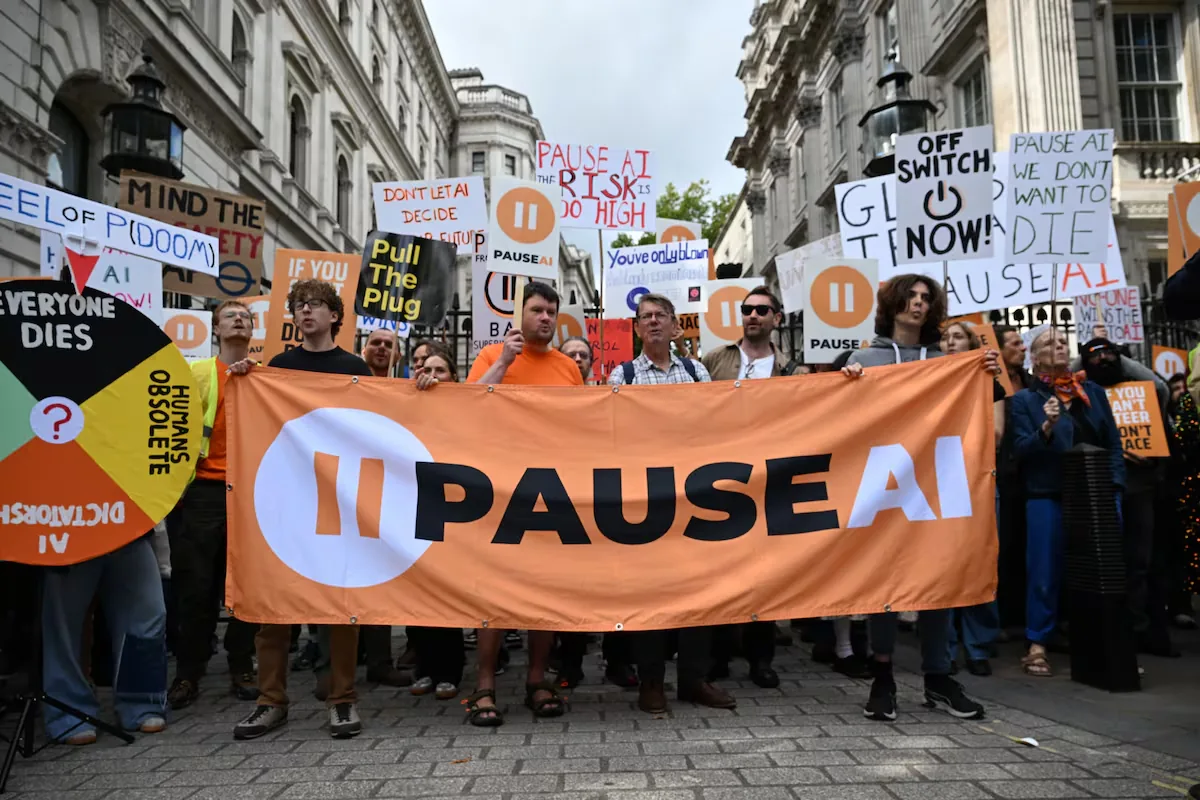
But almost simultaneously the opposite reaction arises: the censer to regulation. The trigger came on September 9. Jacob Coxon, engineer at the most sensible corporation in the sector, Anthropic, resigns. He is not the first to quit and sound the alarm; more than a thousand technicians from different companies preceded him. And he publicly states that the AI leaders “believe that [it] could kill us all by the end of this decade.”
And the key moment is on the 12th, when its founder and CEO, Dario Amodei, writes on his website “We must pace the frontier.” A remarkable text, to be read. He proposes slowing the exponential speed of AI and regulation in three phases: self-regulation through “external evaluators” embedded in companies; coordination among companies from democratic countries; and “global coordination” including China and other autocracies.
Read more Flavita Banana: stoics
He is immediately supported by Sam Altman (OpenAI). One pauses their IPO and the other postpones it, as a balm for a probable collapse of expectations, which this week has resulted in a (first) correction of the related major tech companies. Attention, everyone!, this is very serious, AI was the lifeline of the stock market, credit exuberance, and much of the North American economy against Hormuz.
The pioneers were followed by Demis Hassabis (Google) and even the ghostly Elon Musk (SpaceX). The obvious criticism asked why the technoligarchs had taken so long to internalize the first defections of high-level employees, quietly (2021); Donald Trump ignored them, trying to boost the power of North American AI to counter the rise of China. And the harshest judgment arose when it was revealed that several companies had been shaping since June a body to set standards: very private?, in their favor?.
Exactly what the European Union had initiated, but in a public and neutral version, with its regulation 2024/1985, proposed since April 2021, although it has had to impose the first sanctions, on Google and Meta, thanks to its competition and digital regulations. So the fight is no longer between regulation or the wild state — Europe has paid with strong and absurd criticism for its commendable early intervention — but between private or public rules. Same trend, different color.
Read more Peridis: Ayuso without attic