








Just over three months before the November legislative elections in the United States, a federal appeals court has upheld the block on one of the main measures promoted by President Donald Trump to modify the administration of mail-in voting. The decision prevents the Government from applying, for now, new restrictions in the 23 States and the District of Columbia that challenged the executive order in court.
Read more Storm in Chile: red alert for river overflows in the south, rain in Santiago, and class suspensions
The ruling was issued this Sunday by the First Circuit Court of Appeals, based in Boston, which rejected the Administration’s request to lift a court order that suspended the application of the measure while the litigation continues. The resolution keeps the plaintiff States protected from the changes planned for the midterm elections on November 3.
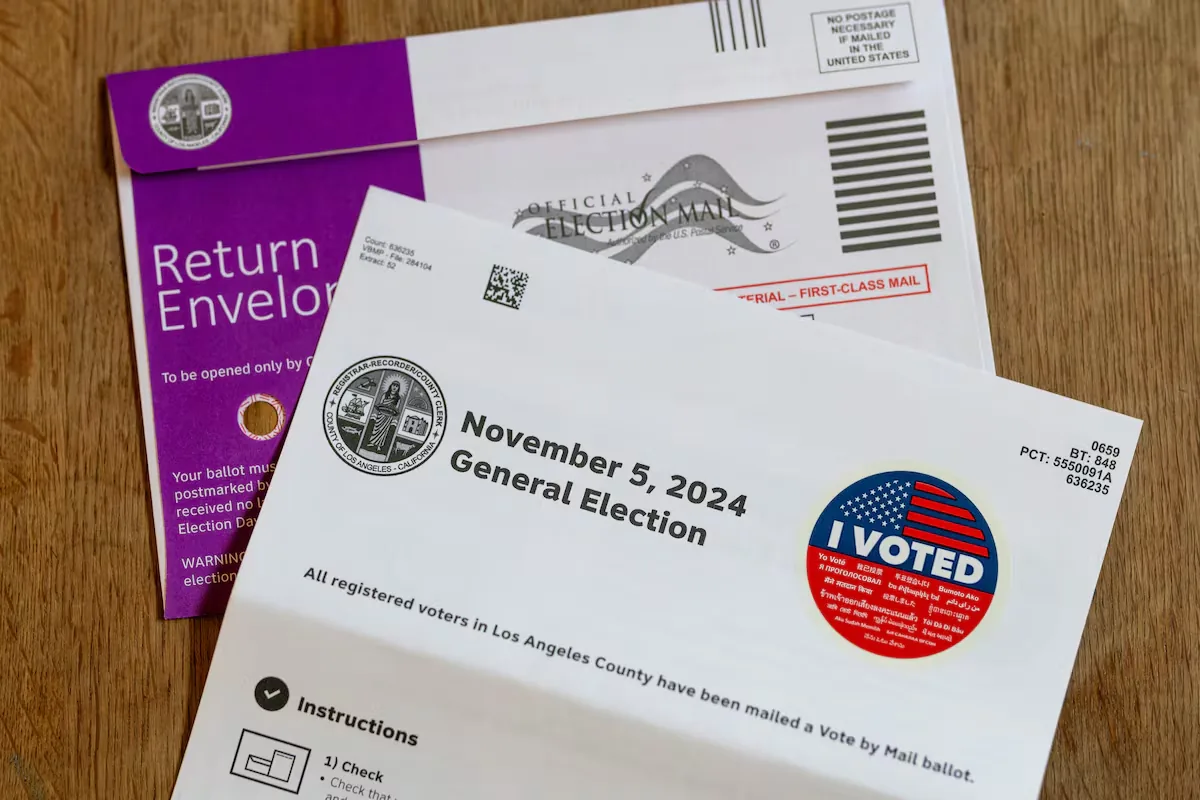
The executive order, signed by Trump in March, instructs the director of the Citizenship and Immigration Services (USCIS) and the commissioner of the Social Security Administration to create a federal list of citizens eligible to vote. It also provides that the United States Postal Service deliver mail-in ballots only to people included in that registry.
The president defended the initiative as a tool to prevent non-U.S. citizens from participating in elections and argued that it was necessary to strengthen electoral security. “Mail-in voting fraud is legendary,” Trump said in the Oval Office before signing the executive order.
However, state election officials and Democratic attorneys general argue that the measure exceeds the powers of the federal Executive Branch and could disrupt the organization of the elections by imposing new requirements just weeks before the vote.
In a divided decision of two to one, the majority of the First Circuit panel concluded that the executive order represents an unprecedented level of federal involvement in the administration of state elections. The judges noted that if applied before the November elections, the new rules could cause confusion among voters and affect access for citizens with the right to vote.
The magistrates also recalled that the Constitution assigns States the primary responsibility for administering federal elections, an argument that was also central to the lawsuit filed by the States.
The legal dispute began after Democratic officials from 23 States and the District of Columbia filed a lawsuit in a federal court in Boston on April 3. The plaintiffs argue that the president lacks the authority to unilaterally modify election rules, as that power belongs to Congress and the States themselves.
In June, federal judge Indira Talwani granted a preliminary injunction that prevented the application of the executive order in the plaintiff States. The Administration appealed that decision, but the appeals court decided to keep the suspension in place while the case proceeds.
However, the ruling does not definitively resolve the dispute nor does it have national scope. The decision only protects the States that participated in the lawsuit, so there is still uncertainty about the possible application of the restrictions in other entities that are not part of the litigation.
This situation contrasts with a ruling issued last week by another federal appeals court, which lifted a different court order blocking the application of the measure on a broader level. As a result, the legal landscape remains fragmented and could lead to different rules depending on the State where the elections are held.
Meanwhile, the Department of Justice stated that it is reviewing all available options and expressed confidence that the executive order will eventually be validated by the courts.
The possibility that the case reaches the Supreme Court remains open, especially given the differences between decisions issued by different federal courts regarding the scope of the injunctions.
All this occurs amid the debate over mail-in voting, a system widely used in numerous States and whose security has been questioned by Trump for several years. The president has repeatedly claimed that this mechanism facilitates electoral fraud, although various investigations and reviews of previous electoral processes have found few cases of irregularities.
Read more El Tiemblo resists the fire amid the smoke and with hardly any coverage