



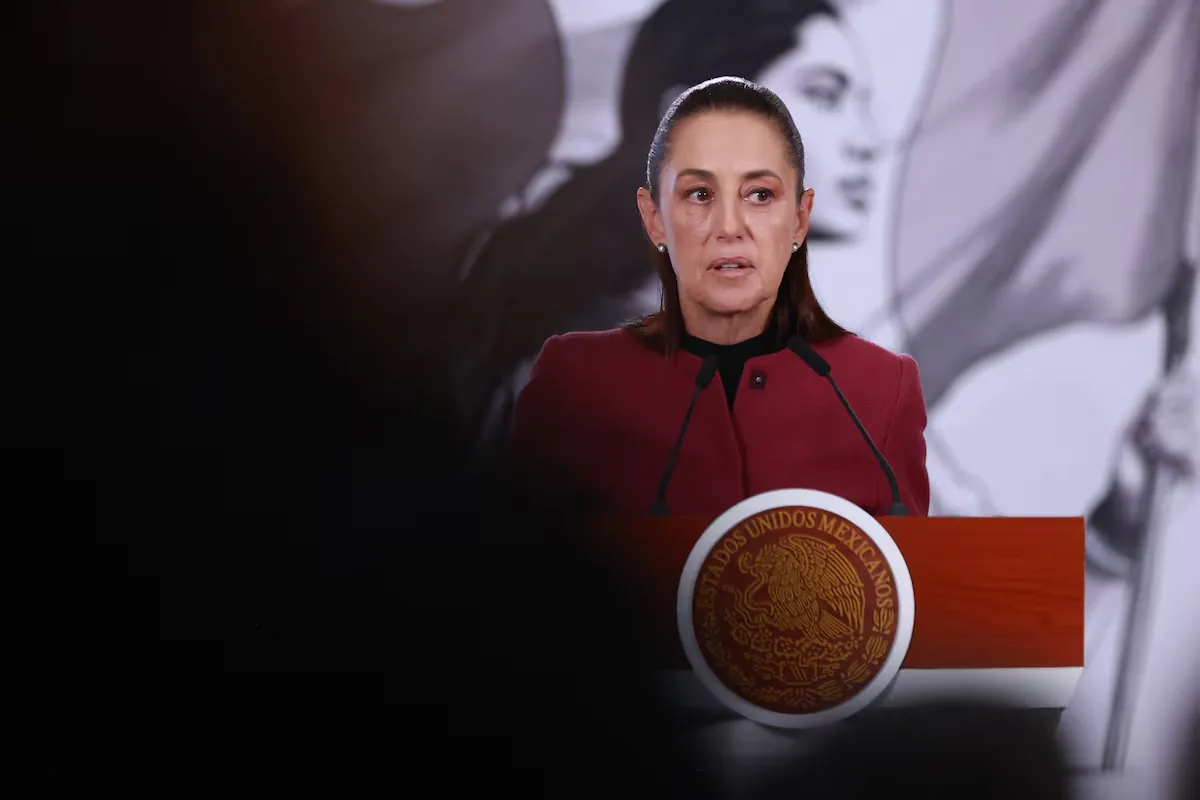
Mexican President Claudia Sheinbaum has resumed her cautious stance and has avoided commenting on the Nicaraguan leader Daniel Ortega’s intention to eliminate elections in his country. “First is the self-determination of the peoples, whatever the people of Nicaragua decide, and we are always in agreement with democracy, in all its terms,” she limited herself to saying after a reporter’s question during her morning press conference this Monday. “Each country decides, each people decides,” she reiterated. On Friday, various media widely circulated an alleged letter from the Mexican ambassador to Nicaragua, Guillermo Zamora, with a “warm congratulations” from the Embassy to the co-presidents, Daniel Ortega and his wife, Rosario Murillo, on the 47th anniversary of the fall of the Somoza dictatorship in the country. The document is dated July 16, three days before the autocrat’s announcement to eliminate the ballot boxes, and there has been no official statement following the dissemination of the letter.
Read more El Tiemblo resists the fire amid the smoke and with hardly any coverage
“They can forget it, there will be no more elections here,” Ortega declared precisely during the July 19 celebrations, which commemorate the victory of the Sandinista Revolution. The proposal must be debated and voted on in Parliament, controlled by the Government. The leader, who has governed the Central American country for 20 years and faces accusations of fraud and persecution of opponents, has consolidated, along with his wife, the last great tyranny in Latin America, with thousands of exiles and hundreds of deaths.
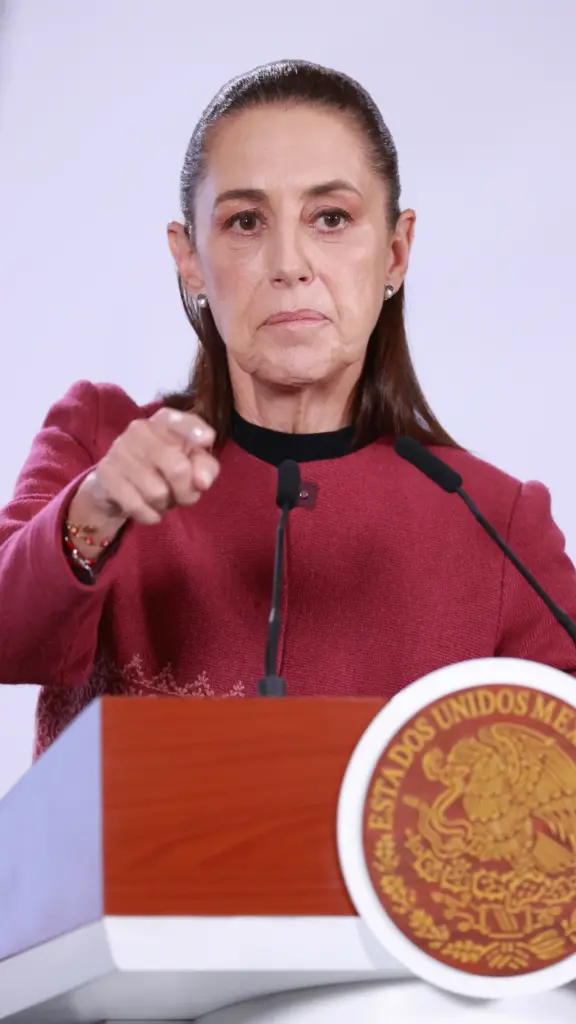
Mexico has always tried to maintain a neutral profile in the internal conflicts of each country while defending respect for human rights and political freedoms, two positions sometimes complex to harmonize that have forced Mexican governments to exercise balancing acts. In cases like Peru, however, public stances have been more forceful than in others, and the president explicitly speaks of former president Pedro Castillo, imprisoned since 2022 accused of staging a self-coup, as a victim of a coup d’état. Regarding Nicaragua, the former Morena president Andrés Manuel López Obrador, Sheinbaum’s mentor, avoided making strong statements against the Ortega and Murillo regime despite international isolation and increasingly forceful criticism from international organizations.
“On that, we can indeed express a very respectful opinion. We consider that freedoms must be guaranteed and that there should be no repression,” López Obrador stated for the first time in 2021, when the country was escalating in the repressive crisis following the imprisonment of the main opposition candidates. Four days earlier, both Mexico and Argentina had announced a recall of their ambassadors in Managua to request explanations about the “worrying political-legal actions carried out by the Nicaraguan Government,” which had “put at risk,” they added, “the integrity and freedom of various opposition figures.”
Mexico is a country with significant influence in the region whose role as mediator has been fundamental in various contexts, such as in relations between Cuba and the United States, where it has historically served as a bridge. The government of José López Portillo, in fact, already played a key role in facilitating the fall of the Somoza dictatorship in Nicaragua in the late 1970s, and the Morena administrations have since 2019 been one of the hopes of the Nicaraguan exile community to confront the repressive expansion of the presidential couple.
López Obrador offered in 2019 to mediate in the crises of Venezuela and Nicaragua, following criticism for Mexico’s lack of firmness, and the ball is now in the court of his successor. In recent months and with all eyes on her, Sheinbaum has raised her international profile and taken a position on an ideological board led, on the opposite pole, by the U.S. president, Donald Trump. But it is still unknown how she will face the disintegration of the Central American country and the expectations placed on her leadership abroad.
Read more Filmed for the first time two female bears with six cubs in the Aran Valley