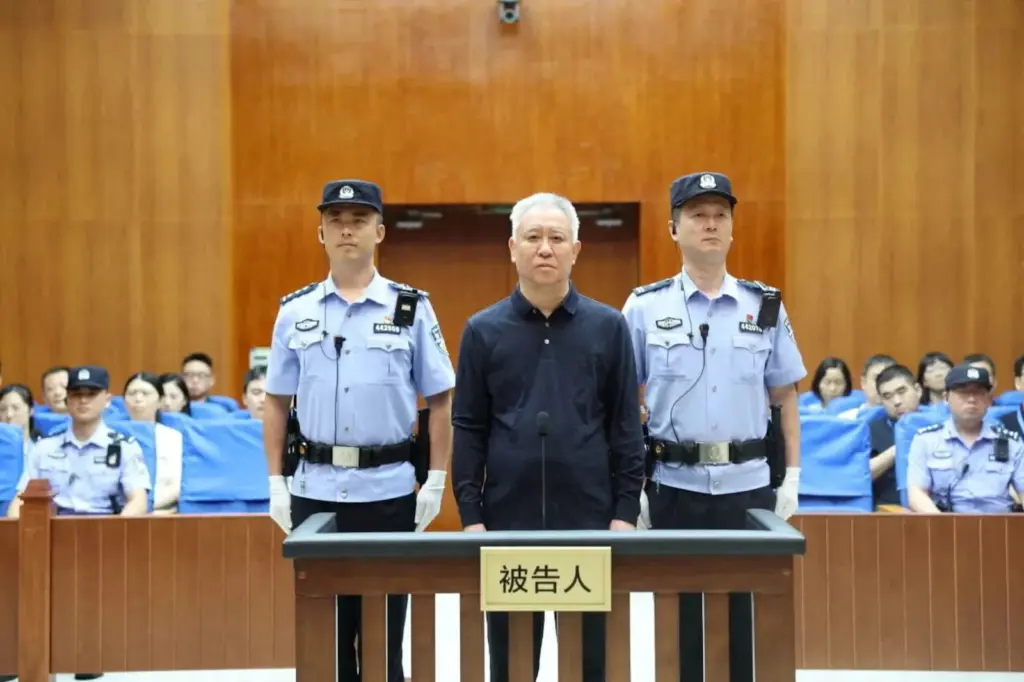
Xu Jiayin, the founder of the collapsed real estate giant Evergrande, has embodied for five years the excesses that led to the biggest business disaster in recent Chinese history. The man who became the richest in Asia reappeared on Thursday before a court in Shenzhen (Guangdong, southern China) gray-haired and aged, after three years out of the public eye, to hear his life sentence. The verdict offers a criminal conclusion to the fall of the empire that made real estate a symbol of China’s rise, although punishing the man who best personifies the debacle — seen by many as a villain — does not solve the problems the crisis left entrenched in the Chinese economy.
Read more Flavita Banana’s August fashion: the tunic
The ruling, issued in the first instance, finds proven that Xu and his companies inflated assets and concealed debts through “continuous and large-scale” falsification of their accounts between 2016 and 2021. The businessman, also known by the Cantonese pronunciation of his name, Hui Ka-yan, was found guilty of eight crimes, including fraud, embezzlement, and bribery. The court ordered the confiscation of all his assets and fined Evergrande and its subsidiary Hengda 15.82 billion yuan (about 2 billion euros). Another 56 people received sentences of up to 18 years in prison.
Evergrande, which accumulated more than 300 billion dollars (257 billion euros at the current exchange rate) in liabilities, entered liquidation by order of a Hong Kong court in January 2024. By August 2025, its liquidators had received claims for 45 billion dollars and sold assets for barely 255 million. On Friday, a day after Xu’s conviction, a Guangzhou court also agreed to liquidate Hengda due to insolvency.
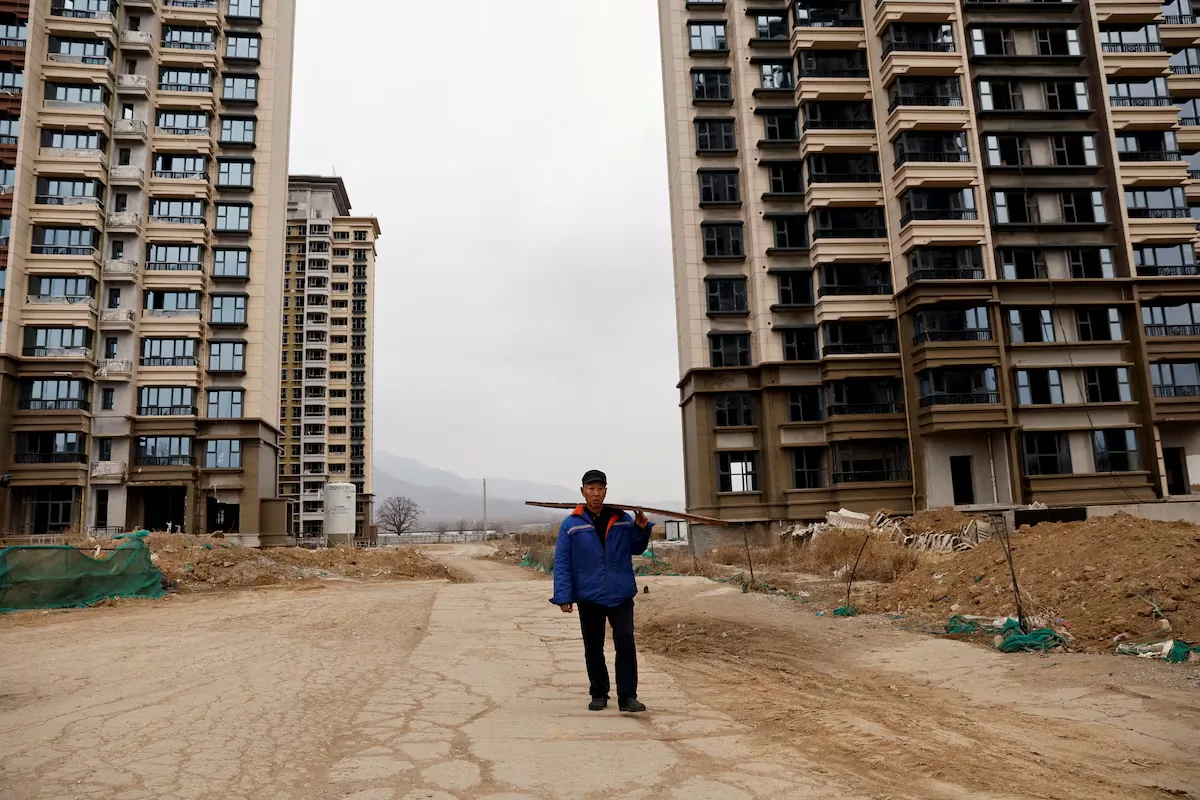
Xu, 67, a man of humble origins raised by his grandmother in a village in Henan, built since 1996 a machinery based on buying land with debt, selling homes before building them, and using the advances to finance new developments. The model worked while sales and prices were rising. But when Beijing imposed the “three red lines” in 2020 to contain developers’ leverage, restrictions on mortgage credit exposed the group’s fragility, which halted construction and defaulted at the end of 2021.
Although the collapse did not cause the Lehman Brothers moment feared by markets, the contagion followed another route, less abrupt and more diffuse. The direct exposure of banks was relatively limited and state control of major entities gave Beijing room to avoid a widespread liquidity crisis. Bank loans accounted for less than 50 billion dollars of Evergrande’s approximately 300 billion debt, according to BNP Paribas estimates at the time. However, the halt in construction broke buyers’ confidence and dried up one of the main sources of financing, advances from their clients. The drop in sales then worsened the cash shortage of other real estate companies and dragged down prices and investment.
The scale of the blow is understood by the weight that real estate had reached. At its peak, in the late 2010s, the real estate sector and related activities accounted for nearly 30% of China’s GDP and real estate development concentrated almost a quarter of fixed asset investment. But since mid-2021, real estate investment has recorded negative rates.
Alicia García Herrero, chief economist for Asia-Pacific at investment bank Natixis, considers in a message that, today, the important thing “is no longer the story of Evergrande, but the fact that there is no real estate investment; neither from households nor builders.” Edward Chan, director of S&P Global Ratings, also believes that Evergrande marked the end of the real estate expansion model based on extreme indebtedness and accelerated off-plan project sales, according to the Hong Kong newspaper South China Morning Post, but points out that Xu’s conviction will no longer have a significant effect on the market.
Read more Saffron and faucets, the scarce trade between Spain and Iran that Trump threatens to sanction
The Evergrande crisis had a domino effect that has transformed the sector. After the withdrawal or default of numerous private developers — another significant example was Country Garden — state-owned or publicly backed companies have gained ground. The five largest by sales between January and July belong to that category, according to China Index Academy. They were Poly Developments, China Overseas Land, China Resources Land, China Merchants Shekou, and Greentown China.
State support has allowed millions of homes to be completed and limited buyers’ losses: the Ministry of Housing assured in October 2025 that 7.5 million delayed apartments had been completed and delivered nationwide. However, it has not cleaned up developers’ accounts and banks still consider financing many private companies too risky. In the first seven months of the year, domestic loans received by real estate companies fell 32.1% year-on-year, according to the National Bureau of Statistics. Credit is increasingly concentrated in state-backed companies and projects considered viable.
But state developers gaining market share does not mean the sector is recovering, but that they are occupying more space within a market that continues to contract. Between January and July, real estate investment fell 19.2% year-on-year and the value of new home sales, 13.2%. S&P Global Ratings forecasts that primary market sales will decline between 10% and 14% in 2026 as a whole and warns that without broader national measures to absorb the housing surplus, the downturn could be even greater.
The official diagnosis admits the burden but presents its duration in a more favorable light. A comment published this Monday in the People’s Daily, linked to the Communist Party, states that resolving the risks accumulated over years in the real estate sector “objectively produces a contractionary effect” and requires paying “a certain price” in terms of growth. The piece is attributed to Zhong Caiwen, a pseudonym usually associated with the Central Commission for Financial and Economic Affairs. The text describes this cost as temporary and necessary to achieve more stable and sustainable development. It adds that the priority of public investment has shifted towards manufacturing modernization and infrastructure considered strategic.
García Herrero implicitly questions that outlook: “The real estate sector continues to drag down the economy and no way out is seen.” For his part, Hui Shan, chief economist for China at Goldman Sachs, doubts in a note that the official bet can fill that gap: the industry represents about one-fifth of employment and will hardly boost income and consumption on its own. Measures remain mainly aimed at increasing supply, Hui warns. Although they may help meet the annual growth target — set by the government “between 4.5% and 5%” for 2026 — they will hardly generate a lasting boost to income and consumption. The GDP of the world’s second-largest economy grew 5% year-on-year in the first quarter and 4.3% year-on-year in the second.
Read more Beyond the ‘influencers’: the revenge of paid internet with digital crowdfunding