




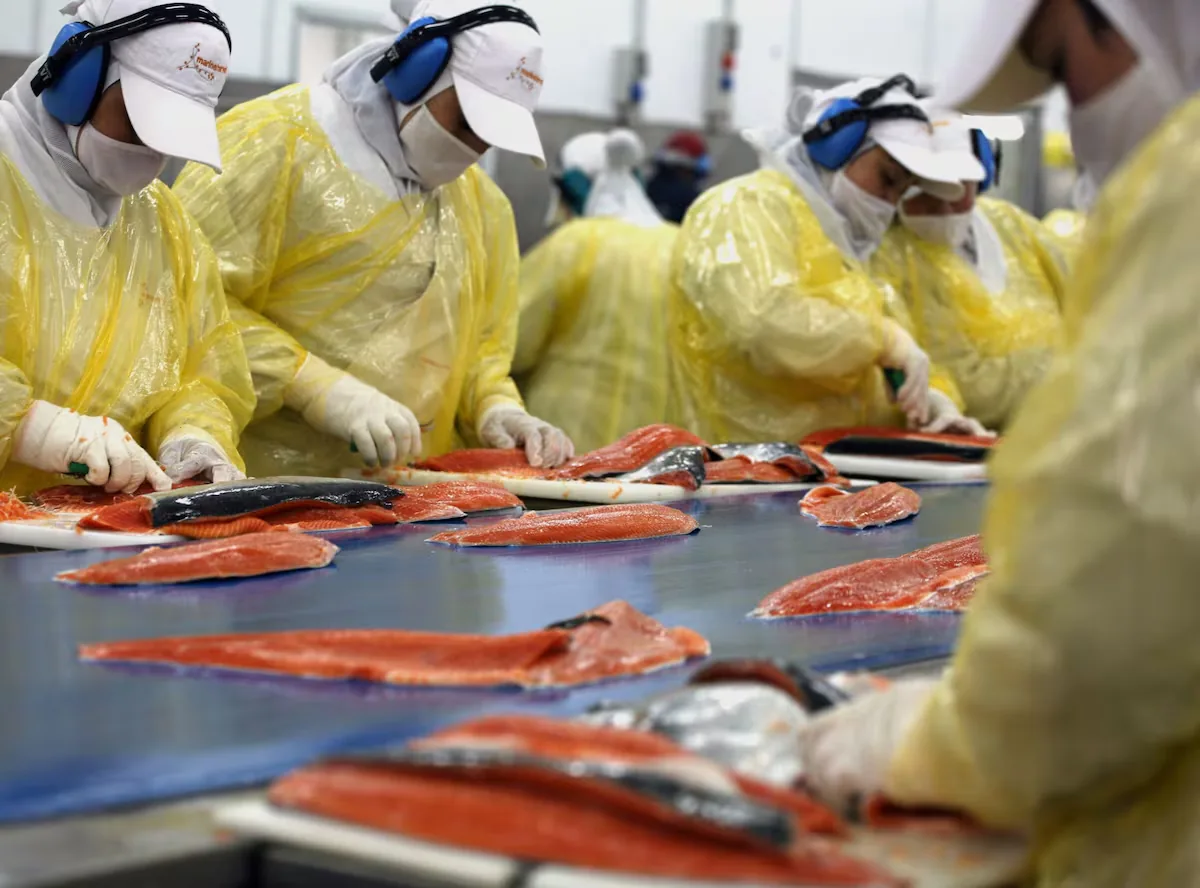
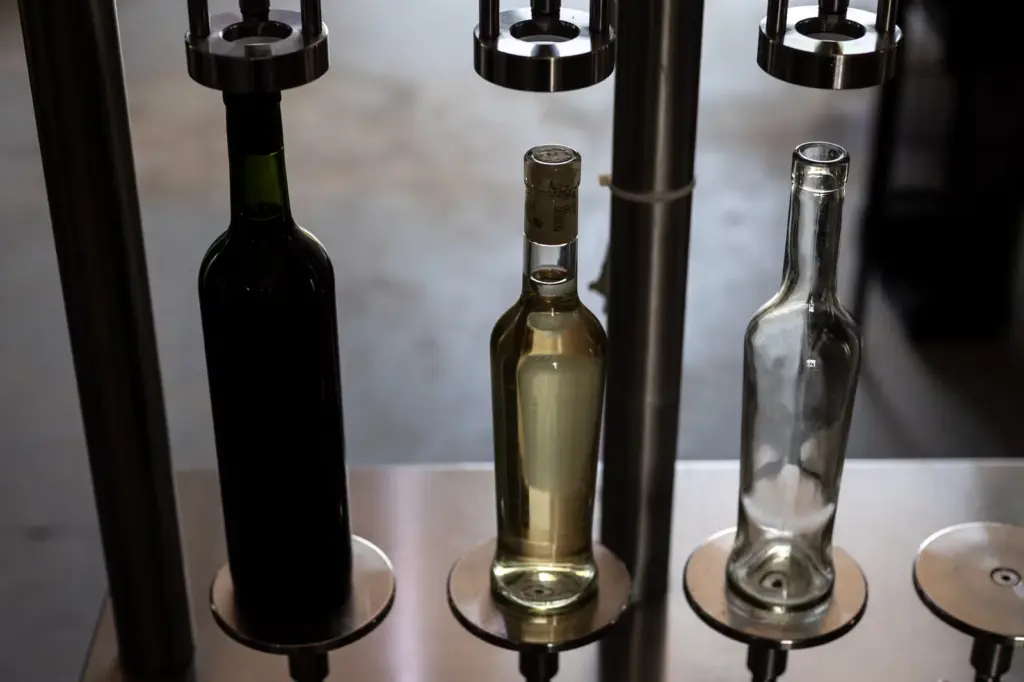
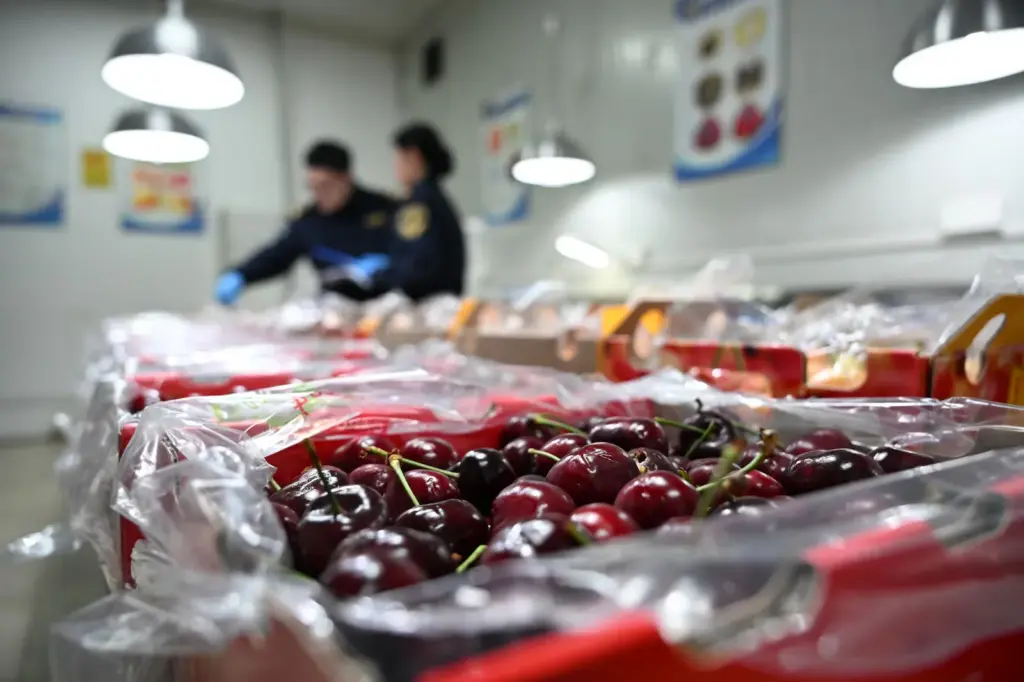
The Government of José Antonio Kast is trying to get the United States to exclude some Chilean goods from the tariffs imposed by President Donald Trump on some 60 economies around the world. The Undersecretary of International Economic Relations, Paula Estévez, said that the Executive is negotiating with Washington for exceptions for Chilean products, such as salmon, meats, wines, dairy products, mussels, wood panels, cherries, grapes, and blueberries. “The strategy is for our products that are now subject to this surcharge to be excluded (…) we are already negotiating,” she said in an interview with Radio Pauta.
The surcharge, between 10% and 12.5%, is aimed at nations that the US accuses of not having taken sufficient measures to control imports of goods produced through forced labor. The new commercial salvo came into effect this Friday, before the universal 10% tariff approved in January by the US president expired, to avoid a legal vacuum after the Supreme Court’s setback to the main measure on which his trade policy pivoted.
Chile has been left with the highest surcharge, 12.5%. “It is a US commercial policy decision to have tariffs on its trading partners. And this began on Liberation Day, on that famous April 3rd. This is a continuation of its tariff policy, it is not against Chile. If you look at the list, its closest partners, let’s say Israel, Australia, Singapore, also have tariffs,” Estévez argued in another interview, with Tele13 Radio.
The Ministry of Foreign Affairs, led by Francisco Pérez Mackenna, has assured in a public statement that “Chile has a solid labor institutional framework, a robust regulatory framework, and a firm commitment to the prevention and eradication of forced labor, supported by compliance with international conventions signed by the country in this matter,” which is why the Kast Government considers that the application of this measure to the country “does not align with these standards, nor with the technical, political, and legal background presented throughout the investigation process.”
In the same statement, it affirmed that the decision adopted by the United States includes more than 60 economies, equivalent to 99.4% of US imports, and therefore responds to a transversal trade policy and in no case constitutes a measure specifically directed against Chile.
The new levies will affect 989 products and could represent an additional tariff burden of 200.5 million dollars for 2026, according to Estévez’s estimates. The greatest impact would fall on agriculture, fruit growing, and the forestry industry. However, the undersecretary stressed that 53% of all Chilean goods have been excluded from the measures implemented by Trump, including refined copper and lithium carbonate.
Chile has sought to expand its relations with other economies in the wake of the trade war. The Government of Gabriel Boric (2022-2026) tried to strengthen ties with powers such as India and Brazil, among others. The market diversification strategy has been followed by the Kast Administration, which this Friday announced a trade agreement with the Philippines and the start of negotiations with Bangladesh to reach a Free Trade Agreement. In addition, Chile signed a joint declaration with Morocco with the intention of opening spaces for dialogue to boost investments between both countries.
But the White House closely monitors the South American country’s business dealings, especially those with Trump’s biggest adversary in his tariff war and Chile’s main trading partner: China. In February, the State Department imposed sanctions on the then Minister of Transport, Juan Carlos Muñoz; the Undersecretary of Telecommunications, Claudio Araya; and his chief of staff, Guillermo Petersen, for approving in January a concession to China Mobile to install, operate, and exploit a submarine fiber optic cable connecting Hong Kong and the Chilean coastal city of Concón, in the Valparaíso Region. Although the Boric Administration annulled the decree two days after granting it to the Asian company, the White House determined that the decision had undermined regional security.
Kast, who has shown affinity with the US president, tried to approach Washington after being elected president of Chile in December 2025. In fact, a few days before assuming the presidency, on March 11, he attended the Shield of the Americas summit (Shield of the Americas), in Miami, along with 11 other Latin American right-wing leaders, such as the presidents of Argentina, Javier Milei; of Bolivia, Rodrigo Paz; of Costa Rica, Rodrigo Chaves; of Ecuador, Daniel Noboa; of the Dominican Republic, Luis Abinader; of El Salvador, Nayib Bukele; of Guyana, Mohamed Irfaan Ali; of Honduras, Nasry “Tito” Asfura; of Panama, José Raúl Mulino; of Paraguay, Santiago Peña, and of Trinidad and Tobago, Kamla Persad-Bissessar. On that occasion, the US president joked about the boost he would have given Kast to come to power: “I love it when I give my support to someone. And they don’t lose! They spend thousands and thousands of millions of dollars and lose, but when they ask me for support, I give it and they win by 30 points. And I don’t keep anything. Is there any way they can pay me for this?”
Read more Pogacar reigns at Alpe d’Huez and seals the Tour de France